You’ve Used a Tape Measure for Years, but Have You Noticed These Features?
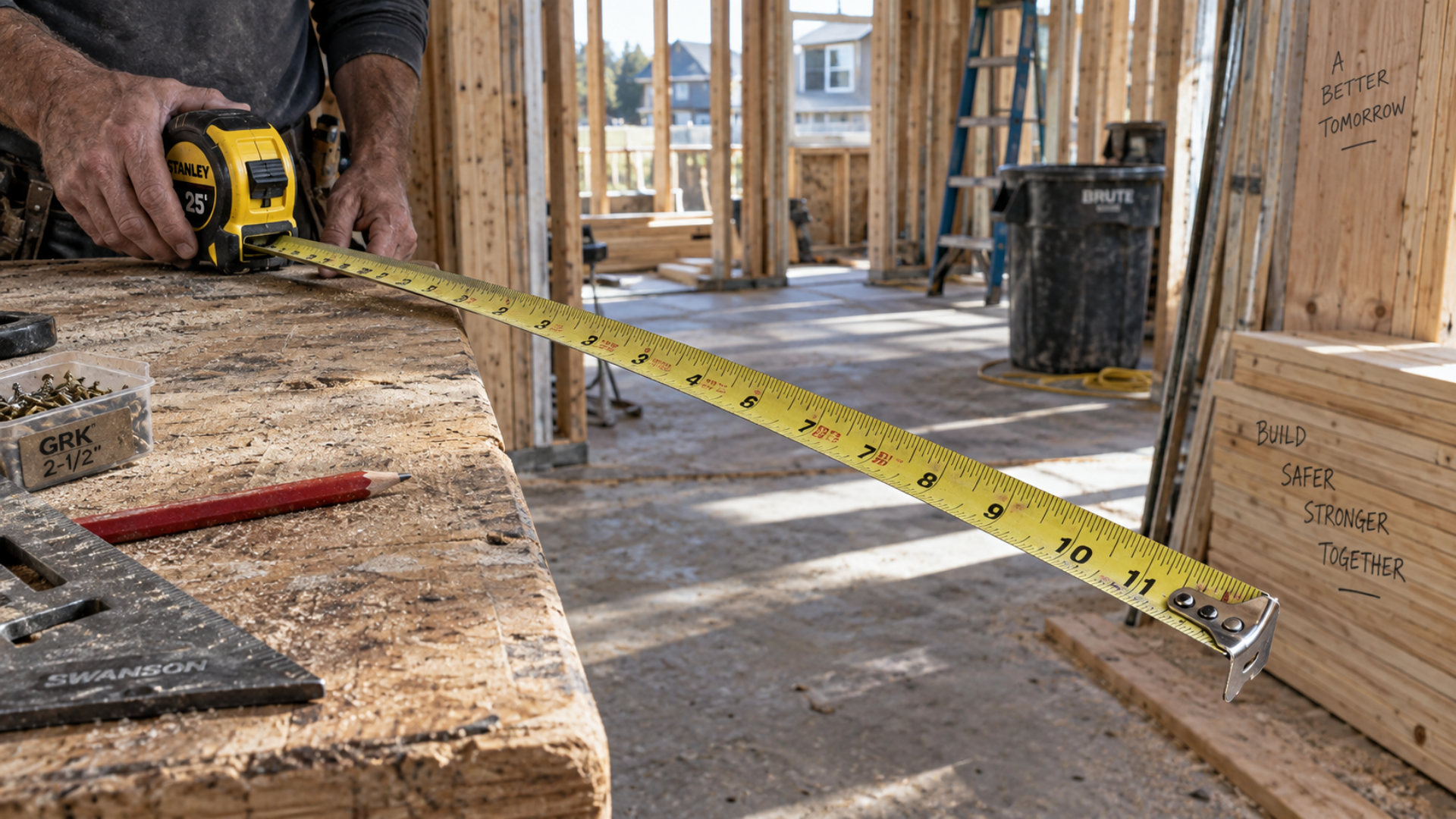

Pick up any tape measure and look closely. Behind that plain metal case sits a set of engineered details most people walk past every day. None of it is decoration. Each piece solves a specific measuring problem that carpenters and builders have wrestled with for generations, hidden in plain sight on a tool everyone owns.
A curved blade can stand out several feet unsupported
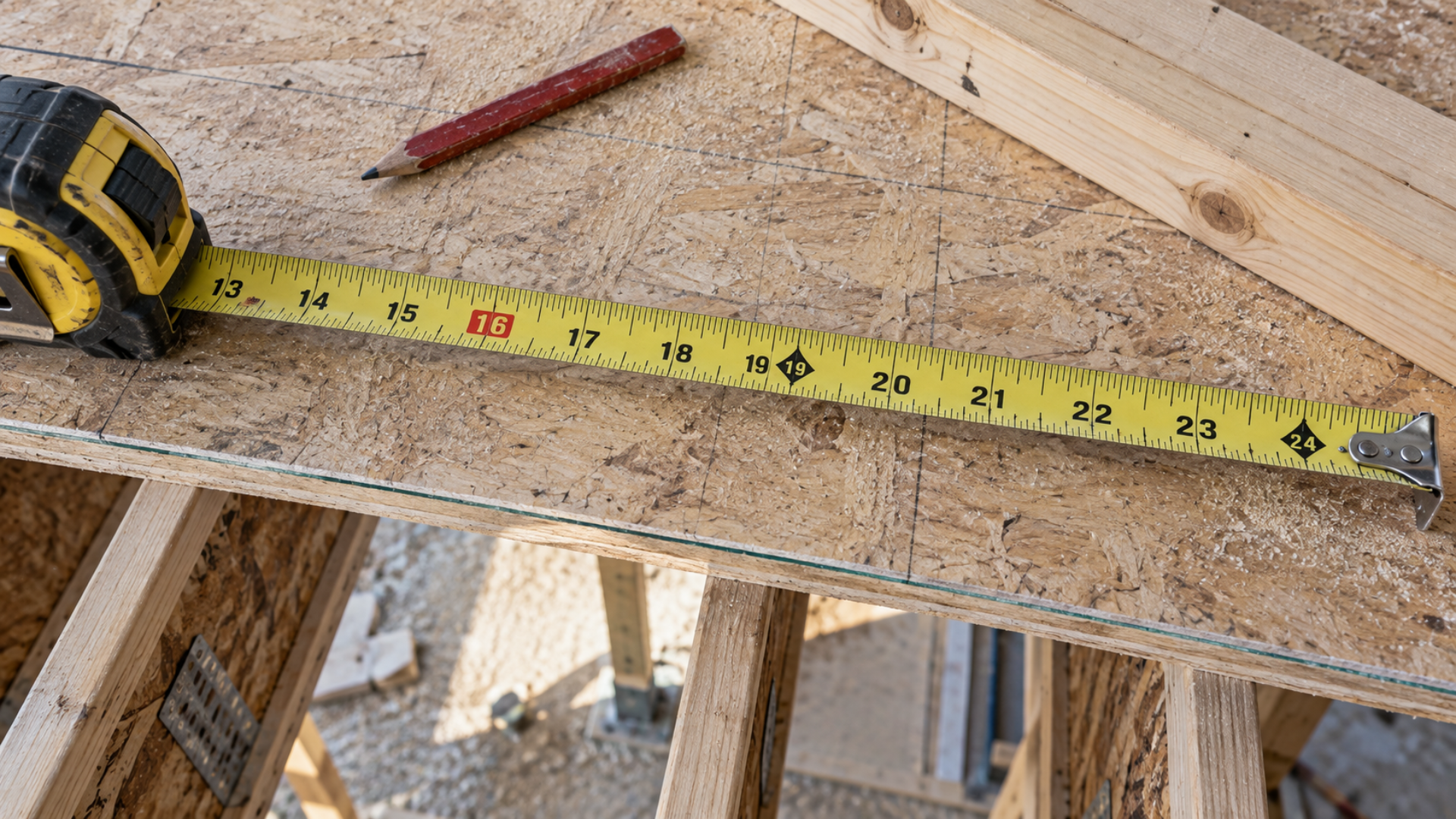
Extend a tape measure across open air and the blade stays straight instead of drooping. That’s because of its concave, or curved, cross-section. The curve gives the thin metal blade rigidity, letting it stand out on its own for several feet before gravity wins. Without that shape, the blade would bend the moment it left the case, making it nearly impossible to measure anything without a second pair of hands to hold the far end steady.
The diamond marks are spaced exactly 19 3/16 inches apart
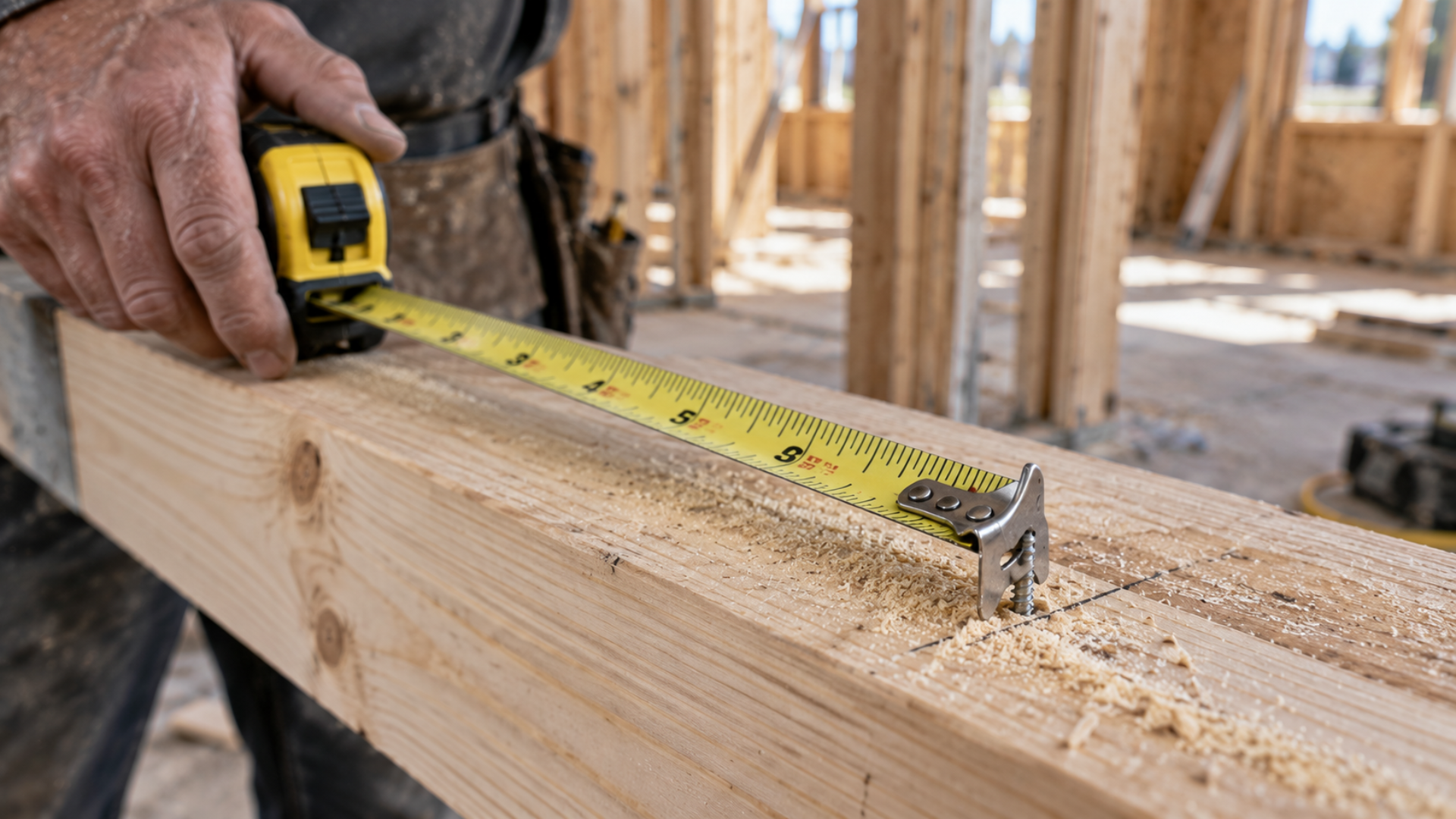
Small black diamonds appear at regular intervals on most metal tape measures, spaced about every 19 3/16 inches. They mark spacing for engineered I-beam floor joists, a lighter, stronger substitute for solid lumber. Span tables rate these joists for spacings of 12, 16, 19 3/16, and 24 inches, each of which divides evenly into 96 inches, the standard length of a plywood subfloor panel. A different explanation for these marks keeps circulating online, and it isn’t accurate.
Wall studs sit 16 inches apart, not 19 3/16
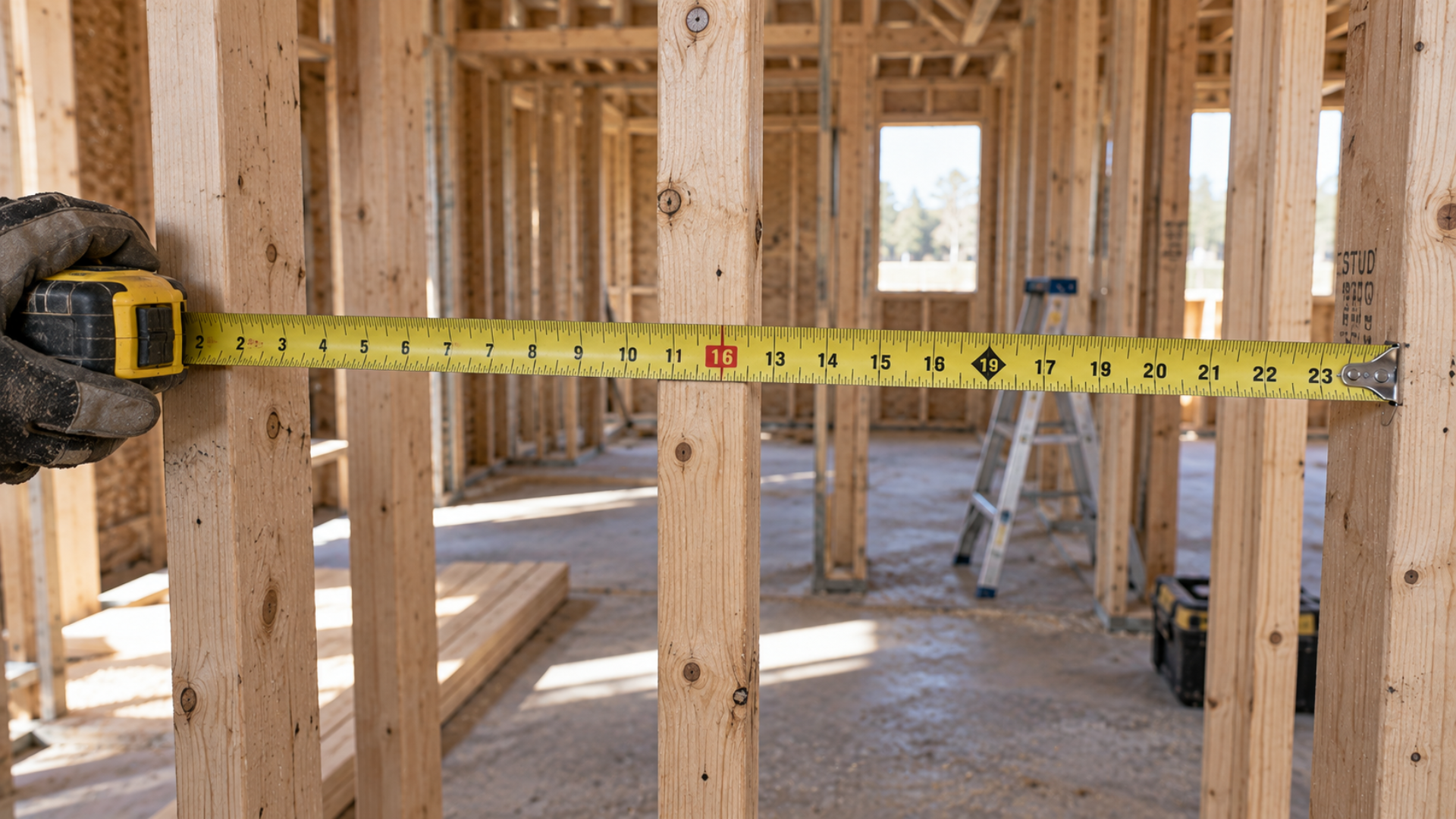
Social media posts often claim the black diamonds mark wall stud placement, but that isn’t true. Wall studs are typically spaced 16 or 24 inches apart, not 19 3/16. According to a Home Depot representative cited by fact-checkers, the marks are called black truss marks and indicate truss layouts used by some engineered joist manufacturers. A separate red or highlighted marking, usually every 16 inches, exists specifically for wall stud layout, a distinction many tape measure owners never learn.
A slot in the hook grabs a nail or screw
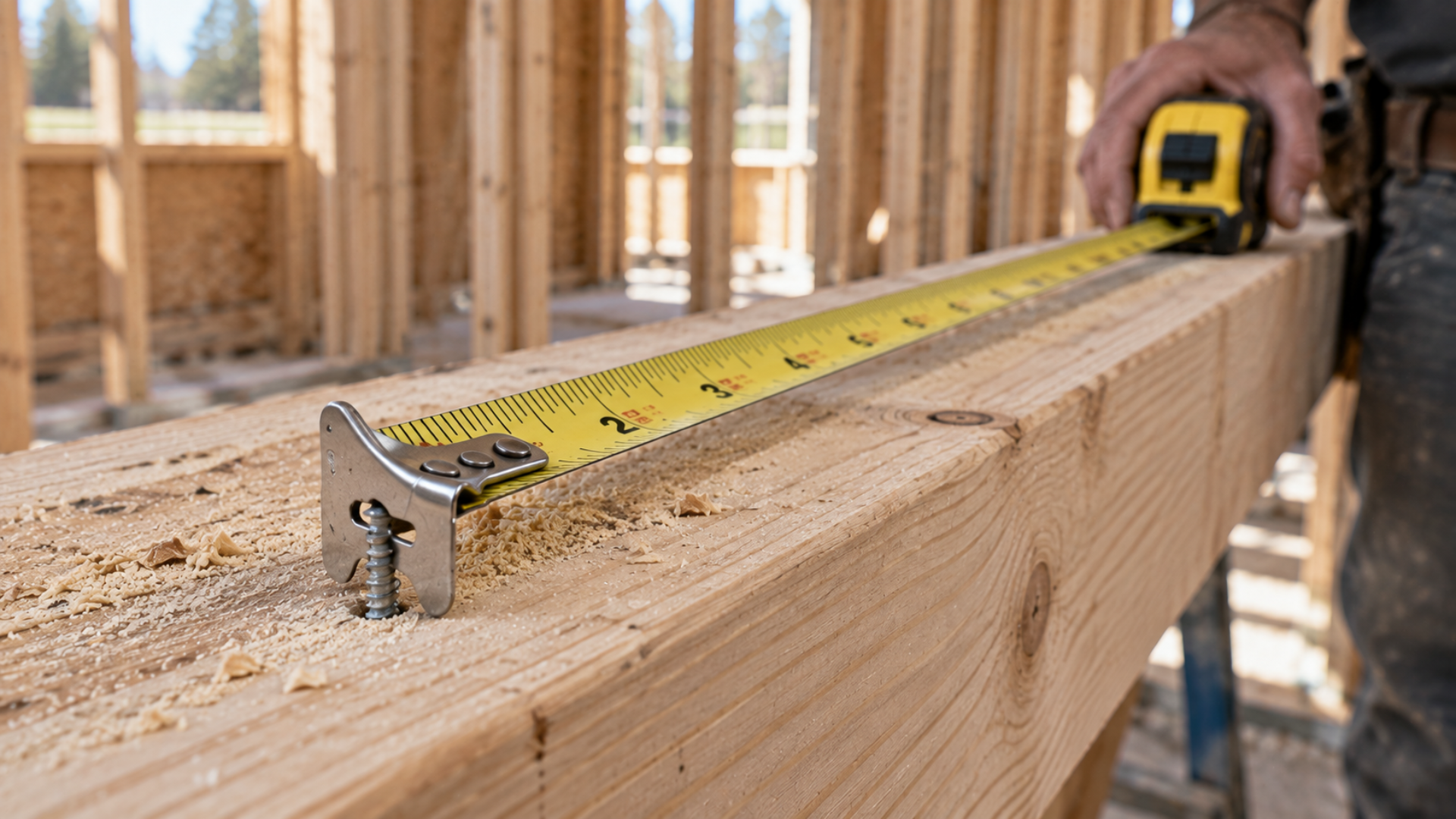
Flip a tape measure over and look at the metal hook on the end. Nearly every model has a small slot cut into it, designed to catch the head of a nail or screw. Hammer a nail partway into a board, hook the tape onto it, and the blade holds steady while the other end gets pulled taut. It solves a common problem in solo carpentry: measuring a long surface with no one around to hold the other end.
A serrated edge marks wood without a pencil
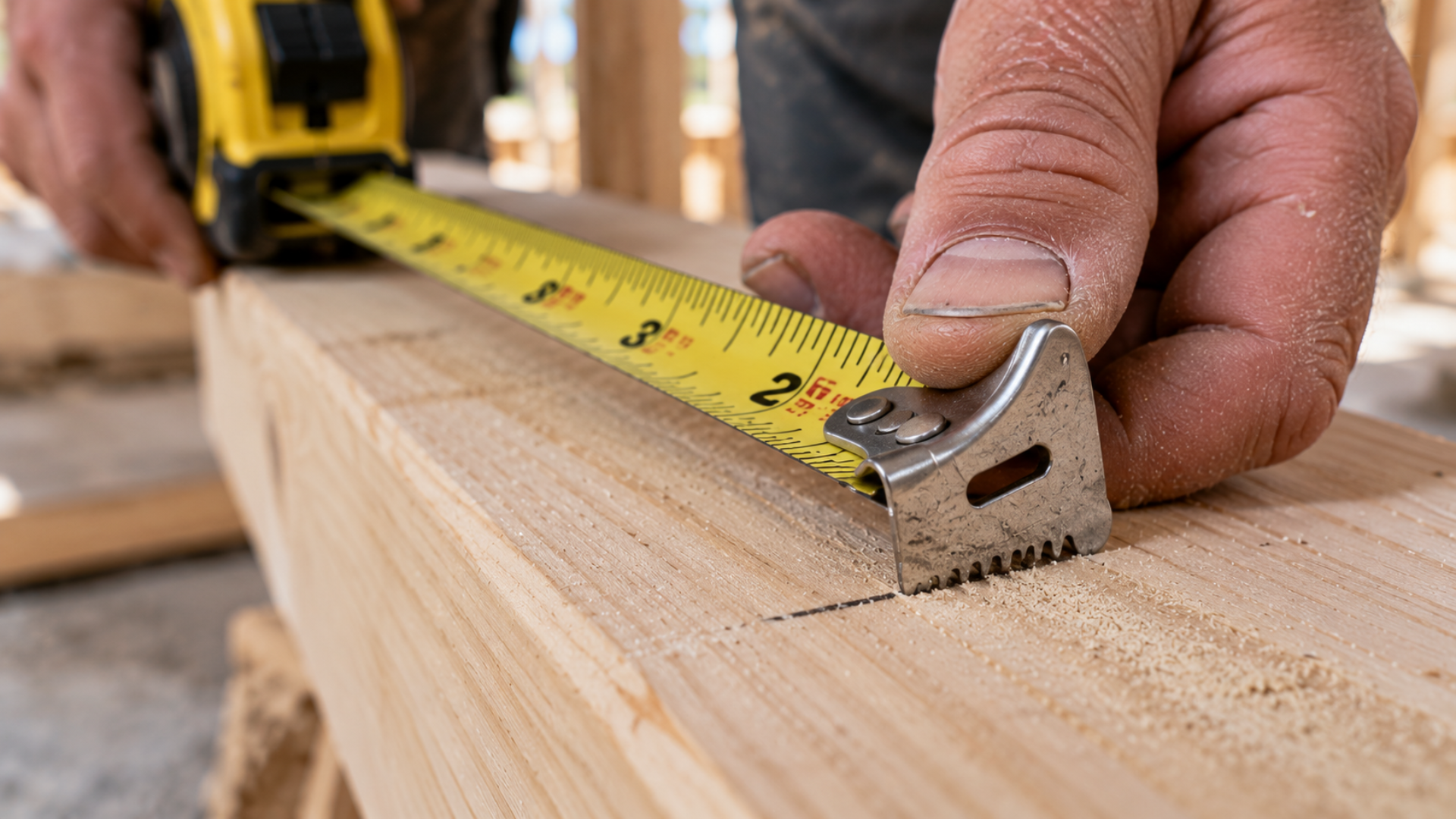
Turn the hook over again and run a finger along its bottom edge. Most tape measures have a serrated, saw-like edge built into the metal there. Without a pencil or marker nearby, that edge can scratch a visible line into wood, drywall, or other soft material by dragging it back and forth at the measured point. Most owners never notice it, tucked into a part of the tape they only ever think of as a hook.
The case length is stamped right on the housing
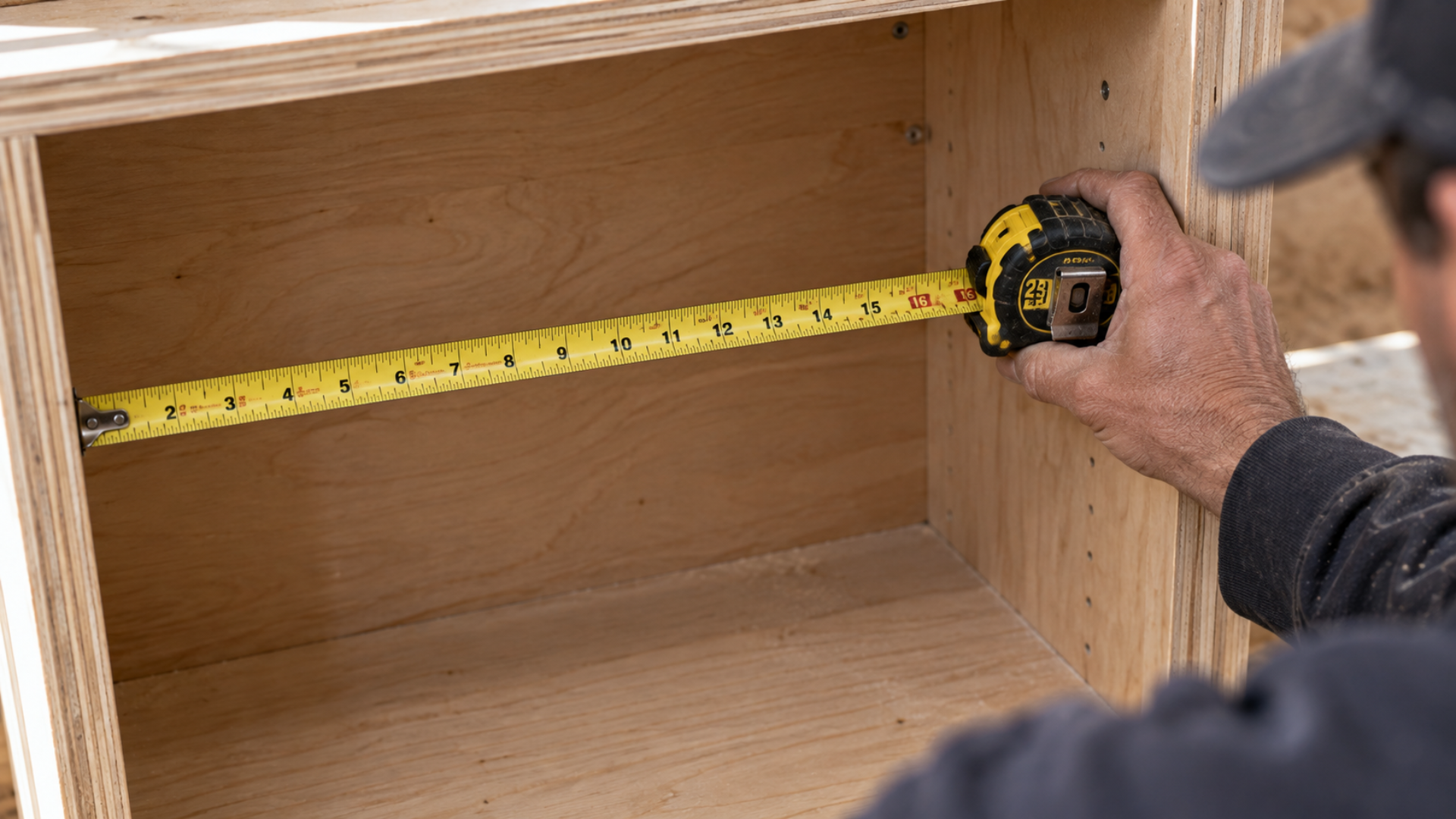
Most tape measure cases have their own length printed or stamped on the housing, often the side or bottom. That number matters when measuring into a tight corner where the blade can’t bend without kinking. Instead of forcing an awkward curve, a builder can butt the case flush against one surface, read the blade, then add the case length for an accurate total, a small shortcut that protects the tape and speeds up the job.
The hook slides exactly one sixteenth of an inch
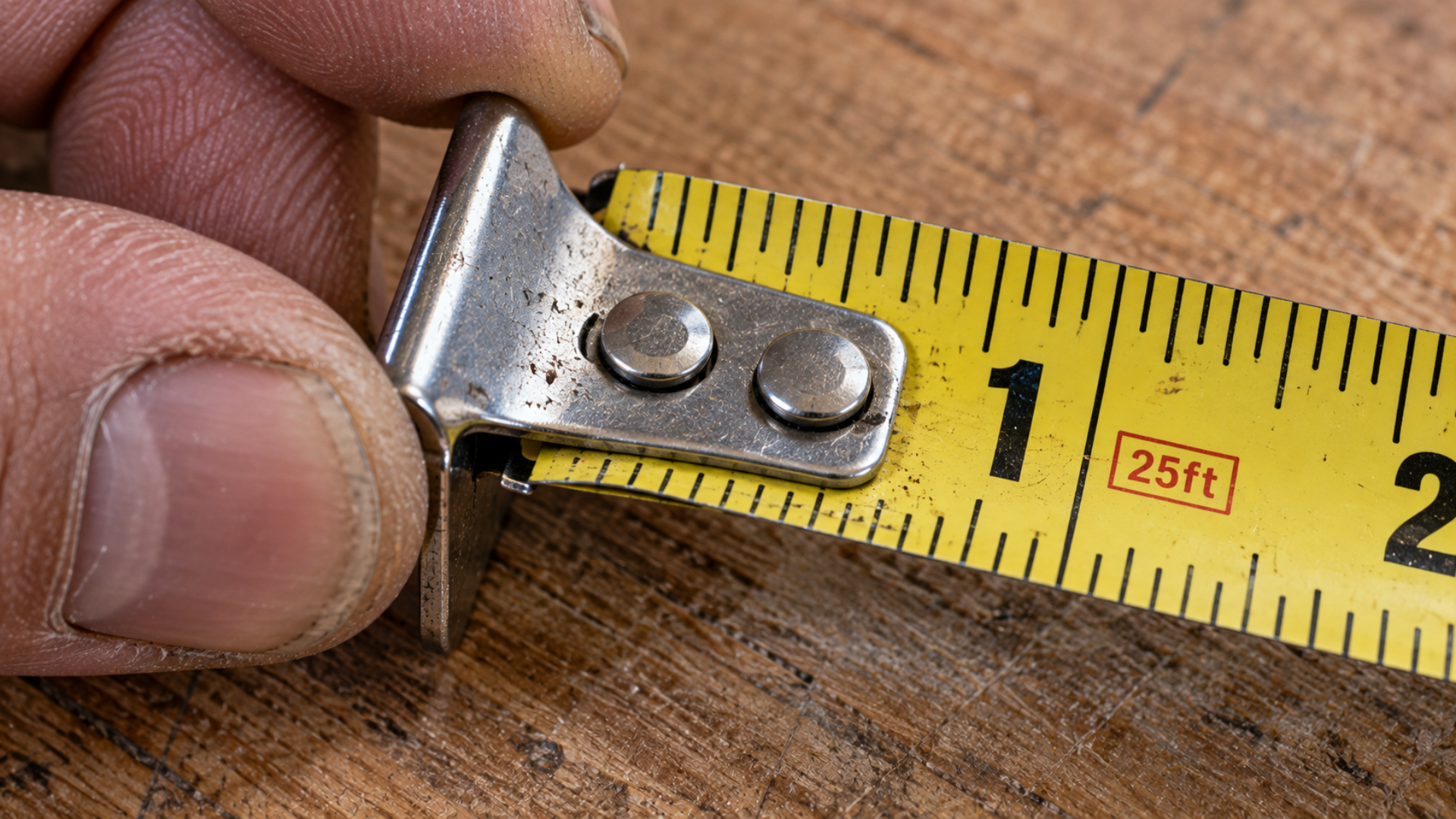
Grab the metal hook on the end of a tape measure and slide it gently. It moves, deliberately, as an engineered feature of the tool. The hook shifts back and forth by exactly its own thickness, usually about one sixteenth of an inch. The first inch printed on the blade is actually short by that same amount, a deliberate calibration with a specific job once the tape gets put to work measuring a real surface.
True zero compensates for the hook’s own thickness
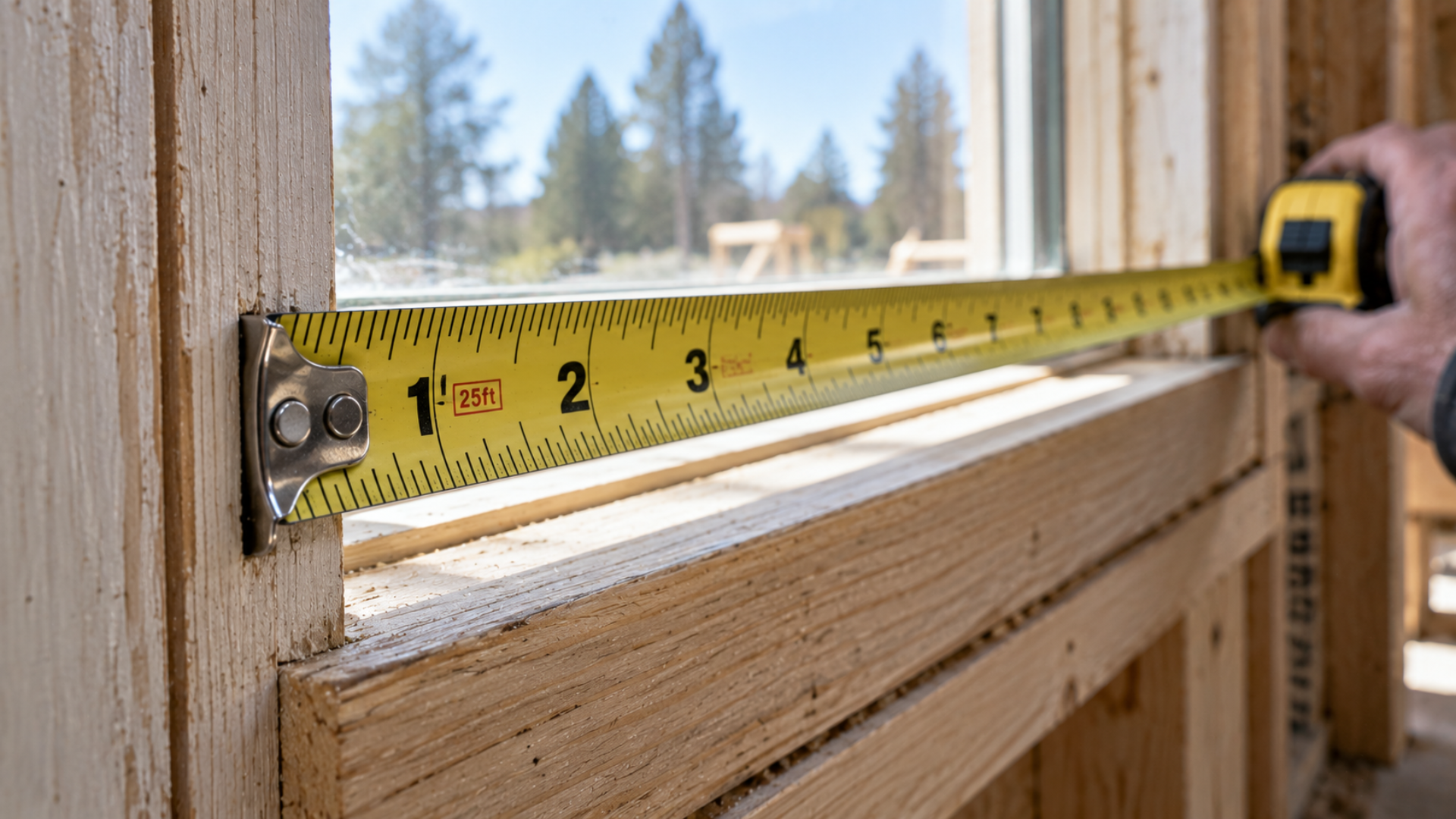
The sliding hook and shortened first inch work together in a system called true zero. Hook the tape over the outside edge of a board, and the metal piece shifts outward, leaving a gap so its thickness never gets counted in the reading. Push the tape against an inside surface instead, like a window frame, and the hook slides inward, adding its thickness back into the measurement. Pulling the tape taut is what makes the math work.
Six engineered details make every reading true
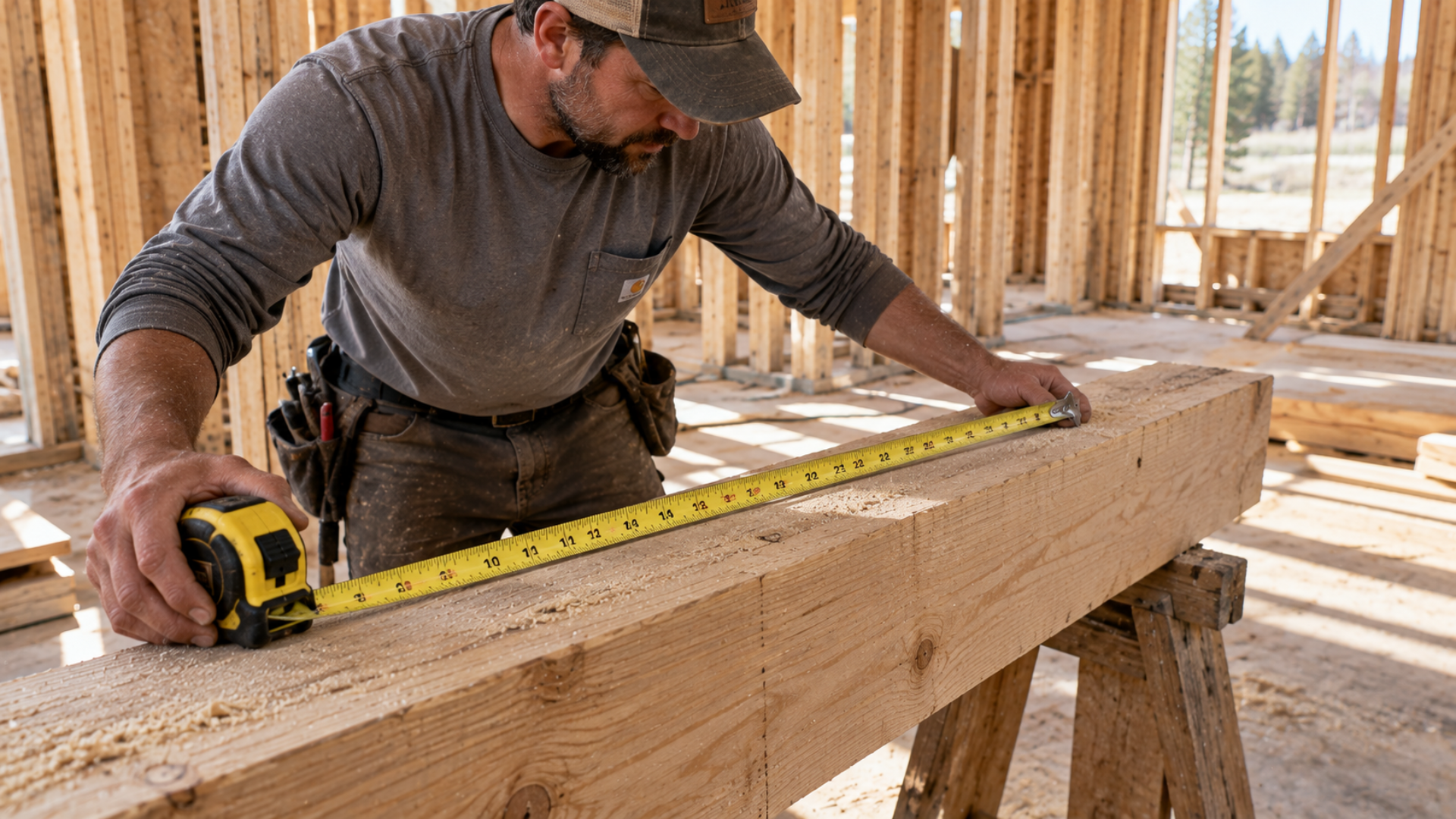
None of these features are accidents. The curved blade, the diamond marks, the nail slot, the serrated hook, the stamped case, and the sliding tip each answer a specific problem builders have faced for decades. A tool that looks as simple as a coiled strip of metal is, in fact, a small piece of applied engineering, refined through generations of use until every measurement it gives comes out true.