Walmart Just Found a New Strat to Make Money From Its Customers
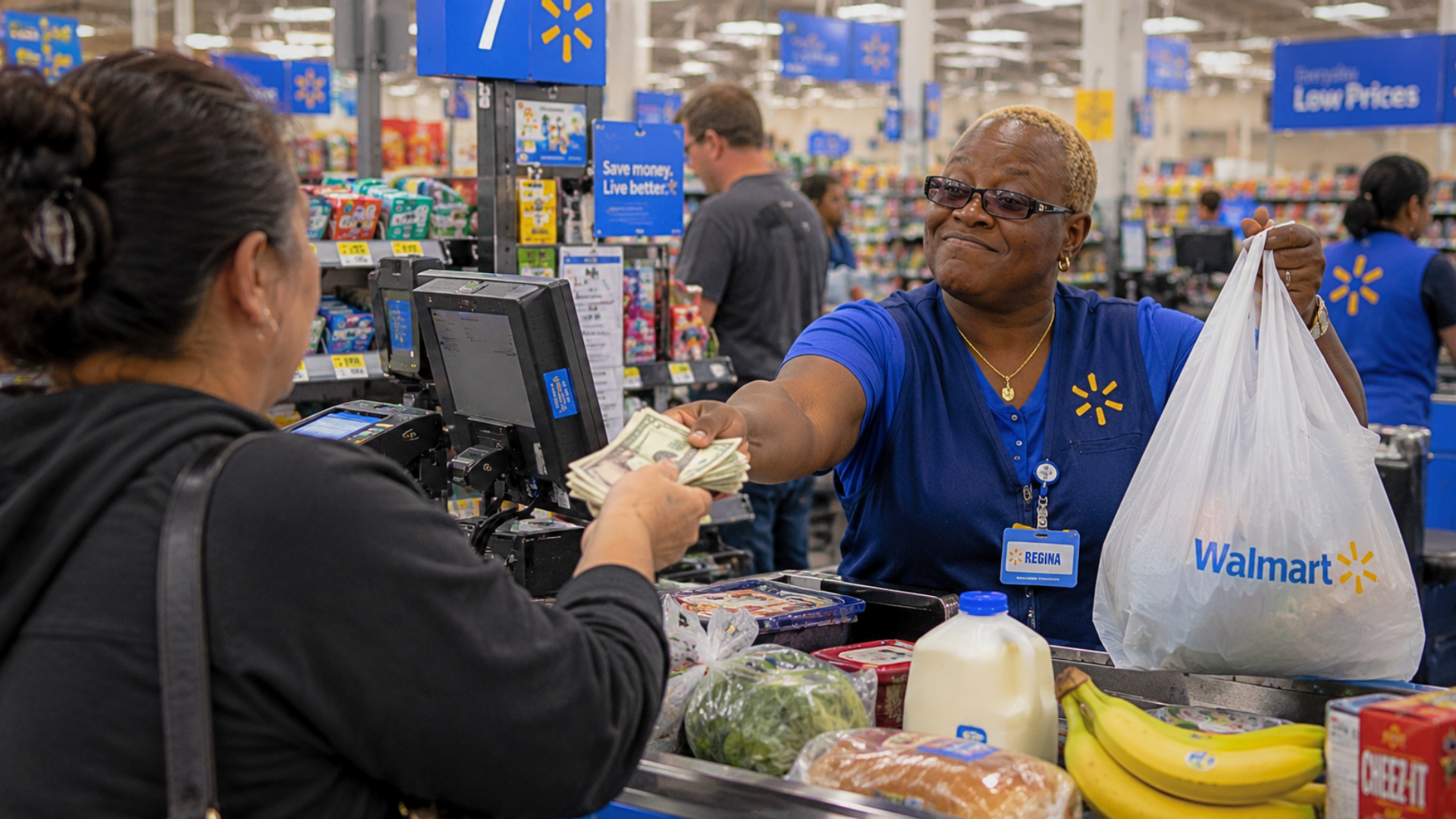

Scroll through Walmart’s app and you’ll pass a small gray label reading “Sponsored,” easy to skim right past without a second thought. That tiny label does real financial heavy lifting. According to a new Goldman Sachs research note, the ad placement next to your grocery list now carries better margins than the groceries themselves ever could.
Walmart Connect, the company’s advertising arm, is only about six years old. Ryan Mayward, the unit’s general manager, told investors at Goldman Sachs’s Communacopia + Technology conference this month that its margins run above 70%. Walmart’s core retail business, by comparison, runs closer to 5%, a gap wide enough to reshape how the entire company thinks about where its actual profit comes from.
That comparison alone explains the sudden analyst attention. A unit built entirely from ad placements and sponsored search results is quietly outperforming the actual business of selling groceries and household goods across the entire company. Understanding how a six-year-old ad arm got here means looking closely at the mechanics behind its growth over such a short span of time.
More Sellers Means More Ads, Which Funds Even More Growth
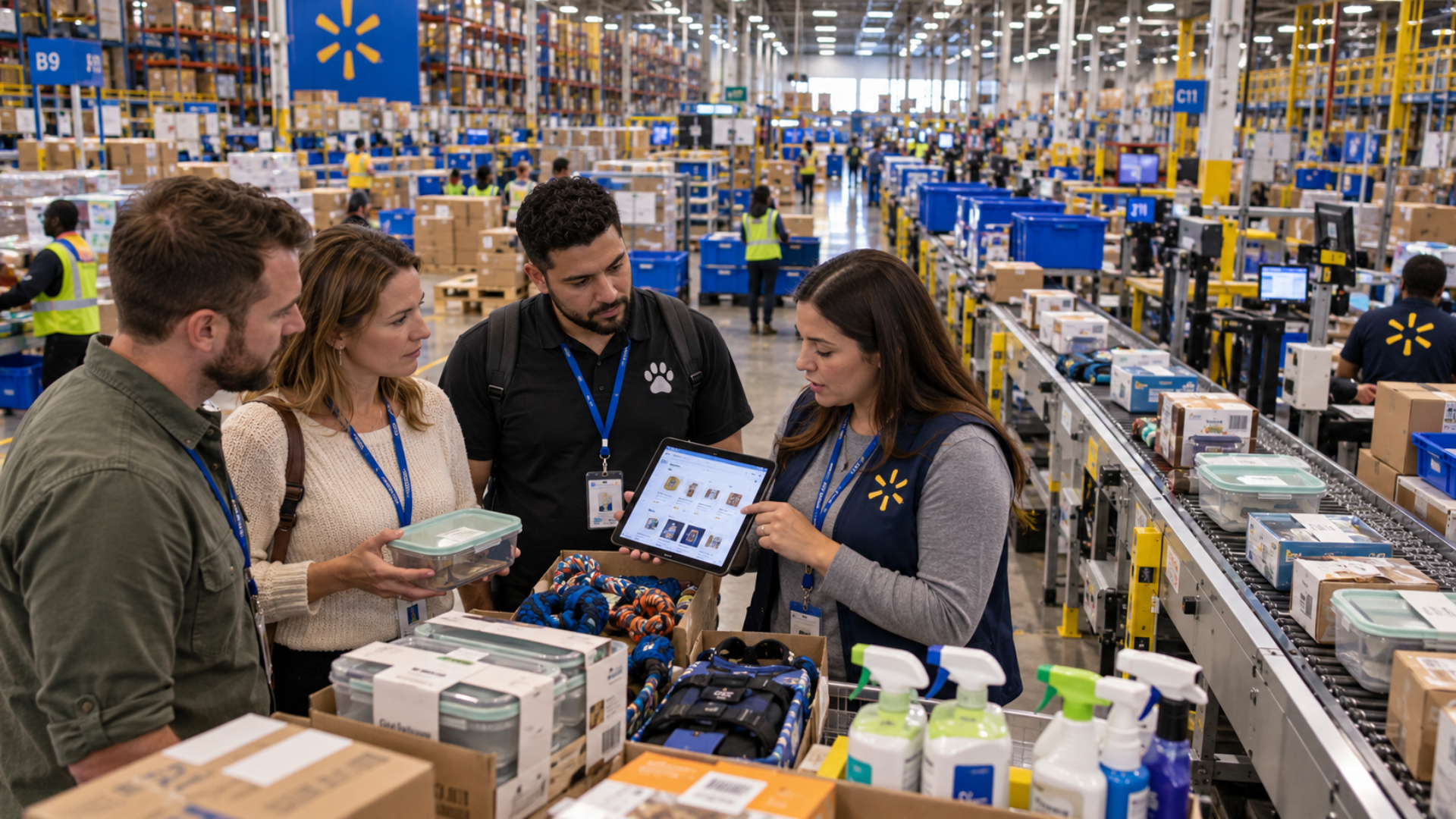
Goldman Sachs describes the growth engine as a self-reinforcing loop. As more independent sellers join Walmart’s online marketplace, they compete for visibility by buying sponsored search placements, and that competition funds even more expansion of the ad business itself. Mayward described the underlying dynamic simply: “The more Marketplace sellers, the bigger our Marketplace becomes, the larger our advertising business.”
The public numbers back up that description. Walmart Connect has grown more than 40% year over year across each of the past several quarters, and its U.S. business specifically grew 41% in the most recent fiscal fourth quarter, excluding VIZIO. Companywide, global advertising revenue reached $6.4 billion for the year, up 46%, and the division now contributes roughly a third of Walmart’s total operating income despite remaining small next to the company’s $713 billion in annual sales.
That cash flow doesn’t just sit on a balance sheet. Every ad dollar earned effectively helps fund the next price cut or delivery upgrade, according to the Goldman Sachs note. Building an engine capable of doing that required more than sponsored search results alone, which is where a pair of major acquisitions comes into the picture.
Walmart Bought Its Way Into TV Advertising, Too

Walmart bought VIZIO for roughly $2.3 billion in a deal that closed in December 2024, gaining a connected-TV platform that put its shopper data behind ads running on millions of televisions nationwide. The payoff arrived quickly. VIZIO’s operating system became the top-selling smart TV platform in the U.S. during the first half of 2026, and Walmart is now pushing that same software into its own private-label Onn TVs to widen its reach even further.
In August, Walmart completed a second acquisition. It bought Vibe.co, a self-service streaming ad platform, for a price The Wall Street Journal put at roughly $1.4 billion. That deal opens connected-TV advertising to small businesses that had never bought a television ad before. Walmart has also struck ad-buying partnerships with Magnite, Yahoo’s demand-side platform, and Google’s YouTube, letting agencies target Walmart shoppers on those platforms without switching tools.
Walmart’s ad ambitions have also reached inside its own AI shopping assistant. That is a genuinely different frontier than a TV commercial or a sponsored search result. Understanding what that specifically means for the person actually typing a question into the app requires looking at exactly how Sparky works, and who might be quietly shaping its answers.
Sparky Users Spend 35% More. Now Walmart Wants to Test Ads There Too.
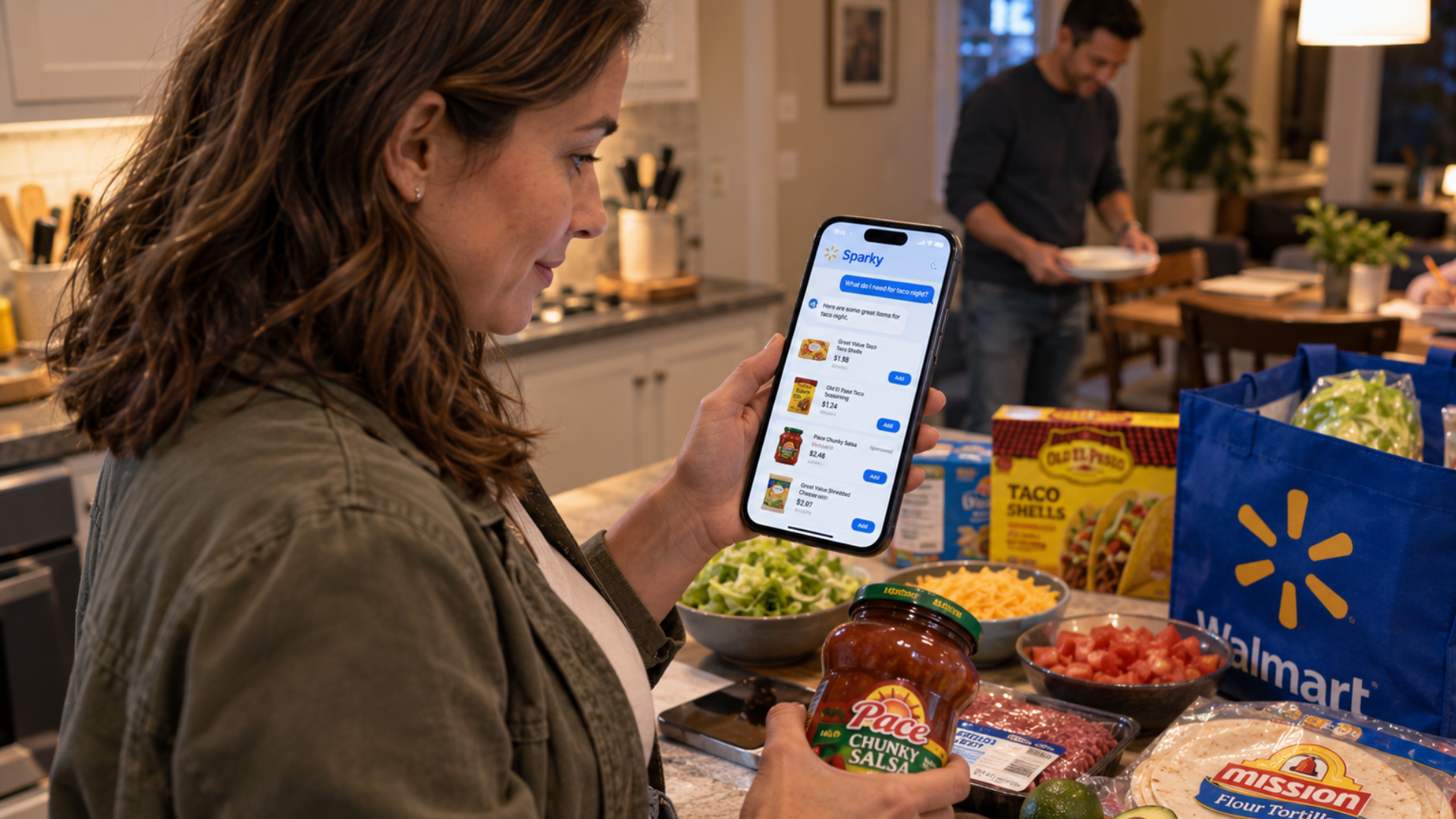
Roughly half of Walmart’s app users have tried Sparky, the company’s AI shopping assistant, and those who use it spend about 35% more per order than shoppers who don’t, according to Fortune. Walmart is now testing ads inside that same tool. That means the assistant answering a question like “what should I buy for taco night” may increasingly be shaped by who actually paid to be recommended.
This shift is playing out against a much bigger backdrop. Amazon edged past Walmart in total U.S. revenue this year for the first time in more than a decade, according to Fortune, a changeover that had less to do with store count than with which company moved faster to turn its platform into a media business. Target, Costco, and Kroger are all racing to build similar ad networks off their own shopper data right now.
Walmart says it wants to keep ad density low enough that shoppers never really notice the trade-off happening underneath the surface. That promise runs directly against the company’s own numbers, though. As long as advertising keeps beating everything else Walmart sells by a factor of fourteen in pure margin, the incentive to push further will only keep growing, whether or not shoppers ever notice at all.