A Valid Real ID Is Causing Problems for Travelers in Another State
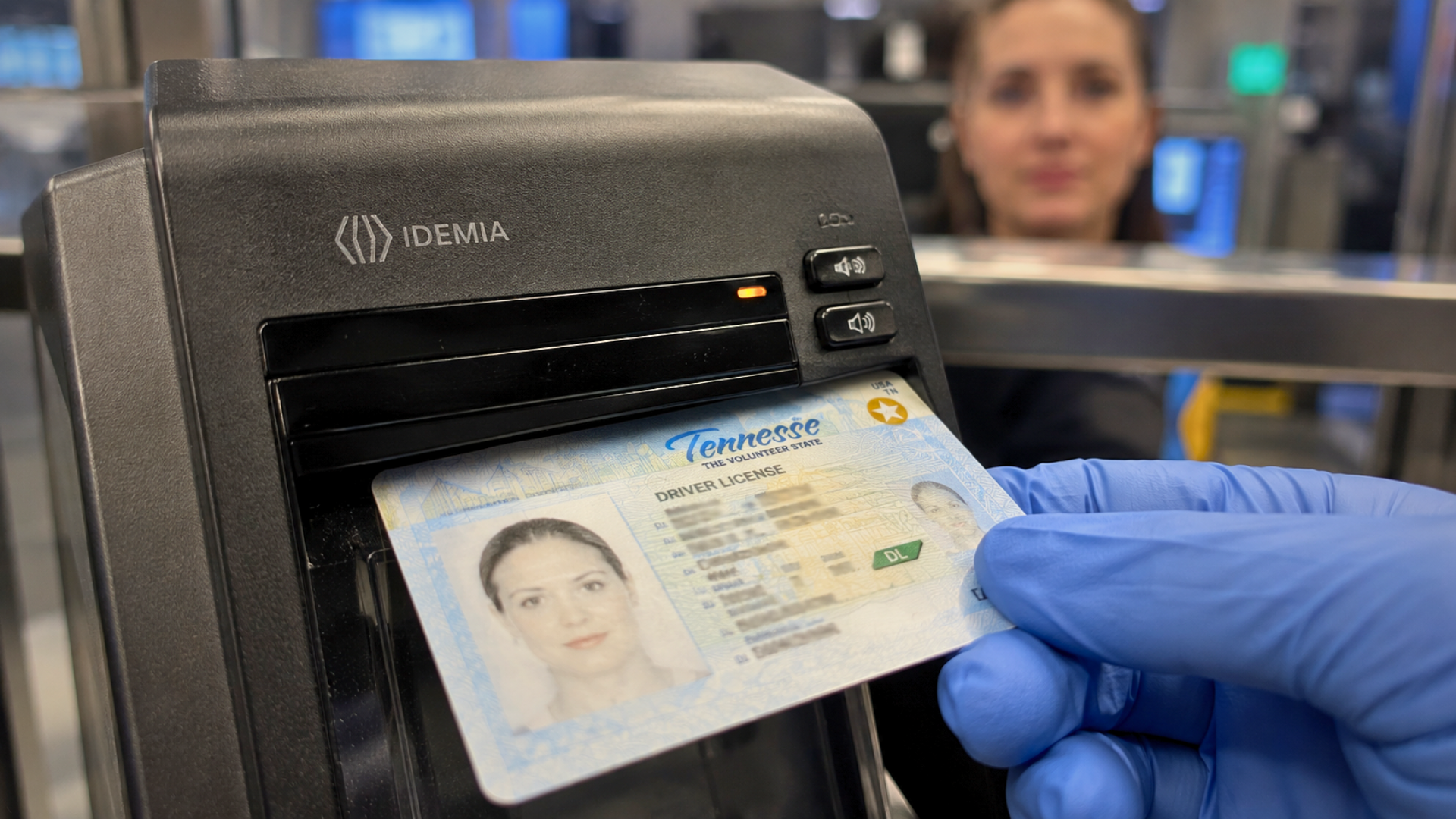

Getting a REAL ID was supposed to be the safe choice, the one that guarantees a smooth trip through airport security. For a growing number of Tennessee travelers, that guarantee just broke down. Even though their driver’s licenses meet every federal requirement, TSA scanners at some airports simply cannot read them, and the fallout has already caused people to miss flights they showed up for on time.
The Tennessee Department of Safety and Homeland Security confirmed the scanning failures on Aug. 12, describing a production defect affecting a small number of driver’s licenses. Officials say the cards themselves remain valid and fully compliant with federal REAL ID standards. The problem is physical, not legal. Affected travelers can get a free replacement at any Driver Services Center, though the new card can take up to 20 business days to arrive.
This is not the first time a REAL ID rollout has stumbled. Travelers with federally recognized tribal IDs have reported similar rejections at TSA checkpoints for more than a year, and a printing glitch in Maine caused comparable scanning failures back in 2025. Understanding what actually went wrong in Tennessee starts with a detail most travelers never think about: how the photo on their license actually got printed.
This article was created with the assistance of AI and reviewed by our editorial team for accuracy and clarity.
The Likely Cause: Photos Printed Too Light for TSA’s Scanners to Read
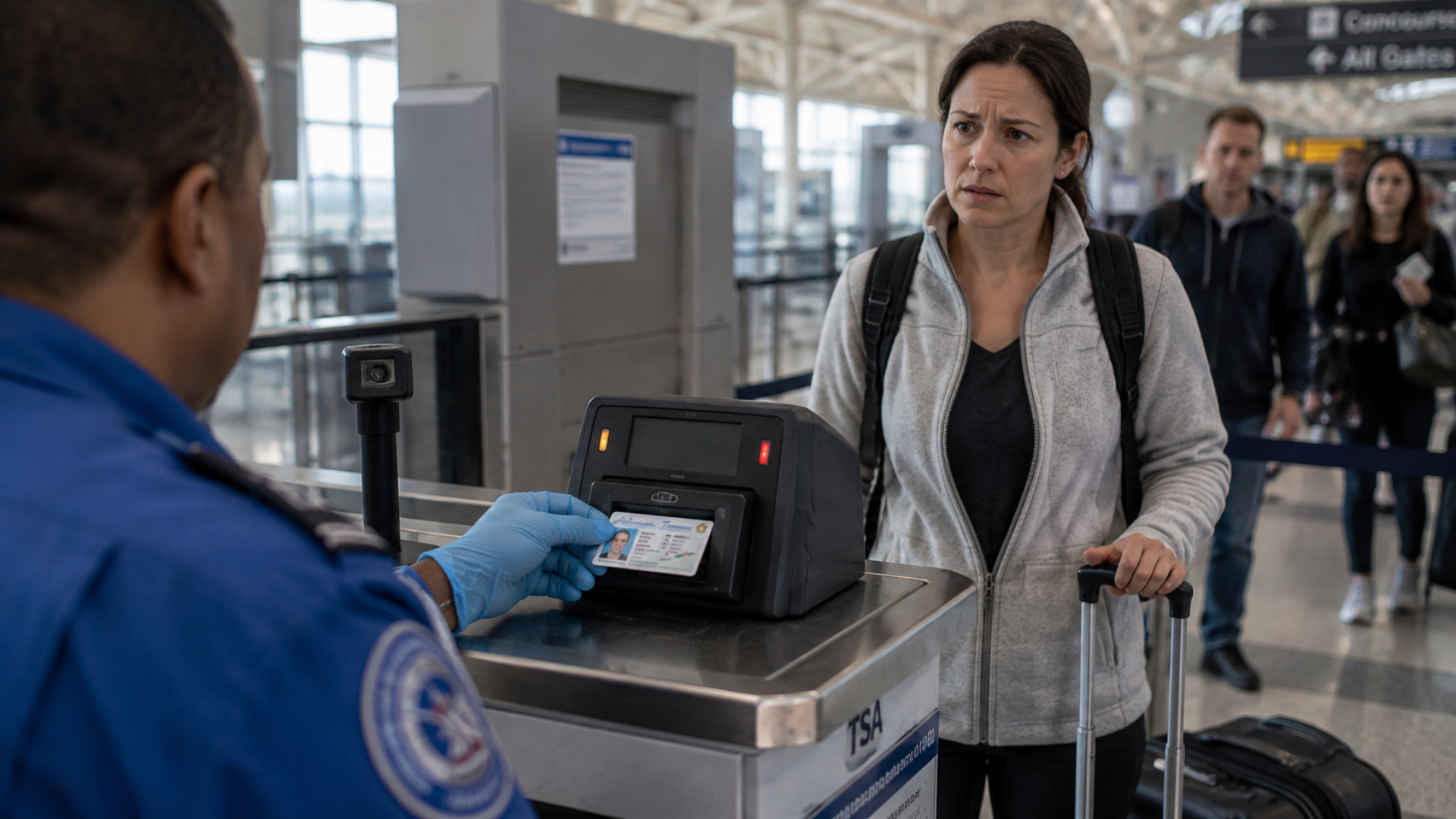
Tennessee driver’s licenses are not printed locally at Driver Services Centers. They are produced at an out-of-state secure printing facility and mailed to applicants, a process that alone can take up to 20 business days. Some of those newly issued cards reportedly came back with photos that had lighter contrast or slightly overexposed backgrounds. That subtle printing flaw appears to be exactly what is tripping up TSA’s facial comparison and document-reading technology at the checkpoint.
Leyna Holt, a Nashville-area traveler, says the problem hits her literally every time she flies. TSA agents run her card through the reader two or three times before it finally clears the system. During one trip through Houston, an agent reportedly told her the issue affects Tennessee IDs and “many” Kentucky IDs too, adding that the photos are simply too light for the reader to recognize. Holt suspects the problem is more widespread than officials have publicly acknowledged.
Tennessee officials have not confirmed the exact cause. The department says it has contacted the vendor that produces the cards to determine what went wrong and is actively working toward a fix. The agency has said “a small number of driver licenses are not being read by TSA.” That careful, cautious language leaves open exactly how many Tennesseans this issue actually touches.
The Fix Is Free. Getting There Might Take a Second Trip to the DMV.
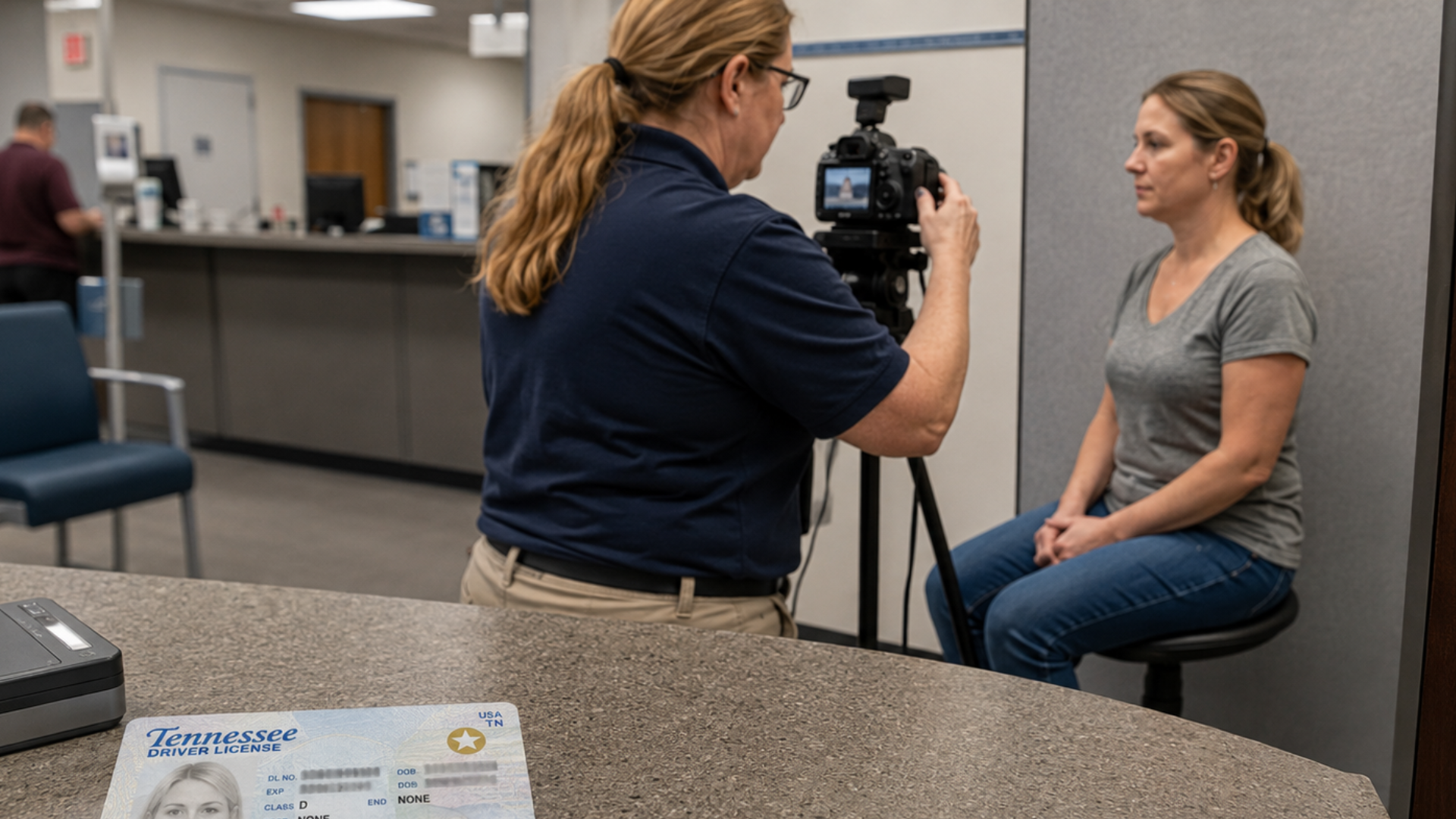
The state’s guidance for affected travelers is straightforward. Anyone whose license fails to scan can visit a Driver Services Center and request a replacement at no cost. Until that new card arrives, TSA says agents will manually verify identity at the checkpoint rather than turn travelers away outright. A valid passport also works as a reliable backup for anyone with an upcoming flight and lingering doubts about their card.
Not every replacement solves the problem on the first try. Tennessee resident Julie Johnson Land had her license redone entirely, new photo included, and it still came out too light for TSA’s system. State officials told her they are using her old card as one of the examples to help figure out the underlying cause. The issue has also reportedly reached beyond airports: at least one resident said her license failed to scan when she went to vote.
None of this makes the cards unsafe or non-compliant, officials stress. It is purely a technical glitch, not a security gap or a legal problem with the ID itself. But for the travelers actually standing at the checkpoint watching an agent rescan their card for the third time, that distinction offers little comfort in the moment. Tennessee is far from the only state learning this lesson the hard way.
Doing Everything Right Still Doesn’t Guarantee a Smooth Trip Through Security
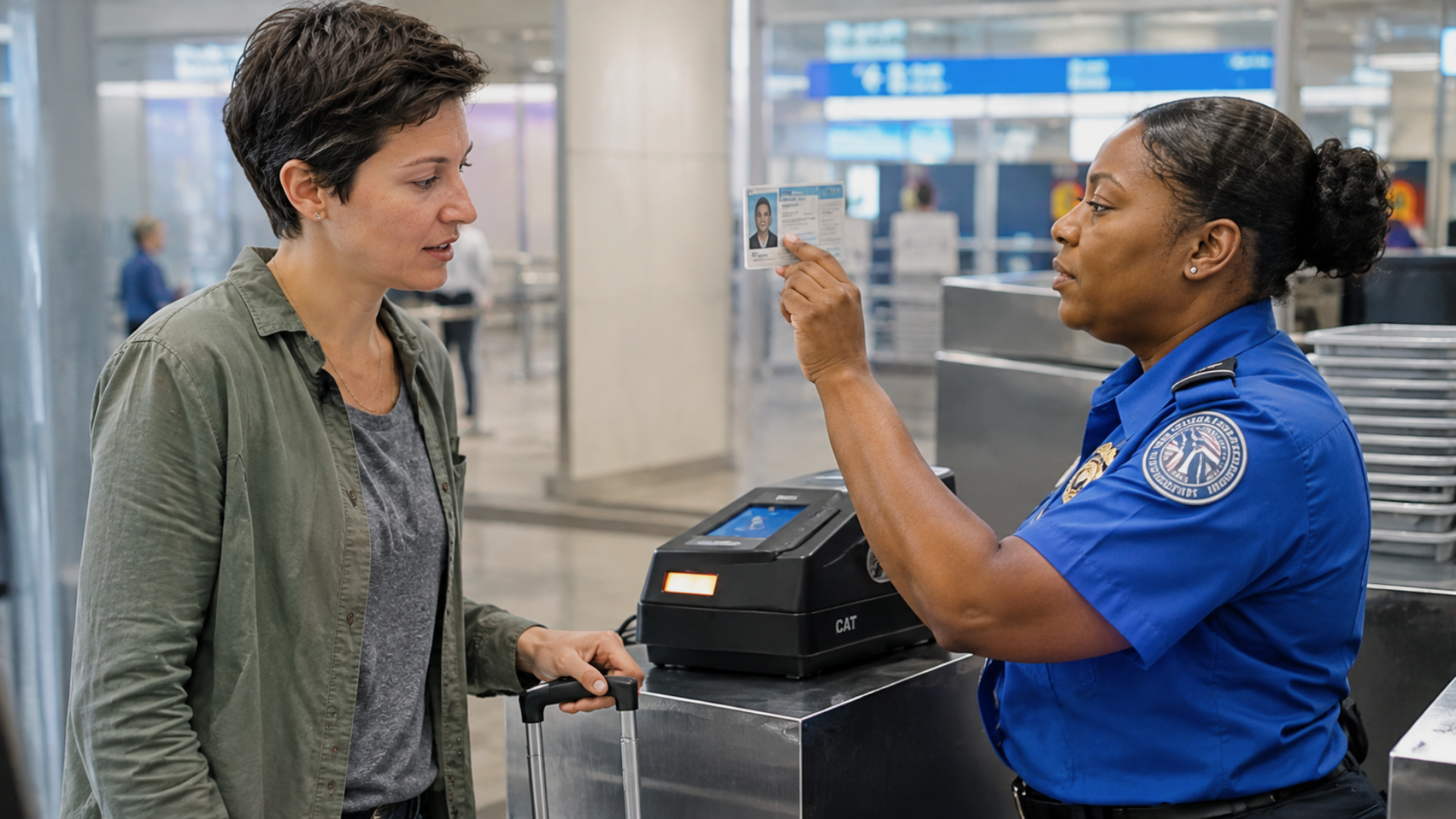
Tennessee joins a small but growing list of states where a compliant REAL ID still failed at the checkpoint. Maine dealt with a nearly identical scanning failure in 2025, eventually traced back to a single faulty instant-issue printer that has since been repaired. New Hampshire reported similar hiccups around the same time. Travelers carrying federally recognized tribal IDs have described ongoing scanning problems that stretch back even further, well over a year now.
There is a real irony sitting underneath all of this. Travelers without any REAL ID at all can pay TSA a $45 fee for temporary identity verification and still get through security. Travelers who did everything asked of them, upgraded their license, provided every document, sometimes redone their photo twice, can still get pulled aside because of a printing defect entirely outside their control. Compliance turned out not to be the same thing as a guarantee.
REAL ID was sold to the public as a one-time hassle that would make air travel safer and, eventually, simpler. For a small number of Tennesseans, it has instead become a recurring hassle with no clear end date, one that a free replacement card may or may not actually fix. The system was designed to verify who you are. Right now, for some travelers, it cannot even reliably verify that their own photo belongs to them.