Trump Claimed He Is Not a Senior at 79, and Netizens Are Calling It ‘Delusional’
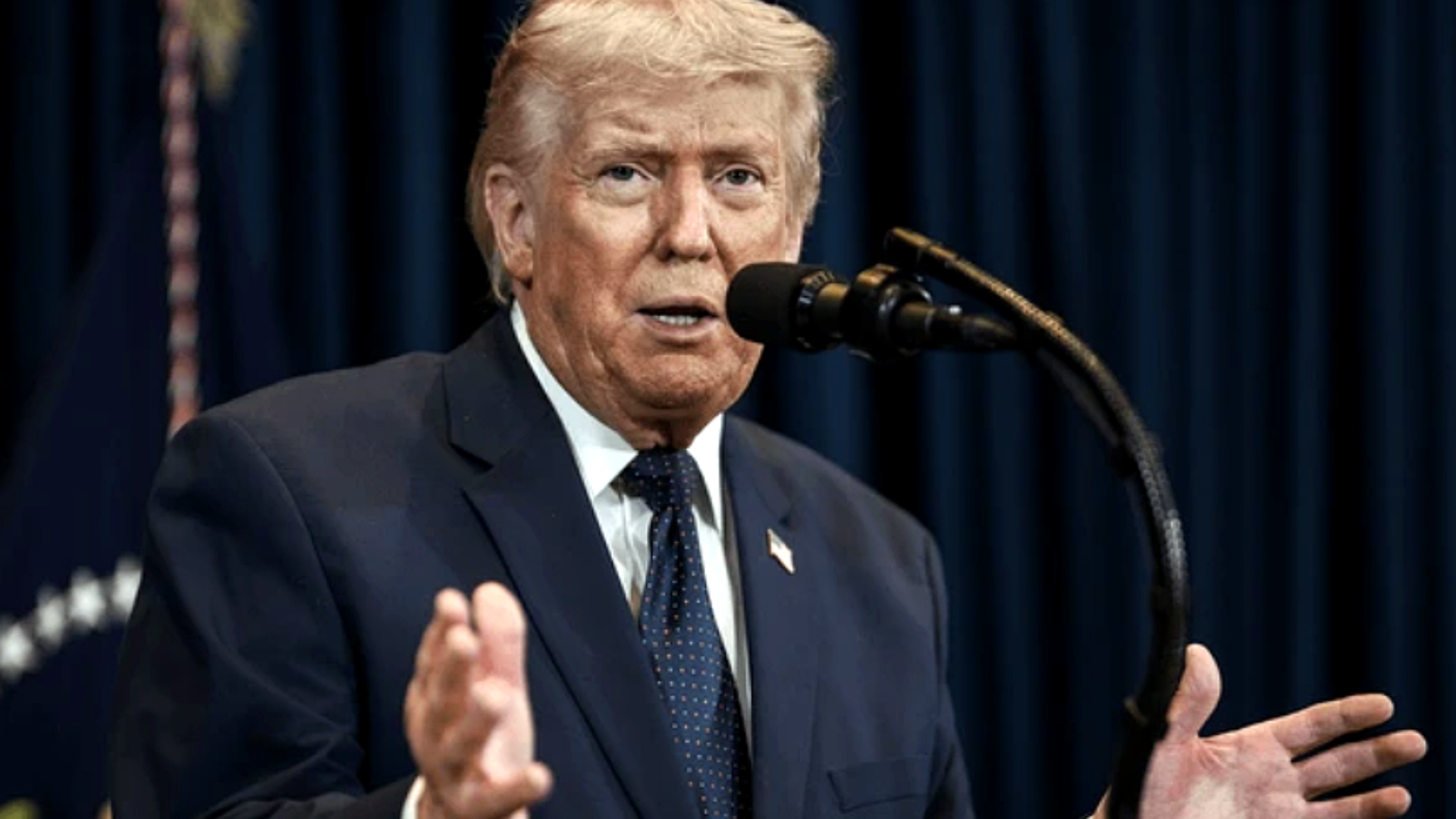

The 79-year-old President of the United States stood before a Las Vegas crowd last week and said, plainly, that he is not a senior citizen. He said it twice. By every federal standard that governs the very tax benefits he was there to promote, he has qualified as a senior since 2011. The comment lasted less than ten seconds. The reaction it produced has lasted considerably longer.
Trump made the remark on April 16, 2026, during a roundtable at the AC Hotel in Las Vegas, where he was promoting the “no tax on tips” policy enacted as part of the One Big Beautiful Bill Act, the sweeping tax and spending legislation he signed into law on July 4, 2025. While describing a provision of that bill that exempts millions of seniors from paying tax on Social Security income, he stopped to offer a personal clarification: “Seniors are loving me, and I love them. Of course, I’m not a senior, so you know.” He then added: “I cater to the seniors, but I don’t happen to be a senior myself.”
Both remarks were delivered to laughter in the room. Some viewers interpreted the comments as a joke. Many others did not. In the United States, the threshold for senior citizen status is 65 and older, a standard used by the Social Security Administration, Medicare, and AARP. Trump was born on June 14, 1946. He turned 65 in June 2011 and will turn 80 in June 2026. By every applicable federal standard, he has been a senior citizen for 14 years, including for the duration of both his first and second presidential terms.
What the Bill Actually Does for Seniors

The One Big Beautiful Bill Act includes a new $6,000 bonus deduction for taxpayers aged 65 and older, stacked on top of existing standard deductions. The administration, citing the Council of Economic Advisers, has stated that the provision will result in 51.4 million seniors, roughly 88% of all seniors receiving Social Security income, paying no federal tax on their benefits. That figure is the one Trump referenced in Las Vegas when he described seniors loving him in the same breath as clarifying that he is not one of them.
Independent analysts have pushed back on that framing. The Tax Policy Center found the deduction benefits fewer than half of older adults when measured against total tax liability rather than Social Security income alone. The lowest-income seniors, who already pay no federal income tax, receive no benefit from the new deduction. Higher-income seniors are excluded as well: the deduction phases out entirely for individuals earning more than $175,000 and married couples earning above $250,000. The deduction is also temporary. Under the law as currently written, it expires after the 2028 tax year.
Those limitations were not part of Trump’s Las Vegas remarks. At the roundtable, he pointed to workers on stage who described receiving the largest tax refunds of their lives under the tips deduction. According to the U.S. Treasury, more than six million Americans claimed the no-tax-on-tips deduction, with an average deduction of $7,100, though that figure represents less than a third of the maximum deduction allowed under the law. IRS data showed the average tax refund across all filers in early April 2026 was $3,462, up about 11% from the same period in 2025.
The Reactions, the Definition, and the Debate Over Whether He Was Joking
The clip circulated widely after the event. Online responses ranged from sarcasm to outright disbelief. One commenter wrote that Trump has qualified for a senior discount since June 2011. Another said: “He’s almost 80. The very definition of a senior.” A third noted: “I’m younger than he is, and I’ve been a senior for awhile.” The word “delusional” appeared frequently across platform comment sections. It is a word that came from the public, not from a clinical or political source, and it traveled fast enough to define how millions of people encountered the story.
Several commenters defended the remark as obvious humor, noting that Trump made it while the crowd was already laughing and that the comment carried no policy weight. That reading has some support in the context: the remark was offhand, bracketed by audience laughter, and Trump moved on from it immediately. Whether it was a joke or a genuine expression of self-perception is something people interpreted differently depending on what they already thought of the speaker, which is part of why the clip traveled as far as it did.
What the comment is not is ambiguous on the facts. The Social Security Administration sets full retirement age at 67 and early eligibility at 62. Medicare begins at 65. AARP defines senior as 50 and above for membership purposes. The very provision Trump was promoting in Las Vegas, the $6,000 senior deduction under the One Big Beautiful Bill, applies specifically to taxpayers aged 65 and older. Trump has met that threshold since 2011. He is, by any federal standard relevant to the law he was standing there to celebrate, a senior.
The Oldest Sitting President in American History
Trump is the oldest sitting president the United States has ever had. At 79, heading into a second term he began at 78 years and 7 months old, he has consistently presented himself in terms of energy and activity rather than age. That framing is a deliberate feature of how he communicates publicly, and it is one that his supporters often point to as evidence of vitality. The Las Vegas comment fits that pattern. Whether it was meant as a self-deprecating quip or a genuine assertion, it is consistent with how Trump has spoken about his own age across years of public appearances.
Questions about presidential health and fitness have been a fixture of American political coverage throughout Trump’s second term. Trump underwent a semi-annual checkup at Walter Reed in October 2025, his most recent publicly disclosed evaluation, and his physician described the results as exceptional health for his age. A cognitive screening test administered during his first term showed no impairment. No verified independent medical assessment contradicting those findings has been made public, and the White House has not issued any statement addressing the online commentary that followed the Las Vegas remark.
A single offhand comment at a tax roundtable became a national talking point within hours, not because it revealed new policy or changed anything about the bill being discussed, but because it touched a nerve that has been exposed for years. Americans across the political spectrum are paying close attention to the age and condition of the people holding the highest office in the country. A comment about whether a 79-year-old president considers himself a senior citizen lands differently in that context than it might have a decade ago. Trump turns 80 on June 14, 2026. The conversation his Las Vegas remark started is unlikely to quiet down before that date arrives.