Toyota, Honda, Ford CEOs Warn ‘We Will Not Survive’ Because China Is Dominating the EV Market


The tone coming from some of the world’s biggest car companies has changed. Top executives from Honda, Ford, and Toyota aren’t just talking about competition anymore. They’re talking about survival. One Honda executive summed it up after visiting a Chinese factory: “we have no chance against this.”
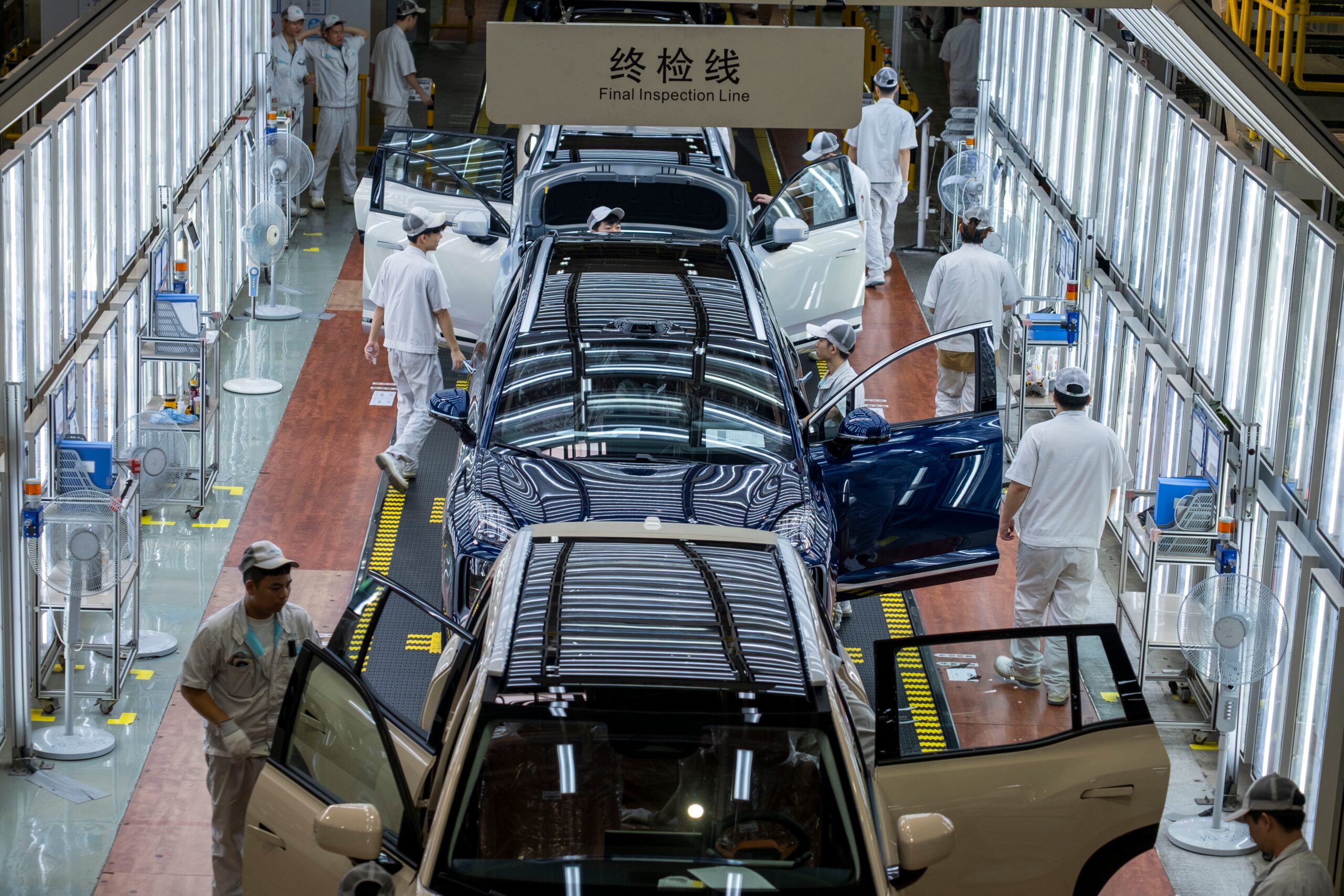
That statement didn’t come from speculation. It came after seeing how Chinese suppliers operate in real time. Highly automated factories, rapid production cycles, and tightly integrated logistics have created a system that moves faster than many legacy automakers can match.
What once looked like a gradual shift now feels like a turning point. The EV race is no longer theoretical. It’s already happening, and the gap is becoming harder to ignore.
China’s Advantage Isn’t Just Speed
The phrase “China Speed” keeps coming up for a reason. Chinese automakers can design and launch new vehicles in roughly two years, while traditional manufacturers often take twice as long. That difference reshapes the entire market, from pricing to innovation cycles.
Cost plays an even bigger role. Companies like BYD benefit from strong government support, allowing them to produce electric vehicles at significantly lower prices. In markets like Mexico, those price advantages have already translated into dominance, with Chinese brands controlling a large share of EV sales.
The combination is difficult to compete with. Fast development, lower costs, and improving quality create a system where legacy automakers don’t just fall behind. They struggle to stay relevant in key markets.
Legacy Automakers Are Feeling the Pressure

Honda has scaled back its EV ambitions, canceling multiple projects after struggling to compete on value. Sales in China have dropped sharply in recent years, falling from over 1.6 million vehicles to a fraction of that level.
Ford’s leadership has also sounded the alarm. Executives warn that China has enough production capacity to supply entire foreign markets, raising concerns about long-term consequences for domestic manufacturing.
Toyota, often seen as one of the most resilient automakers, has echoed similar concerns. Leadership has acknowledged that without major changes, even the strongest players could face serious risks. These aren’t isolated comments. They reflect a broader realization that the industry is shifting faster than expected.
What Happens Next Could Reshape the Industry
The response is already underway. Automakers are rethinking how they build cars, focusing on reducing costs, speeding up development, and restructuring their engineering teams. Ford, for example, is working toward more affordable EVs, aiming to match the pricing strategies used by Chinese competitors.
But catching up won’t be simple. The advantage China has built goes beyond manufacturing. It includes supply chains, software integration, and a culture that prioritizes speed and iteration at every level. That leaves the industry at a crossroads.
The takeaway is clear. This isn’t just about electric vehicles. It’s about who controls the future of the global auto market. And right now, the race is far from even.