Thousands of Jobs Are Leaving Downtown Seattle. Here’s Where the Growth Is Going
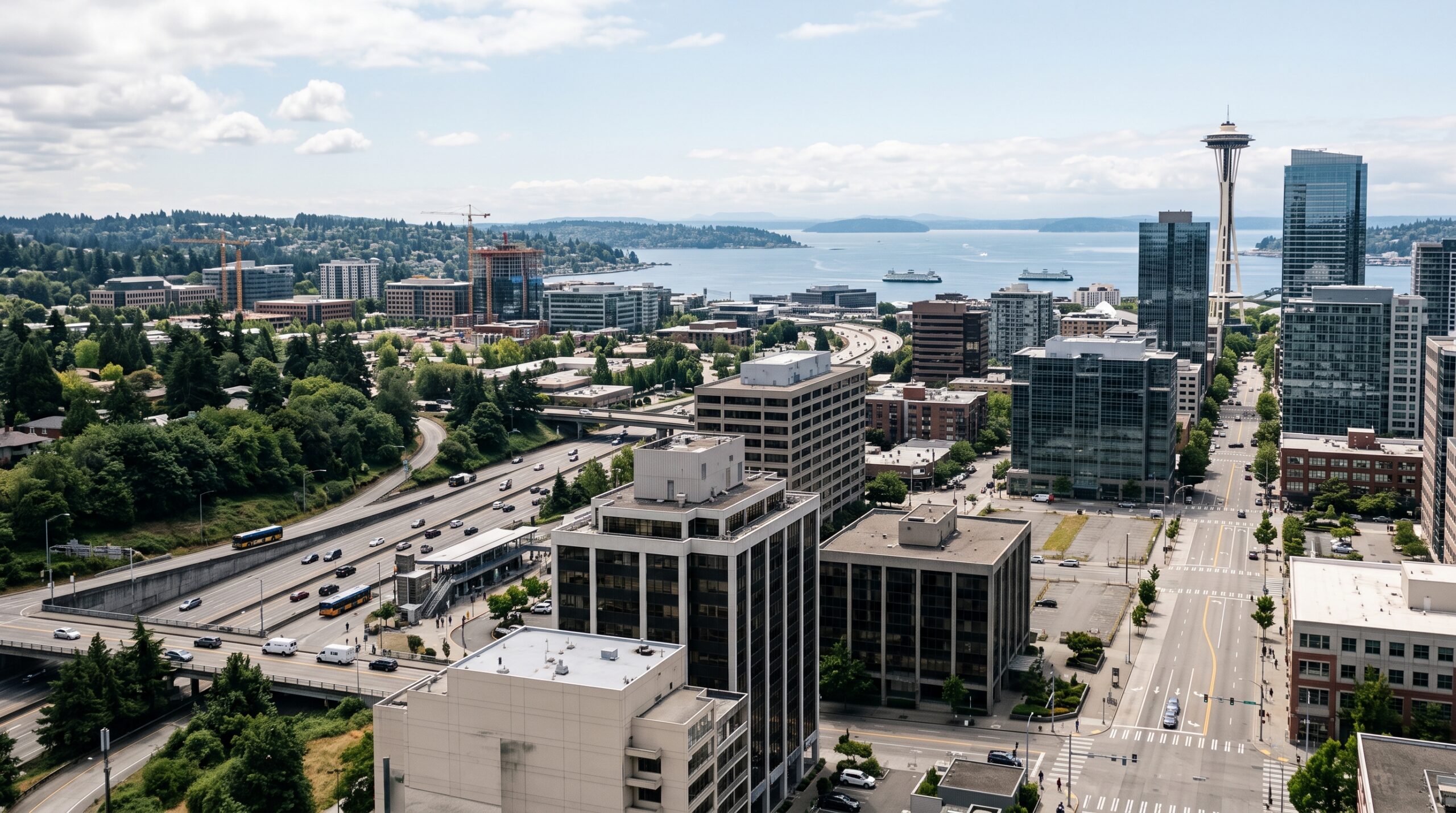

Between 2024 and 2025, Seattle lost 18,065 jobs, and about 70%, or 13,000, of those losses came from the downtown core. That finding comes from a Downtown Seattle Association report. The group advocates for business and economic development, so its numbers come with a point of view. Even so, it says Seattle remains the region’s largest employment center, though officials warn the city is not in the same position as it was ten years ago. The worry is direction, not size. If thousands of jobs left downtown, where did they go? The first answer sits just across Lake Washington.
This article was created with the assistance of AI and reviewed by our editorial team for accuracy and clarity.
Bellevue Gained Jobs While Seattle Lost Them

Across the lake, Bellevue added 5,375 jobs over the same period, while Tacoma added 662. Stretch the timeline to 2023 through 2025 and the gap holds. Seattle lost 1.3% of its jobs, while Bellevue’s labor pool grew 12.6%. Those are the association’s estimates, but they show the region was not shrinking everywhere. Hiring simply landed in different places. That raises a fair question about what is pulling employers toward Bellevue, and one very large company is a big part of the answer.
Why One Tech Giant Matters So Much
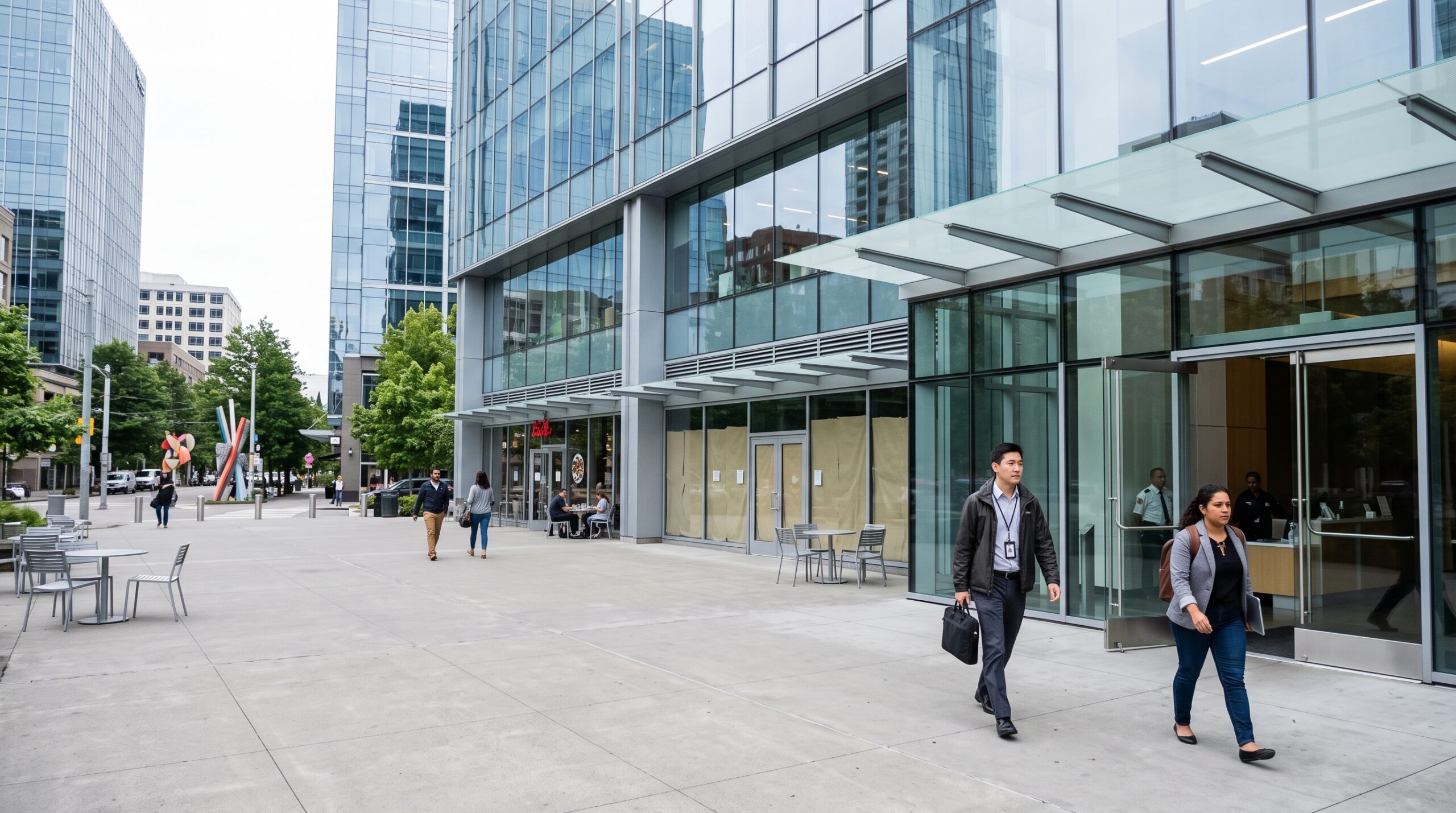
Much of Bellevue’s gain and Seattle’s decline traces back to Amazon. The company employs about 49,000 people in Seattle itself, but it has shed office space downtown and dramatically slowed hiring in the city. One employer’s choices can ripple through a whole neighborhood. Fewer workers means fewer lunch orders, coffee runs and shoppers. Meanwhile, tech employment is growing in Bellevue as it shrinks in Seattle. That is the story of a single year, but the longer view shows an even bigger shift.
The Five Year Gap Is Even Bigger
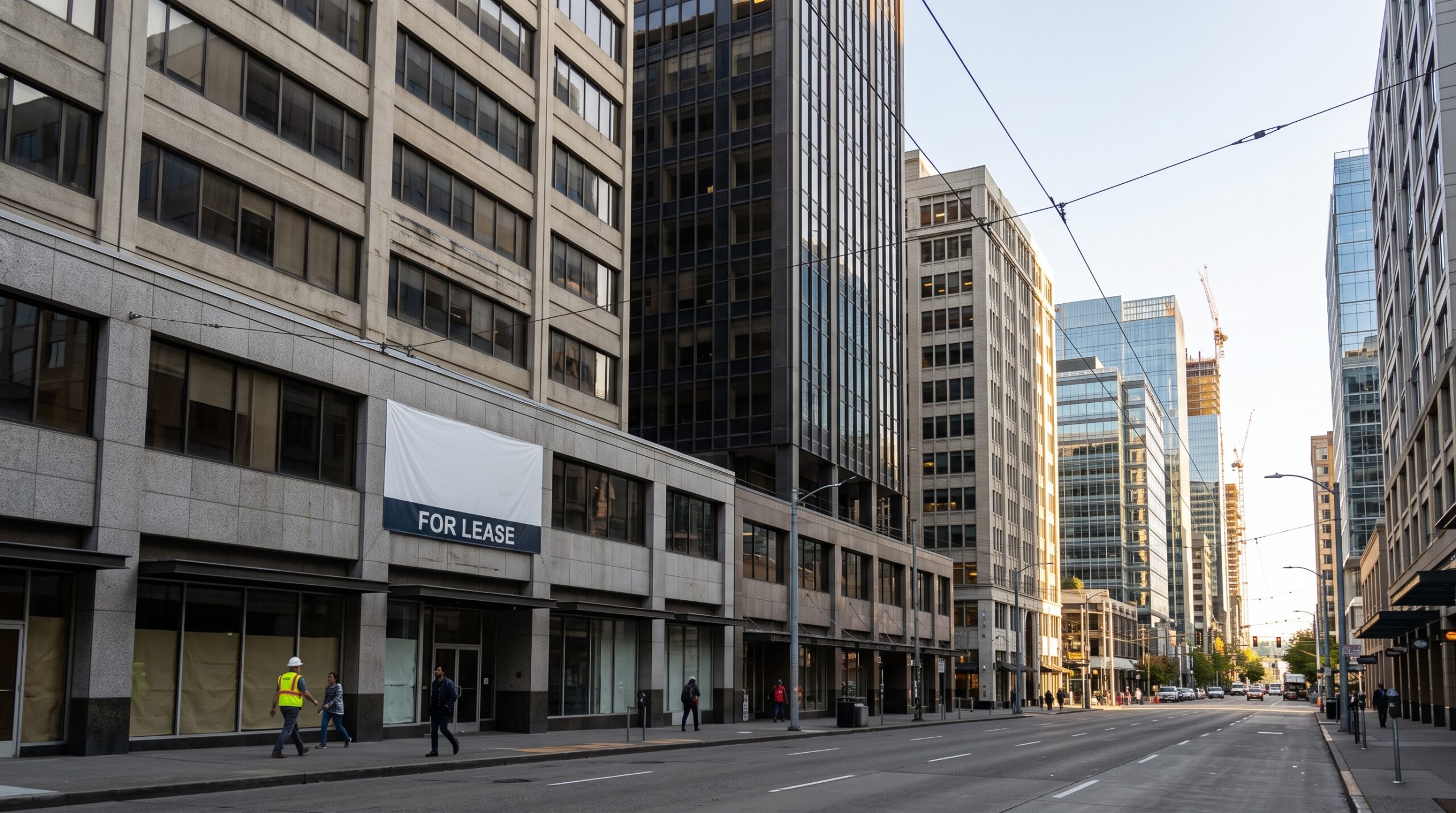
Look back to 2020 and the numbers grow larger. Downtown Seattle has lost roughly 30,000 jobs since then, and its office building values have fallen 48%. Bellevue moved the other way, gaining jobs and expanding its commercial values by 7%. Property values matter to everyday residents because they help determine how much tax money a city can collect for services. When buildings lose value, the effects reach well beyond the people who work inside them. Those falling values are tied to something you can see from the sidewalk: empty office space.
What Empty Offices Say About Downtown’s Future
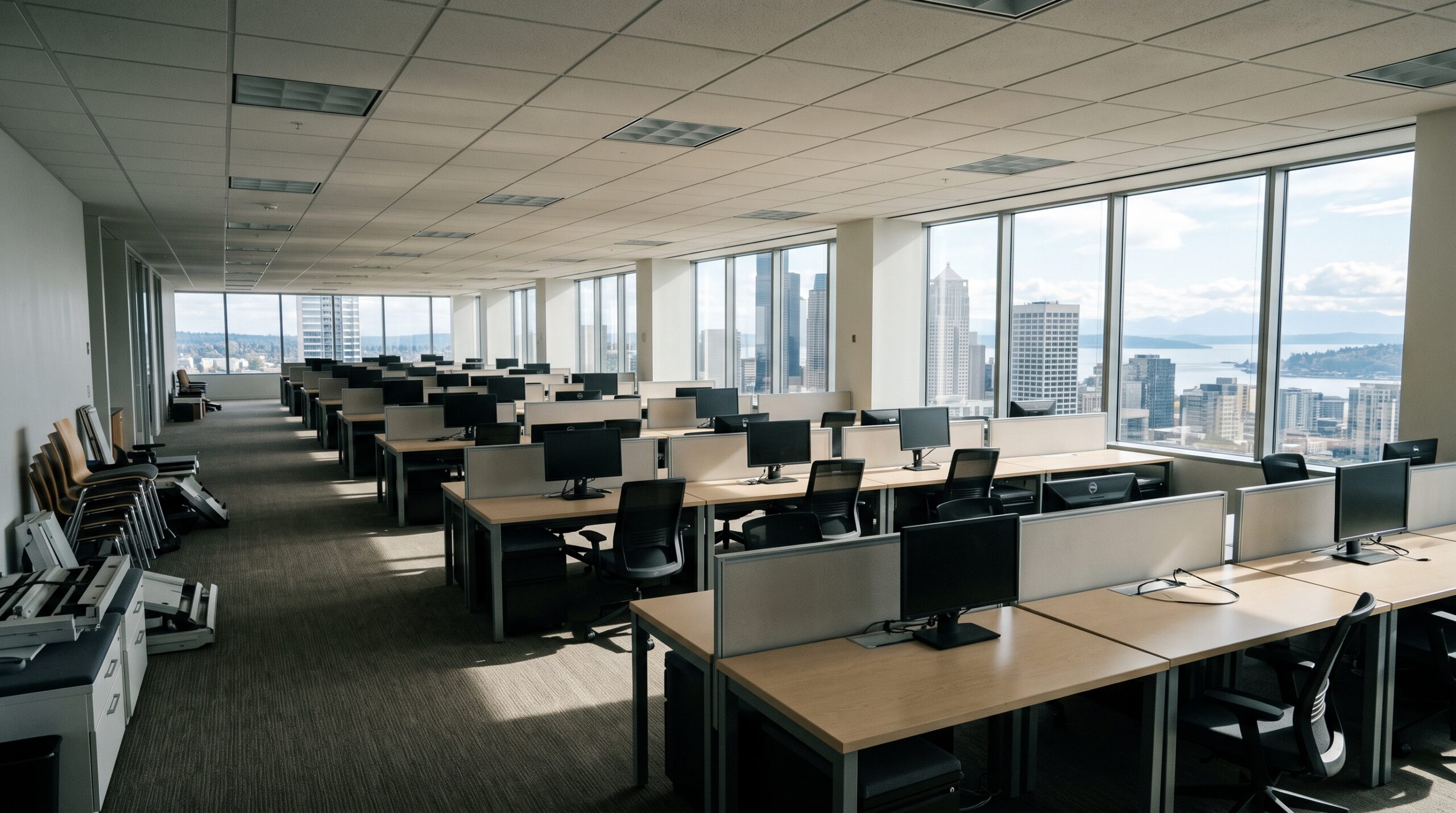
Vacancy is one of the clearest warning signs. The association estimates downtown Seattle’s office vacancy rate climbed to 32% from 6.7% in 2019, while Bellevue’s rose from 2.5% to 24%. Both cities struggled, just by different amounts. Other sources measure it differently. Cushman & Wakefield put downtown Seattle at 35.6% in the fourth quarter of 2025, up from 32.3% a year earlier. Methods vary, but the direction is the same. Empty desks also mean quieter streets, which leads to another question: are commuters actually coming back?
Are Commuters Coming Back Downtown Seattle?
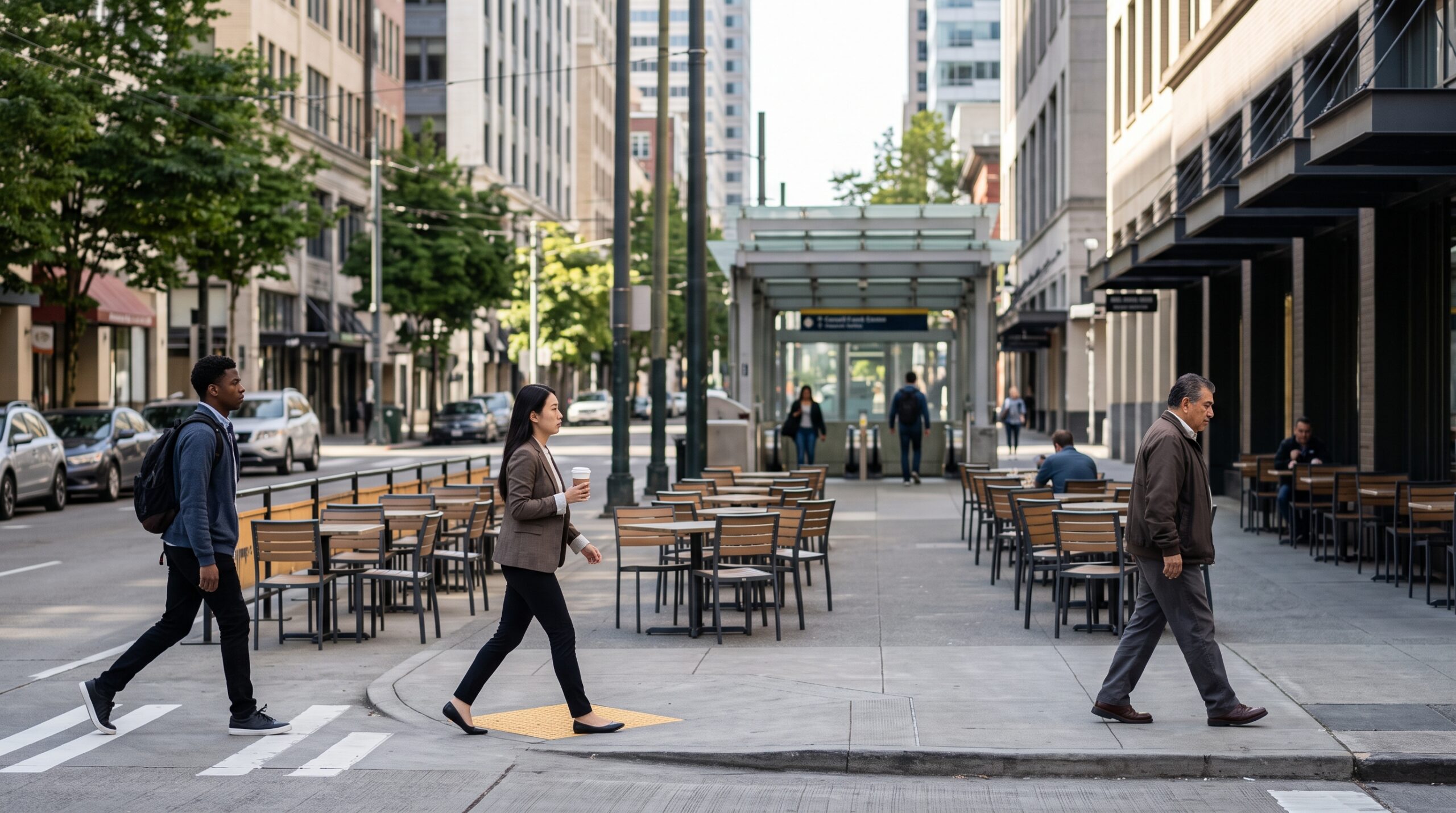
Foot traffic offers a hint. Commuter visits to downtown Seattle remain in the low 60% range compared with 2019, a 38% drop since the pandemic. That is steeper than the declines the report lists for Bellevue at 21%, Austin at 23% and Chicago at 32%. Remote and hybrid work changed habits everywhere, yet Seattle’s recovery has been slower than most. Fewer commuters can hurt restaurants, shops and transit. Still, Bellevue is not the only place benefiting. Some of the biggest moves are happening far outside the Puget Sound region.
The Growth Is Also Heading Far Beyond Washington
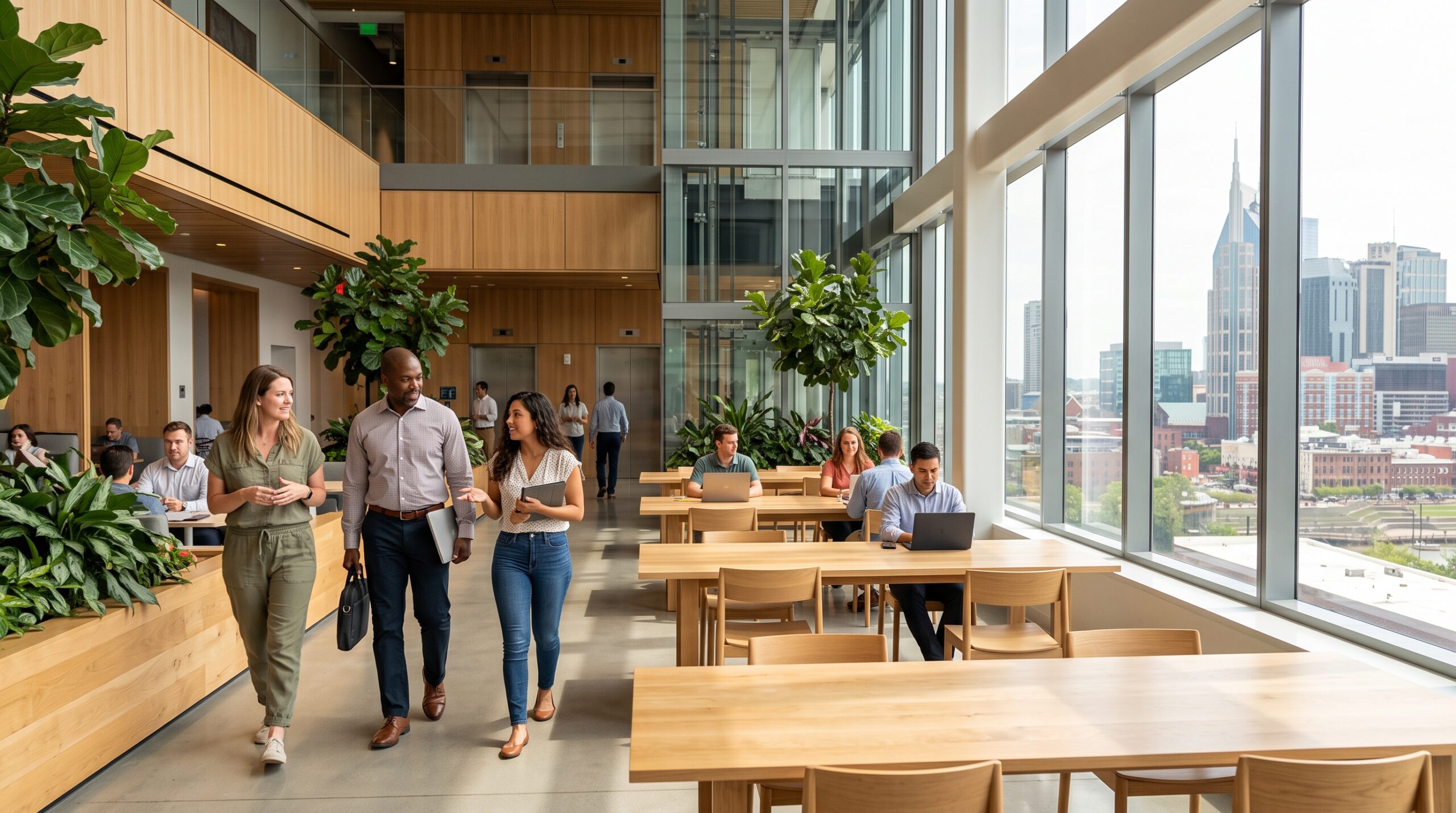
Fortune reported that the region posted a net loss of 13,000 jobs in 2025, its first annual decline since the pandemic, after gaining about 40,000 jobs a year at the peak of the boom. The same article noted that Starbucks, founded in Seattle in 1971, is shifting jobs to Nashville as part of a $100 million, 2,000 person new footprint there. It also said Seattle’s $20.76 minimum wage has added pressure on small businesses. So what makes other places attractive to employers? Many business leaders point to cost.
Why Some Business Leaders Point to Seattle’s Costs

The association argues that Seattle’s JumpStart payroll tax has become part of a wider cost problem that makes the city less competitive with Bellevue, which has no comparable payroll expense tax. Its CEO has also pointed to a 5% social housing tax on employee pay above $1 million, which took effect this year. His concern is that employers have other choices and may simply relocate. It is a strong claim, though, and not everyone agrees that taxes explain what is happening.
Does Tax Policy Explain the Whole Story?

Taxes are only one possible explanation. Coverage of the report notes that new taxes were not the only economic factor during the period it covers. Officials have also cautioned against drawing a straight line from one tax to downtown’s broader challenges. Remote work and shifts in the tech industry affect both Seattle and Bellevue, which makes it hard to measure what any single policy does. For readers, the honest takeaway is that experts still disagree. Despite the tough numbers, the same report also found some encouraging signs that deserve a closer look.
Can Downtown Seattle Win Its Growth Back?
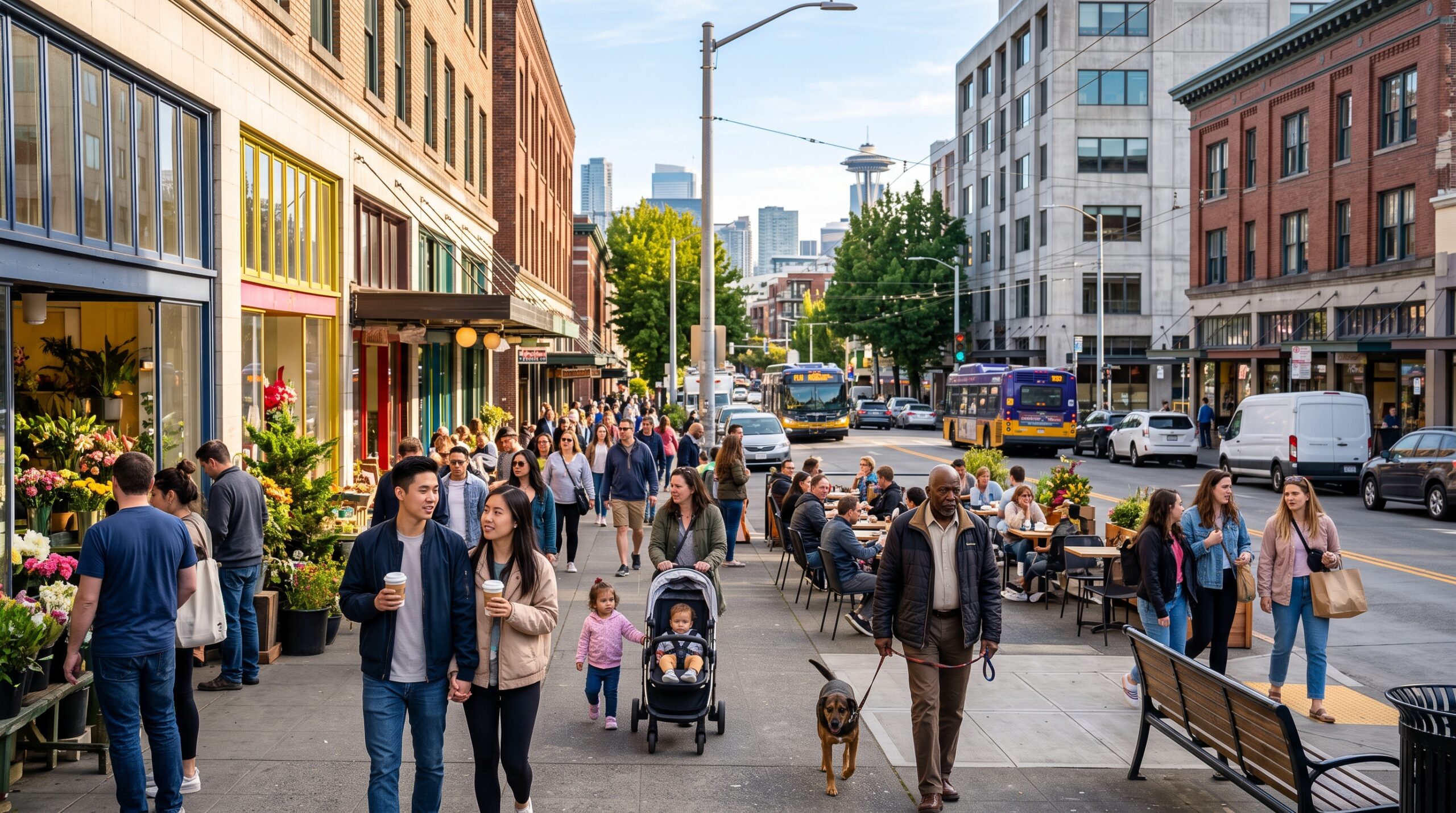
The report found crime going down, more people moving into Seattle than leaving, and tourism booming. More than 110,000 people now live downtown, a record, though the association says a healthy downtown also relies on jobs, services and amenities. Business leaders say the path forward starts with predictable tax policy and continued support for downtown revitalization, since more workers could fill empty storefronts and boost sales tax collections. Its CEO calls this a fragile moment, noting the city has not grown jobs in three years. Where the next wave of growth lands may depend on what Seattle does next.