The Common Cents Act Just Cleared a Major Hurdle. Here’s What It Means for Cash Shoppers



For generations, pennies have rattled around jars, cup holders, and cash registers with little thought. Now, the smallest U.S. coin is moving one step closer to becoming a relic. The House of Representatives has passed the bipartisan Common Cents Act, legislation that would create nationwide rules for cash purchases as pennies disappear from circulation. If it eventually becomes law, shoppers paying with cash could start noticing something new at the checkout: totals rounded to the nearest nickel instead of exact pennies.
The Penny Isn’t Going Away Overnight

One of the biggest misconceptions is that the bill would make existing pennies worthless. It wouldn’t. Pennies already in circulation would remain legal tender and could still be spent, saved, or deposited at a bank just as they are today. What the legislation does is formally end the production of new pennies for general circulation, continuing a process that effectively began after the U.S. Mint produced its final circulating pennies in late 2025. Special collectible versions could still be minted for coin collectors.
The Biggest Change Would Happen Only if You Pay With Cash

Most Americans probably wouldn’t notice much difference. The proposed rounding rules apply only to cash transactions when exact change isn’t available. Credit cards, debit cards, mobile wallets, checks, and gift cards would still be charged to the exact cent. Your receipt would still show the precise total, but if you’re paying with cash, the amount you hand over or receive in change could be adjusted to the nearest five cents.
Here’s How the Rounding Would Actually Work
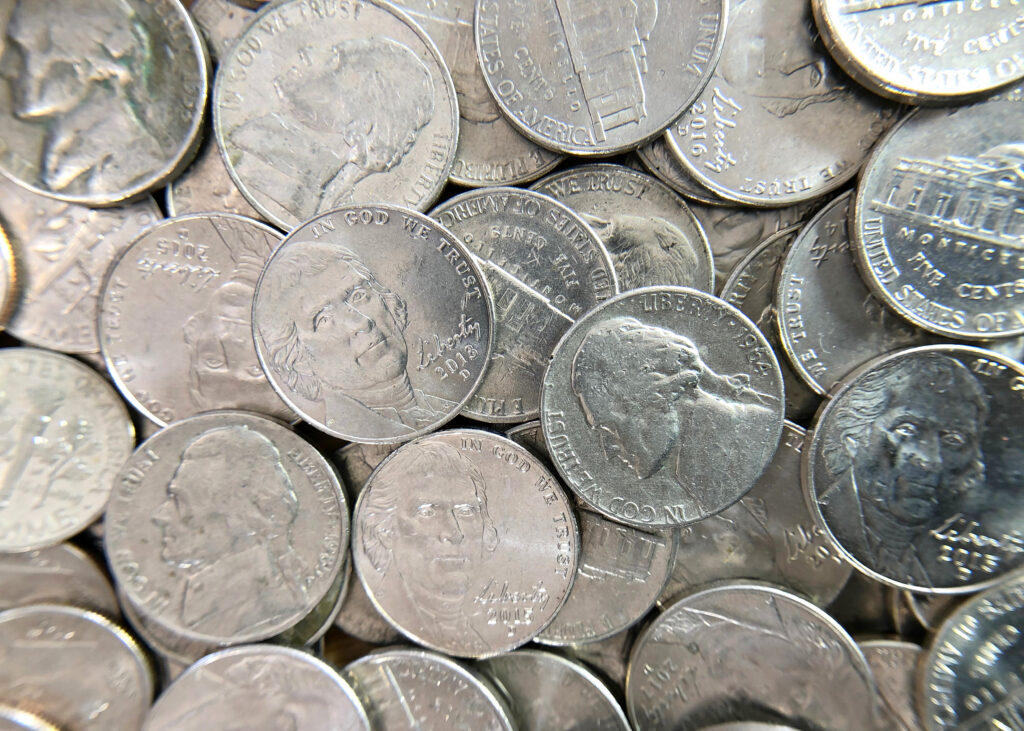
The proposed system is designed to be predictable rather than arbitrary. Totals ending in 1, 2, 6, or 7 cents would round down to the nearest nickel, while totals ending in 3, 4, 8, or 9 cents would round up. Amounts already ending in 0 or 5 cents would stay exactly the same. For example, a cash purchase totaling $19.82 would become $19.80, while $19.83 would become $19.85. The rounding would happen only after taxes have been calculated and the final purchase total is determined.
So Why Is Congress Doing This Now?

The answer comes down to simple economics. According to the U.S. Mint, producing a single penny now costs nearly four cents, almost four times its face value. In fiscal year 2024 alone, penny production cost taxpayers roughly $85 million because the coins cost more to manufacture than they were worth. Supporters of the legislation argue that continuing to mint millions of pennies each year no longer makes financial sense, especially as cash payments become less common.
Businesses Say They Need Clear Rules
Many retailers have already been dealing with penny shortages for months, but there hasn’t been a consistent national approach for handling exact change. Some stores rounded totals, others gave customers small discounts, while some handed out gift cards or coupons instead of pennies. Business groups say that patchwork system creates confusion and, in some places, even legal risks because state and local laws can prohibit rounding cash transactions. The Common Cents Act is intended to establish one nationwide standard so businesses know exactly how to handle cash purchases.
Not Everyone Thinks the Change Will Be Cost-Free

Even though rounding can work in both directions, some groups worry about the long-term financial impact. The National Restaurant Association estimates that businesses forced to consistently round down while pennies remain scarce could lose as much as $168 million a year. On the consumer side, a Federal Reserve Bank of Richmond analysis projected that rounding to the nearest nickel could collectively cost Americans about $6 million annually, although research also suggests that balanced rounding should even out over time because transactions are rounded up and down with similar frequency.
Other Countries Have Already Done This

If the United States adopts the Common Cents Act, it won’t be breaking new ground. Canada eliminated its penny in 2012 and adopted nearly identical rounding rules for cash purchases while continuing to process electronic payments to the exact cent. Australia, New Zealand, Sweden, and several other countries have also phased out their lowest-denomination coins without major disruption, offering lawmakers real-world examples of how the transition can work.
The Bill Still Has One Big Obstacle

Despite clearing the House, the Common Cents Act is not yet law. The legislation now moves to the Senate, where lawmakers will decide whether to advance it. If senators approve the bill, it would then go to President Donald Trump for his signature. Until that happens, businesses will continue navigating penny shortages under the current mix of state laws and individual store policies.
The Penny’s Story May Be Ending, but Cash Isn’t

The Common Cents Act isn’t really about eliminating a coin that’s already fading from everyday use. It’s about answering a practical question millions of Americans could soon face at the checkout counter: what happens when exact change isn’t possible? Whether the Senate ultimately approves the measure or not, the debate reflects a broader shift in how people pay, how businesses handle cash, and how a coin that once symbolized everyday spending is gradually becoming part of American history.