Subway Manager Won’t Serve Jail Time After Locking a 10-Year-Old Girl in a Back Room Because She Walked on a Freshly Mopped Floor


A 10-year-old girl walked into a Jacksonville, Florida Subway with her mother to order sandwiches. She accidentally stepped on a wet floor. Her mother told her to apologize. What happened next left the child convinced she was being kidnapped. James Anthony Morris Jr., the restaurant’s 34-year-old manager, grabbed the girl by the hand and dragged her into a locked back room while her mother screamed on the other side of a closed door.
The incident took place on July 21, 2025, at a Subway location on Argyle Forest Boulevard in Jacksonville. According to the reports, the mother had just finished ordering when she noticed Morris mopping nearby. Her daughter accidentally stepped on the wet section, and the mother told her to say sorry. According to police, Morris grabbed the child’s hand without warning and pulled her toward the back of the restaurant, behind a door he then pushed shut, separating the girl from her mother entirely.
The mother did not wait. She fought the door immediately, pushing against it as Morris held it closed from the inside. A witness with the family helped force it open. “The complainant said she fought with the suspect to open the door as she screamed for help,” the booking report states. “Eventually she was able to push the door open enough that the victim snuck out and ran to safety.” The whole ordeal lasted upward of two minutes. But what happened inside that room, and what Morris said to the child, made it far worse than the physical restraint alone.
What the Girl Heard Behind That Closed Door
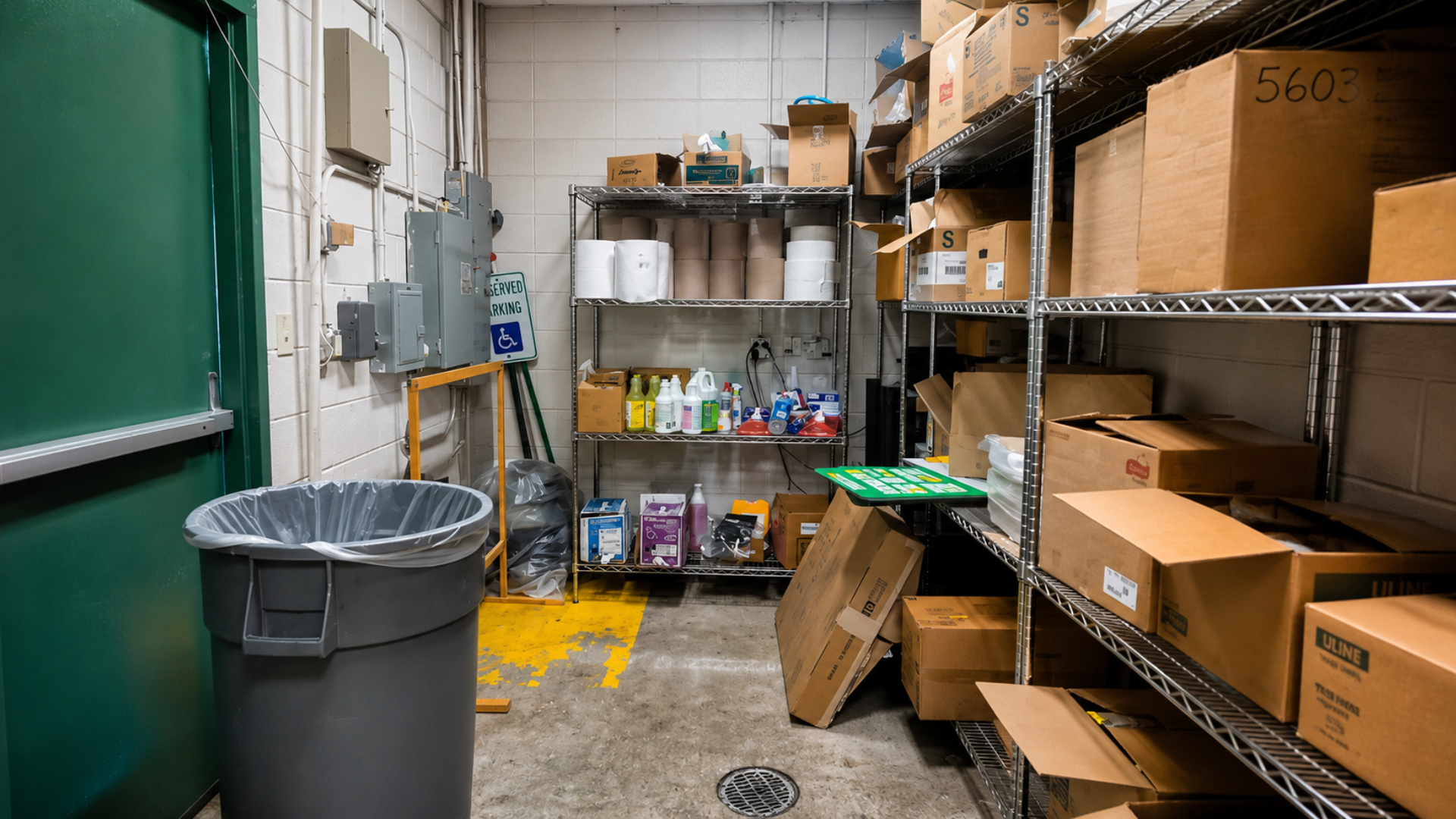
Once inside the back room, Morris did not simply stand in silence. According to police, he gripped the girl’s hand even tighter than he had during the walk through the restaurant, and then began speaking to her directly. The child told officers that Morris went on a rant about how terrible her parents were, calling them “trash and terrible people,” per the booking report. She had never met Morris before that day. He was a complete stranger to her, and she was alone with him in a locked room.
The girl later told police she “was really scared and thought she was being kidnapped,” according to the booking report. That fear was not unfounded. A stranger had grabbed her hand in a public place, separated her from her mother, confined her behind a locked door, and was now berating her about her family. She had no way of knowing when or whether she would get out. Police confirmed Morris made no sexual advances toward the child, but the psychological impact of the incident was evident in how she described her experience to officers.
A second Subway employee who witnessed part of the incident told police that Morris had been “acting weird” and that the employee believed the girl was in danger. That witness helped alert authorities. Morris, for his part, exercised his right to remain silent after police read him his rights and refused to make a statement. He was arrested on July 21, 2025, booked into jail, and held on a $5,003 bond. The initial charge was false imprisonment of a child under the age of 13, but the legal outcome that followed nearly a year later would prove far more divisive than the arrest itself.
A Guilty Plea, Three Years of Probation, and No Prison

On April 30, 2026, Morris pleaded guilty in Duval County Circuit Court, nearly a year after his arrest. The charge he admitted to was child abuse. The sentence: three years of probation, $769 in court fees, and two days in jail, with credit for time already served. Because the judge counted his time in custody following his 2025 arrest, Morris will not spend a single additional day behind bars. The outcome drew immediate public reaction across Jacksonville and beyond.
The court also ordered Morris to complete a substance abuse evaluation, a mental health evaluation, and follow-up treatment as directed, according to documents obtained by People. He was additionally ordered to have no contact with the victim or her family. The conditions reflect a legal outcome focused on supervision and intervention rather than incarceration. Whether those conditions constitute appropriate accountability for what the child experienced inside that room became the central question in public debate following the sentencing.
Jacksonville residents reacted with visible frustration after Morris’s initial arrest, and news of the sentencing reignited those feelings. Olivia Hudson, a local resident, told Action News Jax at the time of his arrest: “That’s just creepy, especially in an area like this where you want to feel safe, especially with your children.” Another resident, Robert Morro, said the behavior was “absolutely unacceptable,” adding that “holding people against their will is just something that ain’t right.” The sentence did not quiet those concerns. For many, it raised them further.
When the Punishment Doesn’t Match the Fear

Child abuse convictions in Florida can carry significant penalties, including prison time, depending on the severity of the offense and the circumstances. In this case, the court weighed a guilty plea, time already served, and conditions requiring mental health and substance abuse treatment, arriving at a probationary outcome. Critics argue the sentence fails to reflect the terror the child experienced. Supporters of the plea deal point to the absence of physical injury and the legal distinctions between degrees of abuse under Florida law.
The broader question the case raises is about the vulnerability of children in everyday public spaces. The girl and her mother had done nothing wrong. They walked into a restaurant, ordered food, and a minor accident triggered a stranger’s decision to physically detain a child. The fact that the girl believed she was being kidnapped, and that her mother had to fight a grown man to reach her, speaks to how quickly an ordinary outing became a traumatic event neither of them could have anticipated or prevented.
Morris will spend the next three years on probation, subject to court oversight, mandatory evaluations, and a no-contact order protecting the victim and her family. What happens when that period ends remains an open question. For the child who ran out of that back room and toward safety, the legal process has now concluded. Whether the outcome delivers what she and her mother needed from it is a question only they can answer, and one the public is unlikely to stop asking.