Students Are Using AI for Homework, and a Berkeley Math Professor Says There’s ‘No Point’ in Grading It


Artificial intelligence is changing how students complete their assignments, and one University of California, Berkeley professor has decided that grading traditional homework may no longer be worth the effort. Richard Borcherds, an award-winning mathematician, says AI-generated answers have become so common and difficult to distinguish from student work that he no longer grades homework for correctness. His decision highlights a growing challenge for universities as educators try to determine whether students are actually learning the material or simply submitting answers generated by technology.
Berkeley Professor Richard Borcherds Has Stopped Grading Homework for Correctness
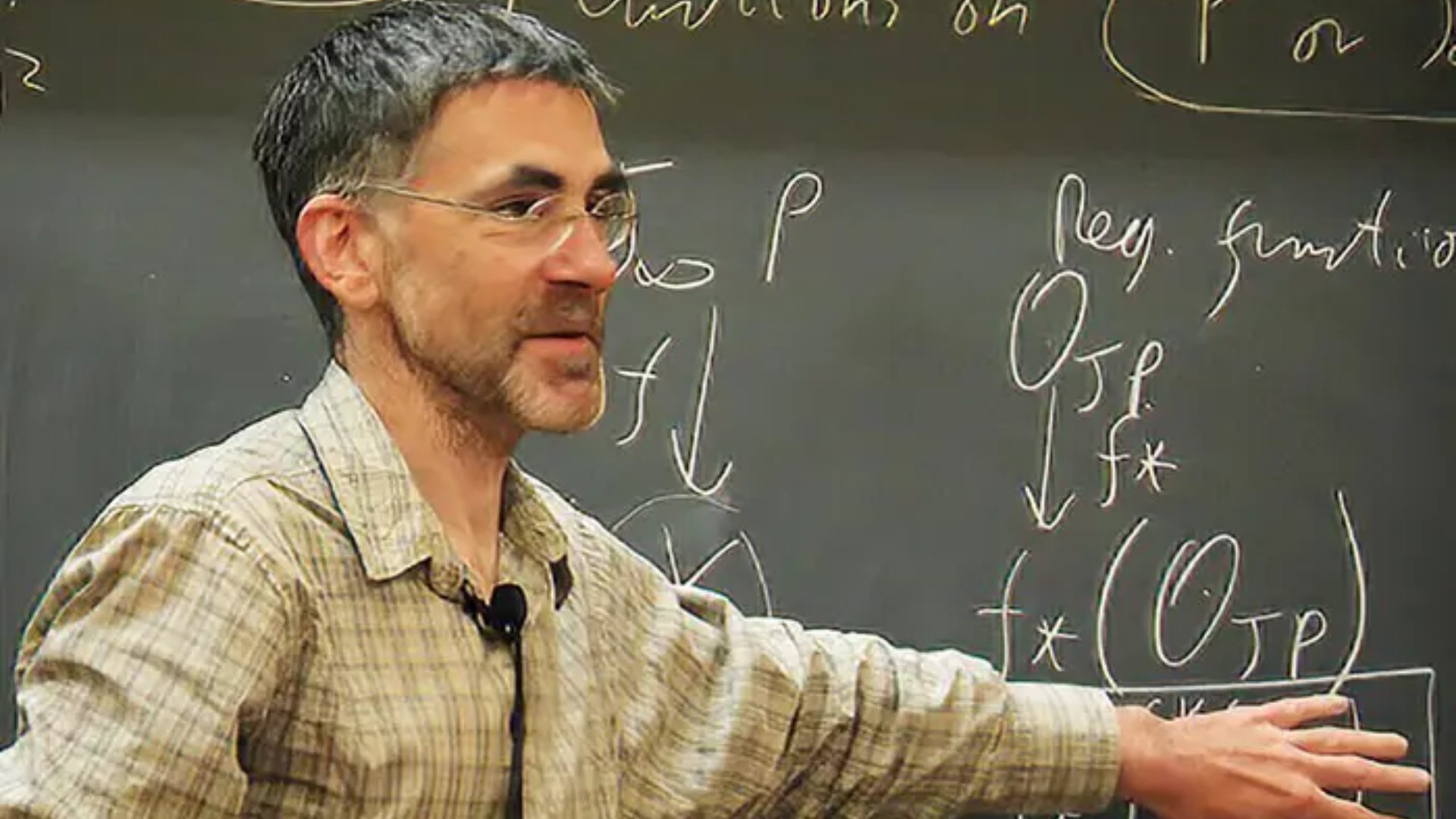
Borcherds, a Fields Medal-winning mathematician who has taught at UC Berkeley since 1993, has changed how he evaluates his students’ homework. He told the California Post that AI use has become widespread enough that he sees little value in paying graders to check whether submitted answers are correct. Instead, he now gives students credit for completing and submitting their assignments rather than evaluating every solution for accuracy.
He Says AI Makes It Difficult to Identify Student-Written Answers

One of Borcherds’ biggest concerns is that AI-generated mathematics solutions can be difficult to distinguish from work completed independently by students. He said there is no easy way to tell the difference between human-written and AI-generated submissions as the technology continues to improve. This makes traditional homework grading more complicated because instructors may not know whether a correct answer reflects a student’s understanding or assistance from a chatbot.
Grading for Correctness Could Encourage Students to Rely on AI
Borcherds argues that assigning grades based on correct answers can create an incentive for students to use AI instead of working through problems themselves. Students who complete assignments independently may receive lower marks than classmates who use technology to generate polished solutions. He told the California Post that grading for correctness can encourage AI use while penalizing students who choose to do the work on their own.
The Professor Now Gives Credit for Completing Assignments

Rather than trying to determine which answers were produced by AI, Borcherds now grades homework based on whether students submit the required work. He acknowledged that this is not a very good system, but said he currently has no clear alternative that solves the problem. The approach means students can receive homework credit for completing an assignment even when their answers are not necessarily correct.
Borcherds Is Concerned About the Future of Human Mathematicians

Borcherds has also raised concerns about what increasingly capable AI systems could mean for the mathematics profession. He told the California Post that if AI continues improving at its current rate, human mathematicians may eventually have difficulty doing research that machines cannot perform better. He said the developments have left him uncertain about what advice to give students considering a future in mathematics.
An AI Breakthrough Has Added to Concerns About the Field

The discussion intensified after reports that OpenAI’s AI agents had made progress on the Navier-Stokes existence and smoothness problem, one of seven Millennium Prize Problems. These problems involve some of the most difficult unanswered questions in mathematics, with a $1 million prize associated with each problem for a qualifying solution. Borcherds pointed to the reported breakthrough as another reason to question how much of mathematical research could eventually be performed by AI, although the announcement does not mean that all mathematical work has been replaced.
UC Berkeley Allows Professors to Set Their Own AI Rules for Courses

UC Berkeley allows instructors to establish expectations for AI use in their individual courses, with those rules communicated through syllabi and assignment instructions. The university’s academic guidance explains that unauthorized use of generative AI can violate academic integrity rules, including when students use it to complete work in ways their instructors have not permitted. Some professors allow AI for specific tasks, while others prohibit it during assignments and exams or require students to disclose how they used the technology.
AI Use Among College Students Has Become Widespread
A 2025 AI in Education Trends Report from Copyleaks found that 90% of college students surveyed had used AI in an academic setting, while 73% said they were using it more than the previous year. Those figures illustrate how quickly the technology has become part of student life, although using AI does not necessarily mean every student is using it to cheat. The challenge for universities is establishing clear boundaries between using AI as a learning aid and relying on it to complete work that students are expected to understand themselves.
The Debate Over AI Could Change How Universities Measure Learning
Borcherds’ decision reflects a larger debate over whether traditional homework and online assessments can still measure student understanding when AI can produce increasingly convincing answers. Universities may need to place greater emphasis on supervised exams, classroom participation, oral explanations and assignments that require students to demonstrate their reasoning. As AI tools continue to improve, educators will face growing pressure to find ways to evaluate genuine learning without overlooking the value of technology as a tool for education.