Stop Scrubbing Kitchen Cabinets for Hours When Grease Can Be Removed This Much Easier
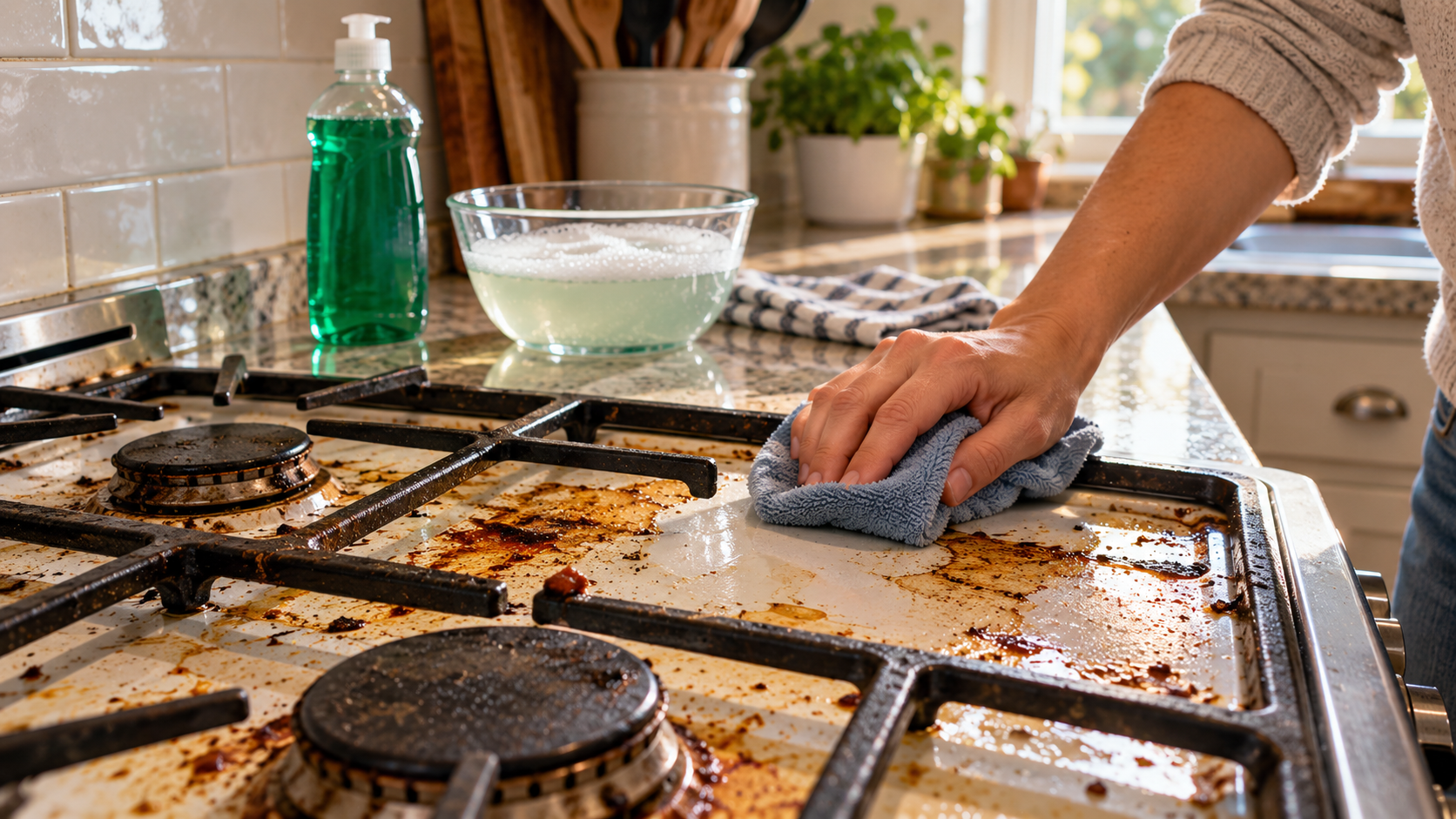

You wipe the counters. You clean the stove. Yet one day you touch a cabinet and wonder when it became sticky. Cooking sends tiny amounts of oil, steam, smoke and food particles into the air, where they settle on nearby surfaces and mingle with dust. Leave that film alone long enough and wiping suddenly feels like a workout. One r/Cooking user, hannahbananahs, described eventually scrubbing cabinets “for like 24 hours straight.” There is a much easier way, and it starts with doing less.
This article was created with the assistance of AI and reviewed by our editorial team for accuracy and clarity.
Scrubbing Harder Can Actually Backfire
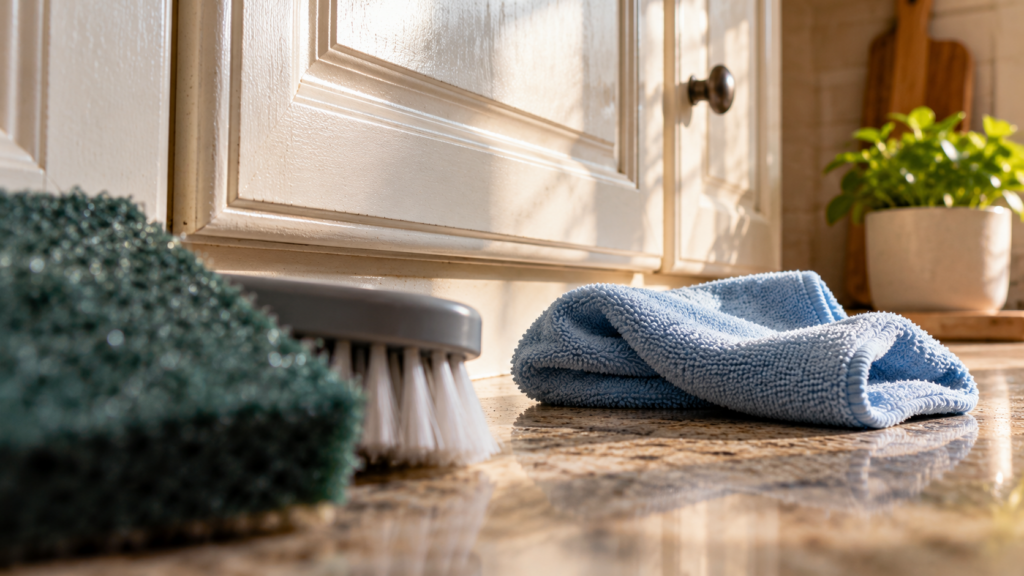
When grease refuses to move, attacking it with the roughest scrubber in the house feels logical. Cleaning pros say that can be exactly the wrong move. Abrasive tools can scratch or dull cabinet surfaces, while harsh chemicals such as bleach may damage or strip finishes. Wood brings another complication: soaking it with too much water can contribute to warping. So before reaching for something stronger, rethink the job. The trick is getting the grease to loosen first, then letting a cloth do the easy part.
Start With the Bottle Beside Your Sink
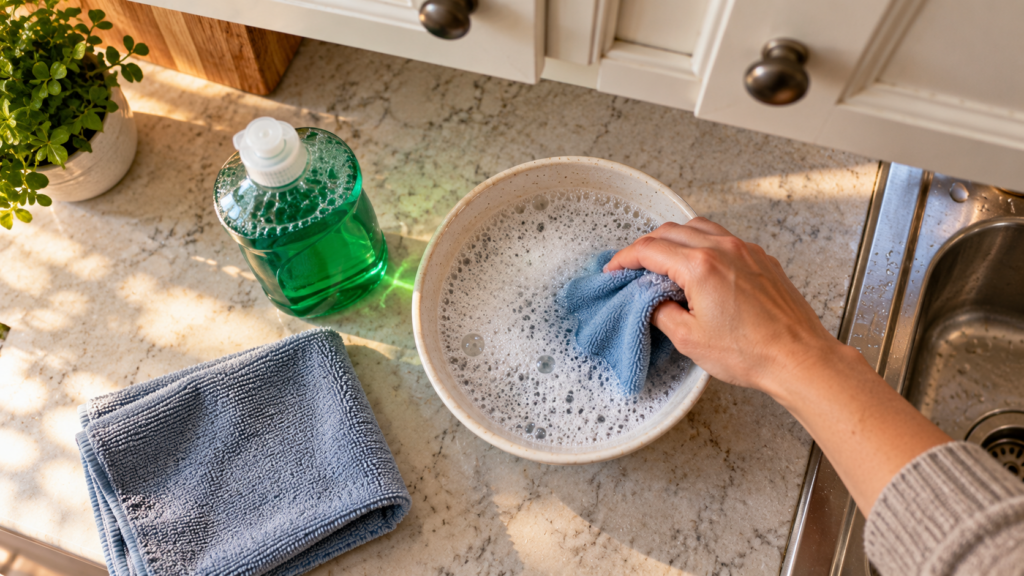
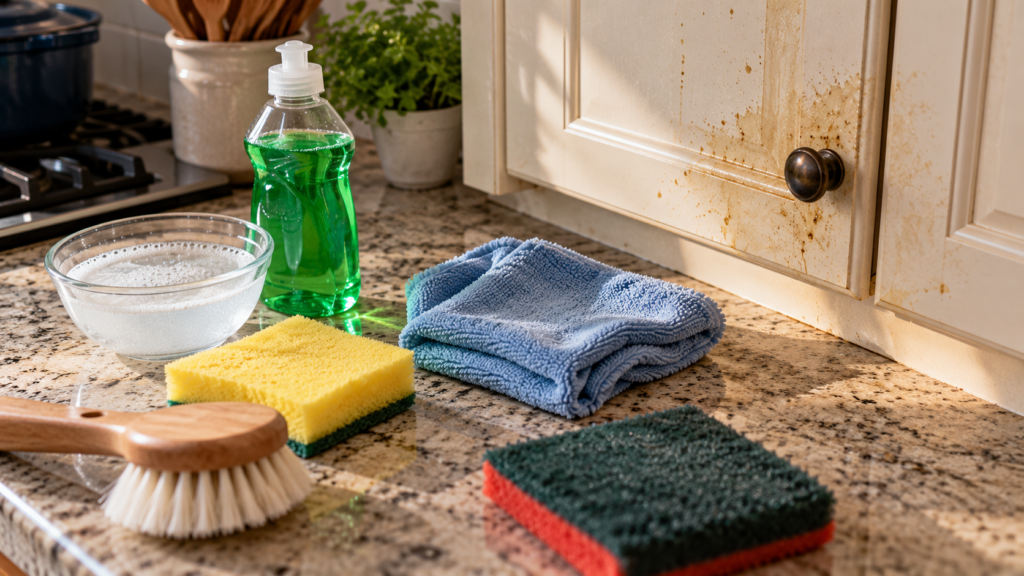
The first reveal is almost annoyingly simple: warm water and dish soap. For lighter greasy buildup, add a few drops of dish soap to warm water, dampen a soft cloth, wipe the affected area and dry it afterward. Aminah Vieira of InspireClean specifically recommends Dawn dish soap, saying it “cuts through the grease easily” without damaging cabinets. Ashley Kidder of Dashing Maids also uses warm soapy water for cabinet grease. No marathon scrubbing session. No cabinet-cleaning arsenal. Just give grease something designed to break it down.
Tougher Grease Has Another Pantry-Level Fix
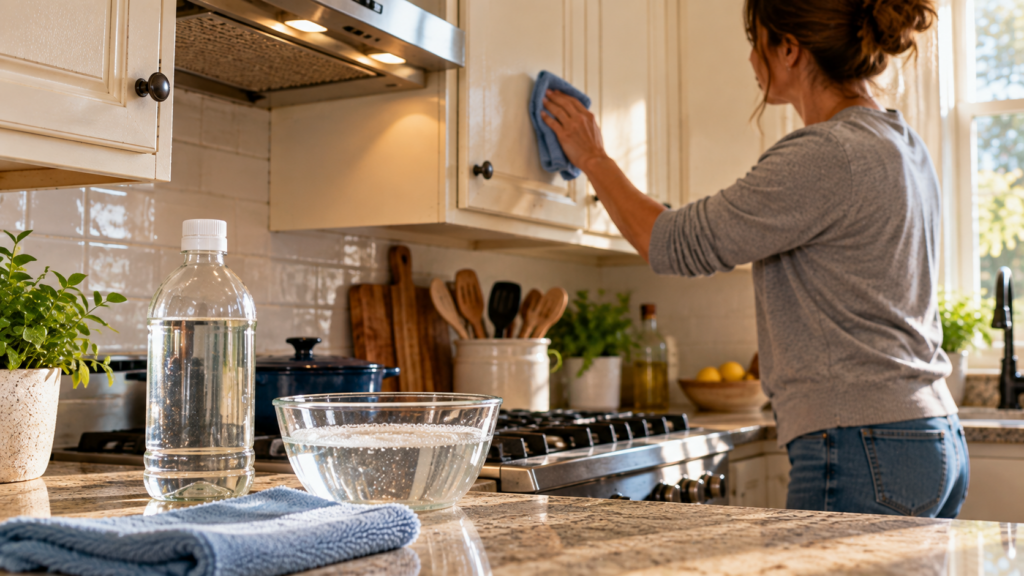
If dish soap does not quite finish the job, cleaning experts offer another simple option: equal parts white vinegar and water. Forrest Webber of Bear Brothers Cleaning recommends gently rubbing the mixture onto cabinets with a cloth. Southern Living advises letting a small amount sit on greasy spots for a couple of minutes before wiping, using a soft-bristled brush only if necessary. Test the mixture somewhere inconspicuous first because cabinet finishes vary. The point remains the same: let the cleaner work before your arms do.
Baking Soda Is the Next Step Up
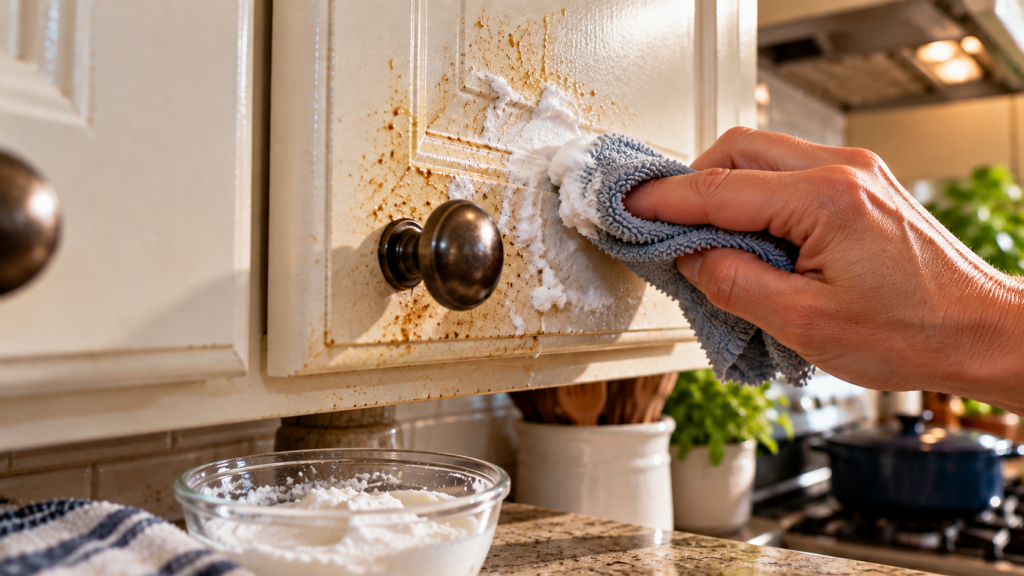
Some grease has been sitting around long enough to deserve backup. Alicia Sokolowski, CEO of AspenClean, recommends combining baking soda with a small amount of water to form a paste, applying it to stubborn greasy areas and letting it sit for several minutes before gently wiping it away with warm water. Southern Living gives a more specific ratio of two parts baking soda to one part water. This is the escalation step, not the opening attack. Start gentle, then target only the grime that refuses to cooperate.
Reddit Has Been Fighting This Battle for Years
The cabinet-grease struggle is hardly new. In an older r/Cooking discussion, user mixamaxim praised Dawn for making “short work” of grease and cabinet stains, prompting Ilmarinen_tale2 to joke, “Im starting to think that Reddit is a giant ad for Dawn dish soap.” But the thread also contains an important warning: some commenters recommended Magic Erasers, while others pointed out their abrasive nature. That lines up with professional advice to avoid rough scrubbers on cabinet finishes. Fast cleaning is only useful if the finish survives it.
The Best Cleaning Hack Happens Before Cleaning
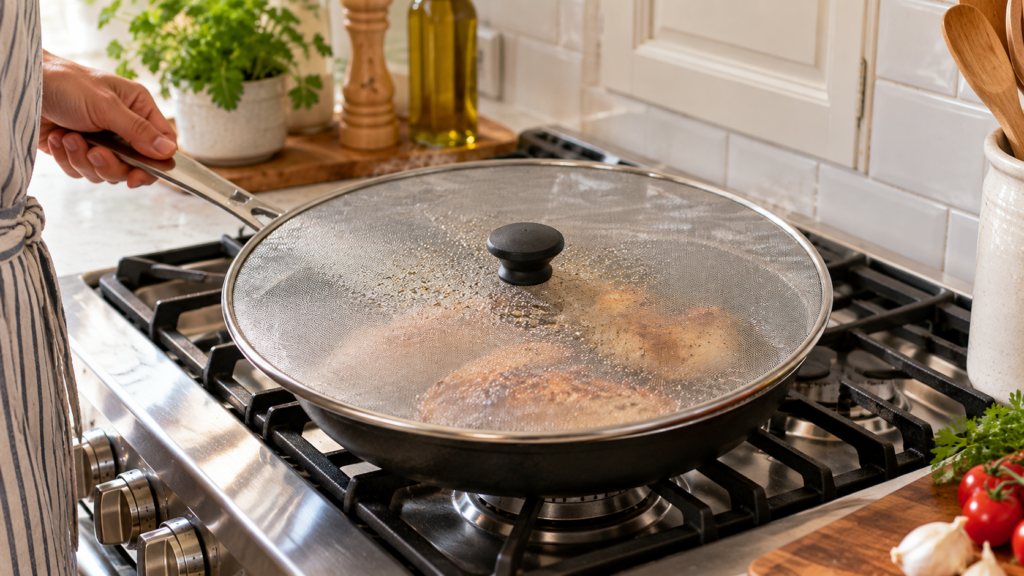
Once the cabinets are clean, the smarter move is stopping another sticky layer from forming. Rosa Picosa, a cleaning expert at Fabuloso, recommends using a splatter screen or partially covering pans while frying and sautéing. Keeping the heat appropriate matters too, since excessively high temperatures can send more oil splattering. Fresh splashes should also be wiped quickly because, as Picosa puts it, “Grease is much easier to remove before it has time to harden and become sticky.” That small habit can eliminate a much bigger chore later.
Your Range Hood Should Be Working Before Dinner

That fan above the stove is more useful than many people give it credit for. Cleaning professional Joe Messmore recommends turning the range hood on before cooking begins and leaving it running for about 10 minutes afterward. The filter also needs regular cleaning or replacement because accumulated grease can reduce ventilation. No hood? Opening a nearby window or using another exhaust fan can improve airflow. Redditors reached the same practical conclusion years ago: less airborne cooking fat means less of it eventually landing on your cabinets.
Even Your Hands Are Adding to the Problem
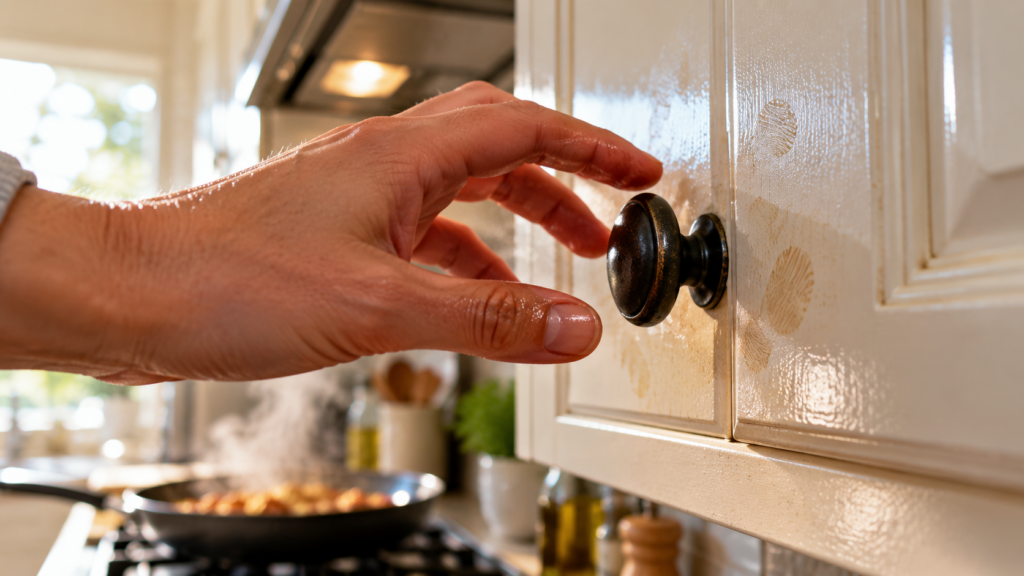
Not every greasy fingerprint flew across the kitchen from a frying pan. Some arrived exactly as advertised: on your fingers. Opening cabinets while handling butter, oil or greasy food transfers tiny amounts onto frequently touched doors and handles. Picosa recommends washing or wiping your hands before reaching for cabinetry. Monthly cabinet cleaning can also stop residue from becoming the sticky film everyone dreads. It is hardly glamorous advice, but that is precisely why it works. A few seconds now beats discovering six months of grime later.
Make the Next Cleanup Boring
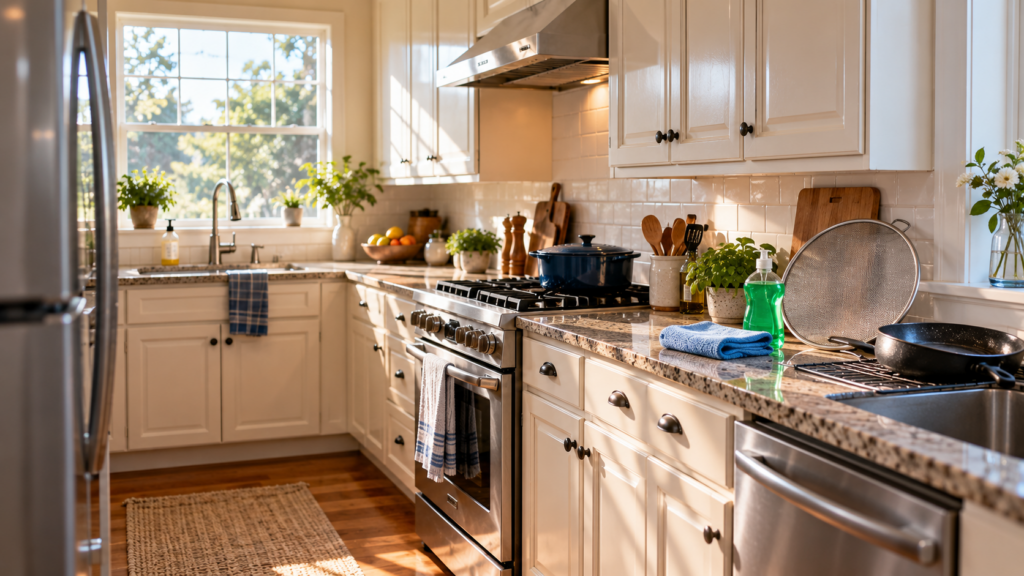
Kitchen grease does not require a punishing annual scrub-down. Start with the gentlest appropriate method, dry surfaces afterward, spot-test unfamiliar cleaners and save stronger products for buildup that actually needs them. More importantly, contain splatters, use ventilation and wipe fresh grease before it hardens. Real Simple cleaning expert Rosa Picosa recommends adding cabinets to the routine at least once a month so grime never gets too far ahead. The real shortcut is not finding a stronger scrubber. It is never letting the job become an all-day project.