SpaceX IPO Filing Reveals Plans for Possible $75 Billion Public Offering
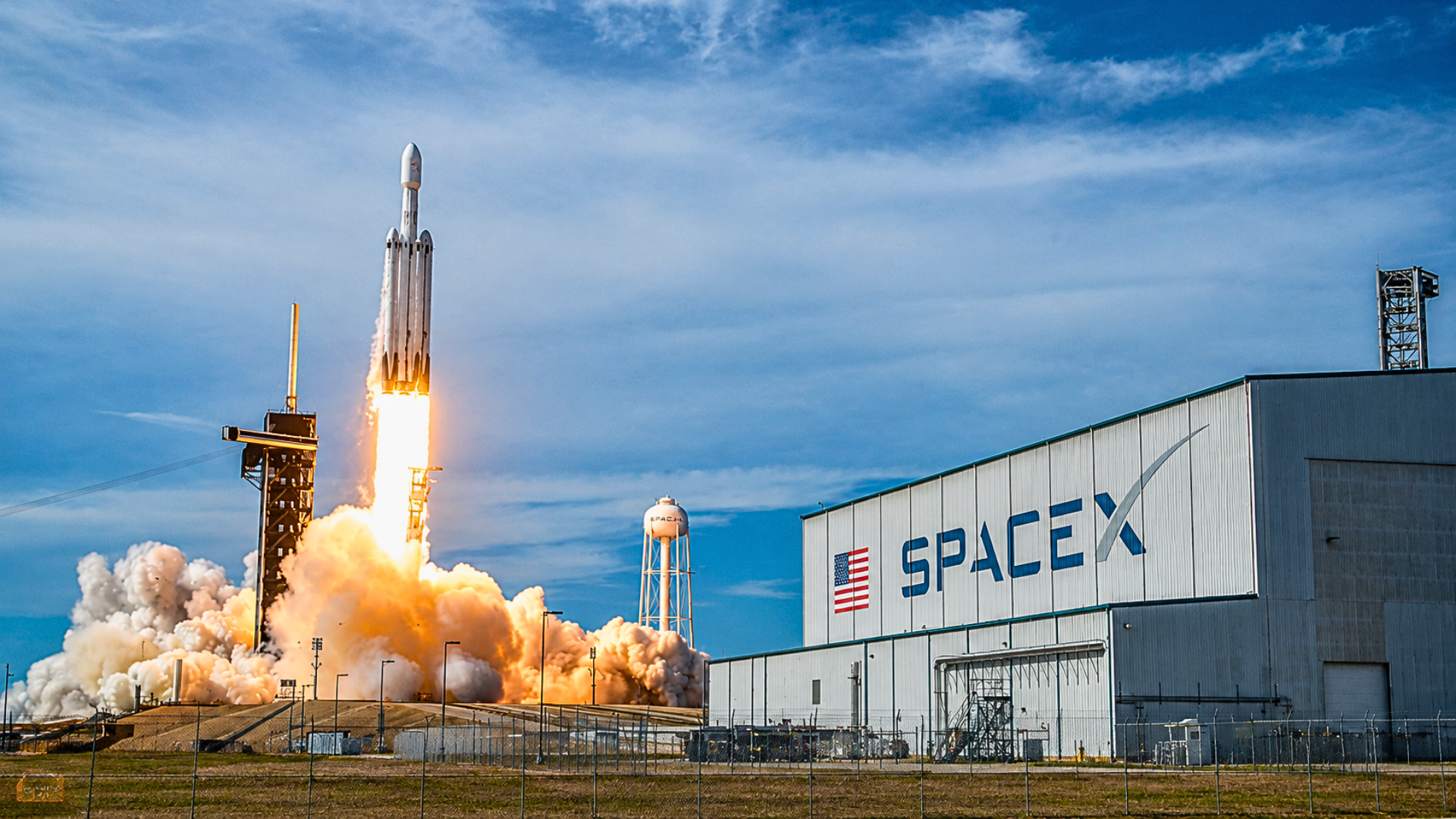

SpaceX made history on May 20, 2026, filing its public S-1 prospectus with the Securities and Exchange Commission and formally setting the stage for what would be the largest initial public offering ever recorded. The company is targeting a listing on the Nasdaq under the ticker symbol SPCX as early as June 12, 2026, with pricing expected on June 11. The offering aims to raise up to $75 billion at a valuation of approximately $1.75 trillion, more than double the previous record held by Saudi Aramco’s $29.4 billion IPO in 2019.
The S-1 landing on May 20 set the stage for a historic public debut. If the deal prices at the upper end of its reported range, SpaceX would instantly rank among the ten most valuable publicly traded companies on the planet, surpassing the market capitalization of Musk’s own Tesla. The company plans to trade on the Nasdaq under the ticker symbol SPCX, with a roadshow expected to begin the week of June 8, pricing on June 11, and shares available to the public as early as June 12, according to Reuters. A faster-than-expected SEC review helped accelerate the timeline from an originally planned late-June debut.
Goldman Sachs is leading the deal, with 21 banks total participating in underwriting the offering. Retail investors are earmarked for 30% of the float, three times the standard allocation for a mega-cap IPO. The filing combines three distinct business lines: SpaceX’s rocket launch operations, the Starlink satellite internet division, and xAI, the artificial intelligence company Musk merged into SpaceX in February 2026. SpaceX also disclosed in the filing that it holds 8,285 Bitcoin valued at approximately $600 million. The S-1 gives the public its first detailed look at the financials behind the most valuable private company ever built.
What the Financials Actually Show, and Why Analysts Are Reading Them Carefully

The combined entity, reflecting SpaceX’s February 2026 merger with xAI, reported $18.7 billion in 2025 revenue and a $2.6 billion operating loss. Standalone SpaceX, before the xAI merger, generated closer to $15 to $16 billion. The gap between those two numbers represents xAI and X, which arrive carrying significant losses. In the first quarter of 2026, the merged company generated $4.7 billion in revenue but posted a net loss of $4.28 billion, driven primarily by xAI’s operating costs and capital expenditures.
Starlink is the only consistently profitable division in the prospectus. The satellite internet business generated $11.4 billion in 2025 revenue, accounting for 61% of total company revenue, and produced $3.26 billion in Q1 2026 alone, serving 10.3 million subscribers. The Starlink figures are the strongest argument for the company’s $1.75 trillion valuation target, and they are the foundation on which SpaceX’s broader financial story rests. The rocket launch business, which includes Falcon 9, Falcon Heavy, and Dragon operations for commercial and government customers, reinvests the majority of its revenue back into operations and development of the Starship system.
SpaceX also signed Cloud Services Agreements with Anthropic in May 2026, providing access to its COLOSSUS computing infrastructure for a reported $1.25 billion per month. The Anthropic deal underscores xAI’s central role in the IPO thesis: SpaceX is not being presented purely as a rocket company or even a satellite company, but as an entity that intends to compete directly in the artificial intelligence infrastructure market. Wall Street analyst Adam Crisafulli noted in a client note that space-based data centers, one of the company’s stated ambitions, are considered operationally and economically unfeasible by many industry experts for at least the next several years, making xAI’s near-term revenue contributions the more relevant near-term consideration for investors.
SpaceX’s Vision for Mars, AI Satellites, and Its Mission Statement in the Filing

The S-1 prospectus is not just a financial document. It contains a mission statement that reflects Musk’s longstanding vision for the company in terms that go considerably beyond typical corporate IPO language. “Our mission is to build the systems and technologies necessary to make life multiplanetary, to understand the true nature of the universe, and to extend the light of consciousness to the stars,” SpaceX wrote in the filing. The prospectus describes establishing space colonies as a core long-term objective. It is an unusual framing for a document primarily designed to attract institutional investors.
SpaceX also outlined a market opportunity it values at more than $28 trillion across all of its business lines. That figure breaks down as $370 billion for space ventures, $1.6 trillion for broadband services, $26.5 trillion for AI services, nearly $23 trillion in enterprise technology, and $600 billion in digital advertising. The AI services figure reflects xAI’s ambitions rather than current revenue, and the $26.5 trillion estimate represents a total addressable market projection rather than a near-term achievable number. The filing says SpaceX believes its reusable rockets, scaled satellite manufacturing, and operational expertise can enable the cost-effective deployment of what it calls “massive AI compute satellite constellations, with potentially millions of satellites, for orbital data centers.”
Wedbush Securities analysts described the IPO in a research note as a potential step toward Musk eventually combining SpaceX and Tesla, writing that “the holy grail could be combining SpaceX and Tesla in some way to give the connected tissue between both disruptive tech stalwarts looking to lead the AI revolution.” Tesla disclosed in May 2026 that it had sold $143 million in vehicles to SpaceX. The market read the disclosure as confirmation that the two companies already function as one economic organism. After the IPO, Musk will serve as CEO, chief technology officer, and chairman of the board, and will retain majority voting control over the company.
What the IPO Means for Musk’s Wealth, American Investors, and the Broader Space Industry

At a $1.75 trillion valuation, SpaceX would instantly rank among the ten most valuable publicly traded companies on the planet, surpassing Tesla’s current market capitalization. For Musk, who already holds the title of the world’s richest person, a successful IPO at the upper end of the target range would push his consolidated net worth across SpaceX, Tesla, and his other ventures to a level that analysts say could make him the first individual to hold a net worth exceeding $1 trillion. That threshold has not been reached before and remains subject to how the IPO prices and how the stock performs after listing.
For everyday American investors, the 30% retail float allocation is the most directly relevant detail in the prospectus. That allocation, three times the standard for a company of this size, is a deliberate choice designed to give individual investors access to shares at the IPO price rather than having the offering dominated by institutional buyers. Whether that access translates into gains will depend on how the stock performs after June 12. SpaceX’s valuation has more than doubled since the December 2025 tender offer, and the company posted a $4.28 billion net loss in the first quarter of 2026 alone, meaning investors will be buying into a company that is spending far more than it currently earns, with the expectation that Starlink’s profitability and xAI’s future revenues eventually close that gap.
The SpaceX IPO will instantly reprice the entire space sector upon listing. Every major publicly traded competitor in launch services, satellite communications, and space infrastructure will be repriced relative to the valuation the market assigns to SPCX on June 12. The filing also represents a structural moment for Musk’s empire: by taking SpaceX public, the company gains access to capital markets that have been unavailable to it as a private company, and Musk gains a public currency for future acquisitions and partnerships. The roadshow begins the week of June 8. Between now and then, institutional investors will have the opportunity to ask the questions the S-1 raises but does not fully answer, starting with how a company losing $4 billion a quarter justifies a $1.75 trillion valuation.