Something Faster Than the Speed of Light Has Just Been Discovered


The idea that nothing can move faster than light has shaped our understanding of physics for over a century. However, new research is challenging that assumption in a fascinating way, revealing that under specific conditions, something unexpected may surpass this universal speed limit. This discovery does not break the laws of physics, but rather deepens how we interpret them.
What The Speed Of Light Really Means

The speed of light, measured at 299,792,458 meters per second, is widely considered the ultimate cosmic limit. According to physics, this boundary applies strictly to anything carrying mass or information. In other words, particles and signals are constrained by this rule, but phenomena without mass or informational content exist outside this restriction.
Why Darkness Is Not What It Seems

Darkness is often misunderstood as a physical entity, when in reality it is simply the absence of light, meaning it contains no photons, mass, or data. Because of this, it does not follow the same limitations as matter or energy, opening the possibility that it can behave in ways that seem to exceed known physical boundaries.
The Concept Of Dark Points In Light Waves

Instead of attempting to measure darkness directly, researchers focused on what are known as dark points within light waves. These are tiny regions where the wave’s amplitude drops to zero, effectively creating pockets of complete darkness embedded within a field of light, making them ideal for observation and analysis.
Understanding Optical Singularities
These dark points are also referred to as optical singularities, areas where the properties of light become undefined or extreme. Scientists have long theorized that these singularities could move at speeds exceeding that of light, particularly during moments when they appear or disappear within a wave.
How Vortices Help Explain The Phenomenon

The behavior of these singularities can be compared to vortices in a flowing river, where certain points move differently from the overall current. In a similar way, dark points can travel through a light wave at speeds that outpace the wave itself, creating what is described as superluminal motion.
The Role Of Advanced Microscopy

To capture this phenomenon, researchers developed highly specialized microscopy techniques capable of observing events at extremely small spatial and temporal scales. This level of precision allowed them to track the rapid movement of dark points with remarkable accuracy.
Why Polaritons Were Essential

A key part of the experiment involved polaritons, which are hybrid states combining light and matter. These quasiparticles significantly slow down the propagation of light, making it easier to observe subtle and fast-moving features like dark point vortices within a controlled environment.
The Importance Of Specialized Materials
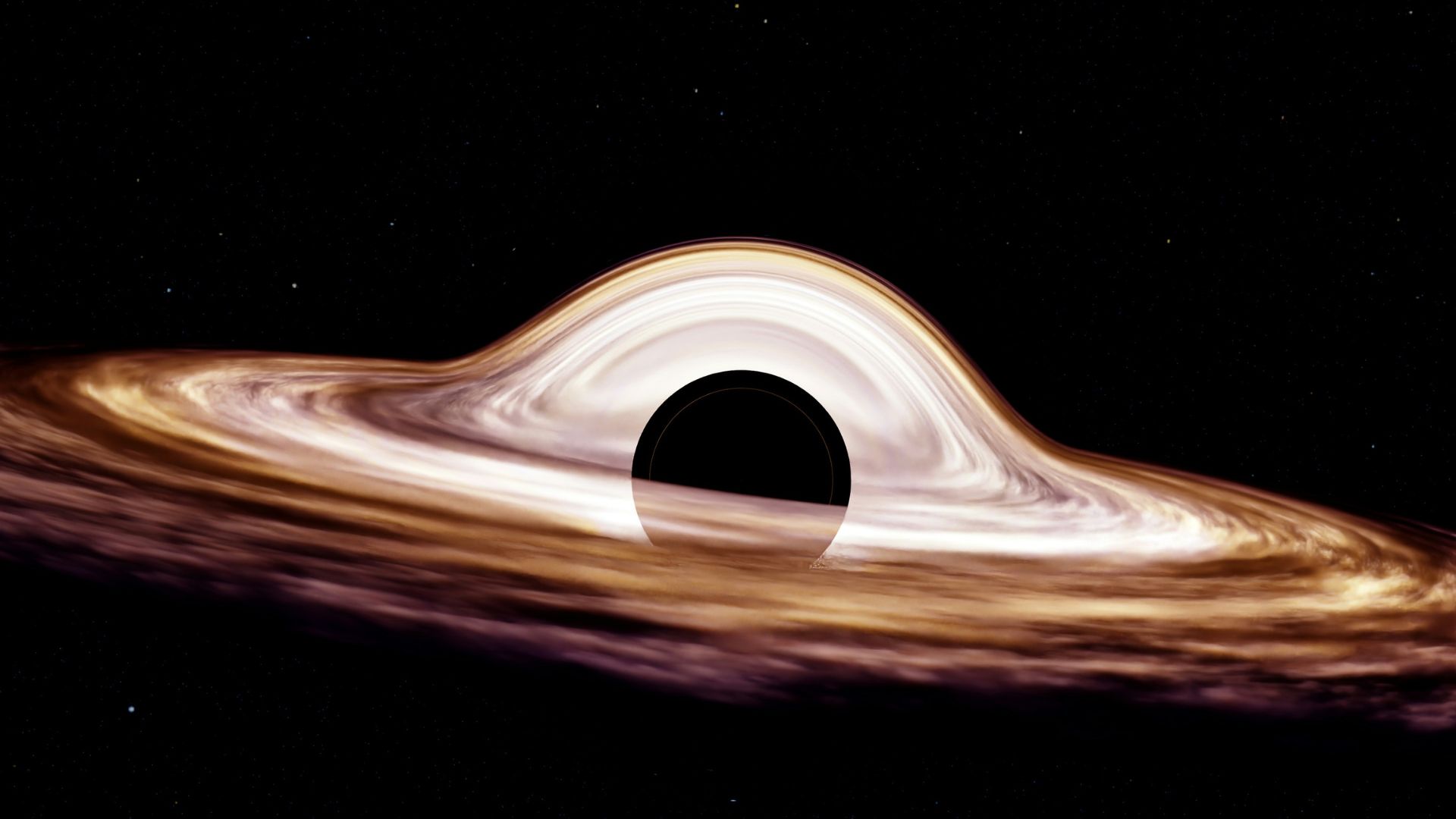
The experiment relied on a thin layer of hexagonal boron nitride, a material that enables light to transform into polaritons. This setup created the right conditions to study how light behaves when its speed is reduced, revealing details that would otherwise remain invisible.
What Scientists Actually Observed

By analyzing these slowed-down light waves, researchers confirmed that dark points can indeed move faster than light itself. This does not involve physical objects breaking the speed limit, but rather patterns within waves exhibiting motion that exceeds it under specific conditions.
What This Discovery Means For Science
This finding opens new doors for understanding wave dynamics across multiple fields, from physics to biology. It suggests that similar principles may apply to other systems, offering insights into processes that occur at extreme speeds and are typically hidden from observation.