Social Security COLA Could Be Capped for Millions of Retirees Yet Washington Hasn’t Made a Move
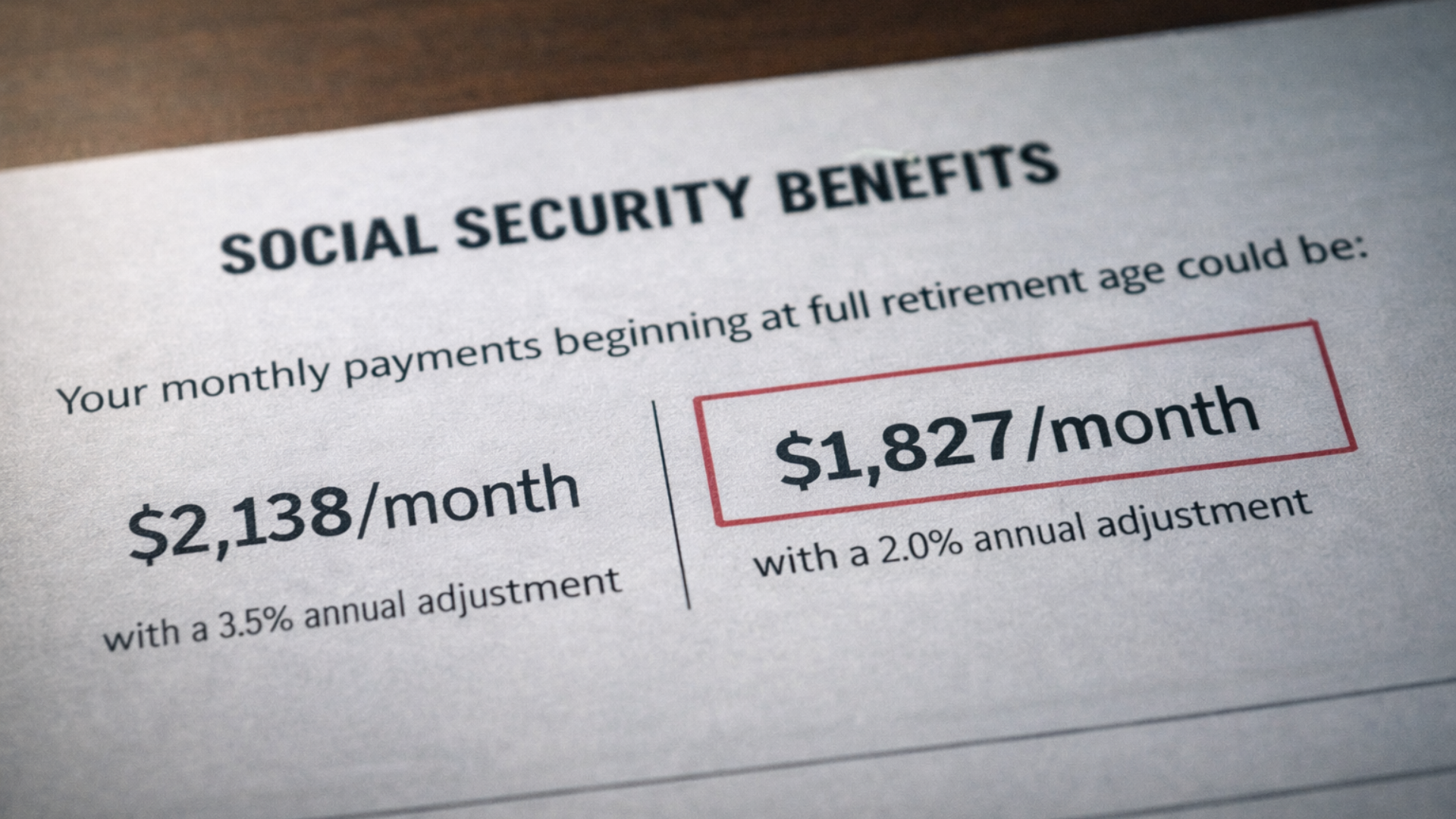

Social Security’s trust fund is on a collision course with insolvency, and the clock is ticking louder than most Americans realize. With the combined retirement and disability trust funds now expected to be depleted by early 2034, a bipartisan nonprofit called the Committee for a Responsible Federal Budget has put forward a proposal that would begin trimming benefits for higher-income retirees before the crisis hits. The mechanism it targets is one that 75 million Americans currently depend on every year: the annual cost-of-living adjustment.
The cost-of-living adjustment, known as COLA, is the automatic annual increase built into Social Security payments to protect beneficiaries from inflation. It has been a fixed feature of the program since the 1970s, when Congress moved to make the adjustments automatic rather than requiring repeated legislative approval. For 2026, the Social Security Administration set COLA at 2.8%, a figure applied uniformly across all 75 million beneficiaries regardless of how large or small their monthly payment. The CRFB proposal would change that uniformity for the first time.
Under the plan, retirees with the largest benefits; those in roughly the top quarter of earners, would face a fixed dollar cap on how much their COLA could increase in any given year. Everyone else would continue receiving the full adjustment. The CRFB frames the change as a targeted, progressive reform that limits cuts to those who can most afford them while protecting middle- and lower-income retirees who depend on the full adjustment to keep pace with rising costs. Whether that framing holds up under closer examination is where the debate begins.
How the Cap Would Work and Who Would Feel It First

The mechanics of the proposed cap are specific enough to produce clear winners and losers. In the CRFB’s white paper, which cites calculations from the Urban Institute, the suggested threshold would be set at the COLA dollar amount received by the beneficiary at the 75th percentile, based on what the program calls the primary insurance amount. Beneficiaries earning less than roughly $45,000 in annual Social Security income would still receive the full inflation adjustment. Those above that level would see their annual increase capped at a fixed ceiling.
A concrete example illustrates the gap the cap would create. If COLA in a given year is 2%, a retiree receiving $50,000 annually in Social Security benefits would normally see a $1,000 increase. Under the cap, that same retiree might receive only $900 instead. The difference in any single year seems modest. But COLA is compounding: each year’s adjustment becomes the new baseline for the next. A capped retiree falls slightly further behind inflation every year, and that gap widens over a long retirement in ways the initial numbers do not capture.
The CRFB’s paper acknowledges these dynamics by building in adjustments tied to collection age and benefit type. The cap would be reduced by 30% for retirees who began collecting at 62 and increased by 24% for those who waited until 70. Spousal benefits would face a cap set at half the standard level. By 2055, the paper projects that benefits for the top fifth of earners would be 7% lower for the highest 5% of recipients. That projection is the honest version of what “a small cap” looks like across a full retirement horizon.
The Trust Fund Math That Makes This Conversation Unavoidable
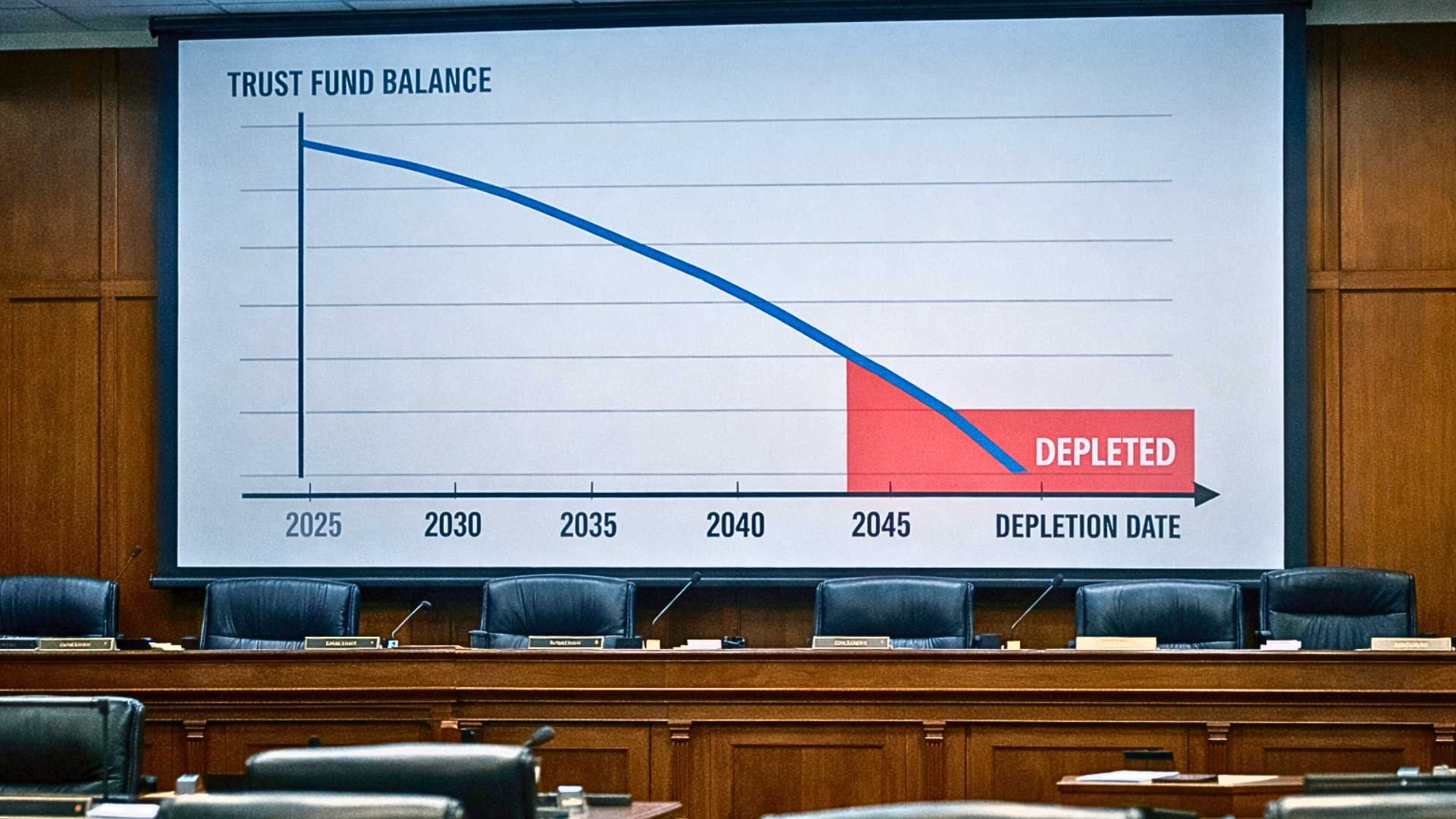
The urgency behind the CRFB proposal is rooted in numbers that have grown significantly more alarming in recent months. When the most recent federal tax cuts and deductions from the One Big Beautiful Bill Act are factored into the outlook, the combined Social Security retirement and disability trust funds are now projected to hit depletion by early 2034. Considered on its own, the retired worker’s trust fund reaches insolvency even sooner, in late 2032, at which point only 77% of scheduled benefits would be payable to all recipients across the board.
That across-the-board cut is the alternative the CRFB is trying to avoid. An automatic reduction to 77 or 81 cents on every dollar would hit low-income retirees with the same bluntness as high-income ones, because the current system has no mechanism to protect the most vulnerable when the money runs out. The CRFB argues that a targeted COLA cap, applied now to those who can absorb it, is preferable to an indiscriminate cut applied later to everyone. Capping COLA for the top 25% of beneficiaries could save $115 billion over ten years, approaching 10% of the program’s 75-year funding shortfall.
The savings scale with how broadly the cap is applied. If the threshold were lowered to the 50th percentile, covering half of all beneficiaries, the ten-year savings would grow to $385 billion. The CRFB is candid that even its most aggressive version of the COLA cap would not resolve the solvency problem alone, and that other reforms would also be necessary. However, it notes that by partially extending the fund’s life, the cap would actually increase payable benefits by roughly 2% for retirees in the bottom three income quintiles, the people the program was most fundamentally designed to protect.
Congress Has Not Moved, the Deadline Is Seven Years Away, and 93% of Americans Support the Program They’re About to Lose
Despite the scale of the problem and the specificity of proposals like the CRFB’s, Washington has not responded with urgency. Lawmakers have not publicly commented on the COLA cap proposal, and no significant Social Security reform legislation has advanced in recent years. The gap between the severity of the funding crisis and the pace of political action is itself a risk, because the closer the depletion date gets without a legislated fix, the fewer options remain and the more disruptive any last-minute solution is likely to be for retirees who built their financial plans around a stable program.
Public support for Social Security is not a contested question. According to the Bipartisan Policy Center, 93% of American adults consider it a valuable federal program. That level of consensus is rare in contemporary politics and creates both an opportunity and a constraint for lawmakers. The broad popularity of the program makes it politically painful to propose any reduction in benefits but it also means that when Congress does act, it will likely have public backing for a solution that preserves the program’s core function, even if it involves difficult tradeoffs for higher earners.
What remains unresolved is the shape of those tradeoffs and who ultimately bears them. A COLA cap for high earners, a higher retirement age, an expanded payroll tax on top incomes, or some combination of all three. Each option redistributes the burden differently across generations and income levels. The CRFB’s proposal is one carefully constructed answer to that question. But the more pressing issue is that every year Congress delays, the range of viable answers narrows. For the millions of Americans planning their retirements around a program that may look different by the time they collect, the next move belongs to Washington.