U.S. Food Assistance Enrollment Drops By 3.5 Million Following Historic SNAP Legislative Overhaul
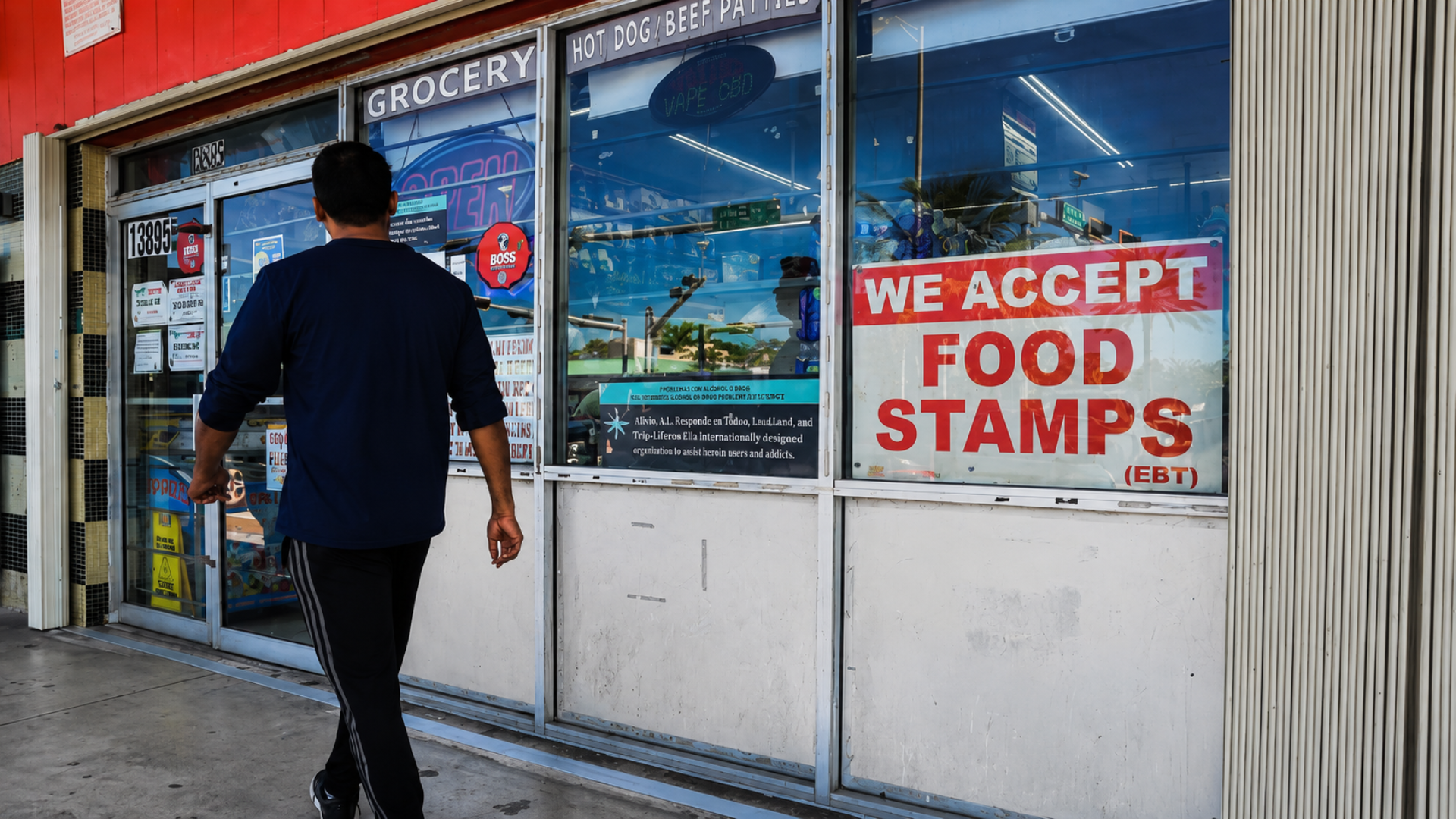

A massive contraction is sweeping through America’s foundational social safety net, catching millions of low-income families in its wake. In the first seven months following a sweeping legislative overhaul of the Supplemental Nutrition Assistance Program (SNAP), more than 3.5 million Americans stopped receiving federal food assistance. Data compiled by the Center on Budget and Policy Priorities from U.S. Department of Agriculture metripecs marks this contraction as the fastest enrollment decline the nation has witnessed in nearly 30 years. The rapid drop signals a major turning point for public benefit access, generating intense national debate over the balance between fiscal restructuring and domestic food security.
Redefining Federal Spending Under the OBBBA

The steep decline in food assistance participation is the direct result of a highly consequential legislative package. Signed into law in July 2025, Public Law 119-21, officially known as the One Big Beautiful Bill Act (OBBBA), enacted a wide-ranging fiscal overhaul through the federal budget reconciliation process. To partially offset multitrillion-dollar tax adjustments, increased defense spending, and expanded border security operations, the legislation targeted federal safety net programs for substantial spending reductions. According to baseline projections from the Congressional Budget Office, federal SNAP expenditures are slated to decline by $186 billion through 2034.
Red Tape and Expanded Work Mandates

The primary mechanism driving millions of Americans off the food assistance rolls is a dramatic expansion of the program’s time-limited work requirements. Under the OBBBA, the age bracket for able-bodied adults without dependents (ABAWDs) subjected to strict work mandates was raised to include adults up to age 64. Furthermore, the law expanded these harsh paperwork mandates to apply to parents of teenage children, veterans, people experiencing homelessness, and former foster youth. Under these tighter rules, affected adults must document at least 20 hours of employment, training, or volunteering per week, or risk losing their grocery benefits completely after just three months.
Stricter Verification and Systemic Churn

While proponents of the OBBBA argue that stricter work requirements encourage gainful employment and reduce program fraud, policy analysts note that the rapid drop in enrollment does not reflect a sudden wave of economic prosperity. The national unemployment rate has remained flat, and widespread food insecurity has persisted. Instead, independent researchers attribute the enrollment drop to a phenomenon known as administrative churn. Stricter work mandates introduce intense layers of monthly paperwork and verification, causing vulnerable individuals to lose their benefits simply because they cannot navigate complex reporting portals or obtain required documentation.
Shifting Severe Fiscal Burdens onto States

The disruption to the food assistance network is poised to intensify as a historic structural funding shift takes effect. Under the newly enacted framework, the federal share of state administrative expenses is reduced to 25%, down from the traditional 50% mark. Even more concerning for local governments, starting in October 2027, the federal government will require states, for the first time in the program’s history, to begin directly financing a portion of their local SNAP benefit costs. For many states, this cost shift represents a massive, unexpected budget deficit totaling hundreds of millions of dollars annually.
The Consequence of Payment Error Penalties
The exact percentage of food benefit costs a state must pay will be tied directly to its official payment error rate, ranging up to 15% of the total benefit cost. Although the vast majority of these discrepancies stem from unintentional mathematical mistakes by overworked caseworkers or minor reporting delays by recipients, the financial penalties create a powerful negative incentive. To protect state budgets from catastrophic federal bills, regional administrators are aggressively modifying their local application systems, shifting their primary operational focus from helping hungry families to minimizing technical error rates at all costs.
Increased Red Tape in Illinois and Georgia

Anticipating the heavy financial penalties of the upcoming cost shift, several states have already overhauled their administrative frameworks, making it significantly harder for eligible citizens to maintain their benefits. In Illinois and Georgia, state administrators have mandated that vulnerable households recertify their financial eligibility twice as often as before. This doubling of mandatory paperwork creates frequent opportunities for eligible families to be dropped from the program due to a single missed mail delivery, a confusing online form, or a minor administrative bottleneck at a local processing center.
Severe Staffing Shortages and Backlogs in Arizona

The real-world danger of these defensive state-level changes is vividly apparent in Arizona, where the local government paired stricter paperwork requirements with severe staffing cuts across its social services department. The resulting administrative bottleneck created massive processing backlogs, leaving thousands of eligible applicants waiting without food assistance for months at a time. Many families were automatically kicked off the program simply because they could not get through to caseworkers on severely overloaded state phone lines. Consequently, Arizona’s SNAP participation has dropped by more than half, leaving almost 200,000 fewer children in the state with access to adequate food.
Widespread Declines in Every Region

The rapid contraction of the food assistance safety net is not confined to specific political strongholds or isolated geographic regions. Agriculture Department data confirms that SNAP enrollment has dropped in nearly every single state across the nation, spanning red and blue territories alike. In more than a dozen states, participation has plunged by more than 10%. Local data shows that 450,000 people have lost benefits in Florida, 234,000 in Illinois, nearly 60,000 in Nevada, and 112,000 in Virginia, demonstrating the sweeping national scope of the legislative overhaul.
The Compounding Long-Term Societal Costs

Public health organizations and economic think tanks warn that dismantling the food assistance infrastructure carries severe long-term consequences for American society. Prior to the recent cuts, SNAP served as the nation’s most effective defense against domestic hunger, reducing food insecurity by up to 30%, with even higher efficacy rates among children. Because roughly 90% of SNAP participants live in households with a child, an elderly individual, or a person with a disability, restricting access to an average benefit of just $6.17 per person per day threatens to spike chronic disease rates, drive up emergency medical costs, and lower long-term educational outcomes for vulnerable youth.