This article was created with the assistance of AI and reviewed by our editorial team for accuracy and clarity.
Smart Homeowners Are Lining Their Cabinet Drawers With Aluminum Foil. Here’s Why You Should Too

Published September 4, 2026
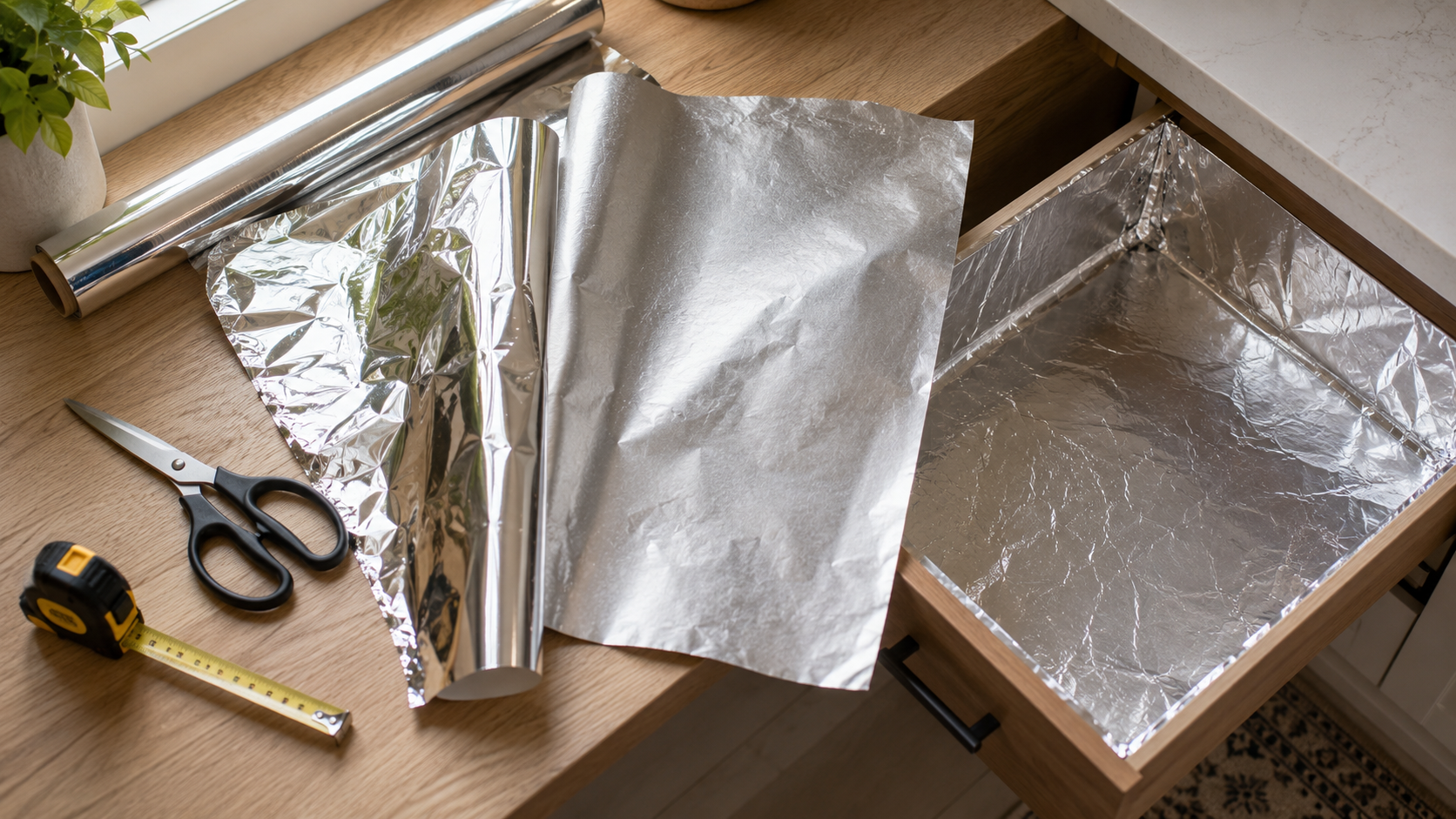
Aluminum foil usually disappears into a drawer until there is a baking sheet to line or leftovers to wrap. But some homeowners are giving that familiar silver roll a permanent job inside their cabinets and drawers. It may look unusual at first, but foil can function as a cheap, replaceable shelf liner that protects surfaces from everyday messes while reflecting light into dark corners, making everything from cookware to pantry supplies easier to see.
It Adds A Barrier Against Everyday Messes
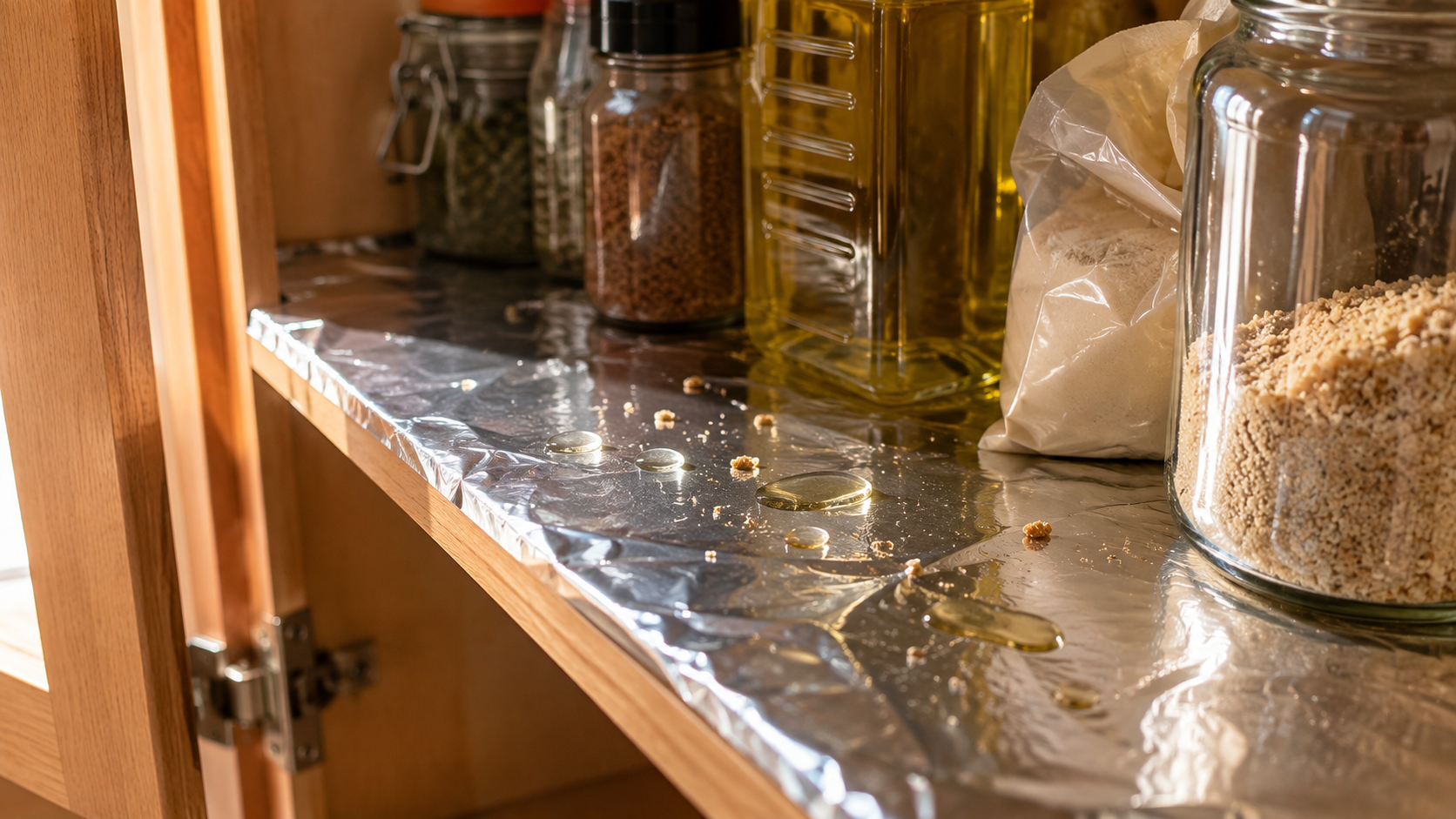
Cabinets endure more wear than their closed doors reveal. Crumbs accumulate, bottles drip, and cookware can scratch surfaces as it is moved around. Aluminum foil creates a barrier between those everyday messes and the shelf or drawer underneath. Since water cannot pass through the foil itself, it can also provide protection from small spills and moisture, although liquids that reach the edges or get underneath should still be cleaned promptly.
The Reflective Surface Has Another Advantage
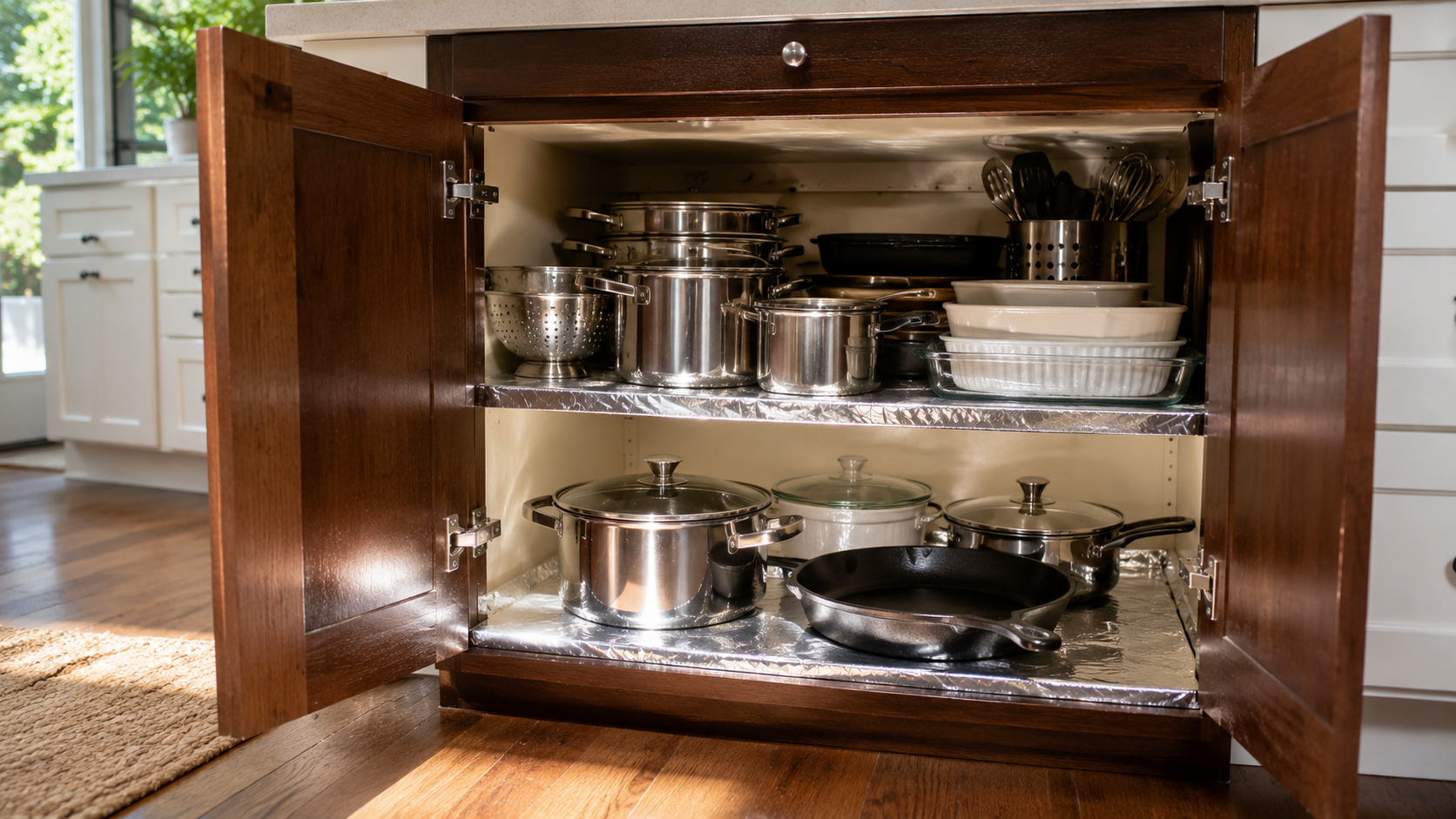
The unexpected benefit appears when you open a dark cabinet. Aluminum foil reflects the light that reaches it, helping illuminate spaces where pots, pans, ingredients, or kitchen tools might otherwise disappear into shadow. That makes the trick especially useful for deep cabinets or drawers with poor visibility. Instead of installing additional lighting, the foil simply makes better use of the light already entering the space.
Either Side Of The Foil Works
Anyone who has debated whether aluminum foil has a “correct” side can relax here. Both surfaces are made from the same material and have similar reflective properties. The shiny side creates a more mirror-like reflection, while the matte side scatters light more diffusely, but the difference in overall brightness is small. For cabinet lining, which side faces upward is largely a matter of personal preference.
Preparation Makes A Difference

Before unrolling anything, empty the cabinet or drawer completely and clear away crumbs, dust, grease, and other debris. A clean surface helps the foil sit flatter and prevents old messes from becoming trapped underneath it. A lightly dampened cloth with a little dish soap can tackle stubborn grime, but avoid soaking wood cabinetry. Allow the surface to dry before installing the new liner.
Getting The Fit Right Is Simple
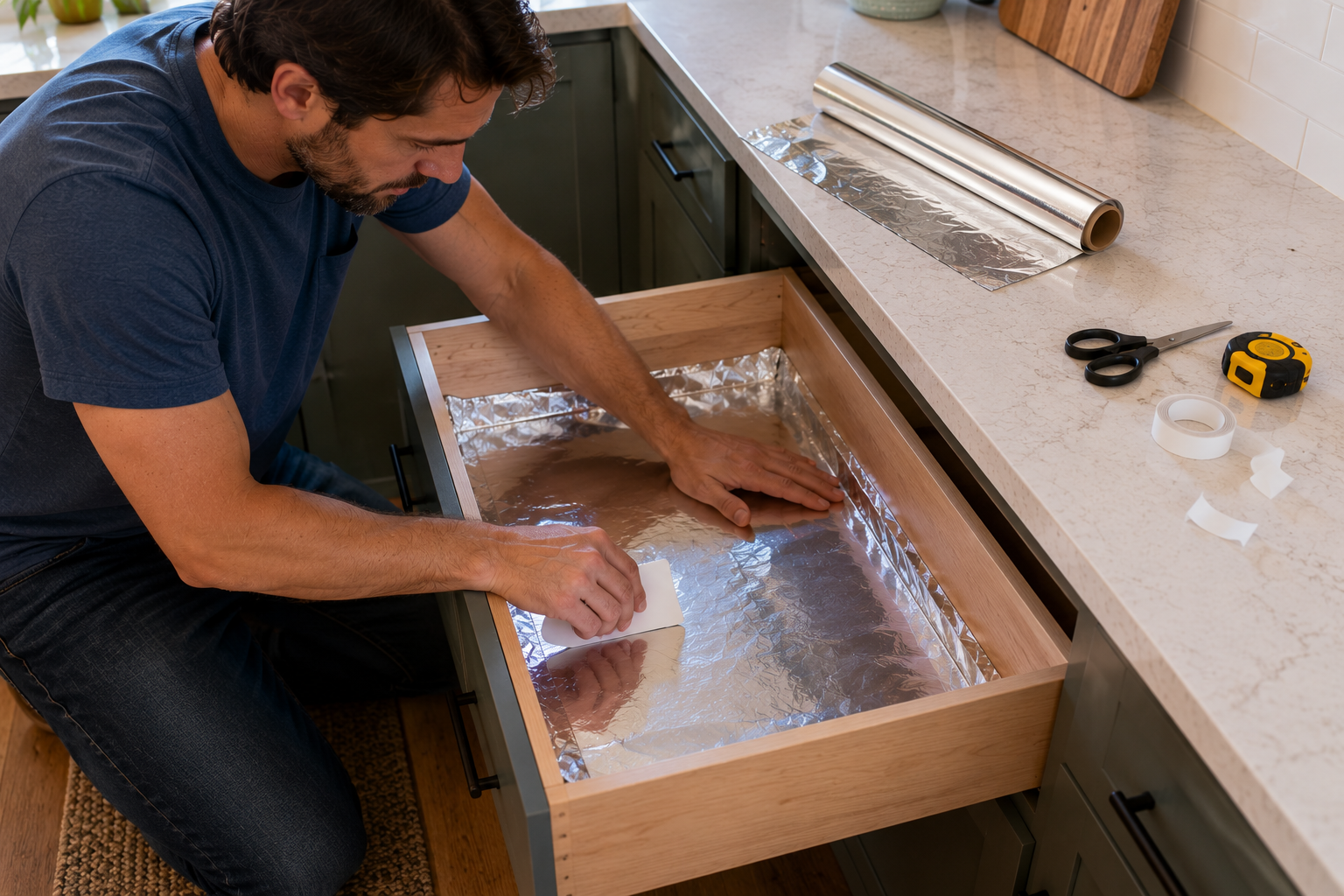
Measure the area you want to cover, then cut a piece of foil slightly longer than the shelf. Center it and carefully smooth it from the middle toward the edges using a stiff card, pressing it into the corners as you go. Once the foil is sitting flat, trim away excess material for a cleaner fit. Double-sided tape can also help secure it if you find that the sheet moves around.
Deep Cabinets Need A Small Adjustment
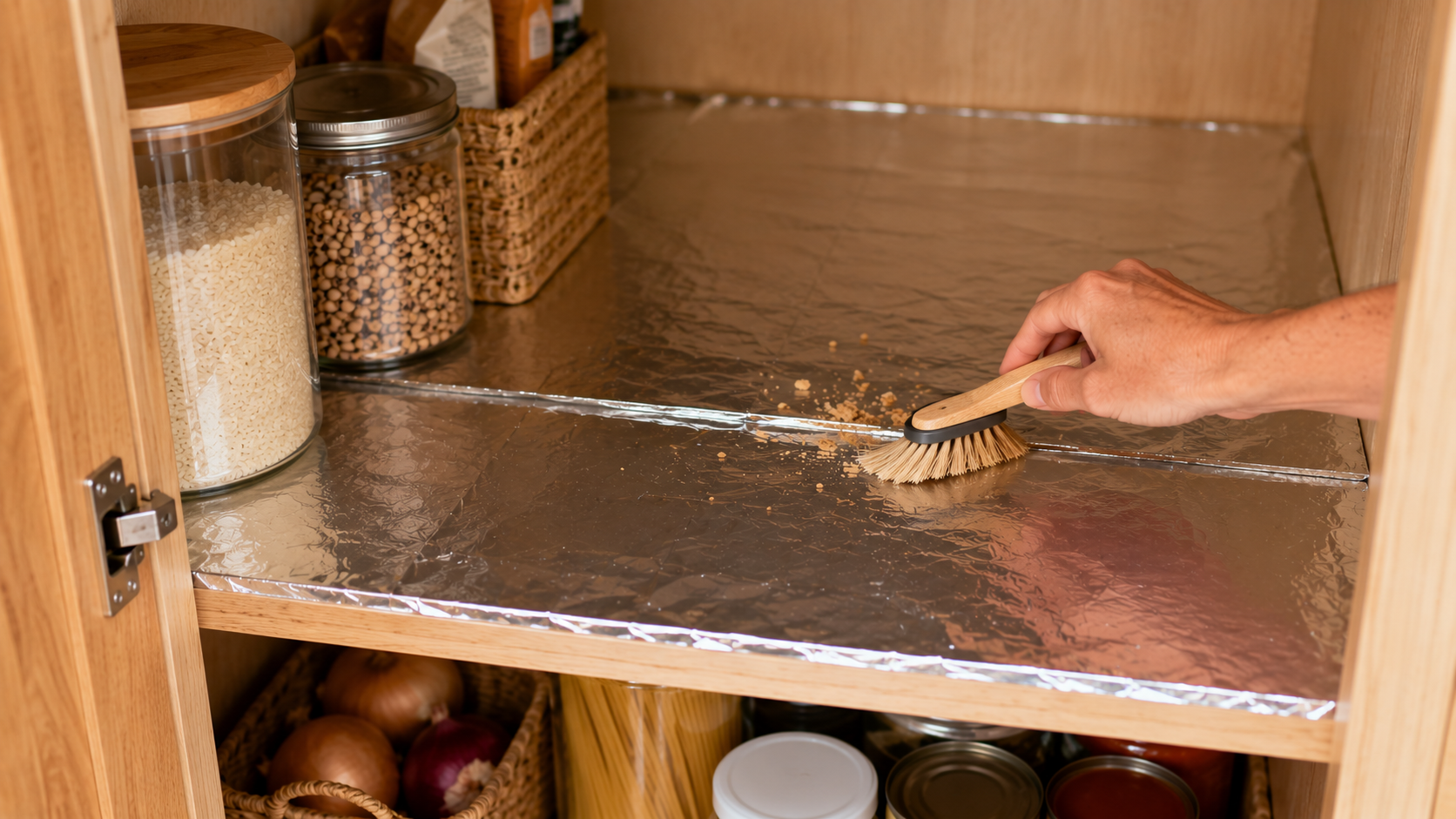
A standard roll of foil may not be wide enough for every shelf. If you need two pieces, install the front sheet first and place the second toward the back with an overlap between them. That arrangement makes routine cleaning easier because crumbs swept from the rear of the cabinet toward the opening are less likely to get pushed underneath the seam and trapped below the liner.
Cleanup Is One Of The Biggest Payoffs
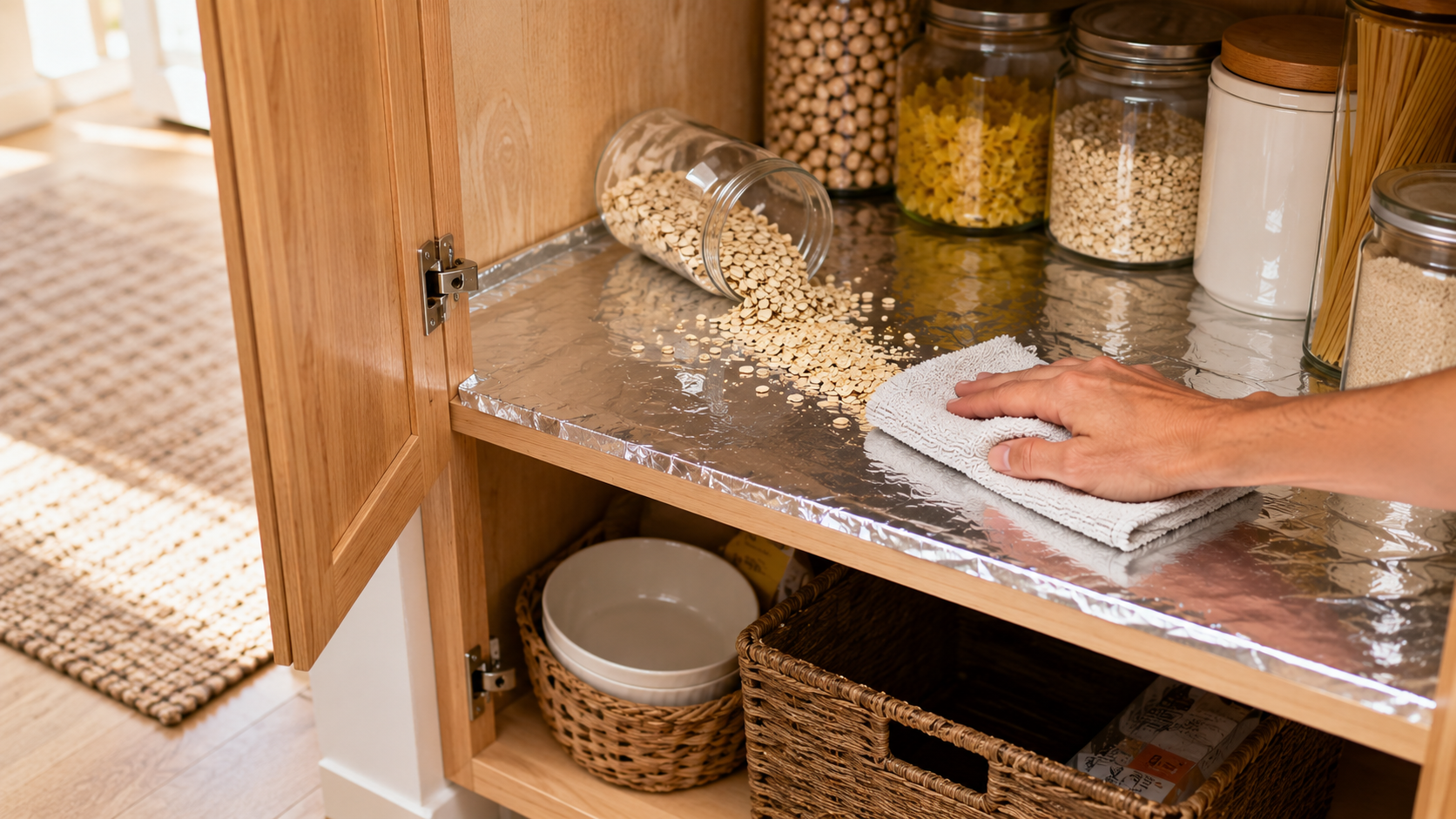
Once installed, foil gives spills and crumbs somewhere to land besides the cabinet itself. Its smooth surface can be wiped clean during routine kitchen maintenance. If the liner becomes badly stained, wrinkled, or torn, replacement is straightforward: remove the damaged sheet, wipe the surface underneath, and cut another piece. For households that already keep aluminum foil on hand, there is no special liner to hunt down.
Know Where Foil Falls Short
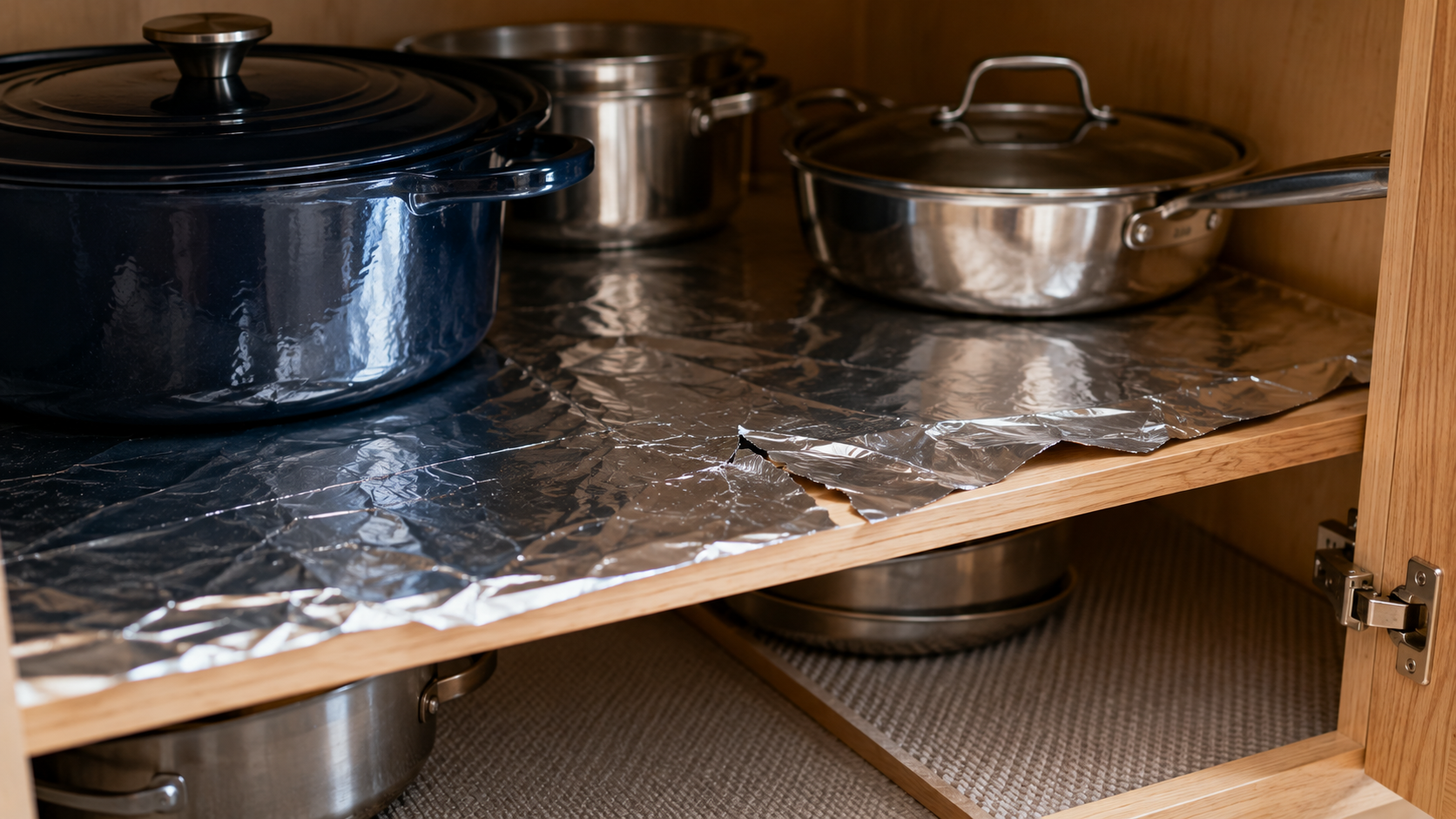
The convenience comes with limitations. Aluminum foil can tear when heavy cookware or containers are dragged across it, and it may shift if it is not secured. Purpose-made liners can be sturdier, while some also provide cushioning or grip that foil does not. Foil therefore makes the most sense when inexpensive protection, better visibility, and easy replacement matter more than creating a permanent or heavy-duty cabinet surface.
Start With The Cabinet That Needs It Most

There is little reason to line the entire kitchen before deciding whether the trick works for you. A dark lower cabinet, messy pantry shelf, or drawer vulnerable to spills makes a practical testing ground. If the foil becomes damaged, replacing it takes only another cut from the roll. And if you decide you need something tougher, you can switch to a conventional liner without having invested much time or money in the experiment.