Shoppers Flock to This Mall Where Nothing for Sale Is Brand New


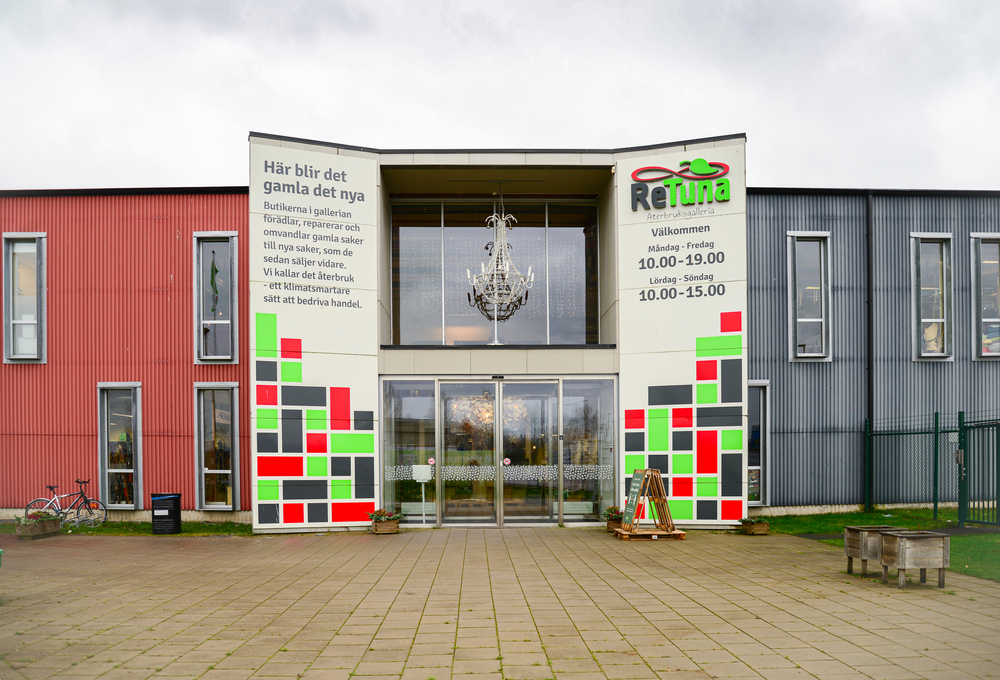
In a retail world built on new arrivals and seasonal drops, one shopping mall has drawn global attention by offering none of it. At ReTuna Återbruksgalleria in Eskilstuna, Sweden, every item on the shelves has already lived a previous life. Clothing, books, furniture, bikes and home décor arrive as donations, then reappear in curated storefronts after being repaired, restored or redesigned.
The concept launched in August 2015 beside the city’s recycling center, making it easy for residents to drop off unwanted goods at a depot known as “Returen.” Staff sort donations before distributing them to the mall’s 14 specialist shops, where retailers decide what to repair, refine or upcycle. The model has proven commercially viable. In 2018 alone, ReTuna generated SEK 11.7 million or nearly $1.2 million in sales from recycled products and created more than 50 jobs.
What began as a municipal sustainability initiative now attracts documentary crews, researchers and tourists. The mall’s founders positioned it not as a thrift center but as a climate-smart shopping destination. That framing has reshaped how many visitors view secondhand retail, turning what was once considered niche into something aspirational.
A Mall Built on the Circular Economy
The idea reflects a broader understanding of recycling and reuse. The U.S. Environmental Protection Agency describes recycling as the process of collecting and processing materials that would otherwise be thrown away and turning them into new products. The agency emphasizes that reducing and reusing materials often delivers even greater environmental benefits, conserving natural resources and cutting greenhouse gas emissions.
Sweden’s long-standing deposit return culture reinforces this mindset. National systems such as “panta” encourage residents to return bottles and cans for refunds, embedding recycling into daily life. Countries with strong deposit programs report high recovery rates, and policymakers often cite these systems as proof that infrastructure and incentives influence consumer behavior.
Changing How Secondhand Feels
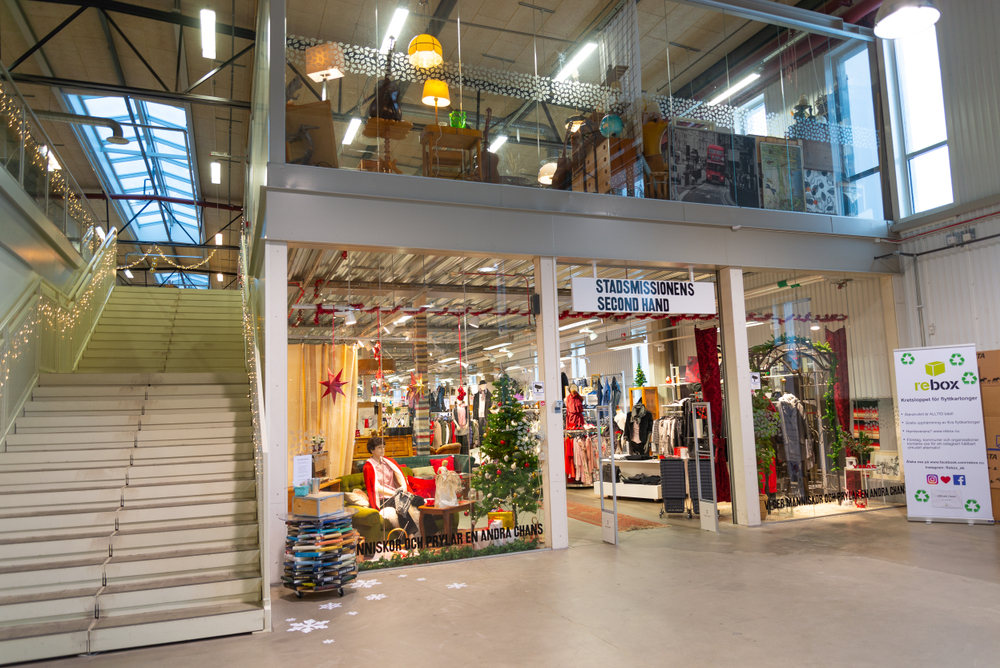
For many visitors, the surprise is not what ReTuna sells but how it looks. Mary-Ann Ball, senior lecturer in fashion sustainability and marketing at Nottingham Trent University, described her first visit as “a delightful surprise.” Writing in The Conversation, she noted that the mall feels “refreshingly different” from cluttered charity shops, offering fashion, sports equipment and even an Ikea secondhand store in a polished retail environment.
Ball observed that customers often describe the mall as “accessible,” “curated” and “convenient.” One shop manager told her that shoppers sometimes mistake the secondhand items for new. Displays mirror conventional retail layouts, and the calm atmosphere makes ethical consumption feel desirable. As one shopper put it, “It’s not just ethical, it’s beautiful”.
Consumer data suggest this shift is part of a larger movement. The secondhand fashion market is growing 2.7 times faster than the broader apparel sector and is projected to reach US$367 billion by 2029. A separate forecast estimates the wider secondhand products market could hit US$1.04 trillion by 2035. Surveys show many buyers still prefer in-store experiences for pre-owned goods, signaling continued demand for physical spaces like ReTuna.
Can Upcycling Malls Become Mainstream?
ReTuna was designed as more than a place to shop. Established as part of Eskilstuna’s climate and waste reduction strategy, the mall brings together retail, education and municipal recycling under one roof. It hosts workshops, lectures and a year-long “Recycle Design – Återbruk” program that trains students to repair and upcycle donated items, positioning reuse as both a skill and a business opportunity. The environmental and economic stakes behind that model are significant. Recycling and composting municipal solid waste saved more than 193 million metric tons of carbon dioxide equivalent in 2018, according to the U.S. Environmental Protection Agency. In the same period, recycling and reuse activities in the United States accounted for 681,000 jobs and $37.8 billion in wages, underscoring how waste systems connect to local economies.
Upcycling adds a consumer-facing dimension. Sustainability data show that 21% of Americans report regularly upcycling clothing and household goods, reflecting growing interest in extending product lifespans rather than discarding them. Recycling systems, however, face structural challenges. The EPA points to confusion about what can be recycled, fluctuating markets for recovered materials and limits in domestic processing capacity. International policy shifts have also forced countries to strengthen their own waste infrastructure. These realities shape how far and how quickly reuse-centered retail can expand.
For American readers, the takeaway is not that every city needs a copy of ReTuna. The Swedish mall relies on municipal ownership and sustained public investment. Its relevance lies in how policy, infrastructure and design can make reuse convenient and visible. Oregon’s bottle bill, with redemption rates nearing 90%, shows how incentives can shift behavior at scale. As consumers increasingly ask where products come from and where they end up, secondhand retail and deposit systems move closer to the mainstream, offering a practical example of how shopping habits and waste policy can evolve together.