Scientists Say the ‘Earthquake Gate’ Between California’s Most Stressed Faults Could Trigger More Dangerous Quakes
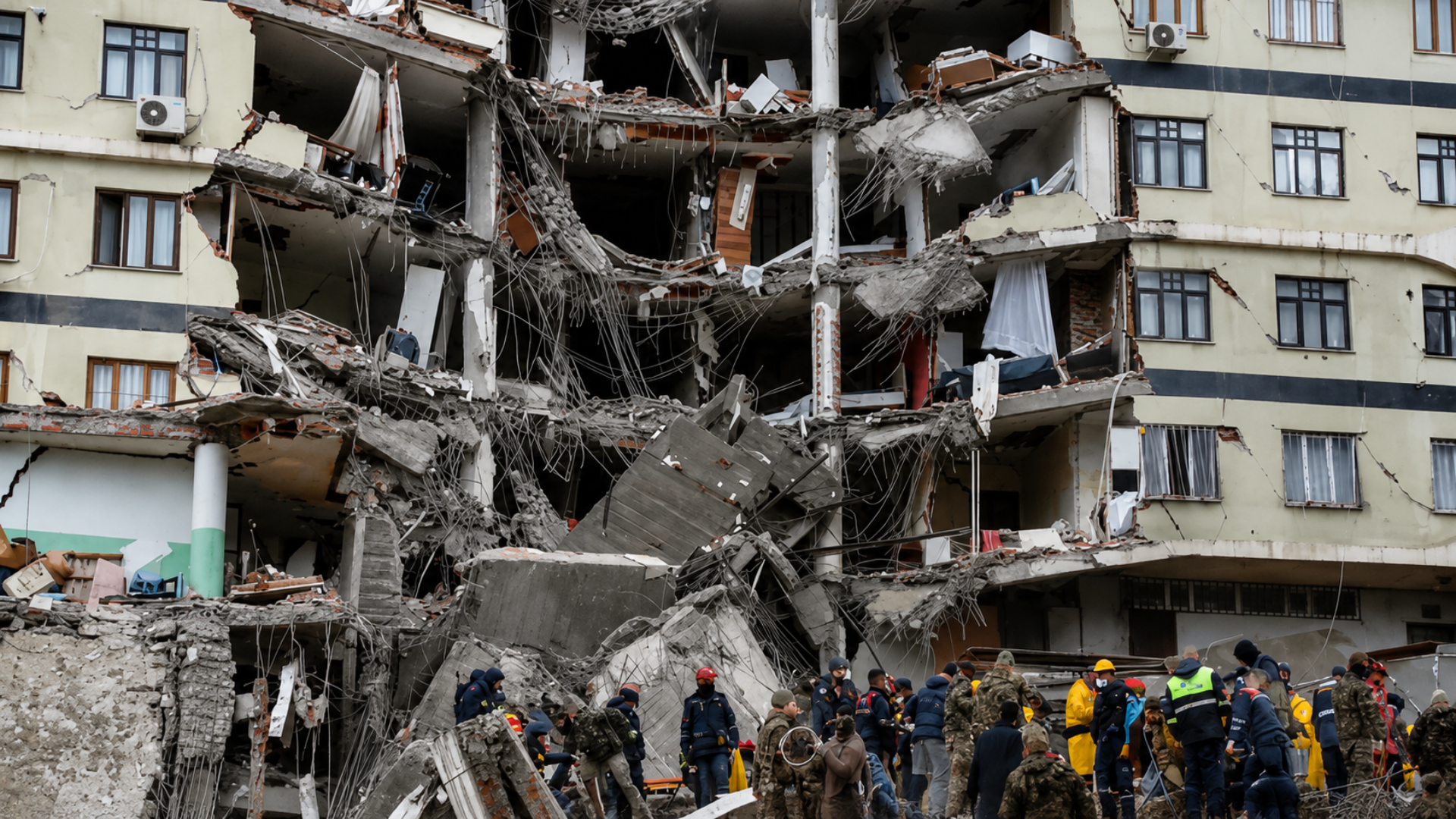

A single junction in the mountains northeast of Los Angeles may determine whether the next major earthquake stays bad or becomes catastrophic. That junction, called Cajon Pass, sits where two of Southern California’s most powerful fault systems converge. A new study finds that both faults are carrying more tectonic stress than at any point in the last millennium, and the conditions that have historically triggered the region’s largest, most destructive earthquakes are forming right now.
The San Andreas and San Jacinto faults together absorb roughly 90% of the tectonic movement between the North American and Pacific plates in Southern California. As the plates grind against each other over centuries, stress quietly accumulates underground until the rock can no longer hold. Scientists describe the current state of both fault systems as critically loaded, with stress levels on key segments reaching, and in some cases surpassing, the highest values recorded across a thousand-year geological record.
The last time Southern California experienced a truly massive earthquake along these faults was 1857, when a magnitude 7.9 rupture tore through 205 miles of the San Andreas. Nearly 170 years of stress have accumulated since then without a comparable release. That silence, researchers warn, is less a sign of stability than a measure of how much energy has built up, and how far beyond its historical breaking point the system may already have traveled.
What Makes Cajon Pass the Most Dangerous Bottleneck in American Geology
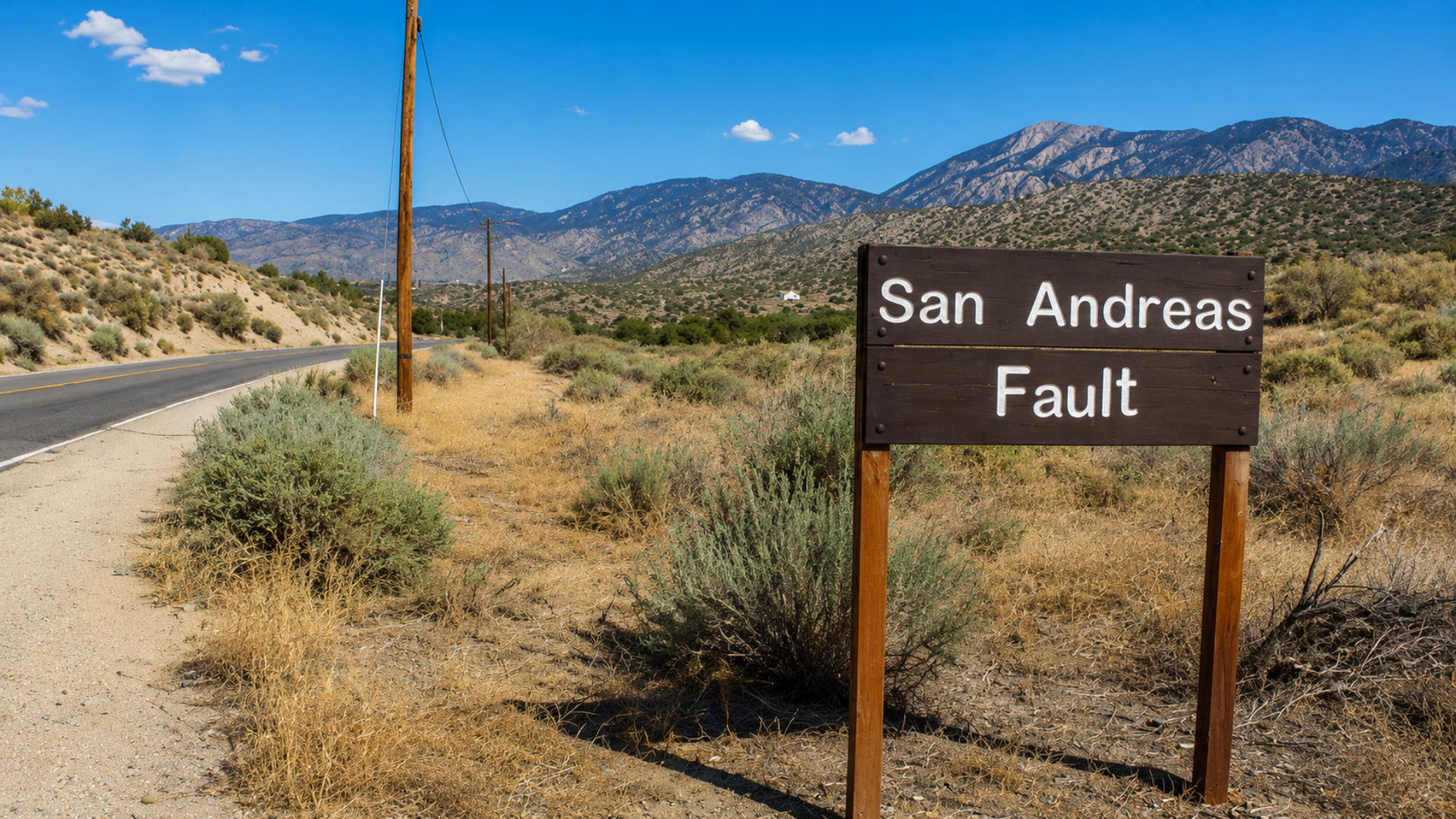
Researchers have introduced a concept that reframes how scientists think about earthquake hazard in Southern California: the earthquake gate. Cajon Pass, where the San Jacinto fault branches away from the main San Andreas trace, functions as a geological switch. Depending on the stress conditions on either side of the junction at the moment of rupture, this gate can either stop a quake in its tracks or allow it to cascade across both fault systems simultaneously.
The gate’s behavior is governed by a specific dynamic. When one fault carries significantly more stress than the other, the junction tends to arrest ruptures. When both faults are loaded to comparably high levels at the same time, the gate opens, and a rupture can jump between systems. According to the study, that second scenario — the dangerous one — is precisely the configuration Southern California is approaching today, with both the San Jacinto Bernardino and Mojave South segments of the San Andreas carrying historically elevated stress simultaneously.
History provides two contrasting examples of how this gate operates. The 1857 Fort Tejon earthquake stopped at Cajon Pass, confining itself to a single fault. The 1812 Wrightwood earthquake, a magnitude 7.5 event, crossed through and ruptured both fault systems, killing 40 people in a far less populated region. The difference, according to the model, came down to how closely matched the stress levels were on each side of the junction at the moment each quake struck.
The Numbers Behind the Warning Are Unlike Anything the Model Has Seen
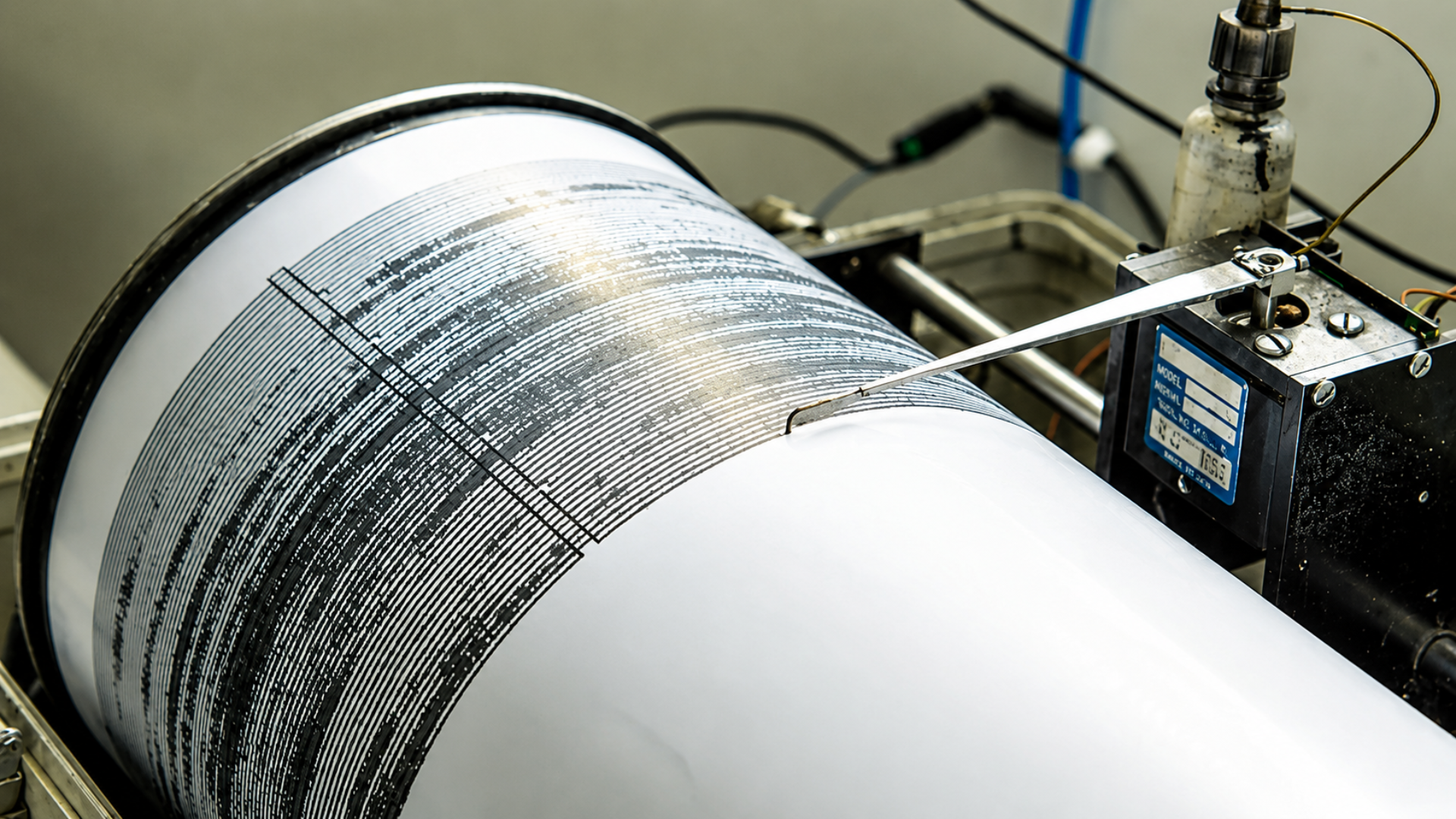
The research team, led by Dr. Liliane Burkhard of the University of Bern and the University of Hawaii at Manoa, built a physics-based four-dimensional model reconstructing a thousand years of earthquake activity. Drawing on radiocarbon dating, tree-ring records, and historical rupture data, the simulation tracked how stress accumulated and released across fault segments over time. The present-day snapshot that emerged from the model is, by the data’s own measure, unprecedented.
The San Jacinto Bernardino segment is currently registering a modeled stress of 3.6 megapascals, the highest value recorded for that segment across the entire thousand-year reconstruction. The Mojave South segment of the San Andreas sits at 2.8 megapascals, also at a record high for its history. Past simulations showed that ruptures successfully crossed Cajon Pass when the stress difference between the two critical segments was as small as 0.3 megapascals. The gap between them today is narrowing toward exactly that threshold.
According to Burkhard, a joint rupture crossing Cajon Pass could reach a magnitude of 7.4 to 7.8, affecting a far larger geographic footprint than a single-fault event would on its own. Cities including Los Angeles, San Bernardino, Riverside, and the Coachella Valley could face simultaneous damage, along with the major highways, railways, and energy infrastructure that run through the pass itself. “Our results show that stress levels on multiple fault segments are now at or above the highest values seen in the past millennium,” Burkhard said in a statement.
The Science Cannot Say When, Only That the System Is Primed

Burkhard and her colleagues are careful to separate what their model can and cannot establish. Earthquake timing remains scientifically impossible to predict with any precision, and the study makes no claim about when a rupture will occur. What the research does establish is the current stress state of the system, and what that state means for the range of scenarios emergency planners and infrastructure managers need to prepare for. “What we can say,” Burkhard said, “is that the system is critically stressed.”
The USGS ShakeOut scenario — based on a magnitude 7.8 rupture on the southern San Andreas alone — estimates roughly 1,800 deaths, 50,000 injuries, and $200 billion in direct damage. The Burkhard study puts a more severe scenario on the table: a cross-fault rupture in which both the San Andreas and San Jacinto systems fail together through Cajon Pass. The researchers say their model could also apply to other fault junctions globally, offering a new tool for seismic hazard assessment in regions where multiple fault systems interact.
Southern California has built one of the world’s largest, most complex metropolitan areas directly on top of a fault system that the science now describes as carrying more stored energy than at any point in recorded geological history. The earthquake gate at Cajon Pass has closed before, containing ruptures to a single fault and sparing millions from a wider catastrophe. The model indicates that both sides of that gate are now loaded to historically matched levels — the configuration that, twice in the last thousand years, preceded the gate swinging open.