Scientists Say Asteroid Contains All 5 DNA Letters Raising Big Questions About Life
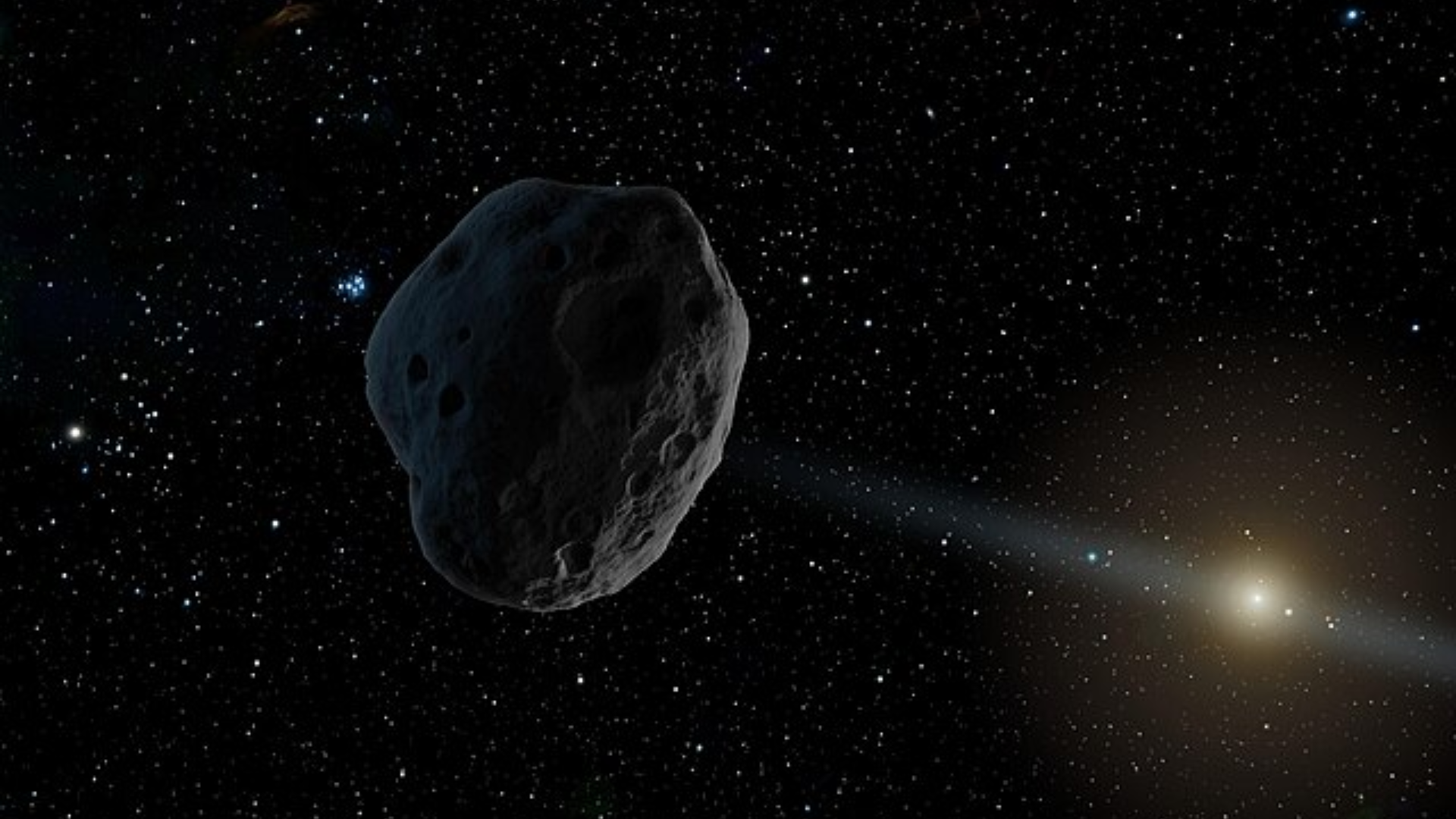

Scientists studying samples from asteroid Ryugu have identified all five nucleobases associated with DNA and RNA, the molecules responsible for storing genetic information in living organisms. The discovery is drawing attention because these compounds are considered essential ingredients for life as it exists on Earth. Researchers believe the findings add new evidence to the idea that the chemistry linked to biology may be common throughout the solar system.
Ryugu is a carbon-rich asteroid roughly 900 meters wide that was explored by Japan’s Hayabusa2 mission. The spacecraft successfully landed on the asteroid, collected material from its surface, and returned the samples to Earth for laboratory analysis. Because the material remained carefully sealed during the mission, scientists were able to study ancient organic compounds with minimal risk of contamination from Earth’s environment.
The discovery does not mean that life once existed on the asteroid itself. Instead, researchers say the presence of these molecules suggests that primitive asteroids may naturally create and preserve compounds tied to prebiotic chemistry. This supports the growing scientific theory that asteroids could have delivered some of the ingredients necessary for life to the young Earth billions of years ago.
Ancient Asteroids Continue To Surprise Researchers
Scientists inside a laboratory examining microscopic asteroid particles under advanced instruments while digital molecular models appear on nearby screens. Researchers previously detected amino acids and other organic compounds inside Ryugu samples, but the latest analysis offered a much more complete picture of the asteroid’s chemistry. This time, scientists confirmed the presence of adenine, guanine, cytosine, thymine, and uracil, the complete set of nucleobases connected to DNA and RNA formation. Their presence inside such an ancient object suggests these molecules may form naturally in space under the right conditions.
The Ryugu findings closely resemble discoveries made in samples collected from asteroid Bennu during NASA’s OSIRIS REx mission. Scientists recovered similar nucleobases from Bennu, strengthening the idea that these organic compounds may be widespread among carbonaceous asteroids. Researchers have also identified related molecules in meteorites that landed on Earth, adding more evidence to the growing pattern.
Scientists compared Ryugu’s chemical composition with well known meteorites such as Murchison and Orgueil to better understand how these compounds formed. The analysis revealed interesting differences in the balance between purines and pyrimidines, the two chemical groups that make up nucleobases. Researchers believe these variations may reflect different environmental conditions inside ancient asteroids during the early formation of the solar system.
What The Chemical Ratios Could Reveal About Space Chemistry
A close scientific rendering of molecular structures floating around asteroid fragments while laboratory data appears in the background. One of the most intriguing parts of the study involved the relationship between nucleobases and ammonia concentrations found inside asteroid material. Researchers discovered that asteroids with certain ammonia levels appeared to share similar chemical patterns connected to nucleobase formation. Since scientists do not yet fully understand this relationship, the finding may point toward previously unknown chemical processes that operated during the solar system’s earliest history.
Scientists divide nucleobases into two categories based on their molecular structure. Adenine and guanine belong to the purine group, while cytosine, thymine, and uracil are classified as pyrimidines. Ryugu displayed a relatively balanced ratio between these groups, while other meteorites showed stronger concentrations of one type over the other, providing researchers with new clues about how organic chemistry developed in different cosmic environments.
Carbonaceous asteroids like Ryugu and Bennu are especially valuable to researchers because they are among the oldest objects in the solar system. These rocky bodies formed around 4.5 billion years ago and have remained relatively unchanged since then. Scientists often describe them as natural archives capable of preserving chemical information from the era when planets, including Earth, were still forming around the young sun.
A Discovery That Expands Questions About Life In The Universe

A cinematic view of early Earth surrounded by asteroids carrying glowing organic compounds through the young solar system. The Ryugu discovery is contributing to a broader scientific effort focused on understanding how life may begin in planetary systems. Many researchers now believe that studying prebiotic chemistry is just as important as searching for direct signs of living organisms elsewhere in the universe. Ancient asteroids provide rare opportunities to examine the raw materials that existed before life developed on Earth.
Scientists remain cautious when discussing the implications of the findings. The presence of nucleobases alone does not prove that life formed in space or that extraterrestrial organisms exist. However, the repeated discovery of these compounds inside asteroids and meteorites strongly suggests that the building blocks connected to biology may emerge naturally across many environments in the cosmos.
Future space missions are expected to continue exploring asteroids, comets, and other ancient objects in search of organic compounds linked to prebiotic chemistry. Each new sample helps researchers better understand the processes that shaped the early solar system and possibly influenced the emergence of life on Earth. As evidence continues to grow, scientists are gradually building a clearer picture of how widespread life’s essential ingredients may be throughout the universe.