Scientists Discover Evidence That Time Travel May Be Real and Already Happening


A concept long confined to myths, philosophy, and science fiction is quietly finding its way into serious scientific discussion. While no human has stepped into the past or the future, new research suggests that time may behave in ways far less straightforward than once believed, especially at the microscopic scale.
Recent findings published in Nature Physics point to subtle processes where time appears to lose its clear direction. The study, led by researchers Till Bohmer and Thomas Blochowicz at the Technical University of Darmstadt, explores how certain materials evolve as they age, revealing behavior that challenges the idea of time as a strictly forward-moving sequence.
Rather than focusing on grand cosmic scenarios, the researchers examined everyday matter. Their work shows that, under specific conditions, the internal structure of some materials rearranges itself in ways that blur the line between past and future, at least from a molecular perspective. This research does not claim that time travel exists in the way popular culture imagines it. Instead, it offers carefully measured evidence that time, when observed closely enough, can appear to shuffle rather than flow smoothly in one direction.
How glass reveals unusual behavior over time
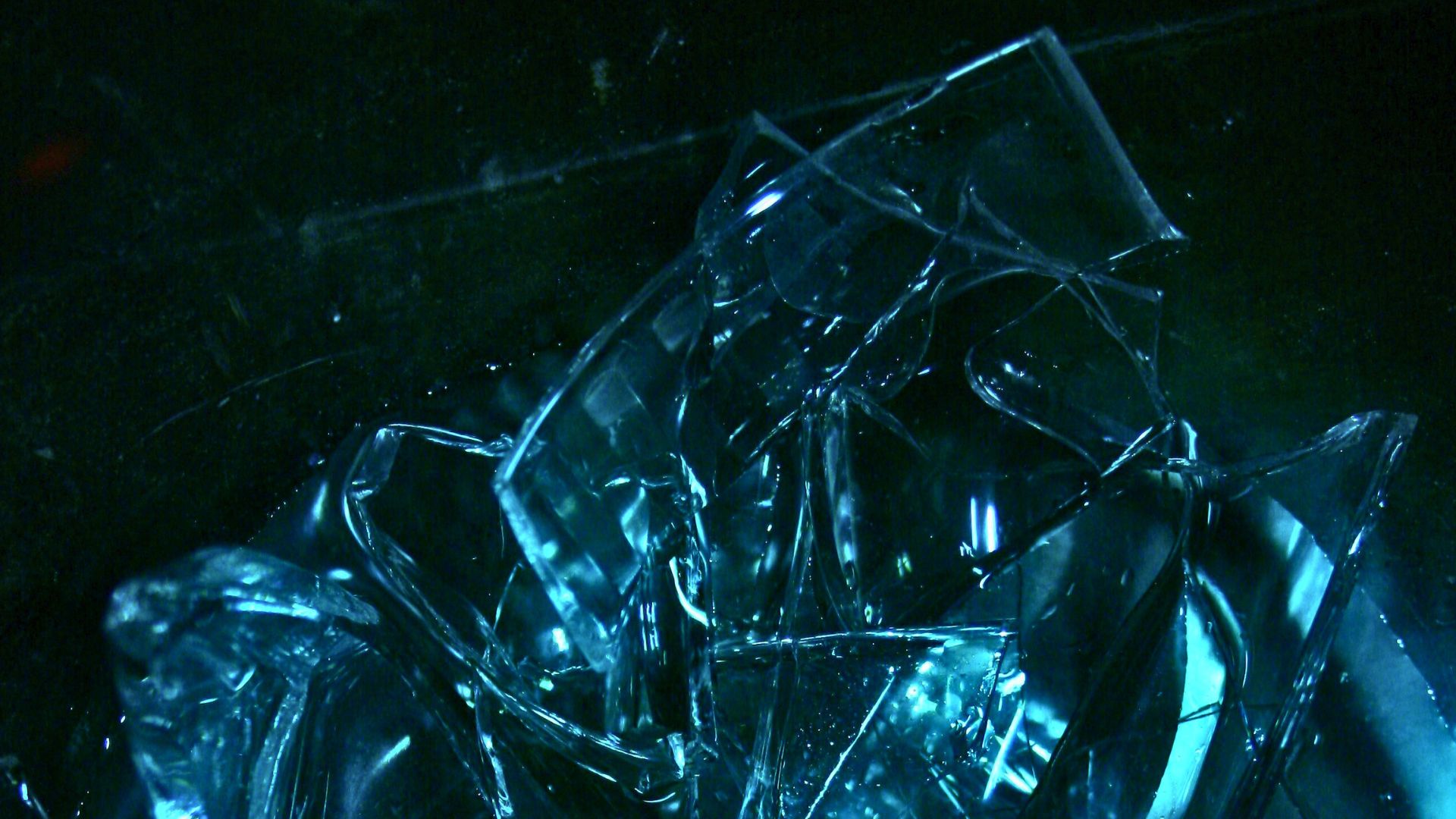
Glass became the centerpiece of the study because of its unusual internal organization. Unlike crystals, which follow predictable molecular patterns, glass lacks a fixed structure. Its molecules are constantly shifting, settling into new configurations even when the material appears completely solid.
This constant rearrangement creates a scenario where molecular changes look strikingly reversible. From a scientific standpoint, it becomes difficult to determine whether these microscopic movements are progressing forward in time or retracing earlier states.
To capture this behavior, researchers used scattered laser light combined with extremely sensitive imaging technology. The movements involved are so subtle that standard observation methods are useless, requiring equipment capable of detecting the smallest fluctuations. As Professor Blochowicz explained, the challenge lies in the scale of the motion. The molecular changes are not dramatic shifts but quiet, continuous adjustments that only become meaningful when observed over extended periods.
Why direction matters in the physics of time

The findings raise deeper questions about how scientists define the arrow of time. In everyday experience, time feels irreversible, events happen once, and cause always precedes effect. At the molecular level, however, that certainty begins to weaken.
Because the internal movements of glass do not clearly indicate a forward or backward direction, researchers cannot easily label the process as aging in the traditional sense. This ambiguity does not violate known physical laws, but it does expose their limits when applied at extremely small scales. Importantly, this does not suggest that large objects, or people, can reverse time. The phenomenon exists within tightly controlled physical systems, where energy changes are minimal and reversible behavior becomes statistically plausible.
The study reinforces the idea that time’s one-way flow is closely linked to scale. What holds true for planets, stars, and living organisms may not apply in the same way to molecules and materials.
What this discovery really changes

While the research rules out the possibility of humans traveling back in time, it reshapes how scientists think about materials and their long-term behavior. Understanding these subtle time-related processes could influence fields ranging from materials science to nanotechnology.
The study also complements recent theoretical work showing that, at the scale of the universe, time still moves in a single direction. Light, energy distribution, and entropy continue to define a clear forward path, even if local systems briefly blur that order.
The real takeaway is not science fiction becoming reality, but science revealing a more complex picture of the world. Time may feel absolute in daily life, yet at the smallest levels, it behaves with surprising flexibility. In that sense, the discovery invites a shift in perspective. Even the most familiar materials, like glass, can carry quiet evidence that reality is more intricate than it appears, and that time itself still holds unanswered questions.