San Francisco’s ‘AI’ Chatbot Turns Out to Be an Actual Man Answering 5,000 Queries in an Hour


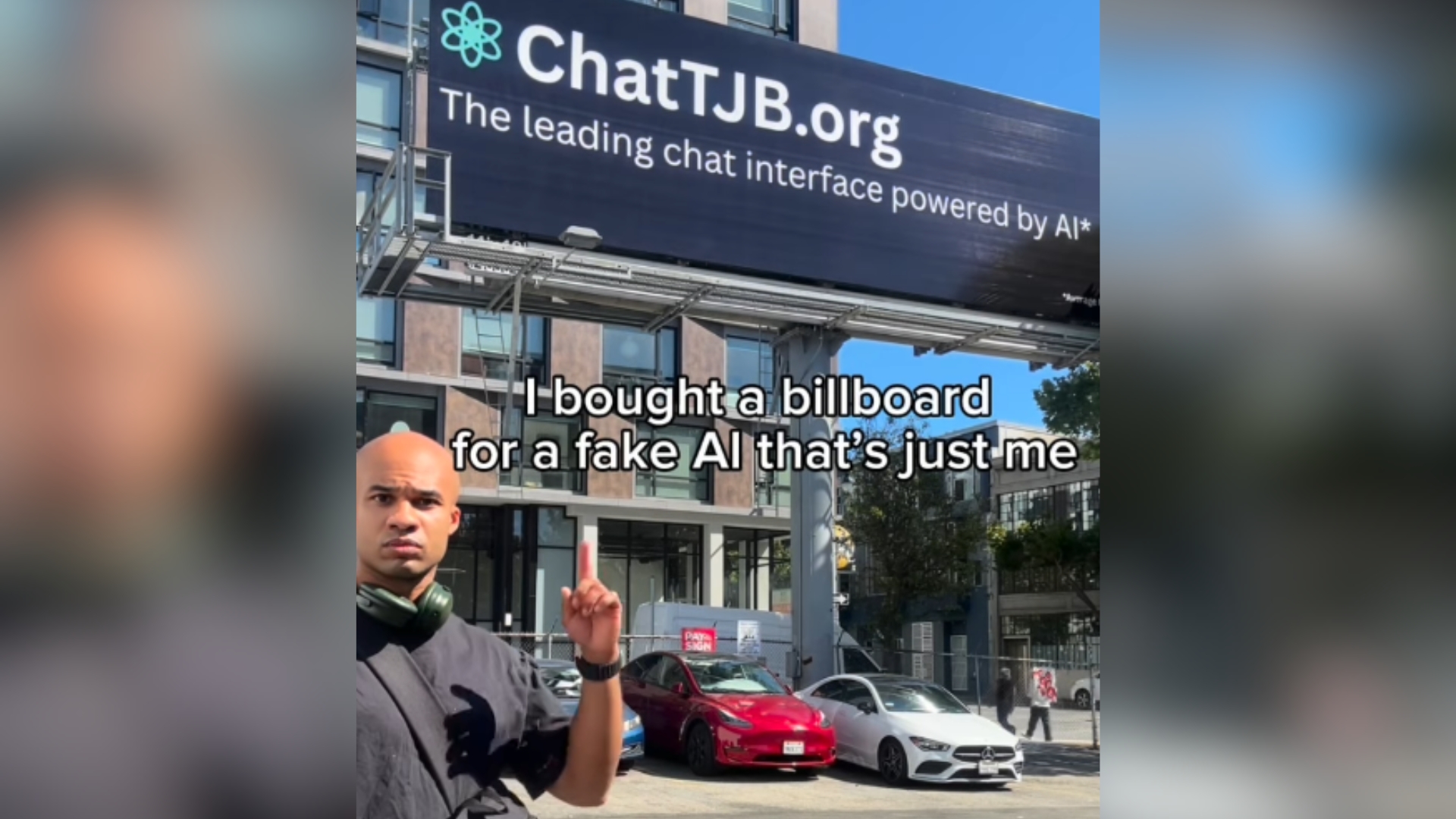
A billboard advertising a new chatbot recently went up in San Francisco with a bold pitch: “the leading chat interface powered by AI.” No mention of a large language model. No claims about training data or servers. Only a slogan promising instant answers to anyone willing to type in a question. The catch sits in two letters most people scroll past without a second look, and it changes everything about how the service works.
‘AI’ Doesn’t Stand for What You Think It Does

The chatbot, called ChatTJB, describes its “AI” as “average individual” instead of artificial intelligence. The pitch invites people to skip typing into Claude or ChatGPT and put their question to a random person instead. That person is 32-year-old Tucker Bryant, a public speaker, artist, and former project manager at Google. He built the service without training a single line of machine learning behind it.
Bryant Personally Answers Every Single Prompt

Bryant didn’t automate anything. He reads each question himself and writes back by hand, no script, no model generating replies on his behalf. Request an image of a skunk in sunglasses, and he’ll sketch one. Ask how to fry an egg, and he might offer an answer, eventually. WIRED tested this directly, asking ChatTJB how to become a morning person. At the time of writing, no reply had come back.
ChatTJB Launched Quietly in April and Went Nowhere
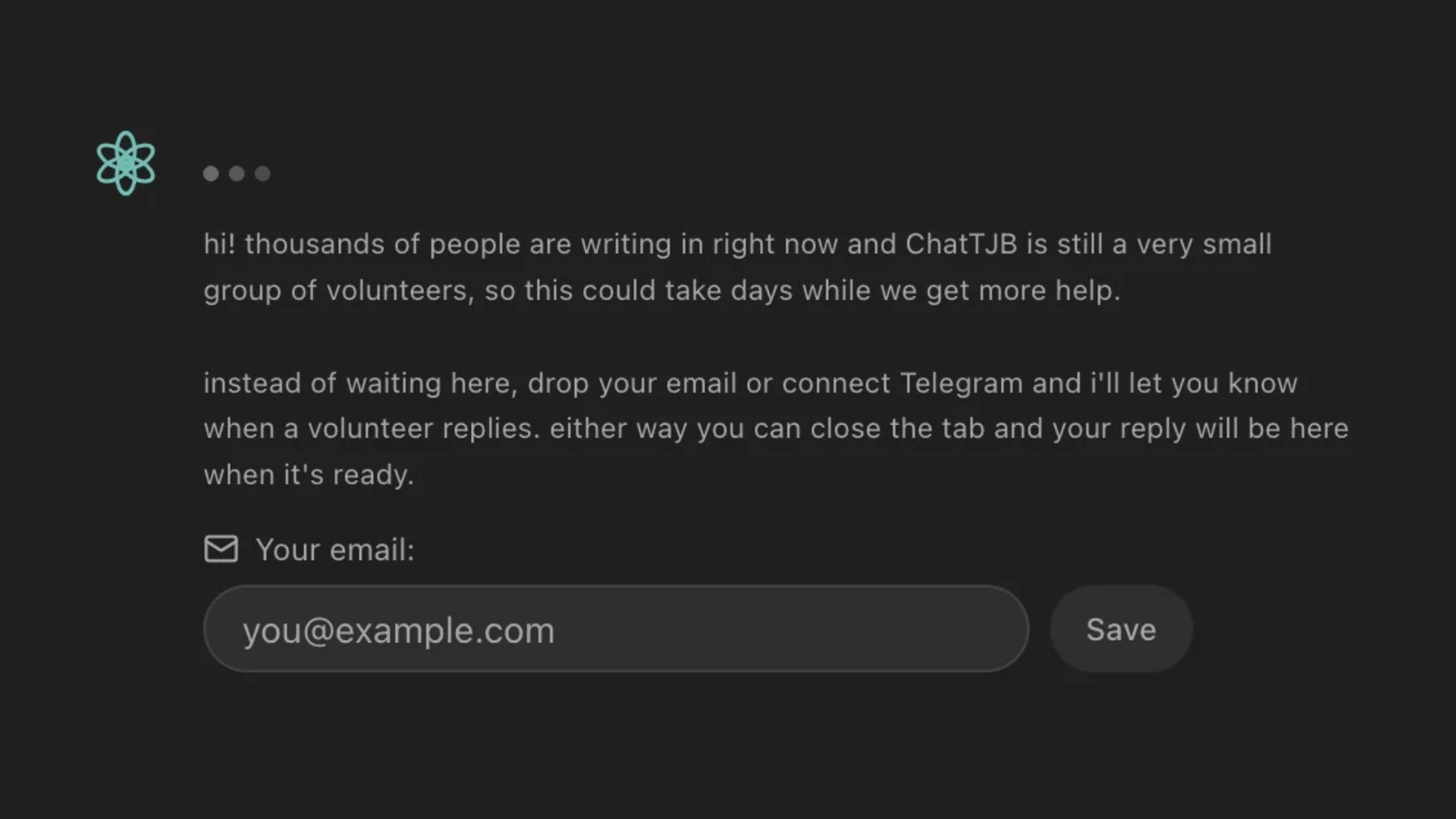
Bryant built the site months before anyone noticed it. It sat with barely any traffic through the spring, a solo art project with no audience beyond a few curious visitors. The site now warns that “thousands of people are writing in right now,” a message that would have made no sense back then. Something specific flipped the switch, and it happened almost overnight.
A $6,000 Billboard Set Off 30,000 Queries by August 6

Bryant put up the San Francisco billboard on July 27, and news coverage followed almost immediately. By August 6, ChatTJB had logged more than 30,000 queries. At his busiest point, Bryant says he was fielding roughly 5,000 prompts in a single hour, a peak that briefly turned one man’s laptop into the bottleneck for an entire city’s curiosity.
Bryant Calls It Art, Not a Joke or a Stunt
Bryant tells WIRED he considers ChatTJB “first and foremost” an art project rather than a bit or a social experiment. He describes it as commentary on what he calls “a strange moment” in how people relate to technology. He isn’t anti-AI. He even used the tool Lovable to vibe-code the ChatTJB website itself. His concern lives somewhere more specific than technology in general.
A Question About Sleeves Made Bryant Rethink Everything

Bryant points to “cognitive surrender,” the habit of accepting AI answers without scrutiny, as the idea behind ChatTJB. He recalls asking a chatbot whether to wear short or long sleeves on a 65-degree day in San Francisco, a city he’d lived in for seven years. He already knew the answer. Deferring to an LLM felt easier anyway, and that unsettled him enough to ask what he was doing.
Requests Range From a Skunk to a Birthday Dilemma

Recent asks have included a frog eating spaghetti, San Francisco Mayor David Lurie reimagined as Godzilla, and two black cats eating grass on a table. Written prompts cover just as much ground, from someone dreading an upcoming birthday party to people asking what to cook with whatever’s in their fridge. Bryant says people started as jokers and often ended up sharing something “more personal, sincere, genuine.”
3,000 People Applied to Help Answer Messages

Bryant expected ChatTJB to last a couple of days. Instead, he brought on 10 volunteers, selected from more than 3,000 applicants. For superfans, there’s ChatTJB Pro, a $5-a-month tier Bryant openly calls “worthless” since subscribers get nothing beyond the knowledge they’re supporting the project. About four people have signed up so far, nowhere near enough to cover the billboard, which stays up until late August.
Bryant Wants a ‘Weird Time’ to Sit a Little Lighter

Bryant says he built ChatTJB to give people a reason to reconsider their relationship with technology, not to sell them anything. Surrounded by companies promising world-changing tools and headlines warning of an AI bubble, he wanted to offer something smaller and stranger instead. “I hope that just makes a weird time sit a little bit lighter,” he says, “because I think sometimes that’s the best that we can do.”