Researchers Tore Apart Tesla and BYD Batteries and Found That Both Are Missing a Material Widely Considered Essential

Engineers at RWTH Aachen University cracked open a Tesla battery and a BYD battery expecting to catalog their differences. Instead they found something both cells had in common. Neither contained silicon, a material widely considered essential for boosting how much energy a battery can store. The findings, published in Cell Reports Physical Science, offer one of the first detailed side by side looks inside the batteries powering the world’s two best-selling EV brands.
Tesla and BYD dominate the global EV market in very different ways. Tesla leads sales across Europe and North America. BYD holds the top spot in China and has been expanding fast worldwide. Both companies guard their battery technology closely, releasing performance numbers but rarely details about materials or manufacturing. That secrecy left researchers with a knowledge gap they wanted to close.
Lead author Jonas Gorsch and his team at RWTH Aachen, working with the Fraunhofer Research Institution for Battery Cell Production, bought a Tesla 4680 cell and a BYD Blade cell and took them apart piece by piece. They measured electrode thickness, tested thermal performance, and mapped the exact chemistry inside each cell.
Tesla’s Cylindrical Cell Trades Cost for Range, BYD’s Flat Blade Trades Range for Safety

Tesla’s 4680 cell packs a cylindrical design about 46 millimeters wide, built to squeeze in as much energy as possible. According to Gorsch, the cell uses NMC811 chemistry, a nickel, manganese, and cobalt blend prized for high energy density. That density comes at a cost. The materials are more expensive, and the compact cylindrical shape traps heat more easily during fast charging.
BYD’s Blade cell takes the opposite approach. It’s a thin, flat prismatic cell that stretches roughly a meter long, built around lithium iron phosphate chemistry instead of nickel and cobalt. That chemistry is cheaper to produce and far more resistant to thermal runaway, the dangerous chain reaction that can cause battery fires. The tradeoff is lower energy density per kilogram than Tesla’s design.
The C&EN analysis found the gap shows up under real testing conditions. When researchers charged both cells at various rates, Tesla’s cell ran significantly hotter than BYD’s. BYD’s flatter shape dissipates heat more efficiently, giving it an edge for fast charging without the same thermal stress. Tesla’s design still wins on raw energy packed per pound of battery.
Neither Anode Contained a Single Trace of Silicon
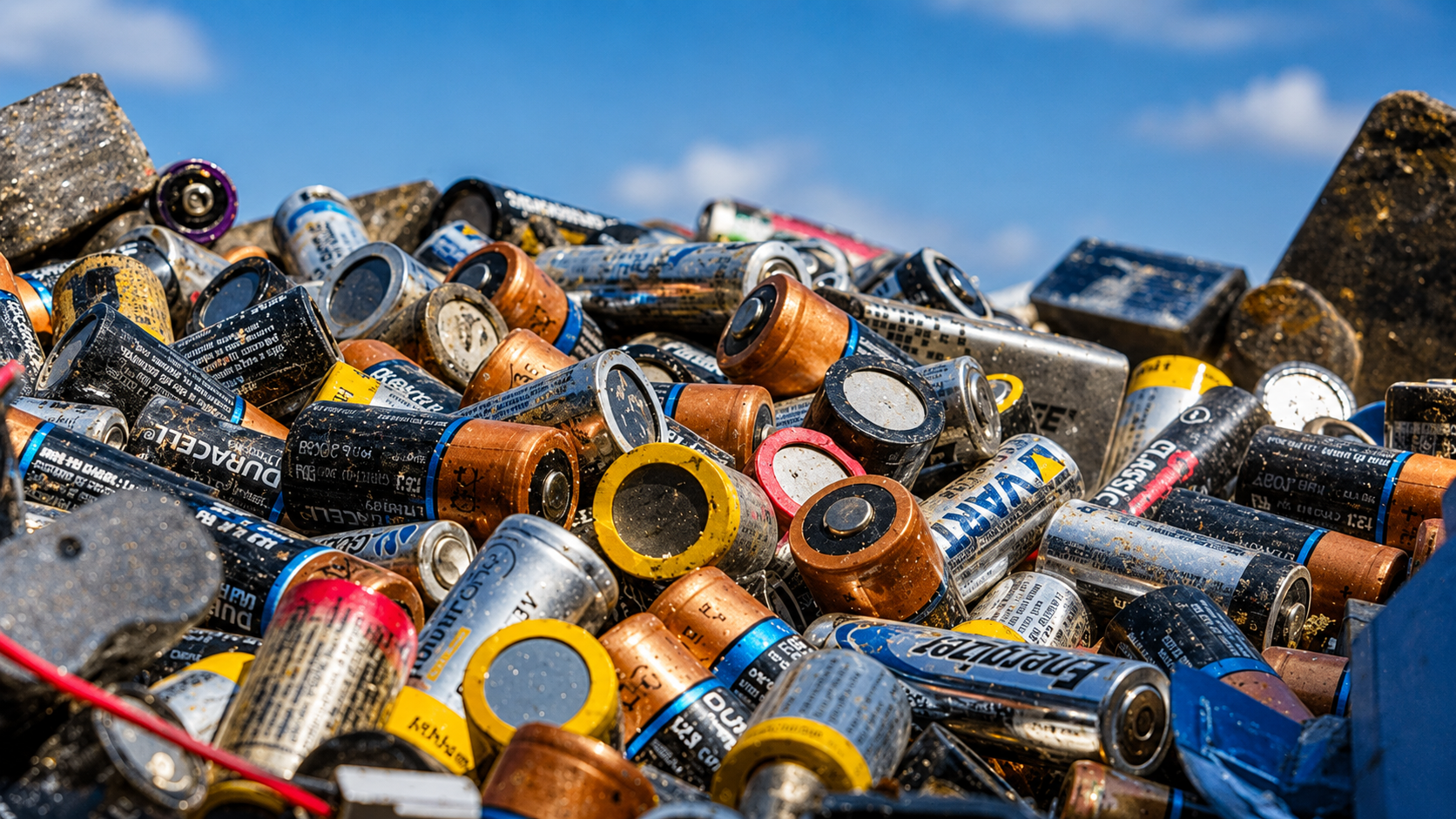
Buried in the electrode data was a result nobody on the team expected. Researchers ran an elemental analysis on both anodes, checking for the mix of materials each manufacturer used to build out their electrode coatings. Both the Tesla and BYD anodes came back built from plain graphite. Neither cell, not even Tesla’s high performance 4680, contained a single trace of silicon.
“We were surprised to find no silicon content in the anodes of either cell, especially in Tesla’s cell, as silicon is widely regarded in research as a key material for increasing energy density,” said Gorsch, according to ZME Science. Industry watchers have expected silicon-enhanced anodes to become standard in premium EV batteries for years, especially from a performance focused company like Tesla.
The AIChE report on the study points to a likely reason for the holdout. Silicon swells significantly during charging and discharging cycles. That swelling stresses the surrounding material and shortens battery life over time. Both Tesla and BYD may be prioritizing durability over the energy density gains silicon could theoretically provide, at least in these current cell generations.
The Teardown Sets a Concrete Target for the Next Generation of EV Batteries
The teardown revealed manufacturing choices too. Both companies use laser welding to connect thin electrode sheets to external contacts, a departure from the ultrasonic welding common across the industry. BYD adds an extra step, laminating the edges of the separator between anode and cathode to keep the electrode stack precisely aligned and prevent the short circuits that misalignment can cause in a prismatic design.
The Cell Reports Physical Science paper frames the comparison as a guide for the next generation of cell design, not a verdict on which company builds a better battery. Tesla’s approach suits performance and luxury vehicles willing to pay for range. BYD’s approach suits mass market EVs where cost, safety, and manageable heat matter more than squeezing out every extra mile.
Silicon’s absence from two of the industry’s most advanced production cells tells engineers something concrete. The material long treated as inevitable for next generation batteries has not cleared the bar for large scale automotive use, not because of cost, but because it still swells and degrades faster than graphite can tolerate at scale. That gap is now a defined target for the next wave of battery research.