People Whose Homes Are Always Clean Don’t Clean More Often; They Just Do These Small Things Differently



The cleanest-looking homes are often maintained in the seconds everyone else skips. A mug makes it all the way to the dishwasher. Shoes reach the rack instead of stopping beside it. A coat gets hung up rather than landing on a chair. People who consistently keep tidy spaces are not necessarily spending every spare hour cleaning; they are preventing dozens of unfinished tasks from accumulating into the mess that eventually demands an entire afternoon.
Professional organizers quoted by Real Simple describe this as putting things away immediately. Katrina Teeple, founder and CEO of Operation Organization, recommends the simple mantra, “Don’t put it down, put it away.” The principle is closely related to the “one-touch rule”: once an item is in your hand, take it to its actual home instead of relocating it to another temporary surface. That extra trip of a few seconds eliminates a second job later.
The same logic applies to dirt. House Digest recommends “micro-cleaning”: wiping the backsplash after doing dishes, removing hair from a shower drain immediately, or tackling another job when it takes less than two minutes. In the kitchen, cleaning while cooking can mean putting utensils straight into the dishwasher and wiping spills before they dry. Rather than repeatedly returning to clean up yesterday’s activity, the mess disappears while everyday life is already happening.
Their Homes Make Putting Things Away Almost Effortless
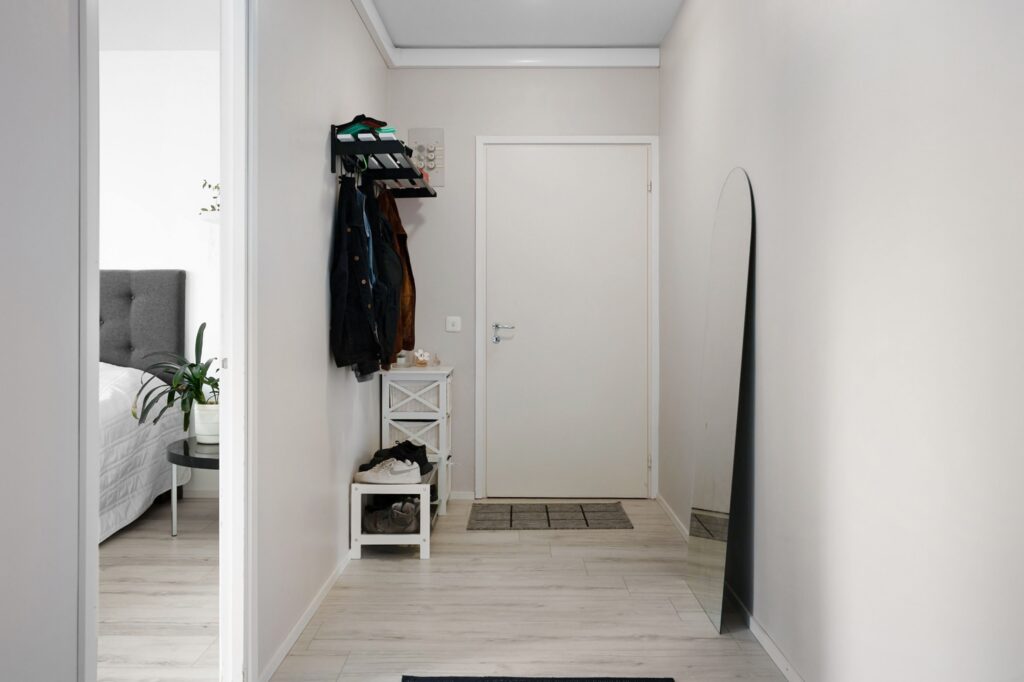
Good habits become considerably harder when the house itself fights them. If shoes belong in a closet across the house, laundry hampers sit far from where clothes come off, or keys have no designated landing spot, clutter becomes the path of least resistance. People with orderly homes tend to reverse that equation: the correct place for an object is also the easiest place to put it.
House Digest recommends storing belongings close to where they naturally “land.” That can mean a hamper beside the place where someone gets undressed, coat hooks near the entrance, or a bowl or tray for keys, wallets and sunglasses. Clear surfaces matter, too. A counter crowded with appliances, decor and loose objects takes longer to wipe, while an open counter can be cleaned in seconds. When several small items need to remain visible, grouping them on one tray makes them easier to move together.
Real households show how much that can matter. In a r/CleaningTips discussion, one parent described cleaning every day while raising three children and living with two large, slobbery dogs, yet still feeling as though the house never looked clean. Responses repeatedly shifted the conversation away from simply cleaning more. One commenter described organizing kitchen equipment into defined zones and reducing the number of dishes and glasses in daily circulation; another said systematically assigning belongings a place made a shared household much more functional. The point was not showroom minimalism, but reducing the number of objects and decisions competing for limited space.
They Use Short Resets Instead of Waiting for Cleaning Day
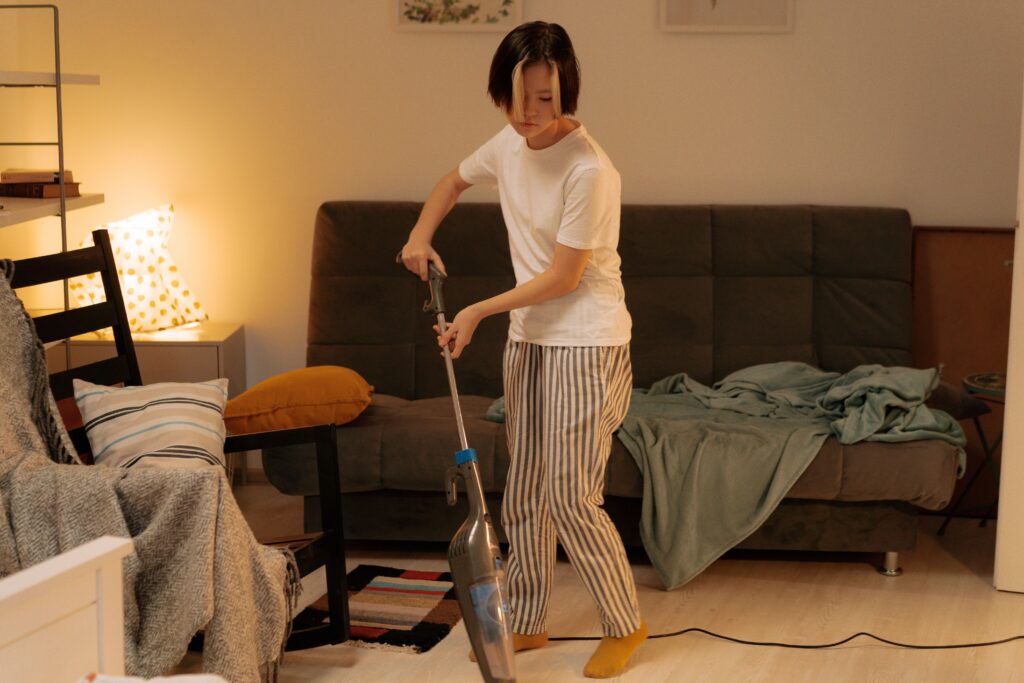
A house can deteriorate surprisingly quickly between big cleaning sessions because daily life never stops generating work. Meals produce dishes, clothes become laundry, toys leave their bins and mail reaches the counter. Waiting until everything needs attention at once makes cleaning feel enormous. A more manageable strategy is to interrupt that buildup with brief resets.
Professional organizer Jamie Hord recommends spending about 15 minutes at the end of the day clearing counters, putting away toys and handling other small chores. House Digest similarly describes straightening the house before bed—not deep-cleaning the shower or reorganizing drawers, but folding a blanket, returning cups to the dishwasher and quickly dealing with an obviously dirty floor. Vogue Adria offers a comparable routine of roughly 10 minutes to put things back, straighten cushions, run the dishwasher and leave the kitchen ready for morning.
Some jobs benefit from their own rhythm. A refrigerator can be checked weekly so aging leftovers and produce do not accumulate. Laundry can be handled when there is enough for a manageable load rather than waiting for an overflowing basket. A timer can also turn vague intentions into a defined cleaning window. The exact schedule matters less than preventing ordinary maintenance from repeatedly reaching emergency status.
They Control Clutter Before Trying to Clean Around It
Sometimes, the obstacle isn’t dirt at all. It’s volume. Every additional object needs a place to live, and when storage is already full, new possessions migrate to counters, chairs, and floors. These surfaces become harder to clean, vacuum, or visually assess. Cleaning harder won’t permanently solve a home with more belongings than its systems can comfortably handle.
That’s why decluttering frequently appears in advice about consistently tidy homes. Hord suggests removing unwanted or broken items as soon as the decision is clear and using a one-in, one-out rule when storage is already at capacity. House Digest agrees, stating that small, frequent decluttering sessions can be easier than dismantling an entire home for a marathon purge. Even rotating decorative objects instead of displaying everything simultaneously can reduce visual clutter.
The larger difference, then, isn’t that people with clean homes have discovered a way to eliminate housework. They simply make fewer messes that need to be cleaned. They give belongings convenient addresses, complete small tasks while they’re still small, regularly reset high-use rooms, and prevent possessions from overwhelming available space. A home with children, pets, cooking, and ordinary life will still get dirty—the Reddit discussion makes that reality particularly clear. However, when disorder is managed in small increments, cleaning stops being a rescue operation and becomes what the consistently tidy have made it all along: routine maintenance.