People Who Report Out-of-Body Experiences May Have Something in Common, Study Finds


Human consciousness holds many profound mysteries, but few are as captivating as the sensation of floating completely outside one’s physical form. While these episodes often sound like topics reserved for science fiction, recent scientific inquiry reveals that they are much more frequent than most people assume, pointing to shared underlying psychological and biological patterns among those who experience them.
Understanding the Prevalence of Out-of-Body Phenomena

A significant portion of the global population reports hovering outside their physical bodies, with historical data suggesting that between 10 and 20 percent of individuals have encountered this unusual state at least once. These occurrences completely shift how people perceive reality, creating a distinct feeling of detachment that temporarily separates the conscious mind from its usual anatomical anchor.
The Surprising Variety of Situational Triggers

Interestingly, the catalysts for these events are incredibly diverse and often completely contradictory, meaning they can manifest during moments of profound peace or intense distress. Some individuals transition into this state while practicing quiet meditation or deep relaxation, while others find themselves cast out of their physical forms during moments of severe physical danger, psychological shock, or bodily trauma.
Emotional Responses and the Sensation of Floating

Once the event begins, the psychological reaction can range from absolute tranquility to intense panic, particularly when individuals worry they might never find their way back to reality. Witnesses frequently describe looking down at their own physical shapes from an elevated vantage point, feeling as weightless as air while observing their Earthly forms from a distance of several feet.
Uncovering the Neurological Roots of Detachment
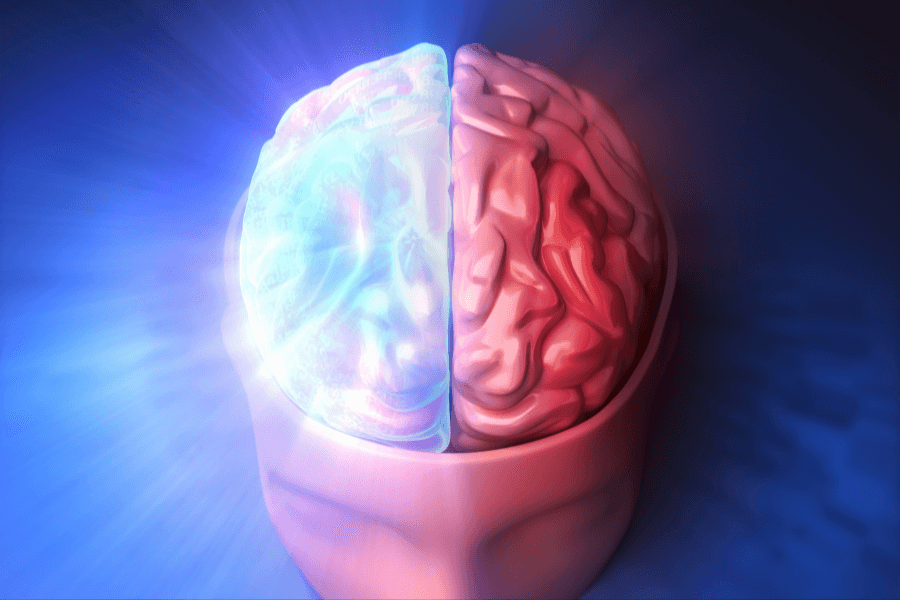
Historically, researchers suspected that inner ear complications might distort spatial awareness, but subsequent clinical trials focused on a specific brain region known as the right angular gyrus, which blends visual data with physical feedback. By applying electrical stimulation to this node during operations, scientists in Switzerland triggered the phenomenon in a patient undergoing brain surgery, which was later mirrored in a 2007 case where a patient seeking a cure for tinnitus experienced identical episodes.
A New Investigation by the University of Virginia

Seeking deeper insights into these occurrences, a research team led by neuroscientist Dr Marina Weiler at the University of Virginia’s Division of Perceptual Studies examined the shared traits of people who navigate these episodes. The scientists gathered a diverse cohort of 545 adult participants, collecting extensive data regarding their psychiatric histories, physical health backgrounds, and personal life paths to identify underlying correlations.
Statistical Patterns of Frequency and Modern Catalysts

The collected data showed that 80 percent of the affected individuals had endured between one and four episodes, while the remaining 20 percent reported five or more occurrences. Furthermore, roughly 74 percent of these instances happened spontaneously, whereas smaller segments of the cohort traced their experiences back to the use of psychoactive compounds, meditation practices, or hypnosis.
Measuring the Connection to Dissociative Traits

The final results revealed a clear trend, as the group reporting these experiences demonstrated higher rates of common mental health challenges like anxiety and depression. Additionally, these participants scored significantly higher on the Dissociative Experience Scale Taxon, with 40 percent scoring above 20 to exhibit moderate dissociation levels, compared to a mere 14 percent in the non-OBE control group.
Childhood Trauma and Subconscious Coping Mechanisms

The data also highlighted a compelling link to early life adversity, revealing that individuals who faced severe childhood trauma were much more likely to report these occurrences later in life. Rather than viewing the phenomenon as a sign of mental decline, the authors proposed that the subconscious mind might deploy this mechanism as a protective shield, offering a temporary escape from painful realities or a way to safely process distressing memories.
Challenging the Stigma in Clinical Settings

Because of the societal shame surrounding these unusual episodes, many individuals suffer in silence out of fear that they will be misdiagnosed or judged harshly by others. Dr Weiler emphasized that medical professionals must change how they view these events, urging practitioners to approach patients with empathy, sensitivity, and open minds instead of immediately assuming pathology.
The Vital Need for Nuanced Future Research

While this study uncovers vital connections, scientists agree that further exploration must isolate the exact environments where these events unfold. Because an episode triggered by meditation likely involves different brain mechanisms than one caused by psychedelic substances or sudden accidents, future inquiries must focus on these contextual details to fully decode the mysteries of human perception.