Owners of Cars With a Parking Brake Button May Be in for an Expensive Surprise at the Repair Shop


The switch you press to park has replaced the lever and foot pedal on many new cars. Autopost Global notes electronic parking brakes now come standard on entry-level subcompacts and city cars, though they were once reserved for imported luxury nameplates. Instead of pulling steel cables, the system leans on electric motors. The convenience is real, but so is the catch waiting at the repair shop.
Press the switch, and a control module sends a command to motors on the rear calipers, which clamp the caliper pistons against the rear rotors. Some designs use motorized calipers on discs or integrated drum brakes. The module checks motor current, position sensors, and circuit health every time the brake applies or releases, and it flags a fault if a reading drifts outside its calibrated range.
Part of the appeal is how well the switch plays with other features. Auto Brake Hold can keep pressure on the brakes at red lights and in stop-and-go traffic without your foot on the pedal. Japanese-market automakers Honda and Daihatsu paired standard electronic parking brakes with adaptive cruise on models like the N-Box and Tanto, while Toyota’s redesigned Aqua kept foot-operated mechanical brakes and let its ABS block do the holding, Autopost Global reported.
More Parts That Can Fail
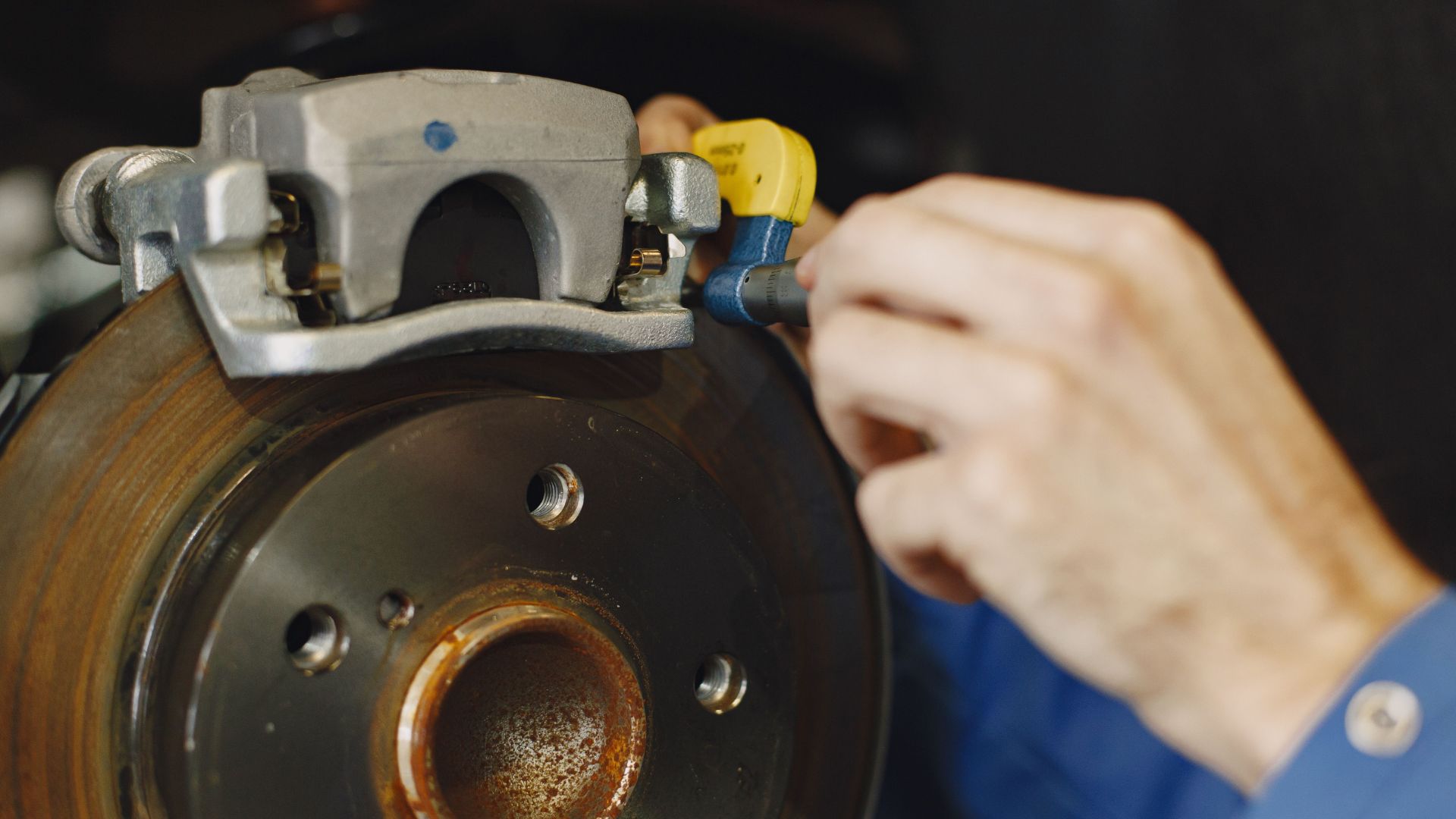
A simple cable system has fewer parts to fail. Going electronic puts motors in the calipers and adds wiring and microcontrollers, so a fault has more places to start. According to Car Justify, caliper motors are the most frequent failure point because they sit near heat, moisture, road salt, and brake dust. Over time, the internal brushes can wear down, the armature can corrode, or the gears can strip.
Wiring is another weak spot. The connectors at each rear caliper take water, salt, and repeated heating and cooling, and corrosion on the terminals can disrupt communication with the motors. A weak battery can cause similar trouble because the module needs steady voltage. Drivers may notice a warning after wet weather or on cold mornings, then see it vanish once the connectors dry out or the car warms up.
When the system senses a problem, the dashboard may display “Park Brake Limited Function Service Required.” On GM trucks and SUVs, where the message is most commonly seen, the warning means the brake may still apply some clamping force but cannot guarantee full holding power. Regular braking, ABS, and stability control are unaffected, since the electronic parking brake is separate from the hydraulic service brake system.
What the Shop Visit Looks Like

Swapping rear pads and rotors now means retracting the caliper motors into a service mode, which often takes an OBD-II scan tool or a specific pedal-and-dashboard routine. Afterward, many platforms need the caliper gap recalibrated, and the sensors relearned. Autopost Global says that software barrier makes the job tougher for home mechanics. Failed actuator motors or wheel sensors can push diagnostic, parts, and labor costs far beyond a traditional brake repair.
Car Justify’s estimates show how the bill can climb. Its figures put a battery replacement or connector cleaning under $200, while an actuator motor or caliper replacement typically ran $400 to $800 per side with parts and labor. Doing both sides at those rates would add up to $800 to $1,600. A control module replacement with programming could run $600 to $1,200 at a dealership.
Where you go matters too. A dealership costs the most but has factory scan tools and the programming ability that replacement modules on newer vehicles require. Independent shops often charge lower labor rates, though it is worth confirming they can program a module before approving the work. DIY can work for actuators, connectors, and switches if you have basic mechanical skills and a scan tool that can command the module.
What to Keep in Mind

There are wrinkles beyond the shop, too. Because the brake engages and releases electrically, a dead battery or damaged electrical harness can leave the rear brakes locked. That makes a stalled car harder to push or tow, and getting it onto a flatbed may take wheel dollies. The Japan Automobile Federation also cautions that parking brakes that engage automatically at shutoff can freeze to the discs in subzero temperatures and slush.
If the warning does appear, the car can still be driven, but the parking brake should not be trusted on hills. Shifting into park and turning the wheels toward the curb adds a backup. Even if the message fades on its own, the stored fault codes remain, so a scan is still worthwhile. Disconnecting the battery may clear the message briefly without properly resetting the system.
None of this makes the switch a bad deal, since Auto Brake Hold and adaptive cruise do help reduce commuting fatigue. Still, it helps to know what sits behind that button. Including the rear motors, the wiring that feeds them, the battery that powers them, and the software a shop may need to service the system. That way, the first dash warning does not come as a surprise.