New 2027 Tax Brackets Are Out. See What They Could Mean for Your Wallet

On Thursday, Nov. 5, the IRS published its 2027 inflation adjustments, covering nearly 70 provisions of the tax code. Most people will never read the full notice, yet it quietly decides how much of next year’s income gets taxed at a lower rate. Some households could keep a few hundred dollars they would have owed under this year’s numbers. Others may find the changes work against them, depending on one detail about their 2027 paycheck.
All Seven Federal Tax Rates Stay Put for 2027, From 10% Up to 37%

The seven federal rates (10%, 12%, 22%, 24%, 32%, 35% and 37%) stay exactly where they were in 2026. Anyone hoping for a lower rate will not find one in this release. What moved are the dollar amounts marking where each rate begins, and every one of them went up. Those thresholds decide which slice of your income meets which rate. A single inflation figure drives the size of each increase, and it came in higher than in recent years.
A 3.2% Inflation Adjustment Drives Every Bracket Increase, Up From the Past Two Years
NerdWallet reports that the IRS set the 2027 adjustment at 3.2%, larger than in each of the previous two years. The goal is to prevent “bracket creep,” where a cost-of-living raise pushes income into a pricier bracket even though buying power stays flat. Because every threshold grew by roughly 3.2%, a raise of that exact size leaves your tax rate where it is. Raises of other sizes get treated very differently, and the gap widens the higher you climb.
Single Filers Can Earn $52,025 Before Leaving the 12% Bracket, Up From $50,400

For single filers, the 10% bracket now covers income up to $12,800, compared with $12,400 this year. The 12% bracket stretches to $52,025, and the 22% bracket runs to $109,125, up from $105,700. At the top of the table, the 37% rate begins above $661,375 instead of $640,600. Each step hands a lone earner a little more room at a cheaper rate. Married couples get the same treatment on a larger scale, and one of their numbers stands out.
Joint Filers Can Earn Up to $104,050 and Stay at 12%, a $3,250 Jump

Married couples filing jointly see the 10% bracket end at $25,600 and the 12% bracket end at $104,050, versus $100,800 in 2026. NerdWallet notes that this lets some couples shelter an additional $3,250 of income from a higher rate. The 37% rate now starts above $793,650, up from $768,700. Heads of household and married people filing separately have updated tables too. Whether $3,250 of extra room sounds big or small depends on what it saves, and the arithmetic holds a surprise.
Extra $3,250 Taxed at 12% Instead of 22% Trims a Couple’s Bill by $325

The savings come from the gap between rates. Income that now falls under 12% instead of 22% is taxed 10 cents less per dollar, so $3,250 of room works out to $325. Running the full 2026 and 2027 schedules on identical income, a couple with $200,000 in taxable income owes about $341 less, and a single filer with $100,000 owes about $170 less. Those are modest sums, and the bigger story sits in what happens when your pay changes.
Raises Above 3.2% Could Push a Slice of Pay Into a Higher Bracket
The brackets grew 3.2%, so a raise of that size leaves a worker’s spot in the table about where it was. A smaller raise keeps more income in the lower brackets. A bigger raise, a bonus or a side gig does the opposite, because the extra dollars climb faster than the thresholds do. Only the portion above each line gets taxed at the higher rate, a detail that surprises many people. Two other lines on the return grew as well, and both apply before a single bracket comes into play.
Standard Deduction Reaches $16,600 for Single Filers and $33,200 for Joint Filers
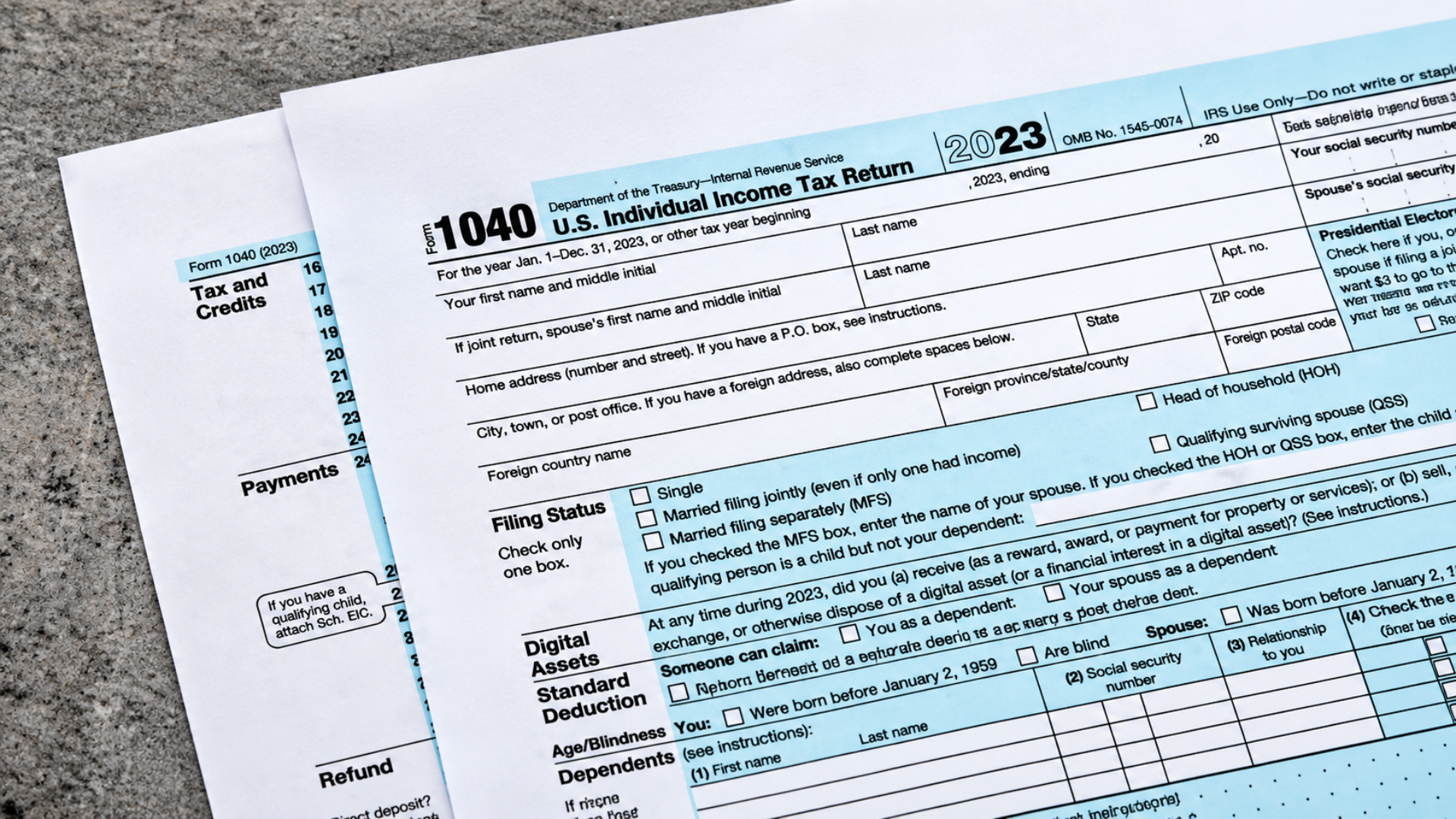
Before any bracket applies, the standard deduction removes a flat amount from taxable income. For 2027 it rises $500 for single filers and $1,000 for joint filers, with heads of household at $24,925. The maximum child tax credit climbs $100 to $2,300 per qualifying child, according to NBC Miami. A new Education Freedom Tax Credit also launches Jan. 1, worth up to $1,700 ($3,400 for couples) for gifts to K-12 scholarship groups in participating states. Savers got news too, and one limit did not budge.
401(k) Limit Rises $1,000 to $25,500 for 2027 While the IRA Cap Holds at $7,500

Workers can defer up to $25,500 into a 401(k) next year, up from $24,500, the IRS said. IRA contributions stay capped at $7,500, the same as 2026. Health savings accounts allow $4,500 for self-only coverage and $9,000 for family plans, and health FSAs allow $3,500. Contributions made before tax shrink taxable income, which is why they matter right at the bracket lines. Every figure in this gallery applies on a calendar that stretches well past next January.
2027 Income Gets Taxed Under the New Brackets, With Returns Filed in 2028

The new thresholds govern income earned during 2027 and show up on tax returns filed in 2028. With the rates unchanged, the dollar impact comes down to timing and income. A steady paycheck gains a few hundred dollars of room, income growing faster than 3.2% gives some of it back, and pre-tax savings stretch the benefit further. The 3.2% adjustment protects purchasing power far more than it cuts anyone’s taxes.