NASA Scientists Confirmed China’s Massive Dam Actually Slows Earth’s Rotation
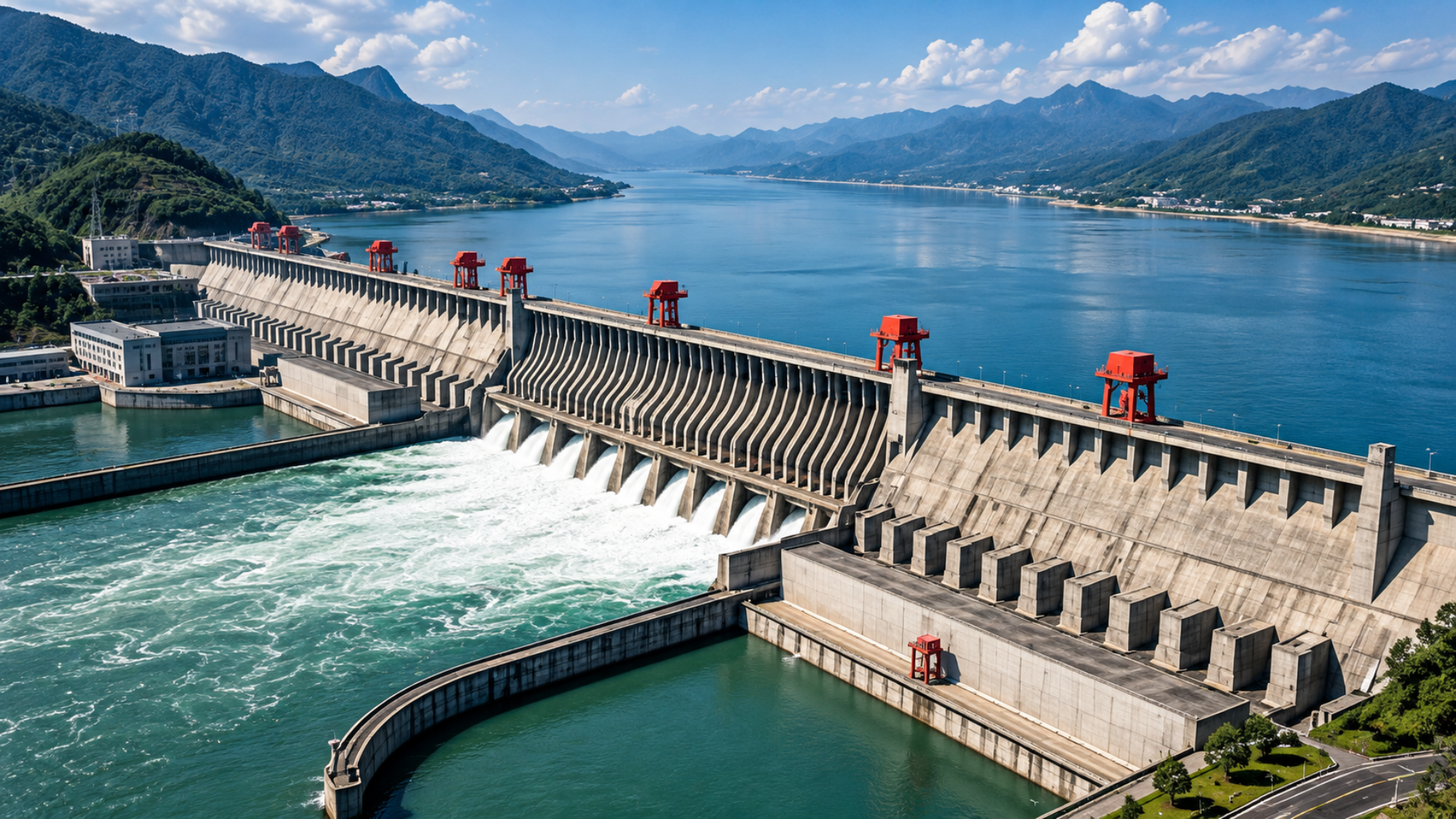

A structure on the Yangtze River is doing something no dam was ever designed to do. It is altering how fast the entire planet spins. The Three Gorges Dam stretches more than 2,300 meters across and rises 185 meters into the sky, and behind it sits enough water to measurably change Earth’s rotation. NASA scientists confirmed the effect two decades ago, and the physics behind it is stranger than the headline suggests.
Completed in 2012, the dam holds back roughly 40 cubic kilometers of water, about 10 trillion gallons, at an elevation of 175 meters above sea level. That height is the entire reason this works. Generating over 80 billion kilowatt-hours of electricity annually while controlling floods along the Yangtze, the dam already reshaped a region and displaced more than a million people. Its effect on planetary rotation was never part of the plan.
The claim did not originate from speculation or viral social media rumor. It traces back to a 2005 calculation by two NASA-affiliated geophysicists studying an entirely different disaster: the catastrophic 2004 Indian Ocean earthquake. What they found while examining that earthquake’s effects on Earth led them somewhere unexpected, straight to a dam being built on the other side of the world.
A 9.0 Earthquake Revealed the Physics Behind the Dam’s Power
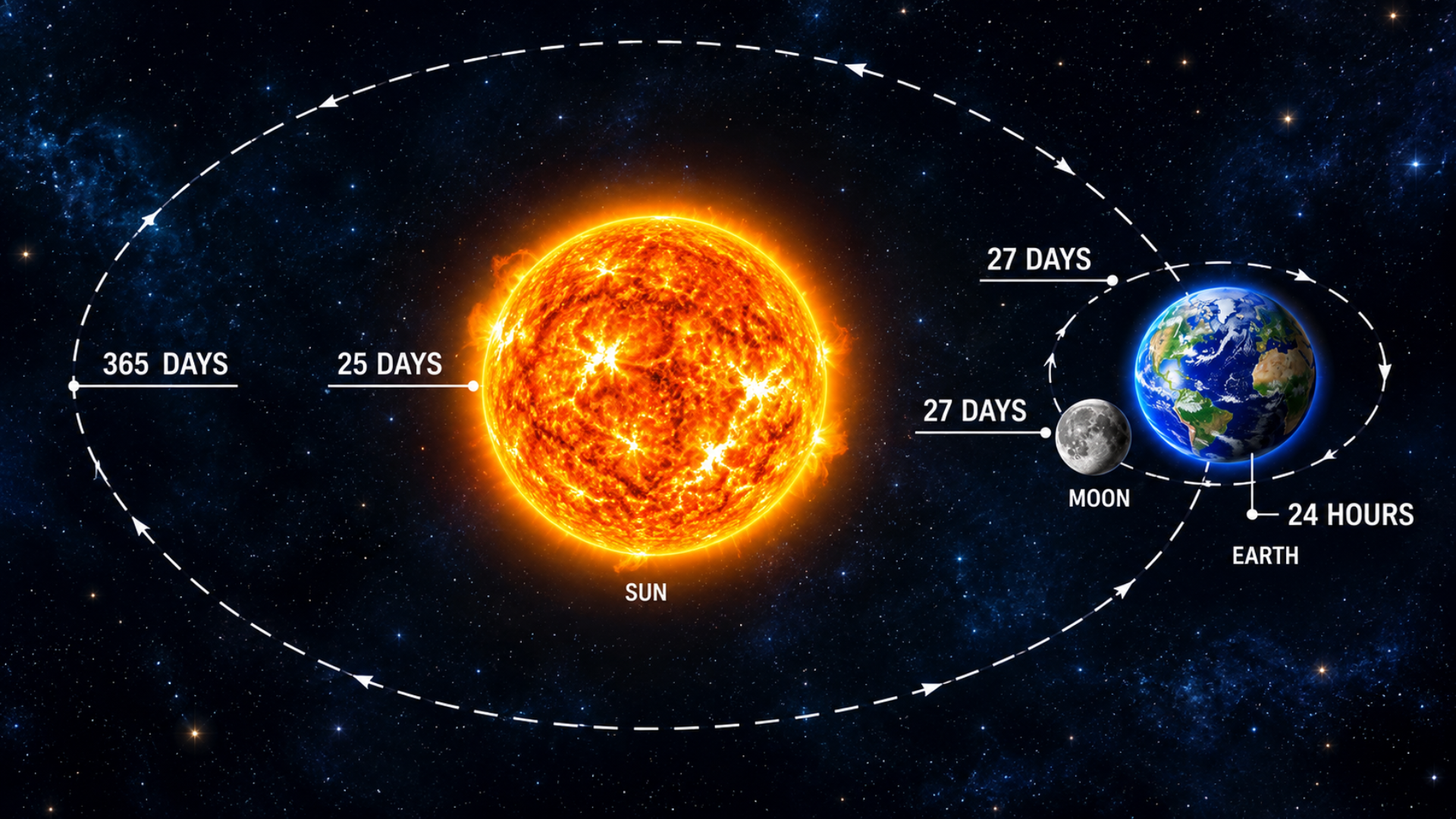
Dr. Benjamin Fong Chao at NASA’s Goddard Space Flight Center and Dr. Richard Gross at NASA’s Jet Propulsion Laboratory were analyzing the magnitude 9.0 Indian Ocean earthquake, the fourth largest recorded in a century. That earthquake shortened Earth’s day by 2.68 microseconds and shifted the planet’s mean North Pole by roughly 2.5 centimeters. The scale of that shift, from a single geological event, gave the researchers a framework to test against something entirely man-made.
Applying that same framework to the Three Gorges Dam, Chao and Gross calculated that filling its reservoir would lengthen Earth’s day by 0.06 microseconds and shift the pole by about 2 centimeters, or 0.8 inches. The dam also decreases Earth’s oblateness, its natural flattening at the poles, making the planet fractionally rounder in the middle. NASA’s findings held up under the same physics that explained the earthquake.
The mechanism is called moment of inertia, the same principle that governs a spinning figure skater. Pull the arms in and the spin speeds up. Extend them outward and the spin slows. Earth behaves identically. When mass moves farther from the planet’s rotation axis, as it does when 40 cubic kilometers of water gets lifted 175 meters higher than its natural resting point, the entire planet’s spin responds accordingly.
The Effect Is Real, But Astronomically Small
Chao emphasized in NASA’s original release that this isn’t unique to megastructures. “Any worldly event that involves the movement of mass affects the Earth’s rotation, from seasonal weather down to driving a car,” he explained. The dam’s effect is measurable using precise instruments, but it exists on a scale that has nothing to do with any noticeable change to daily life on the planet’s surface.
Context makes the number’s size clear. The moon’s gravitational pull alone slows Earth’s rotation by about 1.7 milliseconds per century, roughly 17,000 times greater than the dam’s total annual effect. Even the 2004 earthquake’s 2.68-microsecond shift, itself too small for instruments to feel directly, dwarfs the dam’s 0.06-microsecond contribution by a wide margin. Independent fact-checks have confirmed these figures are accurate, not exaggerated.
None of this makes the Three Gorges Dam’s rotational effect meaningless to scientists, though. It proves something significant: human engineering has reached a scale where physicists must now factor infrastructure into planetary calculations once reserved for earthquakes, tides, and ice ages. The dam isn’t unique in this respect. It’s simply the most visible entry on a growing list.
Humans Are Nudging the Planet in More Ways Than One

The dam is far from alone in this quiet reshaping of planetary motion. Between 1993 and 2010, humans pumped an estimated 2,150 gigatonnes of groundwater out of the ground for irrigation and other uses, an amount large enough to shift Earth’s rotational pole nearly 80 centimeters eastward. Researchers only identified groundwater as a factor after their climate models kept failing to match observed polar drift.
Melting ice caps in Greenland and Antarctica add another layer to the pattern. As polar ice melts and that water redistributes toward the equator, it moves mass farther from Earth’s rotation axis, the same mechanism at work with the dam, just operating at a much larger and accelerating scale tied directly to climate change. Scientists can now measure these shifts with a precision that would have seemed impossible a generation ago.
The cumulative effect of these changes has led some researchers to floating an unusual idea: a “negative leap second,” a single minute containing only 59 seconds, to keep human timekeeping systems aligned with the planet’s actual rotation. That possibility remains distant and unconfirmed. But its mere discussion signals how seriously scientists now treat the intersection between human activity and the physics governing an entire planet’s spin.
Nothing about the Three Gorges Dam’s effect on Earth’s rotation qualifies as dangerous or even detectable without specialized instruments. Its real, immediate impact remains energy production, flood control, and the environmental transformation of an entire river system. But the 0.06-microsecond shift stands as proof of something larger: modern engineering has crossed into territory where the same physics explaining a spinning skater now applies to structures built by human hands, at a scale physicists once reserved for the movements of oceans, ice sheets, and the Earth itself.