NASA’s Juno Mission Probe Reveals Strange Findings Deep Within Jupiter
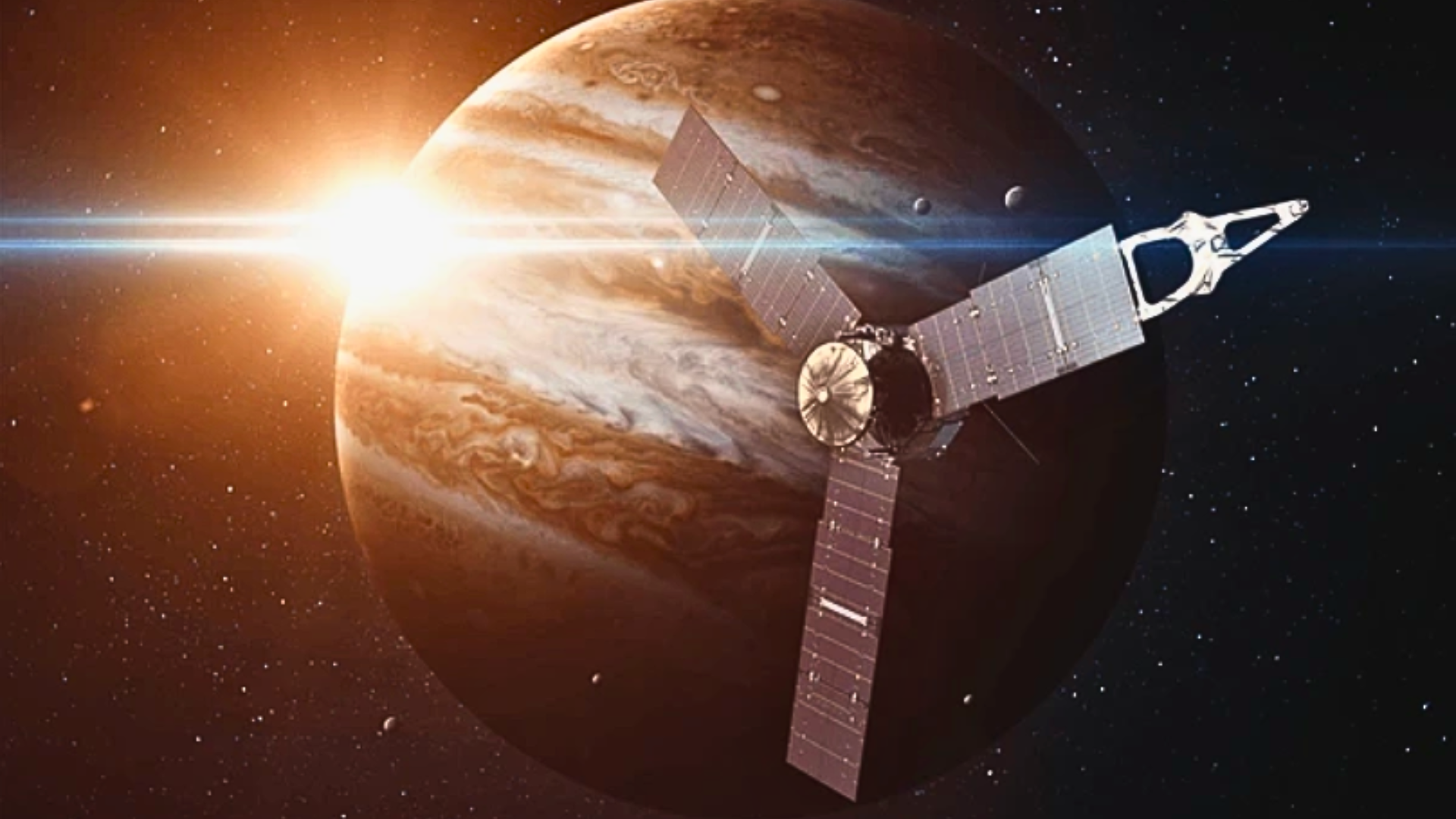

For over half a century, the King of Planets was believed to be a massive ball of gas anchored by a dense, rocky core. But recent data from NASA’s Juno spacecraft has accidentally shattered that long-standing scientific certainty. Instead of a solid heart, Juno found a bizarre, fuzzy core where heavy elements gradually dissolve into liquid hydrogen layers. This massive region of diluted material extends through nearly half of the planet’s radius, suggesting that Jupiter is far more complex than any textbook ever predicted. The discovery has sent shockwaves through the astronomical community, forcing a complete rewrite of our solar system’s origin story.
Groundbreaking measurements of Jupiter’s gravity and magnetic fields revealed that the planet’s interior is a swirling, messy mixture rather than a series of neat layers. Scientists now believe this fuzzy core could be the result of a colossal, head-on collision between a young Jupiter and a proto-planet ten times the size of Earth. This ancient celestial car crash would have shattered the original core, mixing heavy elements into the gas and creating the strange, diluted center we see today. What researchers found next in the radio data only added to the mystery, as it turns out Jupiter is also slightly smaller and more squashed than previously estimated.
The findings are especially relevant today as we enter a new golden age of Jovian exploration. With the recent 2026 breakthroughs, Juno is no longer just a solo mission; it is the essential scout for the upcoming Europa Clipper and JUICE missions. By revealing that the solar system’s largest planet is 8 kilometers narrower at its equator than we thought, Juno is providing the precise calibration needed to study exoplanets across the galaxy. What began as a mission to look beneath the clouds has become a journey that is redefining the very scale of our cosmic neighborhood.
Inside The Fuzzy Core
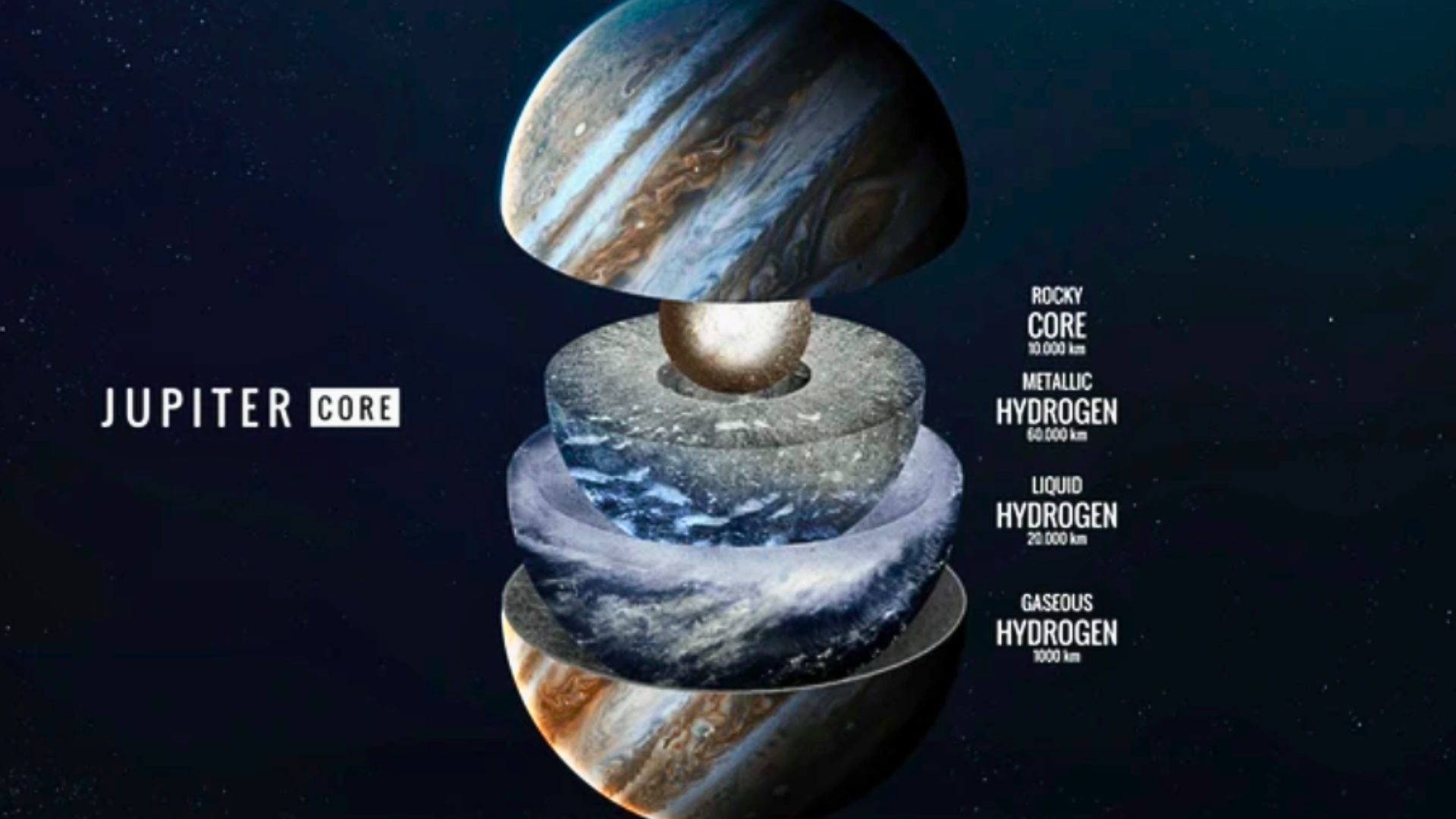
The Juno spacecraft utilizes a technique called radio occultation to see through Jupiter’s opaque clouds, a method that has finally unveiled the planet’s internal architecture. By beaming radio signals back to Earth’s Deep Space Network, Juno allows scientists to calculate the temperature, pressure, and density of the Jovian interior based on how those signals bend. The physical evidence revealed that the transition from the gaseous atmosphere to the deep interior is not a sharp boundary. Instead, the heavy elements are in a state of constant, slow-motion mixing, creating a core that is far larger and less compact than scientists expected.
Recent models published in early 2026 have upped the ante by exploring the oxygen content hidden beneath the storm clouds. It turns out Jupiter contains about one and a half times more oxygen than the Sun, a concrete detail that helps scientists constrain how the planet originally formed from the solar nebula. Furthermore, Juno’s gravity measurements showed that Jupiter’s powerful jet streams extend 3,000 kilometers deep, far below the visible weather. This suggests that the planet’s atmospheric winds are actually deep-seated convection systems that subtly reshape the planet from the inside out.
Despite the intense radiation environment, Juno has managed to capture the highest-resolution images ever taken of Jupiter’s moons. In late 2025 and early 2026, the probe provided breathtaking new insights into the ice shell of Europa and the lava lakes of Io. These observations are grounding our search for extraterrestrial life in reality, as the data on Europa’s subsurface structure is critical for determining if its saltwater ocean could be habitable. Juno has successfully peered through the haze to reveal that Jupiter’s true nature is a dynamic, ever-changing masterpiece of physics.
Why the Sighting is Relevant
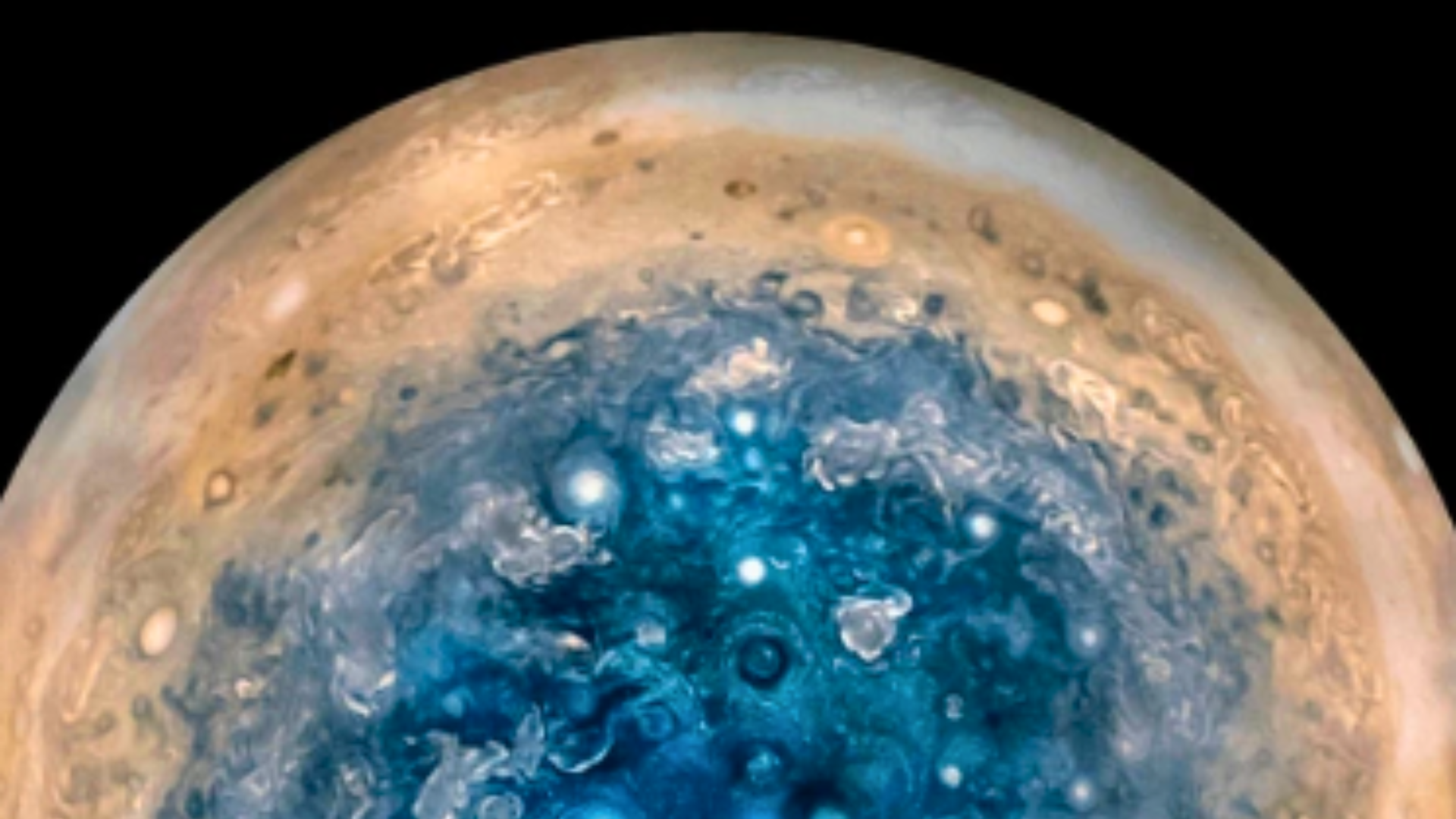
The pivot from a solid-core theory to a fuzzy-core reality marks a massive shift in planetary science. For decades, Jupiter was treated as a constant, the baseline for all gas giants. Now, the discovery that the planet is smaller and more squashed than the 1970s Voyager data suggested has created a localized earthquake in astronomical modeling. This correction is worrisome because it means our measurements of thousands of exoplanets—which are often compared to Jupiter—may need to be adjusted. The King of Planets is essentially on a diet, and the rest of the galaxy might have to follow suit.
The larger implications connect to the violent history of our solar system. If a massive proto-planet collision created Jupiter’s fuzzy core, it suggests that planetary development is a chaotic, high-stakes game of celestial billiards. This reflects a broader pattern in 2026 space news: the early solar system was not a peaceful place, but a war zone of collisions. While this provides a fascinating new angle on our origins, it also raises questions about the stability of other planetary systems. We are watching the history of our neighborhood being rewritten in real-time.
Widen your scope, and the impact reaches the future of humanity’s presence in space. Juno’s findings on the thickness of Europa’s ice shell are currently the most important data points in the search for alien life. If the shell is too thick, it could mean that the ingredients for life are trapped forever in the dark. However, Juno’s recent detection of Callisto’s elusive footprint in Jupiter’s auroras suggests that all four Galilean moons are more geologically active than we ever imagined. This creates a fascination that is driving a surge in public support for deep-space exploration.
The Question of Juno’s Final Descent
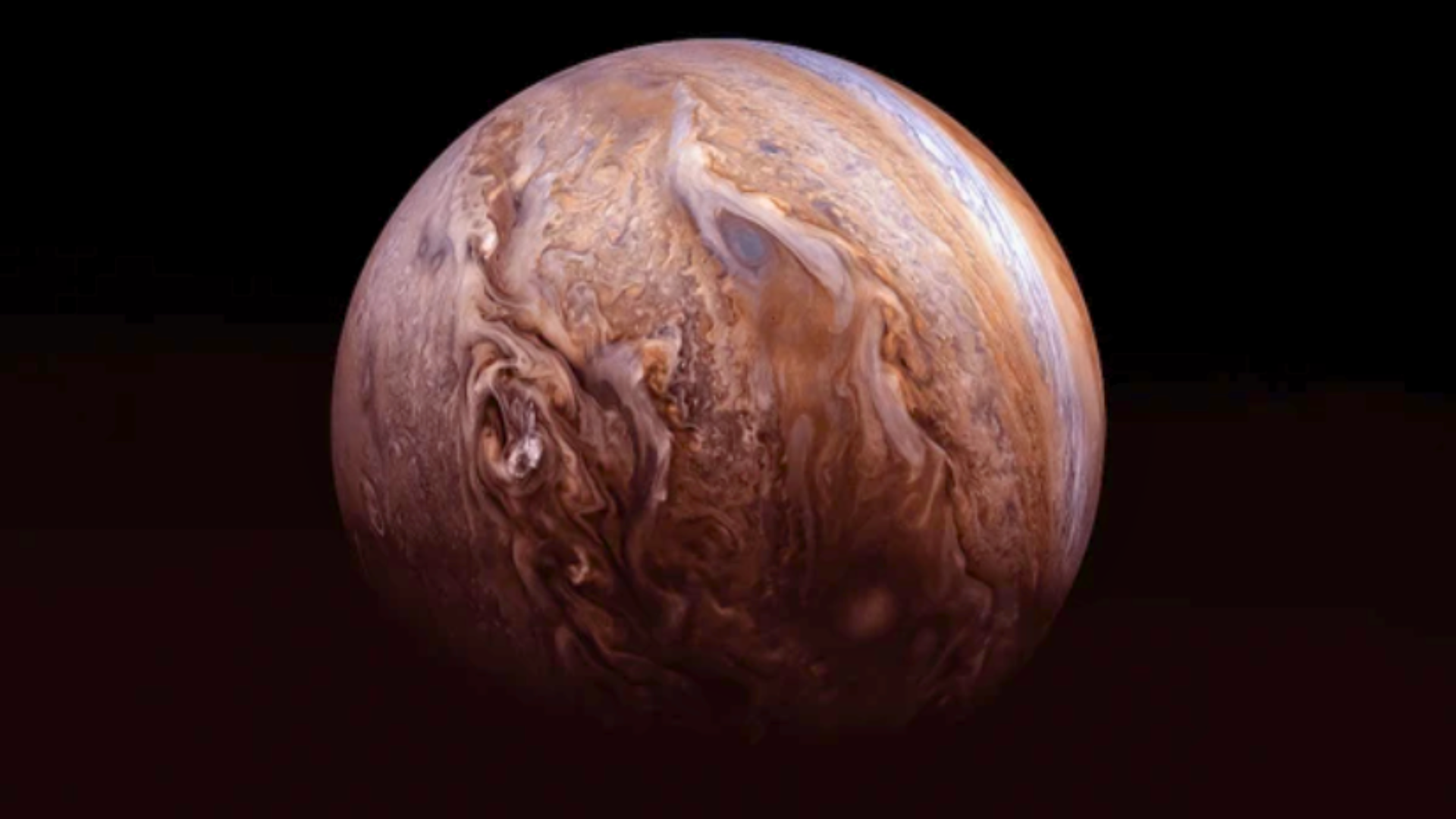
As we move through 2026, the focus is shifting to the final act of this historic mission. Juno has already survived far longer than its intended lifespan, enduring radiation doses that have fried most of its optical instruments. The return to urgency is clear. NASA is currently weighing a potential second extended mission that could keep the probe alive until 2028, provided the fuel holds out and the radiation belts don’t deliver a fatal blow. If no extension is granted, Juno will be intentionally crashed into Jupiter’s atmosphere to prevent any contamination of the moons.
The big takeaway is that we are in a race to collect as much data as possible before the probe goes silent. With the Europa Clipper and JUICE missions currently in transit, Juno is the only active eye we have in the Jovian system. The unique silhouette of the three-bladed spacecraft continues to spin through the radiation, sending back radio signals that are the final statement on a decade of discovery. Whether it ends this year or continues for two more, Juno has already achieved its goal of breaking through the haze to see Jupiter’s true self.
Juno’s strange findings deep within Jupiter prove that the closer we look, the more we realize how much we have left to learn. By overturning 50 years of space history, this mission has doused the world in a renewed sense of wonder. The King of Planets may be a bit smaller and a bit fuzzier than we thought, but it is also far more incredible. The next few years of space exploration will be built on the foundation of what Juno found beneath the clouds, proving that in the quest for knowledge, the sky is never the limit.