NASA Detects Comet Making a Sudden Cosmic ‘U-Turn’ in First-Ever Sighting
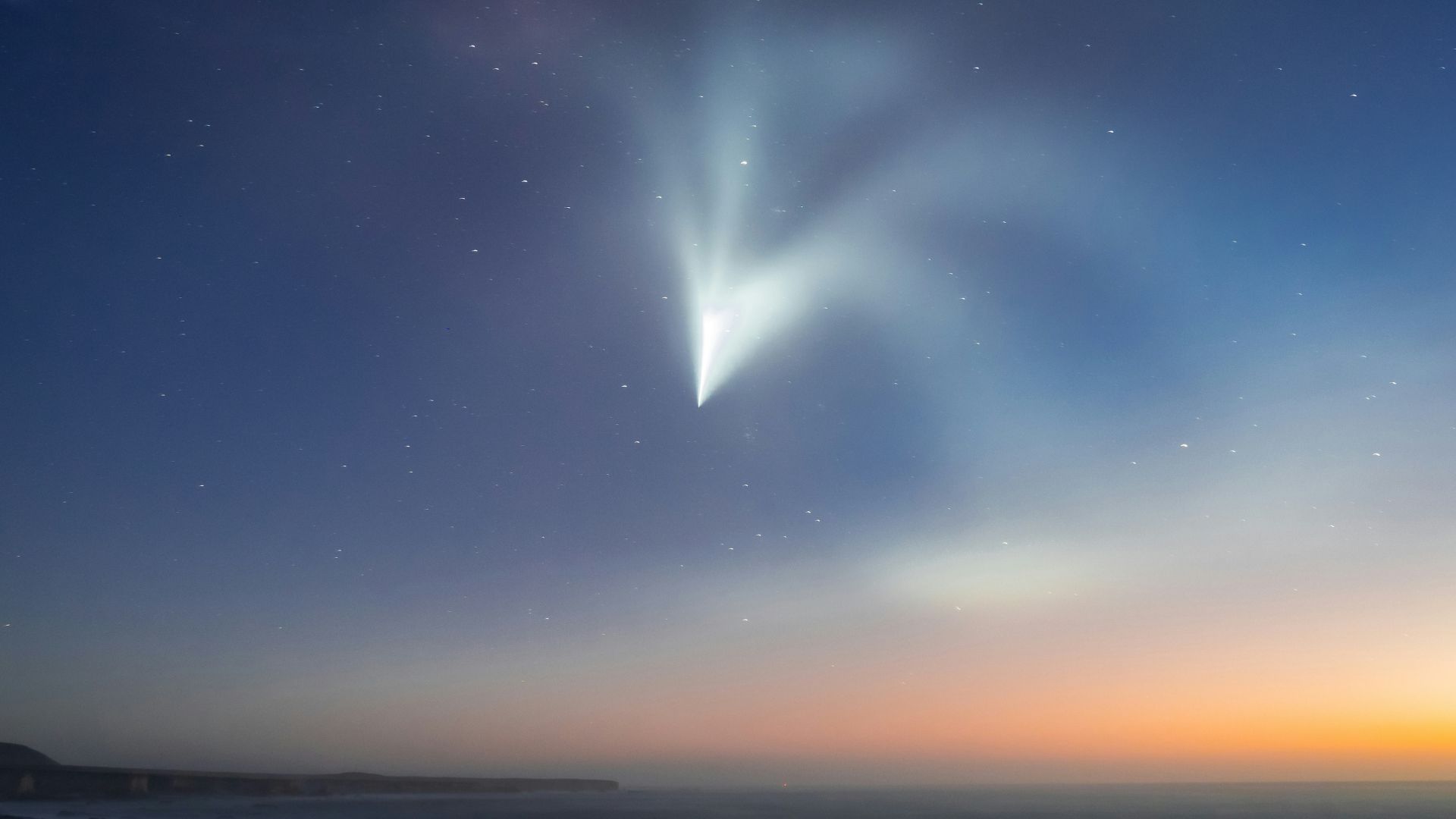

The vastness of space occasionally reveals events that challenge long-standing assumptions. In 2017, astronomers observed something unprecedented, a comet that appeared to reverse its rotation. This remarkable discovery, made through observations from the Hubble Space Telescope, brought renewed attention to the dynamic and unpredictable nature of small celestial bodies.
The object at the center of this phenomenon, Comet 41P/Tuttle-Giacobini-Kresák, showed behavior that had never been directly documented before. Initially, scientists detected a significant decrease in its rotation speed over a short period of time. Such a rapid shift raised immediate questions about the forces acting on the comet and whether internal or external factors were driving this transformation.
Further analysis revealed that the comet did not simply slow down. After nearly reaching a standstill, it began to spin again, but in the opposite direction. This unexpected sequence offered a rare opportunity to study how subtle forces can influence the motion of objects traveling through space.
Understanding How a Comet Can Change Direction in Space

Researchers believe that the answer lies in a process known as outgassing. As comets travel closer to the Sun, the increase in temperature causes frozen materials on their surface to turn into gas. This gas escapes through jets, creating small but continuous bursts of force.
These jets behave like natural propulsion systems. When distributed unevenly across the comet’s surface, they can alter its rotation in complex ways. In the case of Comet 41P, scientists suggest that these emissions gradually slowed its spin until it nearly stopped, before pushing it into a reverse rotation.
The analogy often used to explain this phenomenon compares it to a spinning playground wheel. When force is applied against its direction, it slows down, stops, and can eventually begin turning the other way. This comparison helps illustrate how even small forces, when sustained over time, can produce dramatic changes in motion.
A Glimpse into Rapid Cosmic Evolution

One of the most significant aspects of this observation is the timescale. Changes in comet behavior are typically understood to occur over centuries or even millennia. However, this event unfolded within just a few months, offering a rare real-time view into processes that are usually far too slow to observe directly.
Comet 41P is thought to have originated in the distant Kuiper Belt, a region filled with icy remnants from the early solar system. At some point in its history, gravitational interactions, likely involving Jupiter, redirected it into its current orbit closer to the Sun.
Since then, the comet has been gradually losing mass. This ongoing erosion suggests that its lifespan may be limited, as continuous outgassing weakens its structure over time. Observations like these provide valuable insights into how comets evolve and eventually disappear.
What this Discovery Reveals About the Nature of Comets
This event highlights how dynamic and sensitive comets are to their environment. Rather than being static objects, they respond actively to solar radiation and gravitational forces, constantly changing as they move through space.
The ability to witness such a transformation in a short period enhances scientific understanding of cometary physics. It also demonstrates the importance of continuous observation, as even familiar objects can behave in unexpected ways under the right conditions.
Ultimately, discoveries like this reinforce the idea that the solar system is far from predictable. Each new observation contributes to a broader understanding of how celestial bodies form, evolve, and interact, offering a deeper perspective on the forces that shape the universe.