Man Arrested in Texas After Purposely Driving Cybertruck Into the Lake to Test Its ‘Wade Mode’
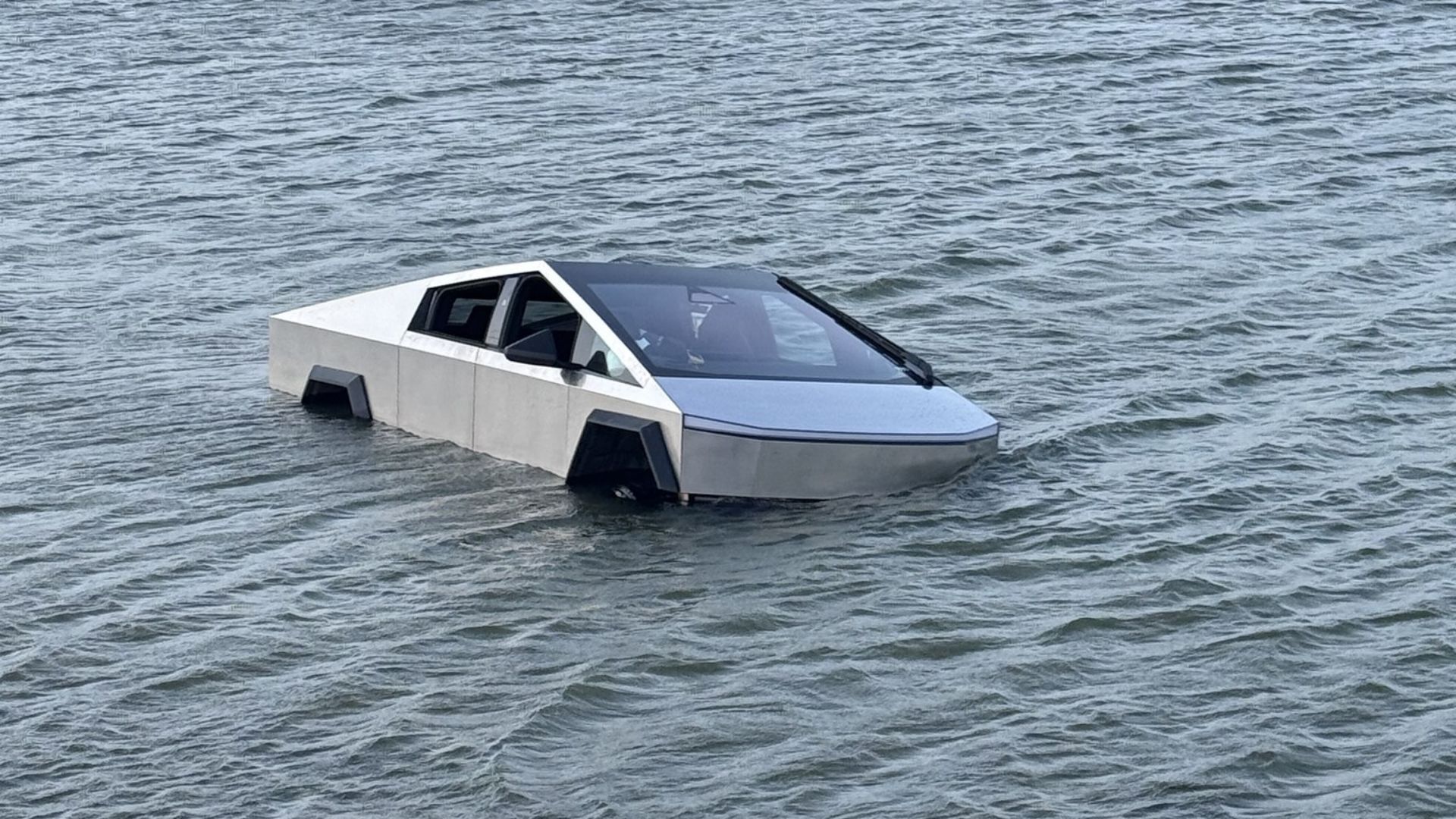

A 70-year-old Texas man drove his Tesla Cybertruck straight into Grapevine Lake on a Monday evening, with two passengers aboard, fully on purpose. The Grapevine Police Department identified the driver as Jimmy Jack McDaniel, who told officers he had intentionally driven the vehicle into the lake to try the Cybertruck’s “Wade Mode” feature. What followed was a rescue operation, an arrest, and a story that quickly spread far beyond North Texas.
Officers responded just before 8 p.m. to the Katie’s Woods Park Boat Ramp, located about 25 miles north of the Dallas-Fort Worth metroplex, after receiving reports of a Cybertruck partially submerged near the shoreline. When they arrived, they found the truck in the water, disabled, with the driver and his two passengers already out of the vehicle. The fire department had been called in to pull the truck from the lake. Nobody was seriously hurt, but McDaniel was in handcuffs by the end of the night.
McDaniel told a reporter the two passengers were a German father and son he was giving a tour to, visitors to his neighbor, and he had taken the Cybertruck out to show them what it could do. He insisted the truck itself was not the problem, saying he had waded it through water before, including the Atlantic Ocean, without incident. This time, he said, he made a “miscalculation” and went too deep. That detail made the story considerably stranger.
What “Wade Mode” Actually Does (and What It Doesn’t Promise)
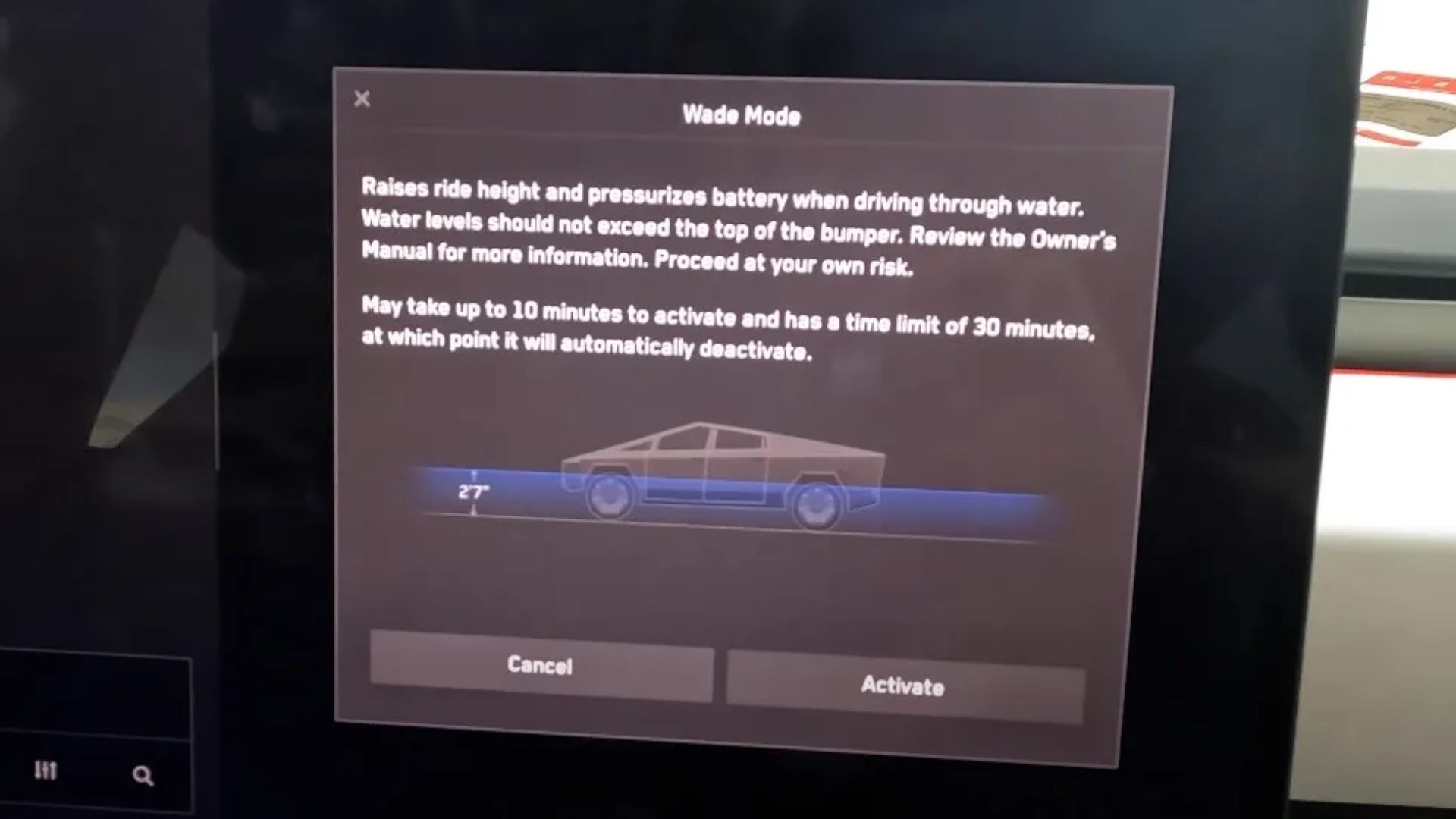
Wade Mode is a real feature built into the Tesla Cybertruck, and it is marketed as a serious off-road capability. Tesla says the feature temporarily raises the truck’s ride height and pressurizes the battery system to help the vehicle navigate shallow water and rough terrain. It is designed for river crossings and similar conditions, and Tesla includes it in the owner’s manual as a legitimate function. The feature’s existence, and its bold marketing, is part of what made McDaniel’s test seem reasonable to him.
The manual, however, comes with firm boundaries. The maximum wade depth is approximately 32 inches, measured from the bottom of the tire, and the manual warns that soft or muddy underwater surfaces can cause the vehicle to sink, raising the water level around it. Drivers are also advised to check water conditions before entering and to avoid strong currents. A public lake with an uncharted floor is a considerably different environment than a controlled water crossing, and those distinctions matter more than the feature’s name suggests.
McDaniel said he believes water entered the truck’s charging port, causing a short circuit that shut down the steering system. The truck became stuck, unable to move under its own power, forcing everyone on board to exit through the windows. The Grapevine Fire Department’s Water Rescue Team ultimately used a wrecker to pull the vehicle out of the lake. A feature designed to handle shallow water had met a situation it could not recover from, and the gap between marketing and reality had just cost someone their truck, and their freedom.
The Charges That Follow a Stunt Gone Wrong

McDaniel did not face a simple citation for a parking violation. He was arrested for operating a vehicle in a closed park and lake area, for lacking a valid boat registration, and for multiple water safety equipment violations. The combination of charges reflects a legal reality most drivers never think about: the moment a vehicle enters navigable water in Texas, it becomes subject to boating laws, which require registration, life jackets, and fire extinguishers aboard. A car driving into a lake is, legally, a boat.
Grapevine Police Media Manager Katharina Gamboa captured the situation with stark clarity. “Don’t drive into the water with your vehicle,” she said, adding that she didn’t think she’d ever have to say that. She noted the incident posed a safety risk both for the people inside the truck and for bystanders along the lakeshore. The police department issued a broader warning to the public, stating that while a vehicle may be physically capable of entering shallow freshwater, doing so carries legal and safety consequences under Texas law.
McDaniel insisted the truck had performed well in water before, and maintained that the Cybertruck itself was not at fault. His confidence in the vehicle was clear. What he apparently had not accounted for was the legal framework governing where and how that capability could legally be used. The charges he now faces have nothing to do with Tesla’s technology and everything to do with where he chose to deploy it, and without the equipment the law required him to carry.
What This Moment Reveals About Drivers, Features, and Responsibility
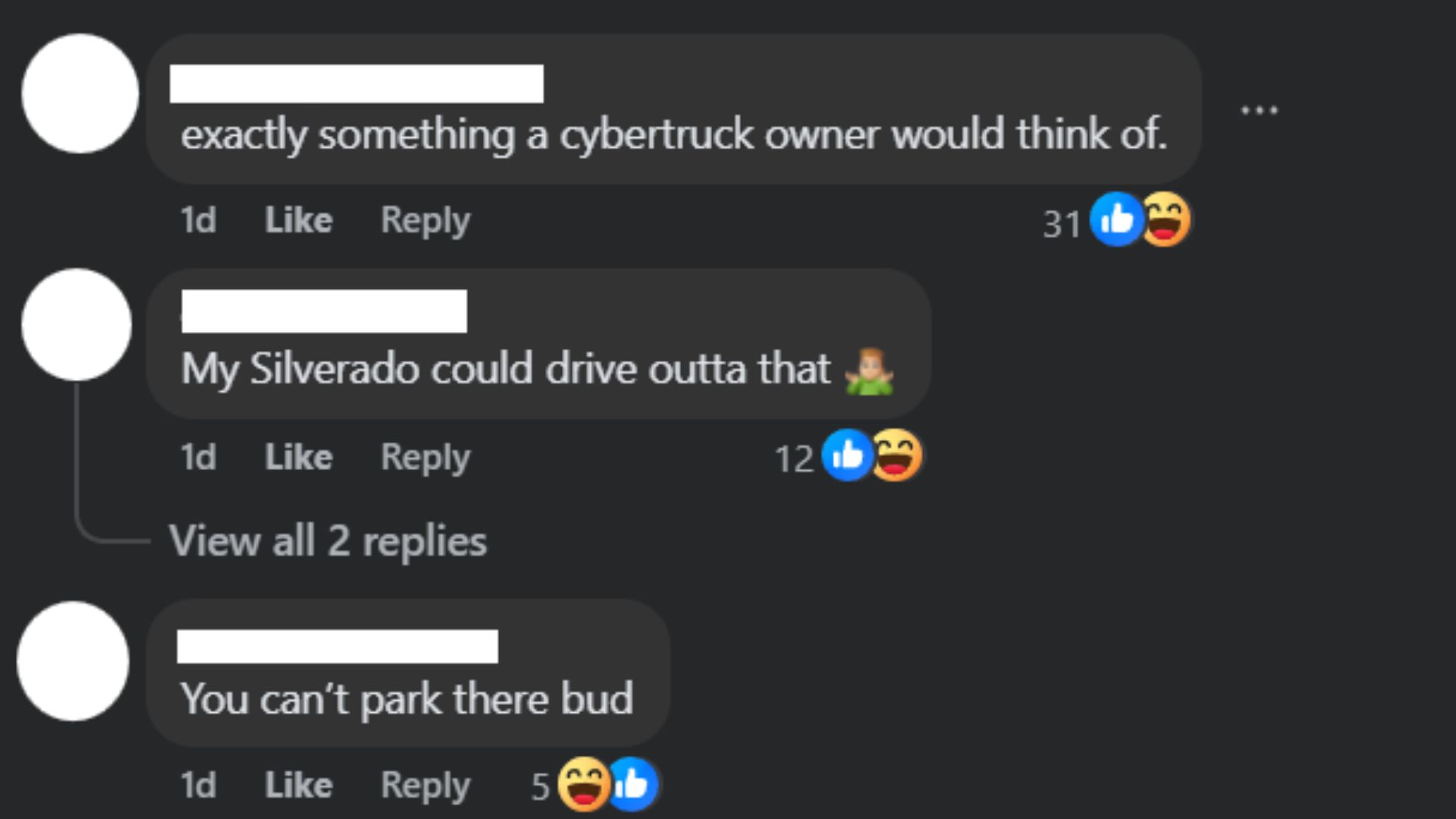
The incident quickly attracted attention beyond local news, in part because it sits at the intersection of expensive technology, bold marketing, and human judgment. The Cybertruck’s Wade Mode raises its air suspension to help the vehicle pass through water, and the feature is a genuine part of what Tesla advertises as the truck’s off-road identity. When a manufacturer builds a vehicle that can drive into a lake, at least some buyers will eventually try to drive it into a lake, regardless of the conditions or the legal context surrounding that choice.
McDaniel remained in the Grapevine Jail on multiple charges following the incident, including the boat-related violations that turned a tech demonstration into a criminal matter. The Cybertruck, pulled from the water by a fire department rescue crew, faced an uncertain fate after taking on water in a lake. The total financial and legal cost of one evening spent testing a feature that the owner’s manual specifically warns against misusing was still being tallied.
The broader question the incident raises is one that applies far beyond a single truck in a Texas lake. As vehicles become more capable and manufacturers build increasingly dramatic features into consumer products, the gap between what a machine can technically do and what a driver should legally and safely attempt keeps widening. McDaniel said he had done it before without trouble. Police said that was irrelevant. The law, it turns out, does not grade on a curve for prior success.