Leaving These 8 Things Outside Your Home Could Be a Costly Mistake
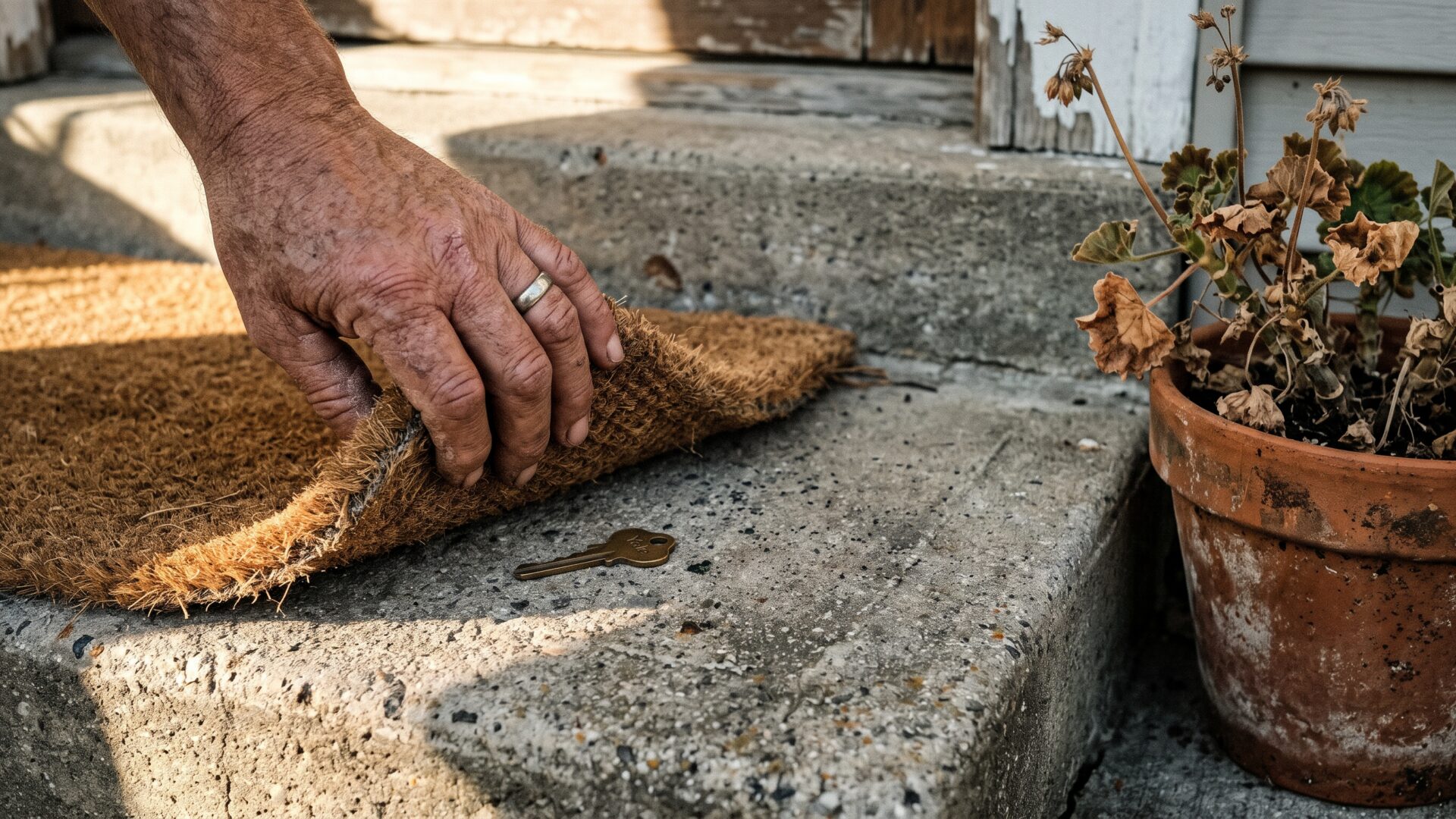

A monitored alarm does very little against someone who walks in holding a key. The mat, the planter and the fake rock shaped like a garden turtle are the spots a stranger checks first, which is why a list of costly outdoor habits starts with the smallest object on it. Eight ordinary things sit on porches, patios and lawns, and each one quietly charges you something: a break-in, a ruined tool, a chemical you buy twice. The fix for the key is dull and effective. Leave it with a neighbor or a relative nearby, or mount a locking key box well away from the door it opens. The next giveaway goes out to the curb on trash day.
This article was created with the assistance of AI and reviewed by our editorial team for accuracy and clarity.
What the recycling pile says about your living room
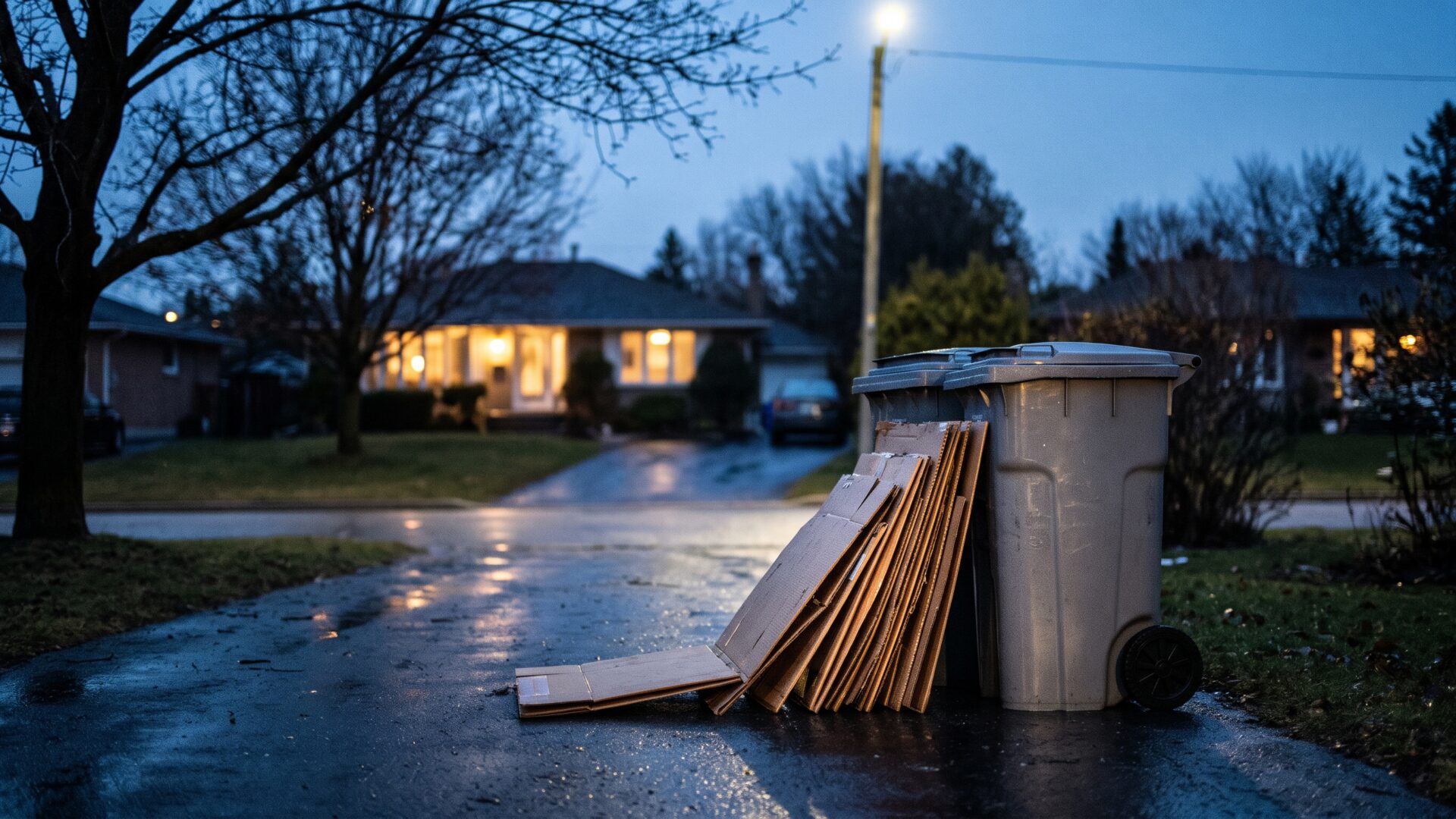
The box your television came in, folded flat against the bins, names the most portable thing you own. In interviews with 422 incarcerated burglars for a 2012 study on how burglars pick targets, nearly 64 percent said they had taken electronics during a break-in. Cut the cardboard down and put it inside the bin rather than beside it, the night before pickup rather than two days early. The same goes for deliveries that still have something in them. A stack of boxes on the step while you are away says the house is empty, and the FBI logged 216,601 daytime residential burglaries in 2024 against 174,053 at night. Something similar happens in the backyard, where the cost starts with rust.
Tools left on the lawn lose value two ways
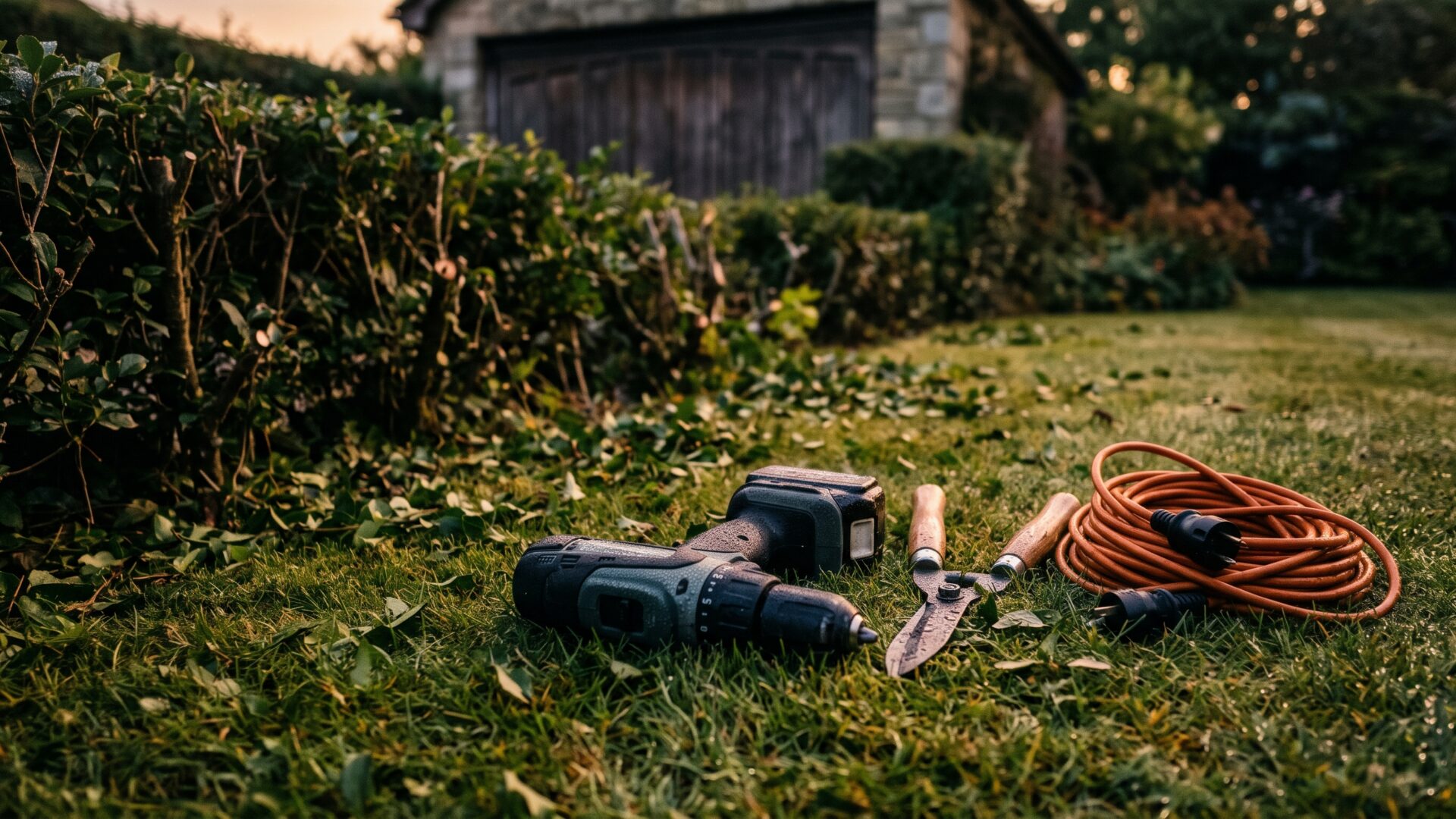
Rust is the slower loss. A pruning shear or a circular saw left out through one wet night picks up corrosion on the blade, and wooden handles swell and warp as they soak and dry. The faster loss is the one you notice in the morning, when the cordless drill and the extension cord are gone. Nothing was forced open, so there is no broken window and often no useful description for police. Bigger equipment raises the stakes: a pressure washer, a chainsaw or a generator tells anyone walking past that the garage is worth opening. Lock the larger items and keep the rest out of sight. One item in that yard is meant to stay outside permanently.
Propane belongs outdoors because the gas sinks
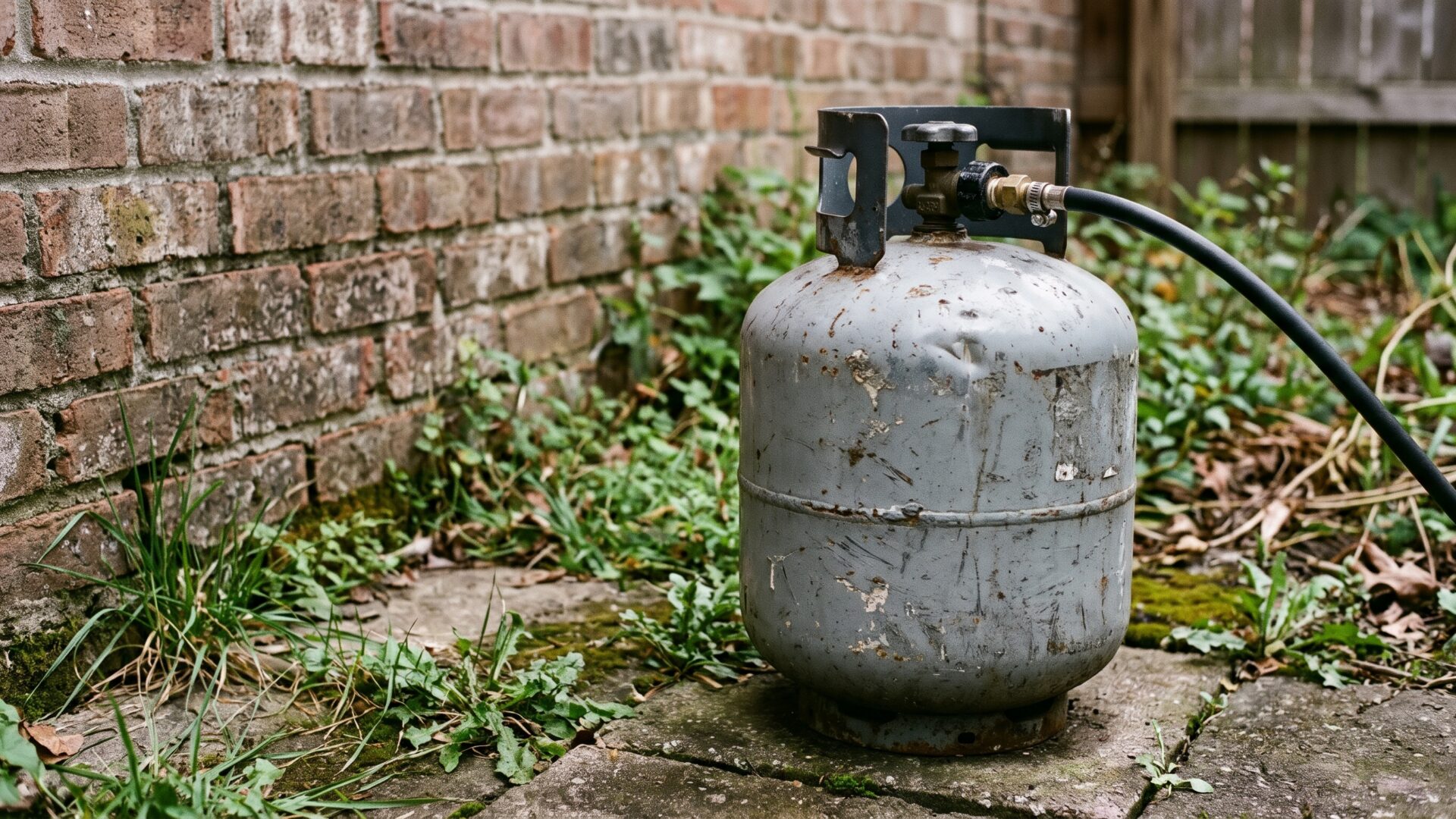
A propane cylinder should never spend the night in a basement, a crawlspace or a garage attached to the house. Propane is heavier than air, so a slow leak does not drift up and out. It pools at the lowest point of an enclosed space and stays there. Store it upright, too. The pressure relief valve is designed to sit in the vapor space at the top of the cylinder, and a tank on its side can vent liquid propane instead of gas. Flat ground outdoors, clear of the swing of a car door, is what the cylinder was built for. Outside is not one place, though, and two numbers decide where the tank goes.
Keep the tank shaded and clear of openings
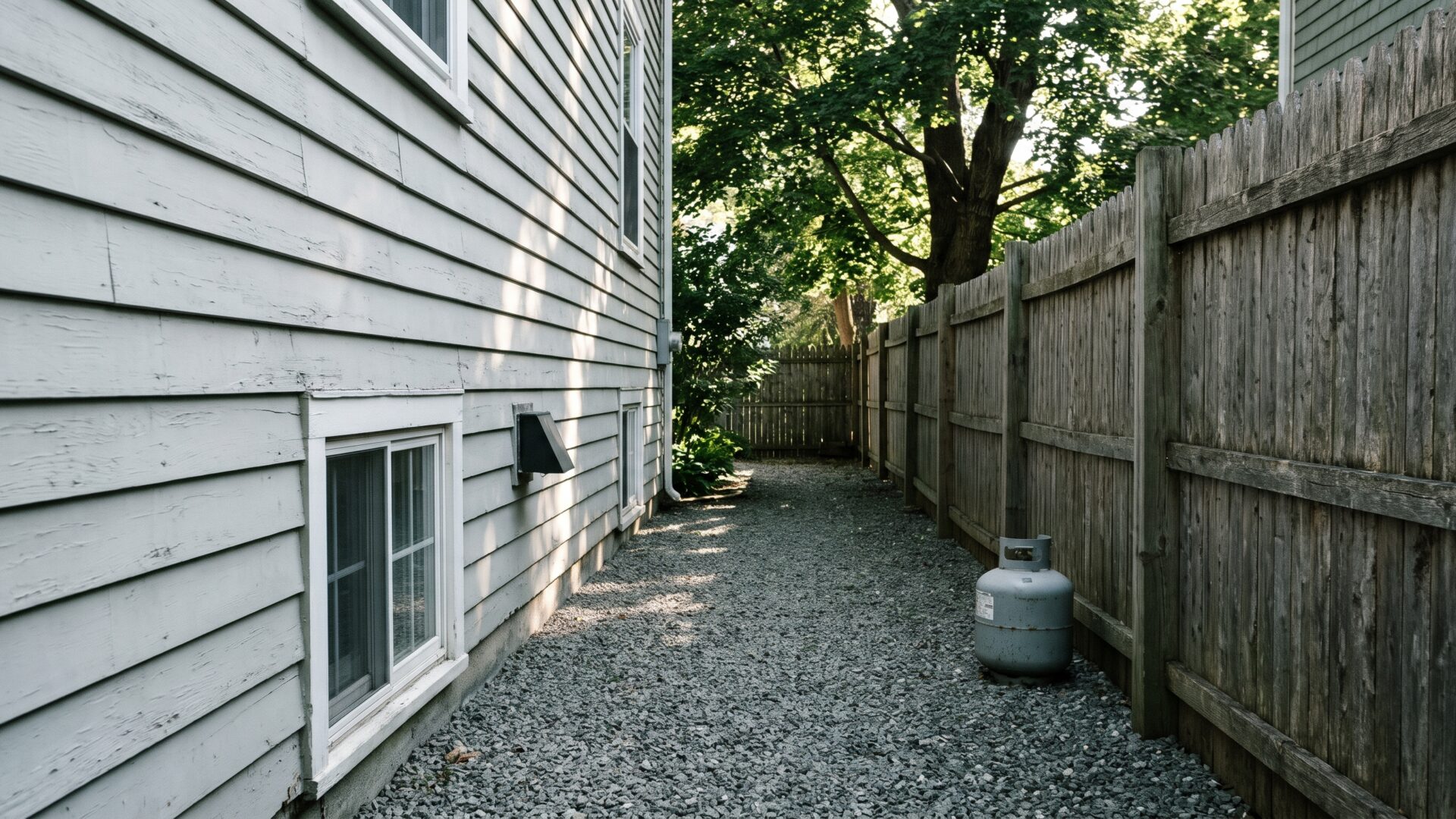
Heat is the first limit. Storage guidance puts the ceiling at 120 degrees Fahrenheit, because pressure inside the cylinder climbs with temperature, so shade does most of the work on a July afternoon. Distance is the second. Keep the tank at least 10 feet from any opening into the building, which means doors, windows and air intakes, so a slow leak has somewhere to go other than your kitchen. A ventilated metal cabinet that locks is the tidy version of both rules: it shades the cylinder, keeps hands away from the valve and still lets air move through. The shed is off limits for something else as well, and that one fails without a sound.
Pool chemicals fail in a damp shed
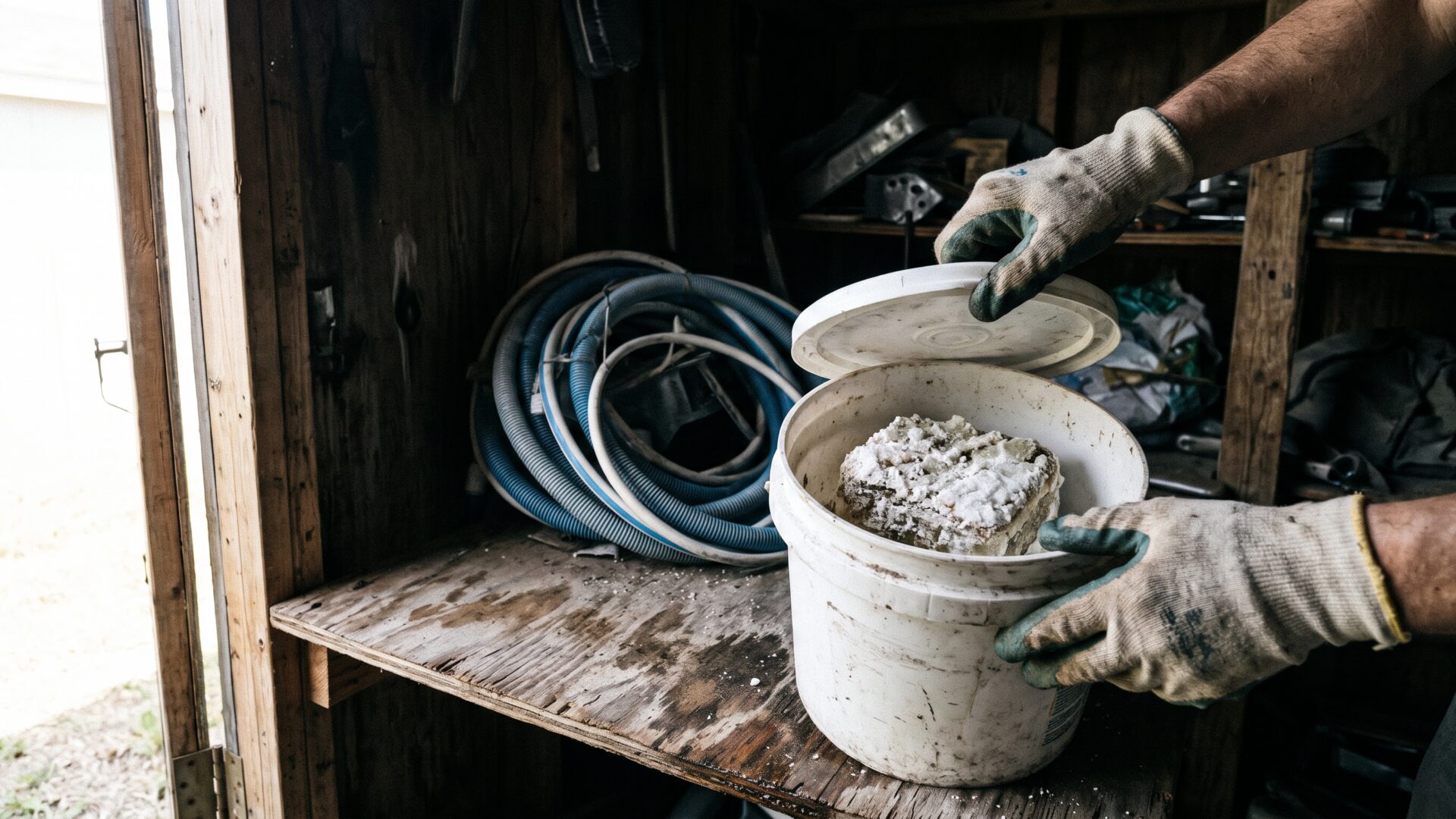
Chlorine tablets and powdered balancers pull moisture out of humid air. They clump and crumble, so a measured dose becomes guesswork, and wet trichlor tablets can give off chlorine gas inside a closed container. Sticky or damp surfaces are the sign that tablets have already started dissolving. Heat adds to it, since guidance for pool chemical storage warns against spaces that pass 95 degrees Fahrenheit, which a closed shed manages easily in August. Household cleaners fail the same way, with temperature and humidity swings separating formulas and clumping powders until the bottle under the deck steps cleans like water. The half-used paint can in the same corner has a different problem.
Temperature swings ruin leftover paint and the can
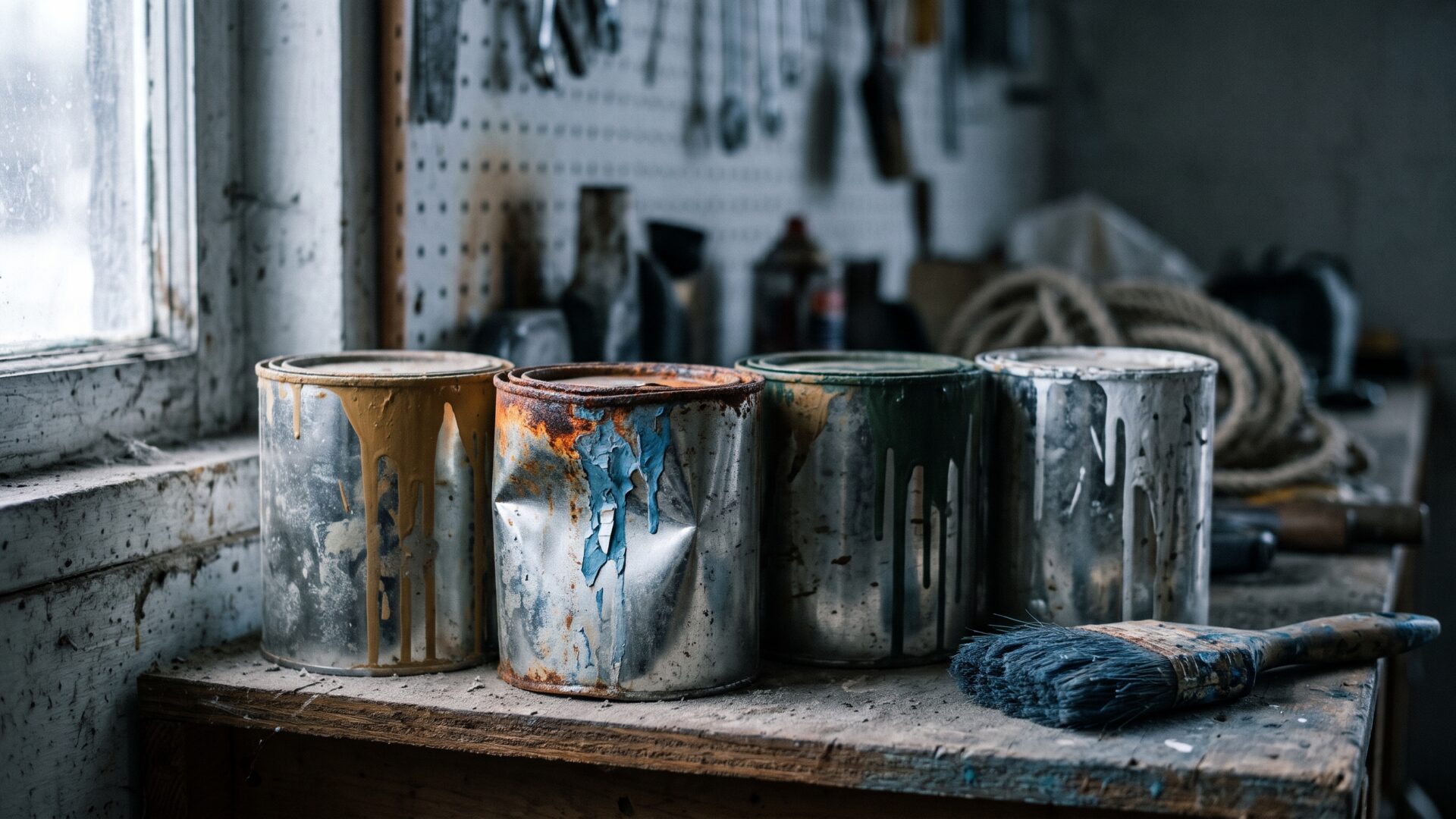
The container fails as fast as the paint does. Humidity rusts the rim and the underside of the lid, and those flecks drop into what is left inside, so the touch-up coat carries grit onto your trim. Freezing does the rest, since water-based paint that goes through a hard freeze can separate into a grainy layer that stirring will not bring back. An interior closet or a basement shelf holds steady enough to keep a gallon usable for the next repair. That matters more outdoors than anywhere, because siding, trim and deck boards need recoating on a cycle, and matching an old color later costs more than storing it now. The most expensive thing stacked outside may be the one that cost nothing.
Firewood against siding builds a bridge for termites
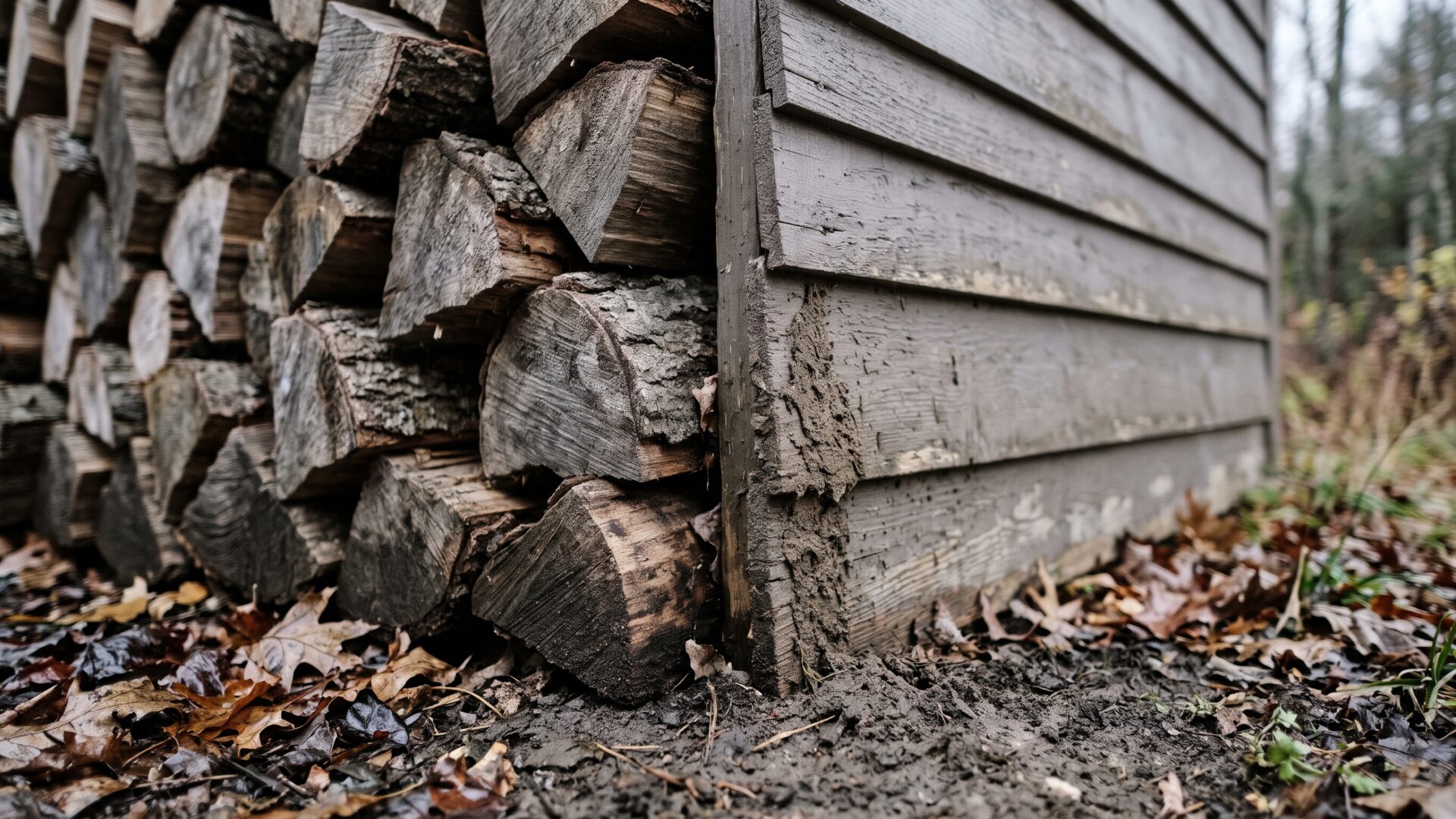
Firewood costs nothing to stack and plenty to clean up after. Wood touching siding or a foundation hands subterranean termites a covered route from soil into the structure. University of Kentucky extension guidance warns that piles against foundations can also let termites bypass soil that was treated with termiticide, and none of it shows from the yard. Ground contact is the other half of the problem, since subterranean colonies nest in soil and depend on the moisture it holds. Wood lying on bare dirt is already joined to the nest. Pest professionals put a number on the gap that pile should leave.
Distance and elevation do the real work
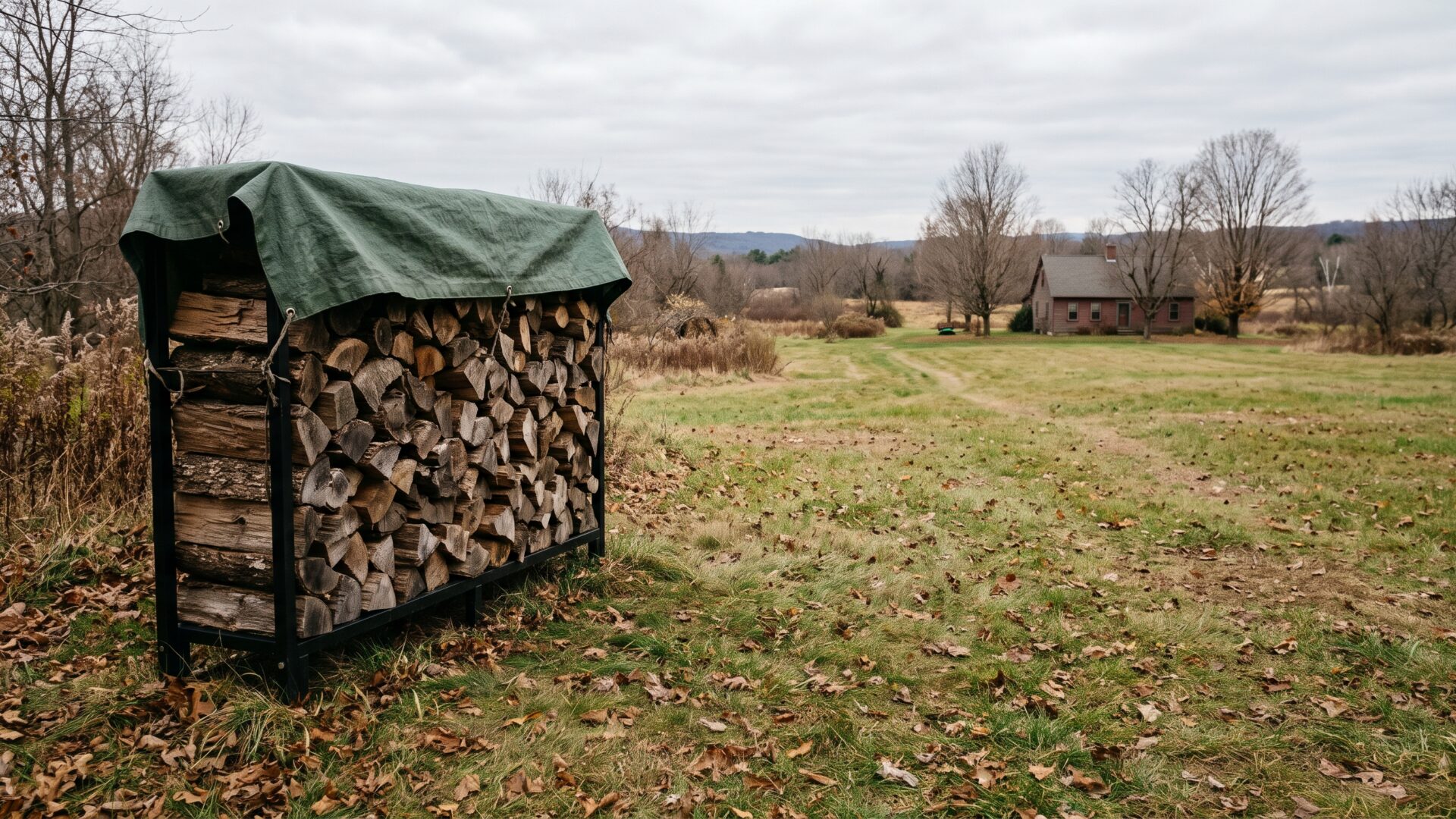
Twenty feet from the house is the figure pest control companies and extension offices repeat, with 20 to 30 feet suggested for a large pile. If the lot will not allow it, more distance still helps, and ten feet beats a stack against the wall. Raise the wood several inches on a metal rack, concrete blocks or a pallet set on blocks, so nothing bridges the soil. Stack it loosely so air can move through and the wood dries. Bring in a day or two of wood at a time rather than a week’s worth against an interior wall. If a pile has leaned on your siding for a season or two, have the structure inspected. The last thing left outside is not a pest problem at all.
Cushions fade and crack before the frame does
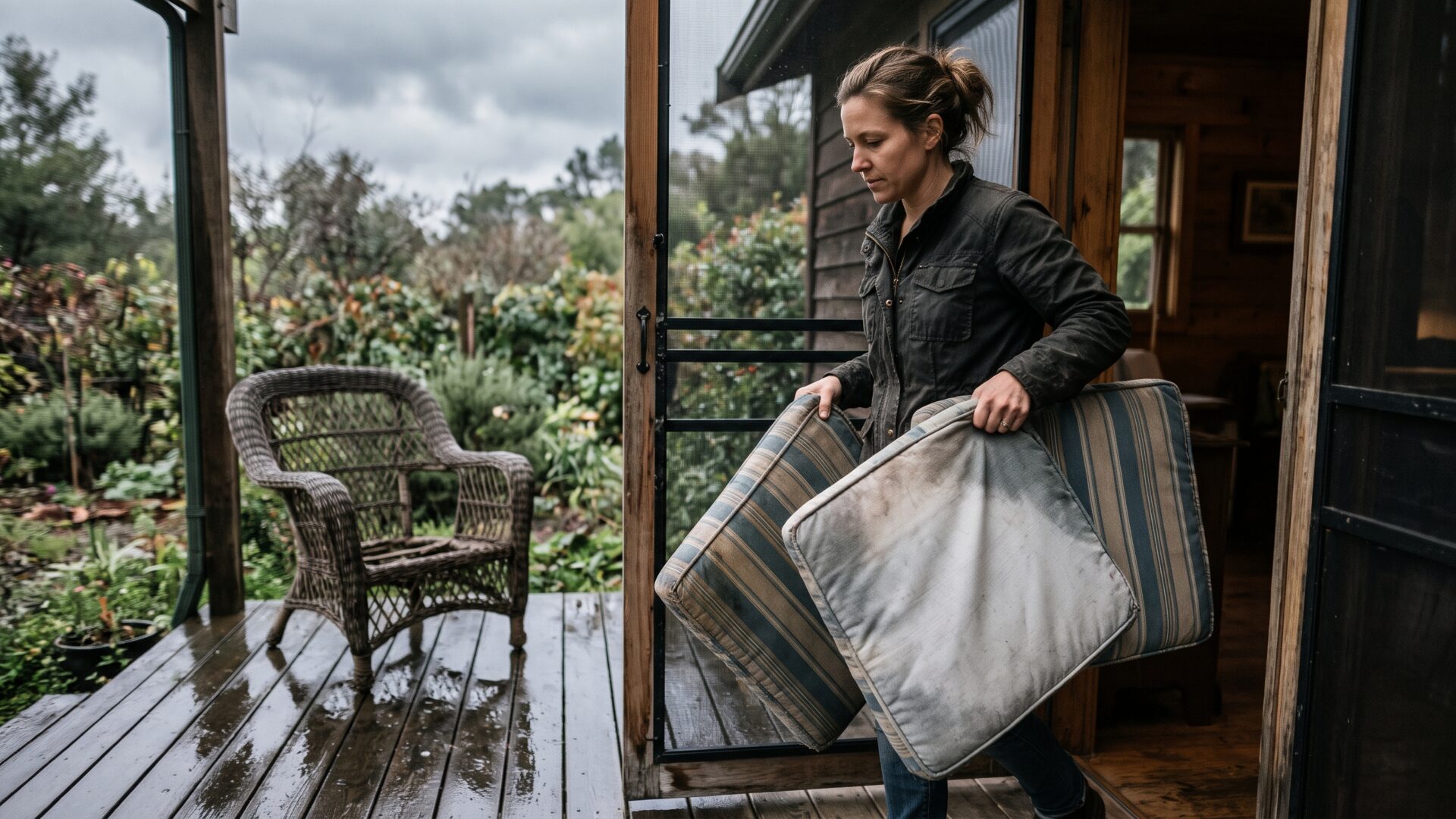
Sunlight is what ends a patio set. UV breaks down dyes and fibers, so cushion fabric fades and turns brittle while the frame under it still looks new. Leather trim dries and cracks on the same clock. Rain finishes the job, soaking foam that cannot dry between storms, which is where the mildew smell comes from. A cover that fits, or ten minutes carrying cushions into the garage before a storm and at season’s end, protects the part of the set you cannot replace cheaply. Check the care tag on one cushion first: solution-dyed acrylic holds color far longer than printed polyester, which tells you how much shelter your set actually needs.