Judge Blocks Trump’s Kennedy Center Rebrand and Orders His Name Removed
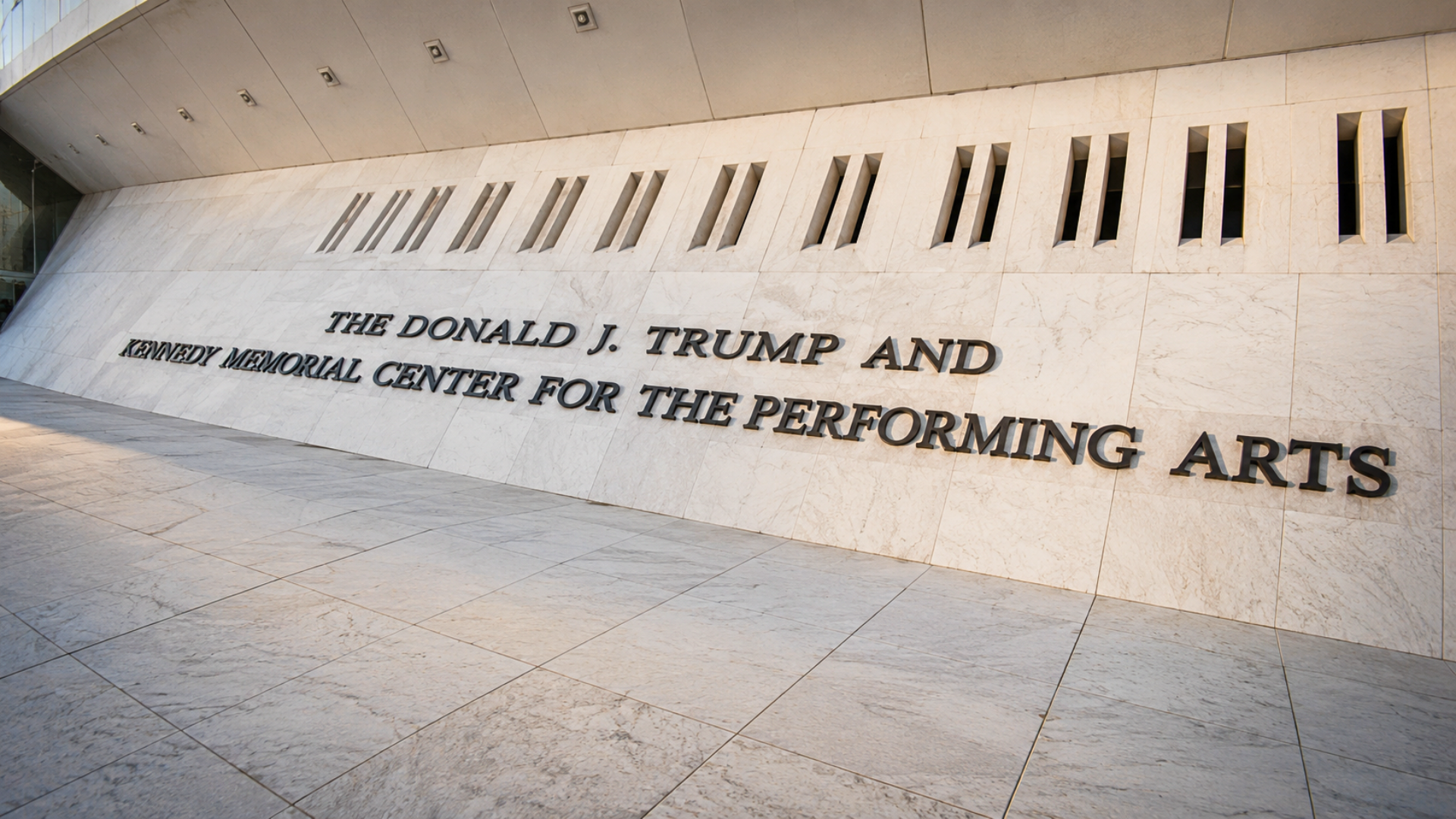

Trump’s name was put on one of America’s most famous cultural landmarks, then a federal judge ordered it taken down. The fight over the Kennedy Center moved from branding to law after U.S. District Judge Christopher Cooper ruled that its board could not rename the institution on its own. His order gives the center 14 days to remove Trump’s name from signs, websites, and official materials.
The ruling, reported by Axios, also blocked a planned two-year closure tied to major renovations. That part mattered because the Kennedy Center is more than a building. It is a working performance venue, a federal memorial to President John F. Kennedy, and a public institution shaped by Congress. The court said those legal roots could not be brushed aside by a board vote.
Cooper’s clearest line became the center of the decision: “Congress gave the Kennedy Center its name, and only Congress can change it.” The phrase turned the case into a test of authority. Trump’s allies saw the rebrand as recognition of his support for the center. Critics saw it as a personal takeover of a national memorial, setting up the deeper clash that followed.
How a Name Change Became a Legal Fight

Trump’s connection to the Kennedy Center changed sharply in 2025, when he replaced several trustees, joined the board himself, and later became chairman. The board then voted to rename the venue as The Donald J. Trump and John F. Kennedy Memorial Center for the Performing Arts. New lettering followed quickly, including on the building’s public-facing materials, intensifying an already unusual power shift.
According to CBS News, the website was updated and crews added Trump’s name to the facade soon after the board vote. Supporters argued the changes honored Trump’s role in securing money for restoration. Opponents countered that the law creating the center already fixed its purpose and name, leaving no room for a unilateral rebrand.
The public reaction soon reached the stage itself. Reports described artists canceling appearances, backlash from parts of the performing arts community, and concern over the center’s direction. Then came the renovation plan, which would have closed the venue for two years starting in July 2026.
The Court Draws a Line Around Public Memory

The lawsuit was brought by Rep. Joyce Beatty, an Ohio Democrat and former trustee, after she and others challenged changes that limited their role in board decisions. Beatty argued that the rebrand violated the center’s governing statute and that the planned closure moved ahead without proper authority. The court agreed in part, giving her side a major legal win in Washington.
In a statement from Beatty’s office, she said the ruling affirmed that efforts to rename and close the center had no basis in law. She also said the Kennedy Center belongs to the American people. Her language framed the dispute as a defense of public memory, not a routine disagreement over signage or construction.
The Kennedy Center signaled it would appeal. Spokeswoman Roma Daravi said the center remained confident that a higher court would uphold the board’s decision to recognize Trump’s contributions. She also said restoration remained urgent, with $257 million secured and approved by Congress. That response kept the legal fight alive and showed why the ruling may be a pause, rather than the final word.
What the Ruling Leaves Behind

The Guardian reported that the judge’s opinion stressed the Kennedy Center’s founding statute, which names it for President Kennedy. The order requires the institution to return to the John F. Kennedy Memorial Center for the Performing Arts. That matters because the court treated the name as part of the memorial itself, not a label that current leaders could revise.
Trump answered with frustration on Truth Social, saying he would work with Congress to transfer the “failing Institution” back to them. He added that without freedom to restore it physically, financially, and artistically, he had no interest in continuing. His statement made clear that the legal setback also carried political weight, especially as the center’s leadership and mission remain contested.
For now, the ruling restores Kennedy’s name and keeps the doors from closing under the challenged plan. It also draws a firm line around public institutions built by law and memory. A board can approve budgets, repairs, and leadership changes, but Cooper’s decision says a national memorial cannot be renamed through power alone. That is the lasting force of this case.