iPhone and Samsung Couples Rejoice: Galaxy S26 Finally Works Like AirDrop for Photo Sharing
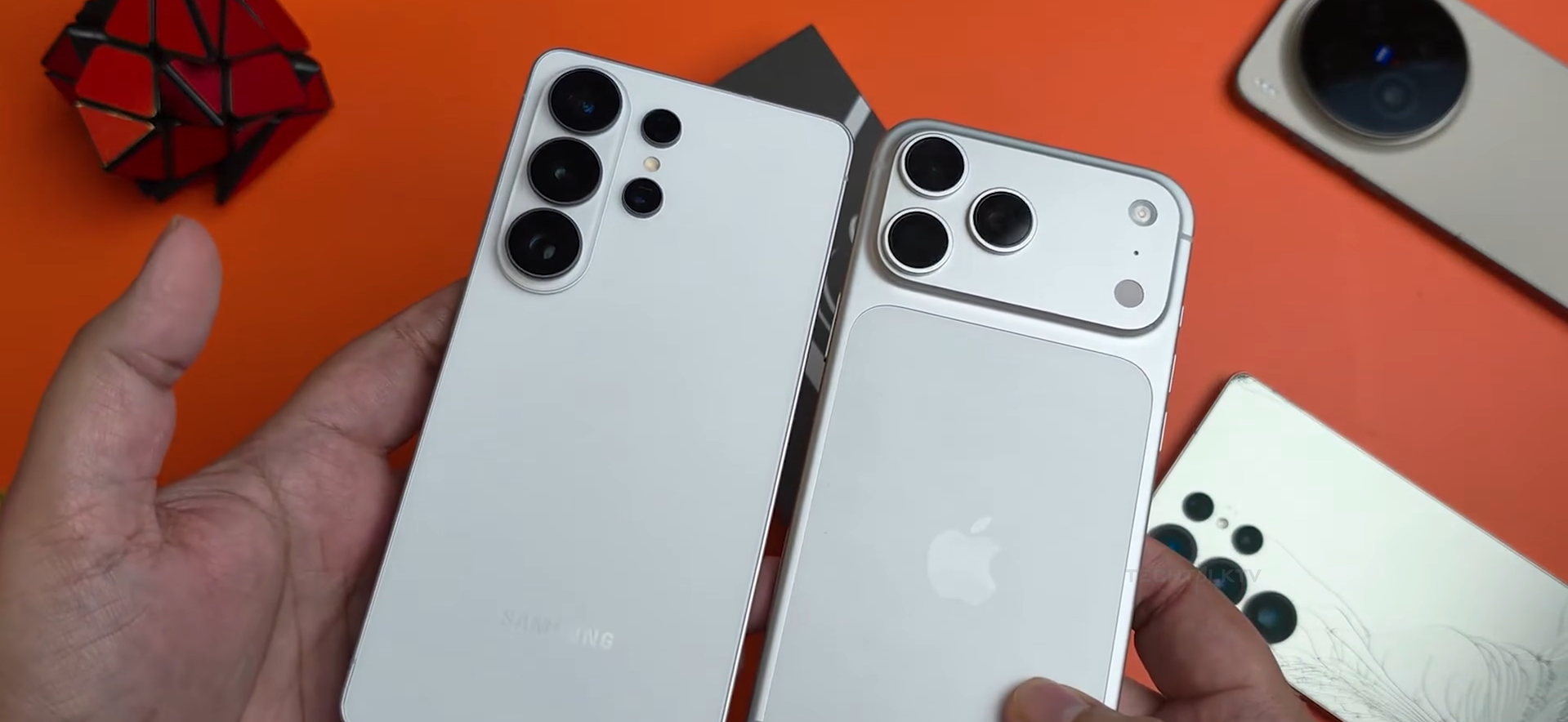

Anyone who has ever tried to send photos between an iPhone and a Samsung phone knows the routine. You take a great picture. Then the friction begins. Blurry messages. Email attachments. Cloud links that take too long. The moment passes before the photo ever arrives. For years, this gap defined the smartphone experience. Apple users had AirDrop. Android users had Quick Share. Both worked well, just not together.
That divide shaped behavior in subtle ways. People stuck with the same devices as their friends, not just for preference, but for convenience. Switching phones often meant losing something simple but essential—easy sharing.
Now, that long-standing barrier has started to break.
What Actually Changed With the Galaxy S26
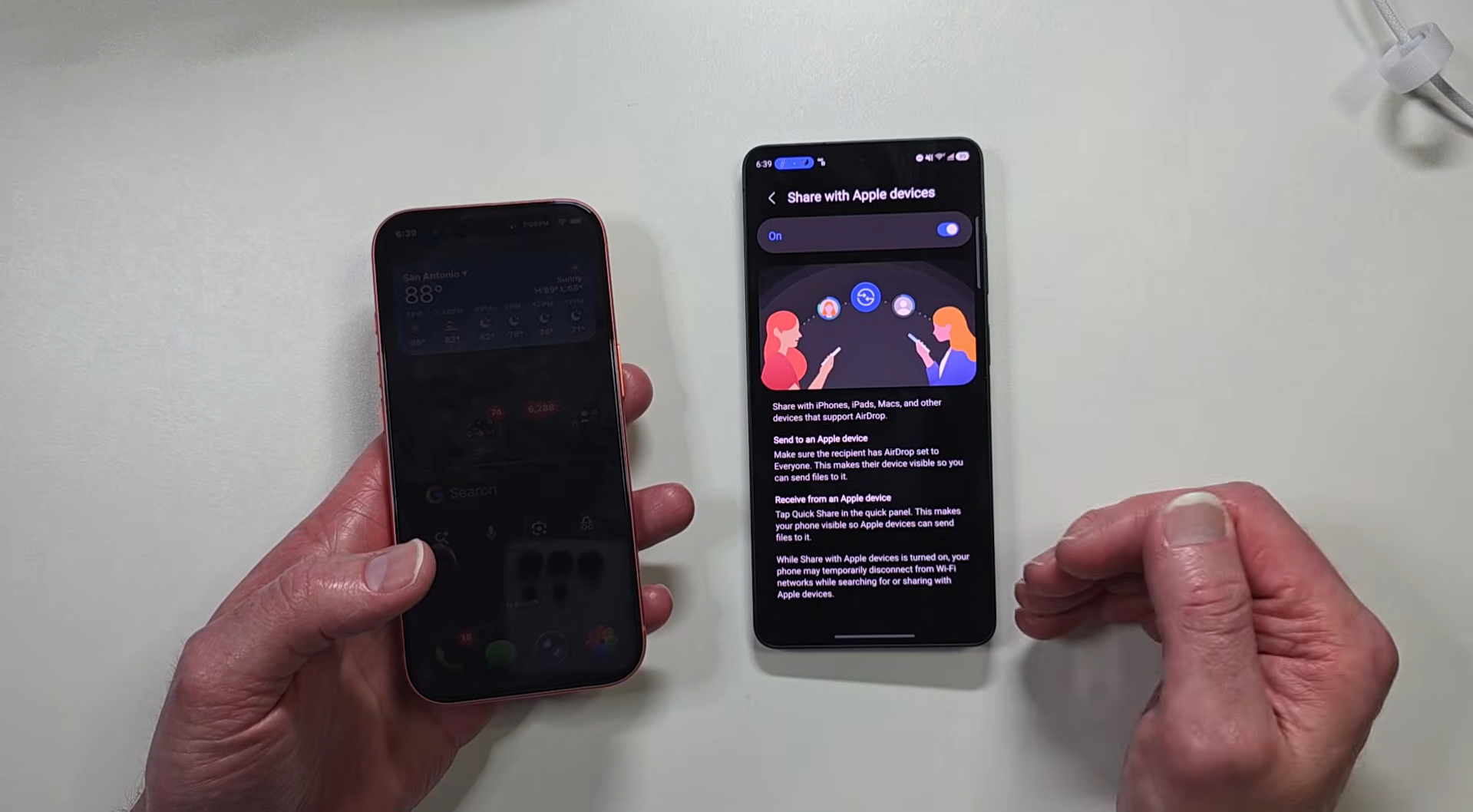
Samsung’s Galaxy S26 introduces a shift that feels small on the surface but carries bigger implications. Through an update to Quick Share, Galaxy devices can now send files directly to iPhones using AirDrop compatibility. That connection relies on the same underlying technologies—Bluetooth and Wi-Fi—to create a fast, local link between devices.
The feature rolls out first to the Galaxy S26 lineup, with plans to expand to more devices later. Setup remains simple. Users enable Quick Share, select the new option to share with Apple devices, and choose a nearby iPhone.
In practice, the experience feels familiar. According to hands-on testing, transferring files between Android and Apple devices now works almost as smoothly as sending between devices in the same ecosystem. The difference is no longer obvious to the average user.
Why This Matters More Than It Looks

For years, companies built what many call “walled gardens.” Features like AirDrop made it easier to stay within one ecosystem and harder to leave. Sharing became a social factor, not just a technical one. If everyone around you used iPhones, switching to Android created friction in everyday moments.
That friction is starting to disappear. The new compatibility removes one of the last practical barriers between Android and Apple devices. It allows users to choose phones based on features, not limitations.
The change didn’t happen overnight. Google laid the groundwork with earlier updates to Quick Share, and Samsung extended that capability to a much wider audience. What started as a technical improvement now signals a broader shift in how devices interact.
What This Means for the Future of Smartphones
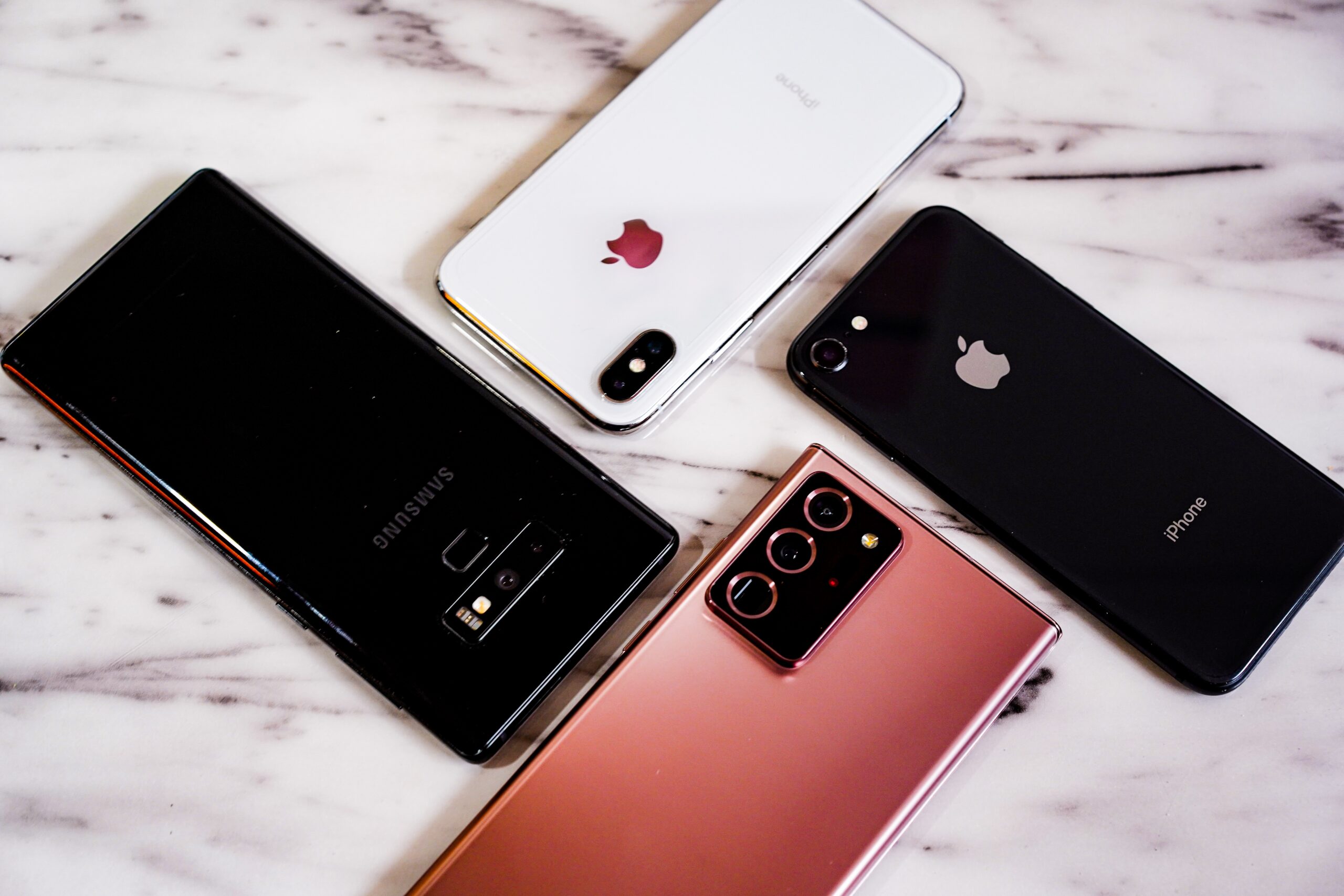
This update does more than fix an inconvenience. It changes expectations. Users no longer have to ask what phone someone uses before sharing a photo. That question starts to lose relevance as cross-platform tools improve.
The impact extends beyond Samsung and Apple. Other Android manufacturers are already preparing to adopt similar capabilities, suggesting that seamless sharing could soon become standard across devices. There are still limits. Speeds may vary, and some features remain exclusive within each ecosystem. Even so, the direction is clear.
The gap between platforms is narrowing, and with it, one of the most frustrating parts of modern technology. The next phase won’t just focus on faster phones or better cameras. It will focus on how well everything works together. And for the first time in a long while, that future looks a lot less divided.