Harvard Faculty Votes to Make It Harder for Students to Earn A’s
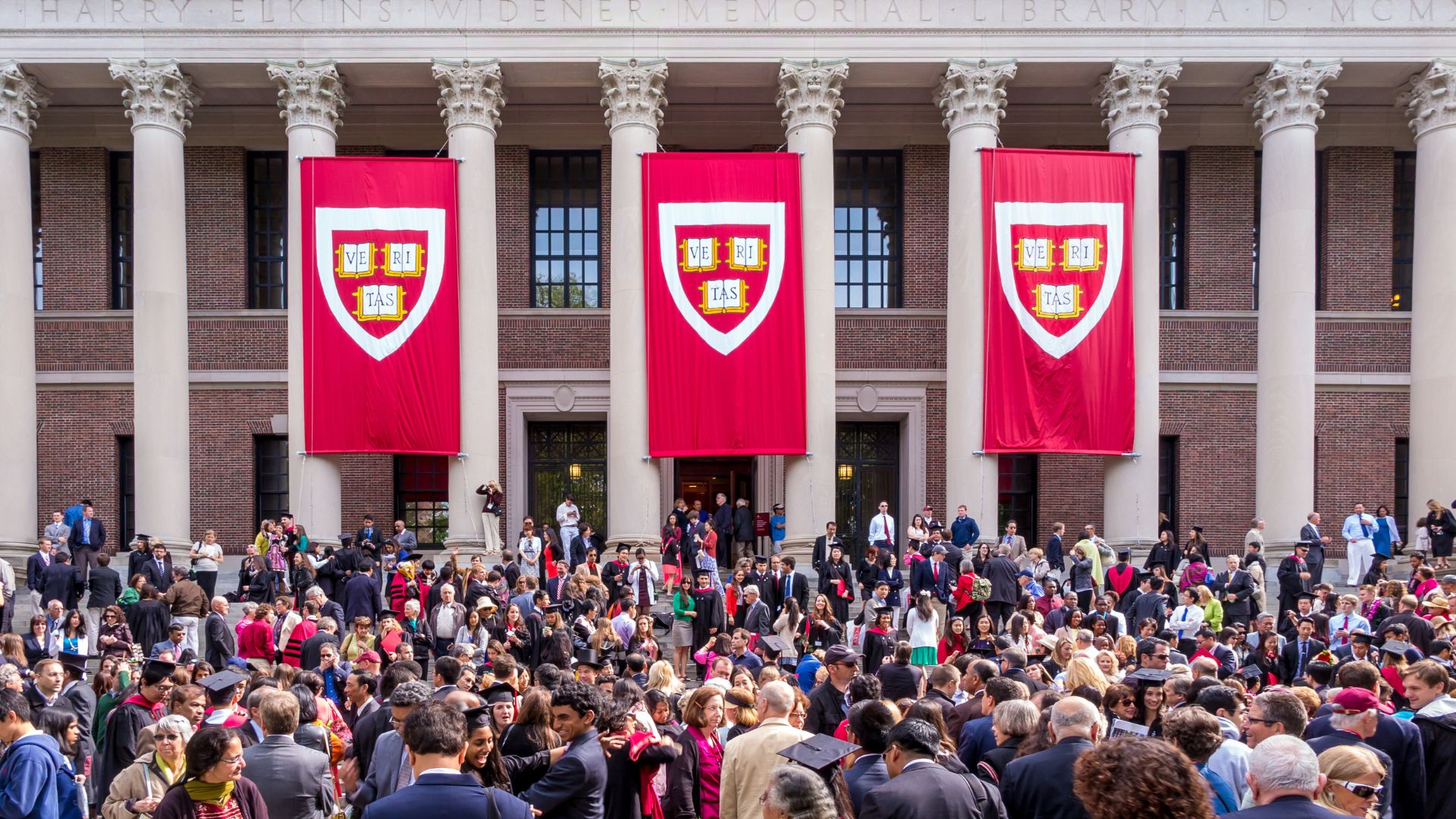

At Harvard University, getting straight A’s has never been easier. Until now. For years, more than 60% of all undergraduate letter grades awarded were A’s, up from just 24% two decades ago. Over 50 members of last year’s graduating class finished with perfect GPAs. The university’s own faculty began asking the uncomfortable question: if nearly everyone earns top marks, does a top mark mean anything at all?
Harvard’s Faculty of Arts and Sciences voted 458 to 201 to cap the number of A grades any professor can award. The result was announced in May 2026, following a week-long email ballot. It marks one of the most significant grading overhauls at a major American university in recent memory. The vote passed with a clear majority, signaling that the faculty’s appetite for change had finally overtaken years of institutional inertia on a problem most agreed existed but few wanted to touch.
Starting in the fall of 2027, instructors in letter-graded courses will be allowed to give A grades to no more than 20% of students per class, plus four additional students. A-minuses are not affected by the cap. The policy will be reviewed after three years. The scope is deliberately narrow, but the intent is broad: to restore the A grade to what Harvard’s own guidelines have long described as a mark of extraordinary distinction, and to make that standard mean something again.
When Every Student Gets an A, No One Really Does

Harvard Psychology Professor Joshua Greene, who served on the faculty subcommittee that developed the proposal, said the reform is designed to reduce what he called “the tyranny of the perfect transcript.” The argument is straightforward: when top grades become routine, students stop taking academic risks. They gravitate toward easier courses to protect their GPAs rather than pursuing subjects that genuinely challenge them or deepen their understanding.
The subcommittee framed its position plainly: “For decades, grade inflation has been a collective-action problem. Everyone saw it, but no one faculty member could fix it alone.” No single professor could realistically hold the line without watching their class enrollment drop as students migrated to more generous instructors. Harvard cognitive scientist Steven Pinker made the same point bluntly, noting that professors who maintained high standards saw their courses empty out as students sought easier paths to the same result.
Grade inflation at Harvard accelerated sharply in the late 2010s, surged during the COVID-19 pandemic, and has only recently begun to level off. Harvard’s dean of undergraduate education, Amanda Claybaugh, described the situation in a formal report as grading that had become “too compressed and too inflated,” no longer able to perform its core function of distinguishing student achievement. That report, released in October 2025, helped set the stage for the faculty vote that followed months later.
A Harvard A Will Mean Something Real Again
Harvard government professor Alisha Holland, co-chair of the subcommittee and a former Princeton student, described the cap as a “pro-student reform.” She was careful to draw a distinction between what Harvard adopted and what Princeton tried in 2004. Princeton’s policy restricted A-range grades broadly and was abandoned a decade later amid concerns that it disadvantaged students applying to graduate programs. Harvard’s approach targets only solid A’s, leaving A-minuses unrestricted, in a bid to minimize GPA disruption while still restoring signal.
Faculty also approved, by a vote of 498 to 157, a separate proposal to calculate honors and prizes using students’ average percentile rank rather than grade-point average. A third proposal, which would have allowed individual courses to opt out of the cap by switching to a satisfactory/unsatisfactory grading system with a new designation for exceptional performance, was rejected. Together, the approved measures represent a structural shift in how Harvard evaluates and publicly communicates student achievement.
Student reaction has been mixed. A Harvard Business School student, Rachel Carp, raised concerns about whether medical schools, law schools, and other competitive graduate programs would adjust their GPA expectations accordingly. The Harvard Undergraduate Association reported that nearly 85% of the roughly 800 students surveyed in February opposed limits on A-range grades. Co-presidents Zach Berg and Daniel Zhao acknowledged concerns about the current system but said students felt excluded from the decision-making process entirely.
A Signal to Every University Watching
Harvard government professor Alisha Holland said the vote carries weight far beyond grading policy. At a time when universities face growing scrutiny over their value and governance, she said, the decision “sends a powerful signal that universities are capable of governing and reforming themselves and evolving to match the challenges of our times.” That framing matters. Harvard’s choice lands in a climate where public trust in higher education is already strained, and institutions are under pressure to demonstrate they can hold themselves accountable without waiting for outside intervention.
Stuart Rojstaczer, a former Duke University professor who has spent years tracking grade inflation across American colleges, called the vote a genuine turning point. Princeton and Wellesley both adopted anti-grade-inflation policies in the past and later rolled them back amid concerns about student stress, perceptions of quotas, and unintended competitive disadvantages. Harvard’s architects studied those failures and structured the reform to avoid them. Whether it holds depends on sustained faculty commitment and whether peer institutions feel enough pressure to follow suit.
As the subcommittee put it, “An A will once again be what Harvard’s guidelines have long said it is: a mark of extraordinary distinction.” That sentence is either a statement of restored purpose or an indictment of how far the standard had slipped. Either way, Harvard has now committed to a version of academic integrity that asks something real of its students. The question every other university now faces is whether they have the same institutional will to do the same, or whether they will wait to see if Harvard’s reform survives its own three-year review.