Georgia Drivers Are Getting a 30-Day Break on Gas Taxes as Prices Top $4 a Gallon


Georgia drivers recently faced an uncomfortable number at the pump: regular gasoline averaged about $4.19 a gallon statewide. Now, a temporary change could leave some of that money in their wallets. Gov. Brian Kemp has declared a state of emergency tied to volatile fuel markets, setting up 30 days of relief through October 29.
This article was created with the assistance of AI and reviewed by our editorial team for accuracy and clarity.
Georgia Normally Collects 33.3 Cents on Every Gallon

The number behind the relief is 33.3 cents. That is Georgia’s 2026 state excise tax on each gallon of gasoline, while diesel carries a higher 37.3 cent charge. Kemp’s order temporarily suspends collection of those taxes from September 29 through October 29. For someone filling a 12-gallon tank, the gasoline tax alone normally adds almost $4 to the cost, putting the potential savings into everyday terms.
One Fill Up Could Cost About $3 to $5 Less

The savings will hardly transform a household budget, but frequent fill ups can make them add up. Based on the 33.3 cent gasoline tax, a 10-gallon purchase represents about $3.33 in suspended state tax, while 15 gallons represents almost $5. Drivers with long commutes or larger vehicles could encounter the savings repeatedly before October 29, although the change at individual gas stations may not appear instantly.
Pump Prices May Take Time to Reflect the Tax Break

The suspension began at 12:01 a.m. on September 29, but drivers were not guaranteed an immediate 33.3 cent drop on station signs. Georgia Public Broadcasting noted that fuel is taxed when it is delivered to stations, meaning previously taxed inventory may still be sold before new shipments arrive. Prices also continue responding to crude oil, refining, distribution, and market conditions, complicating the change drivers actually see at the pump.
Georgia Gas Has Already Fallen Below $4 Statewide
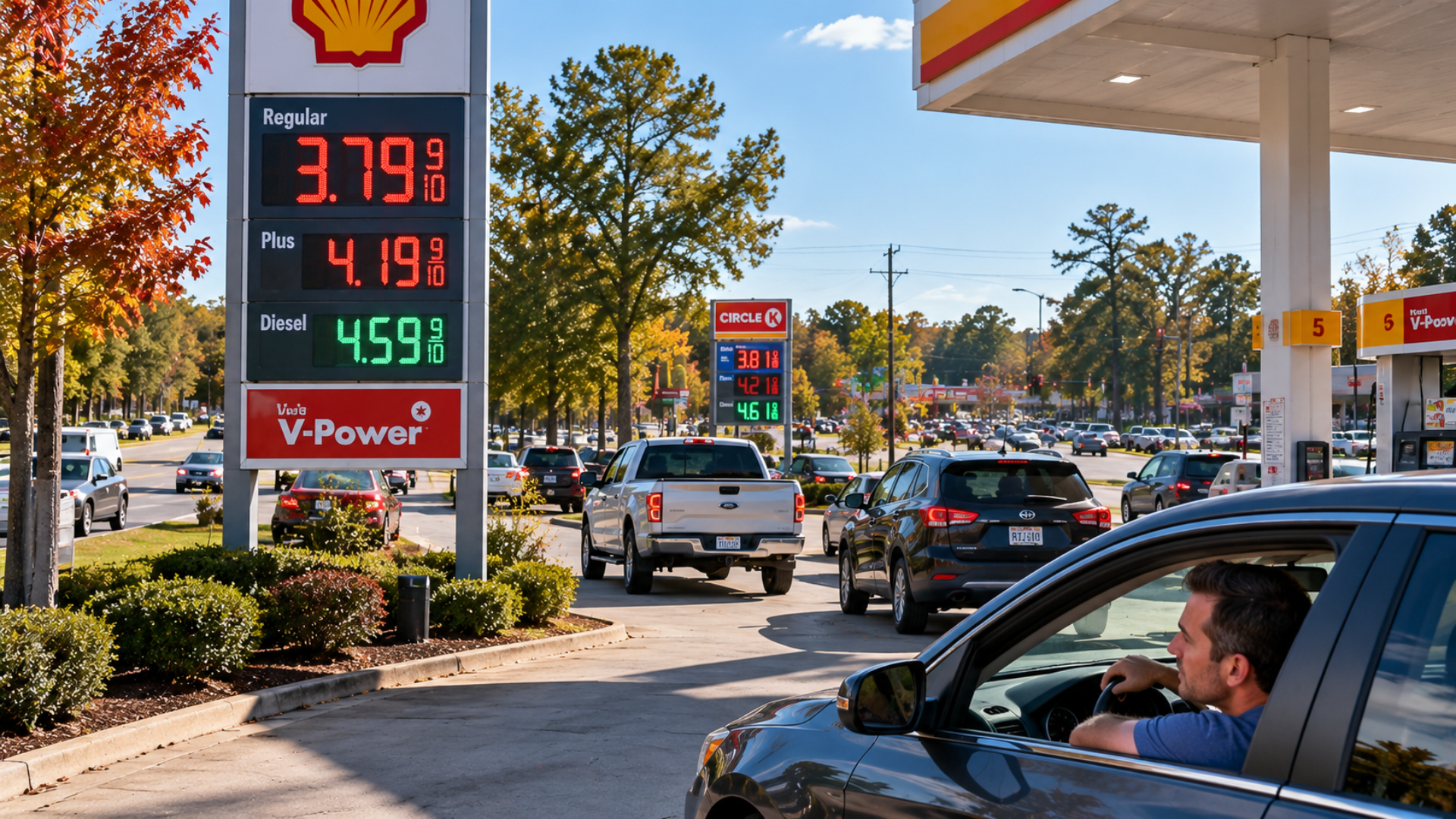
The timing matters because fuel prices have already moved significantly. Georgia regular gasoline averaged roughly $4.19 when the suspension was announced. By October 5, AAA put the statewide average at about $3.85, a decline of roughly 34 cents in one week. That drop is similar in size to the suspended 33.3 cent tax, although the tax break alone cannot explain the entire decline in retail prices.
Diesel Drivers Face an Even Bigger Tax Per Gallon

Gasoline is only part of the order. Georgia’s state excise tax on diesel is 37.3 cents per gallon, four cents higher than the gasoline rate. Diesel prices were also far more painful when the suspension was announced, averaging $6.24 statewide. That matters beyond owners of diesel vehicles because trucks, farms, and businesses rely heavily on the fuel, spreading high transportation costs far beyond the service station.
Kemp’s Order Also Targets the Cost of Moving Goods

The emergency order reaches beyond fuel taxes. Georgia also temporarily suspended state weight limits on commercial vehicles, a step the governor’s office says is intended to reduce transportation costs that can feed into prices for everyday goods. The measure connects the fuel emergency to another expense households encounter constantly: groceries and other products moved by truck. Whether shoppers notice that relief is much harder to calculate than the tax on a gallon of gasoline.
Local Fuel Taxes Did Not Disappear With the State Tax

The suspension also has an important limit. Georgia’s Department of Revenue says prepaid local sales taxes on motor fuel remain in place. The order specifically suspends the state motor fuel excise tax, meaning drivers should not interpret the move as eliminating every tax associated with a gallon of gasoline. That distinction helps explain why subtracting exactly 33.3 cents from an earlier pump price does not necessarily predict what motorists will ultimately pay.
This Is Far From Georgia’s First Gas Tax Holiday

Georgia drivers have seen this strategy before. The state suspended motor fuel taxes earlier in 2026 as rising prices pressured motorists, including a suspension enacted in March and continued into early June. Kemp has also used temporary fuel tax relief during previous periods of elevated prices. That history makes October 29 important: the current order has a clear expiration date, but previous suspensions show that the relief does not always end on its originally expected schedule.
The 30-Day Break Has a Firm Price Tag for Drivers

Georgia’s latest gas tax suspension offers a modest but measurable break during another period of volatile fuel costs. Each gallon of gasoline temporarily escapes 33.3 cents in state excise tax, while diesel gets a 37.3 cent break. Pump prices have already fallen considerably since the order was announced, giving drivers additional relief. Unless the policy changes, however, the suspension ends at 11:59 p.m. on October 29, putting the state tax back into the equation.