Family Dollar Closes 350 Stores While Still Charging More Than Rivals
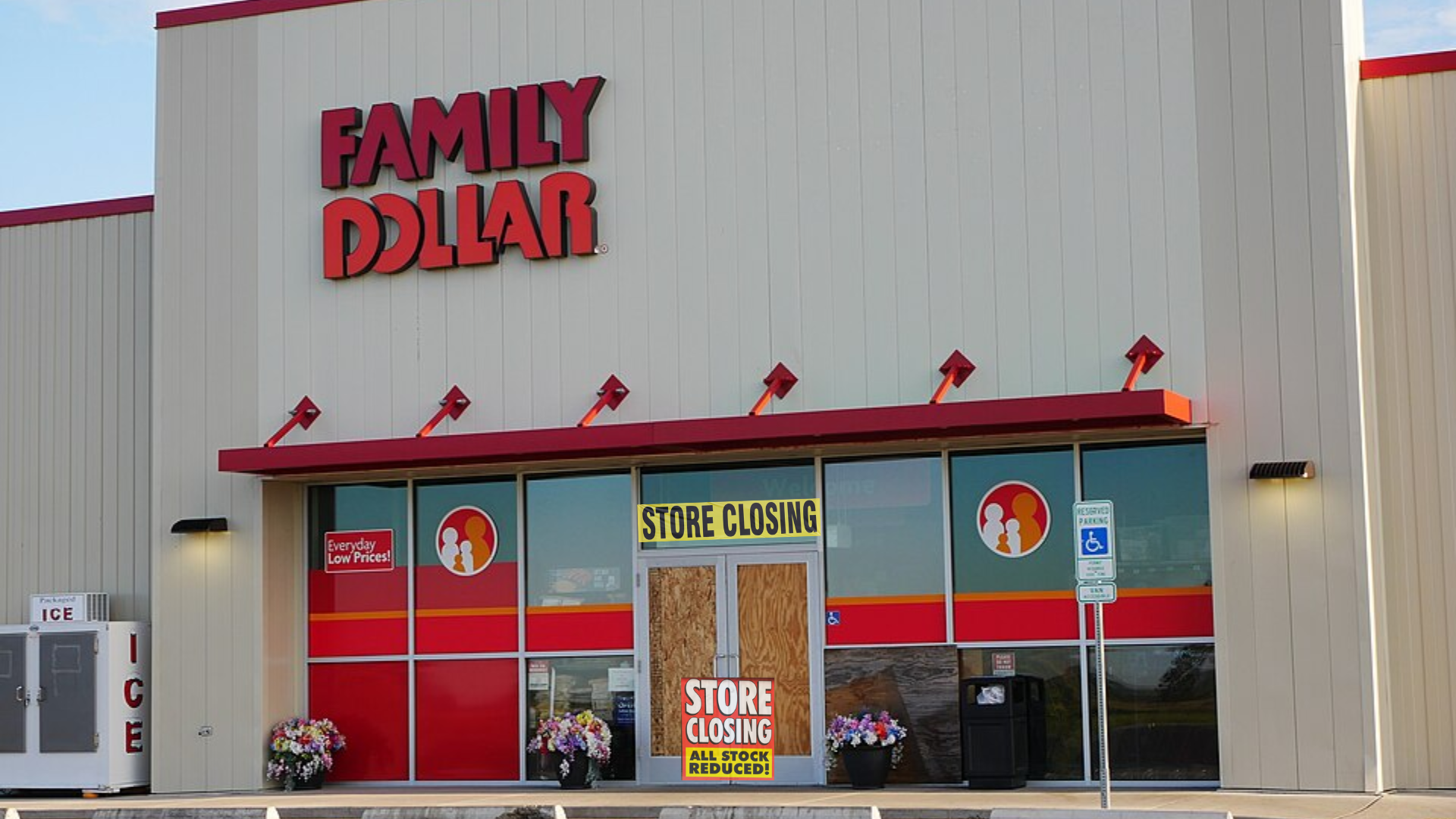

A rough economy is supposed to be good news for discount retailers, as tighter budgets typically push shoppers toward the cheapest options available. That logic has held up for Costco and Walmart, both of which have posted steady sales gains. It has not worked out that way for Family Dollar. Despite its name and its position as a value chain, the retailer has closed hundreds of stores over the past year.
Between July 2025 and May 2026, Family Dollar permanently closed at least 350 stores, according to an analysis by the retail tracking firm Local Falcon, roughly one closure every single day. That reduced the chain’s footprint by nearly 5%. Combined with almost 1,000 closures the year before, Family Dollar has shrunk from more than 8,300 locations in early 2024 to roughly 7,100 stores operating today.
That scale of shrinkage is unusual for a chain marketed as a budget-friendly option during an inflationary stretch. Value-focused retailers are supposed to gain customers, not lose stores, when household budgets tighten. Something about Family Dollar specifically was pushing shoppers elsewhere, and according to retail analysts, it was not really about the economy at all. It was about the prices on Family Dollar’s own shelves.
Walmart Is Investing More in Low Prices Than a ‘Dollar’ Store Is
GlobalData Managing Director Neil Saunders has pointed to pricing as one of Family Dollar’s core problems. The situation has only gotten worse over time. He said Family Dollar’s “prices are not particularly competitive,” especially as rivals like Walmart invest more heavily in keeping their own prices low. According to Saunders, that pricing gap has directly cost Family Dollar even more customers.
Family Dollar is far from alone in this. Many “dollar” chains do not actually sell everything cheaply. Retail analyst Garrick Brown has called these stores “a poor substitute for grocery stores,” since they typically carry no fresh produce and package food in small sizes that cost more per ounce. A Fortune analysis found the same pattern comparing Dove soap at Dollar General and Target: the Dollar General package cost less in total, but Target’s version was cheaper per ounce.
None of this means Family Dollar’s low prices are a myth entirely. It means the comparison is more complicated than the name on the storefront suggests. That gap between perception and reality has real financial consequences, and those consequences eventually reached the boardroom. In July 2025, Family Dollar changed hands entirely, in a deal that says a lot about how far the chain had actually fallen.
Dollar Tree Bought Family Dollar for $8.5 Billion. It Sold It for Just $1 Billion.

The numbers behind that sale tell their own story. Dollar Tree originally acquired Family Dollar for roughly $8.5 billion back in 2015. A decade later, in July 2025, it sold the struggling chain to private equity firms Brigade Capital Management and Macellum Capital Management for just over $1 billion, a loss of more than $7 billion on the original purchase. That single figure captures just how badly the acquisition had gone.
The human cost of the closures is significant too. Each shuttered location reportedly eliminates between 15 and 20 local jobs, and the impact reaches beyond individual stores. When Family Dollar closed a distribution center in North Carolina, 373 workers lost their positions in a single event. Analysts estimate the broader wave of closures between 2025 and 2026 has eliminated more than 5,000 jobs nationwide.
Texas has absorbed the largest share of closures, losing 35 stores, followed by Ohio with 28 and Georgia with 26. Only a handful of states escaped the latest wave entirely. That geographic spread matters. In many of these communities, Family Dollar was not simply a discount option. For some shoppers, it was the closest place to buy groceries and household basics at all.
The Same Customers Losing SNAP Benefits Are Losing Their Nearest Store, Too

Former Dollar Tree CEO Rick Dreiling laid out the underlying problem before the sale went through. Money was simply tighter. He explained that persistent inflation and reduced government benefits had squeezed the lower-income shoppers who make up a sizable portion of Family Dollar’s customer base. Categories like apparel, home decor, electronics, and general merchandise, he noted, had grown especially weak as those customers became more deliberate about every dollar they spent.
Not everyone lays the blame entirely on the economy. RTM Nexus CEO Dominick Miserandino told TheStreet the decline reflects “a combination of both neglected stores and a consumer” facing tighter finances than before. He pointed to inflation squeezing margins on already low-cost goods as a third compounding factor. Family Dollar’s new owners say they are countering this with smaller, city-focused store formats designed for denser urban markets, with pilots planned for 2026.
For a chain whose entire identity is built around being the cheap option, that identity is not just branding, it is the whole reason for existing. When a dollar store stops being reliably cheaper than Walmart or Target, it loses the one advantage that justified shopping there instead of somewhere bigger and better stocked. Three hundred fifty closures later, that math still isn’t working.