Don’t Donate Grandma’s Old Pyrex Just Yet. Some Patterns Are Worth a Surprising Amount
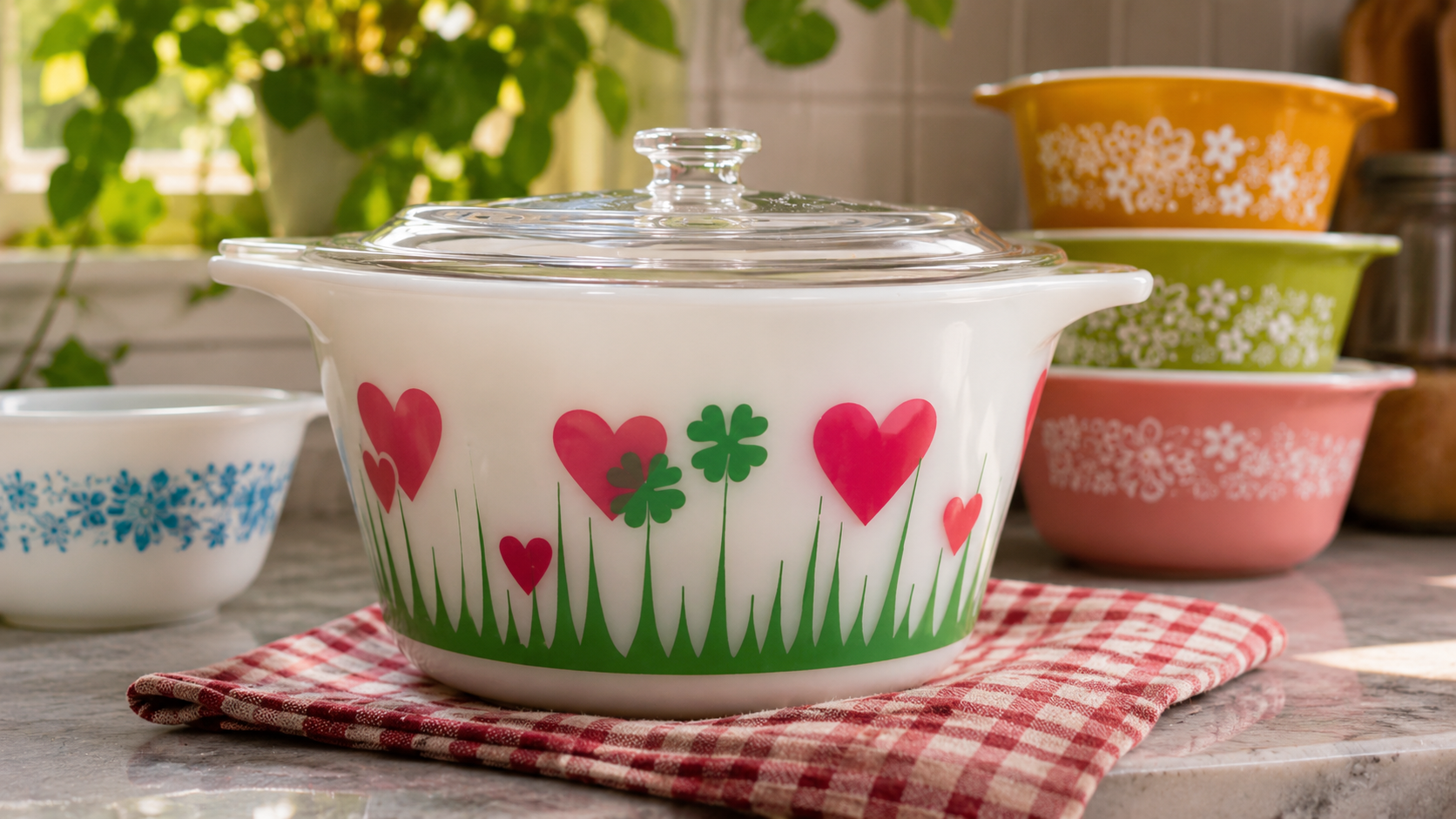

Before the turquoise casserole or pink-patterned bowl from Grandma’s cupboard goes into a donation box, flip it over. Vintage Pyrex has a devoted collector market, and one casserole pattern has sold for more than $4,000. Most pieces won’t come close. Estimonia’s July 2026 price guide puts common patterned pieces at roughly $10 to $80 and complete sets of desirable patterns at about $100 to $500. What separates the low end from the high end is the pattern, the color, the condition and whether the set is complete. The color story started with four plain bowls in 1945.
This article was created with the assistance of AI and reviewed by our editorial team for accuracy and clarity.
Pyrex Began As Clear Glass And Turned Colorful
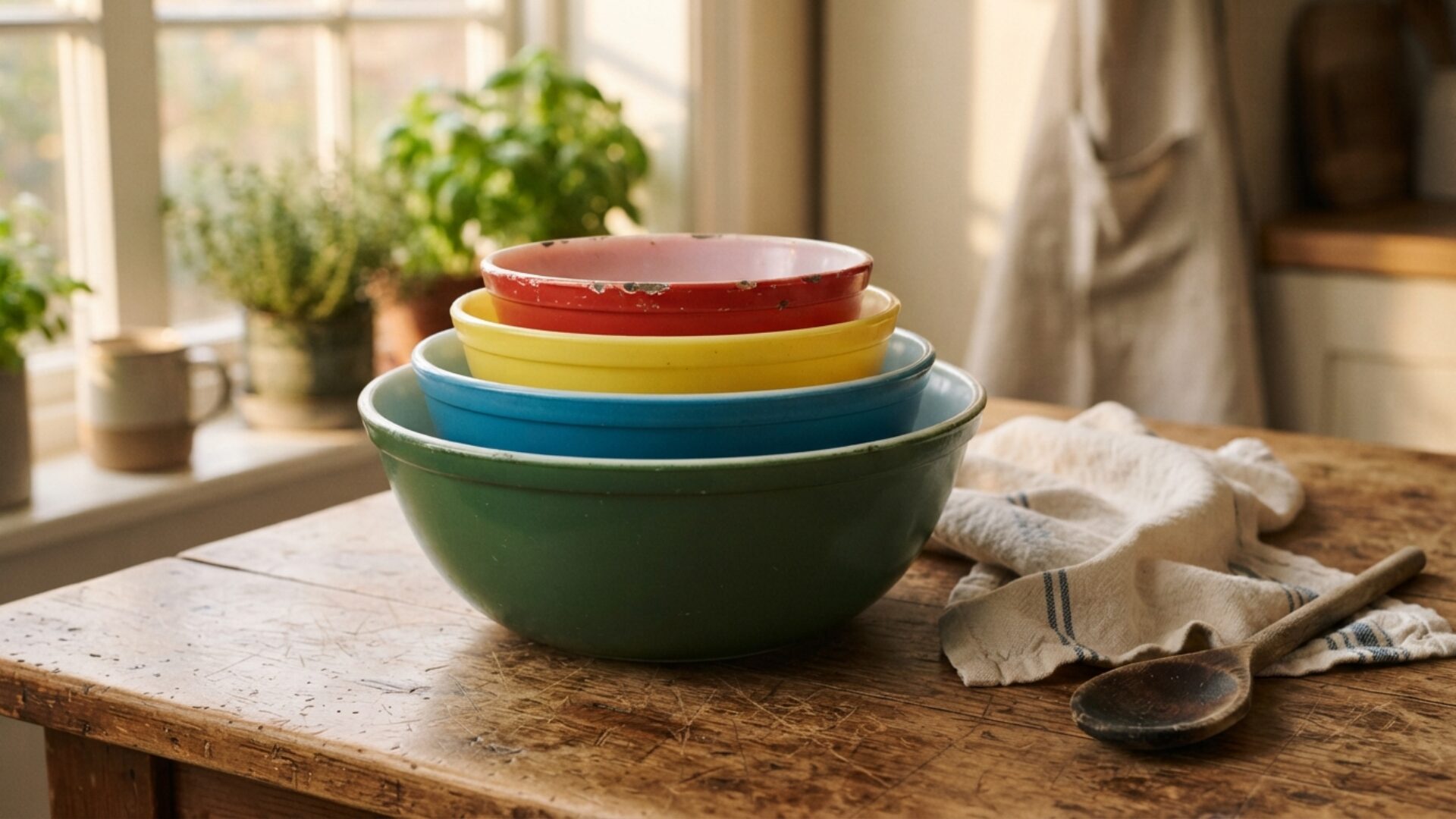
The four-bowl Primary Colors set arrived in 1945 and started Pyrex’s run of colored opalware, a milky, opaque glass. Red, yellow, blue and green bowls nested together, a long way from the clear glass cookware Corning Glass Works introduced in 1915. Printed patterns took longer. According to the Corning Museum of Glass, the company offered its first patterned opalware gift set in 1953, and the 1956 success of seasonal decorator casseroles spread limited-run patterns widely. That timeline helps date a piece in your cupboard: solid colors came first, prints later. Two patterns that debuted in 1957 are the ones collectors mention most.
Butterprint And Gooseberry Launched Together In 1957

Butterprint shows a farm scene with farmers and roosters, usually in turquoise and white. Gooseberry is a vine of berries and leaves, and pink Gooseberry is among the most sought-after pieces. Both debuted in 1957, according to the Corning Museum of Glass, and both were among the first patterns on the new Cinderella bowls, nesting mixing bowls with a handle on one side and a spout on the other. Antiques reseller Diana Petrillo says complete sets of either pattern can go for several hundred dollars on sites like eBay, though color and condition move the price. Butterprint ran until 1968 and Gooseberry until 1966, so many households owned them. One Gooseberry color came on a single set and was gone by 1962.
Rarer Colors Of Both Patterns Had Shorter Runs
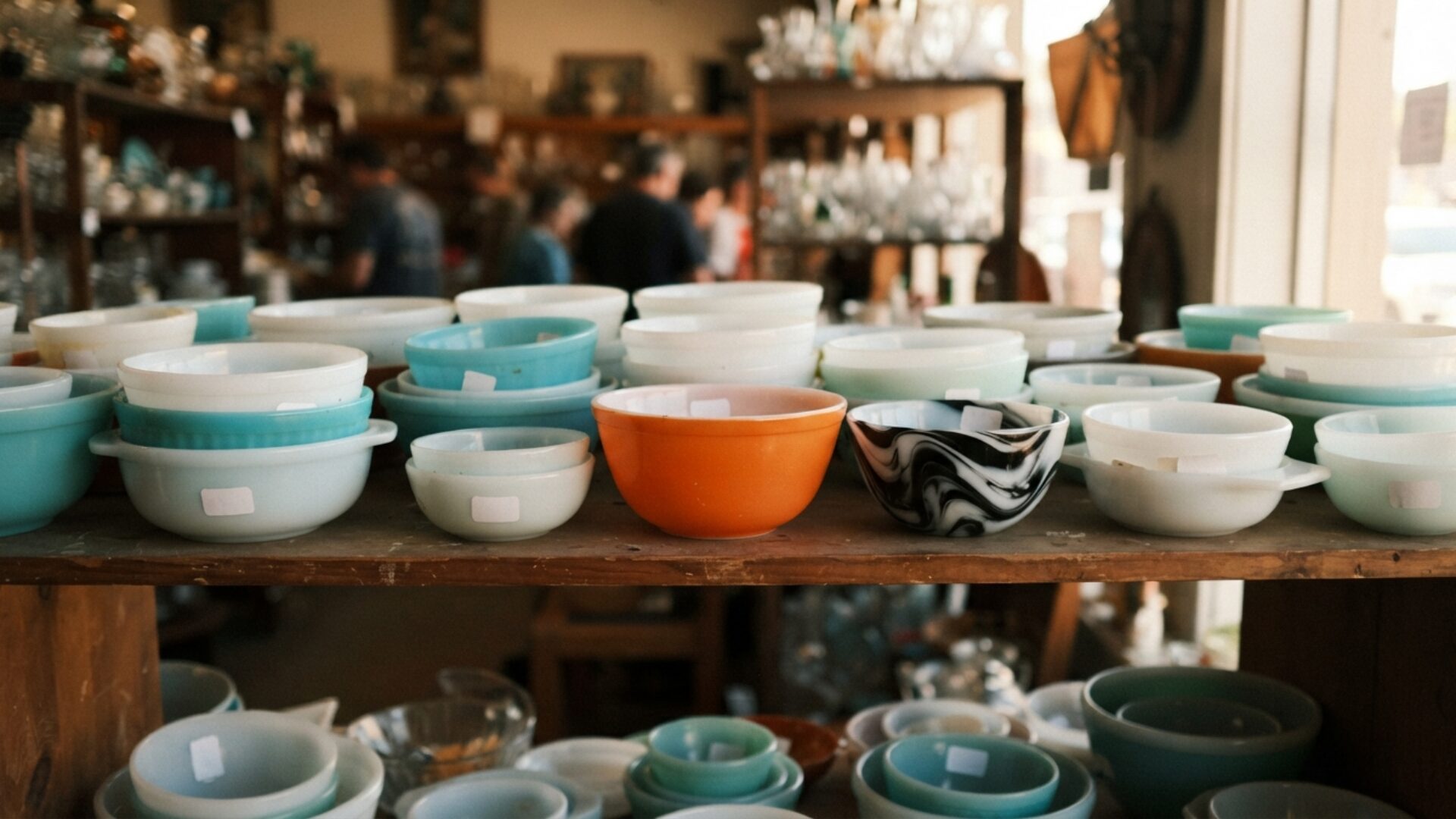
Black Gooseberry came on one product only, the four-piece Cinderella bowl set, on white or yellow backgrounds. Corning discontinued it in 1962, four years before the pink versions ended. Butterprint has short-run colors too. Beyond the usual turquoise, limited promotional versions came in orange on white, pink on white and white on pink, according to Chowhound. For rare patterns like Orange Butterprint, collectors expect near-perfect condition, so condition matters even more. None of these is the rarest design, though. That one is a single casserole from 1959.
Lucky In Love Is Among The Rarest Pyrex Patterns
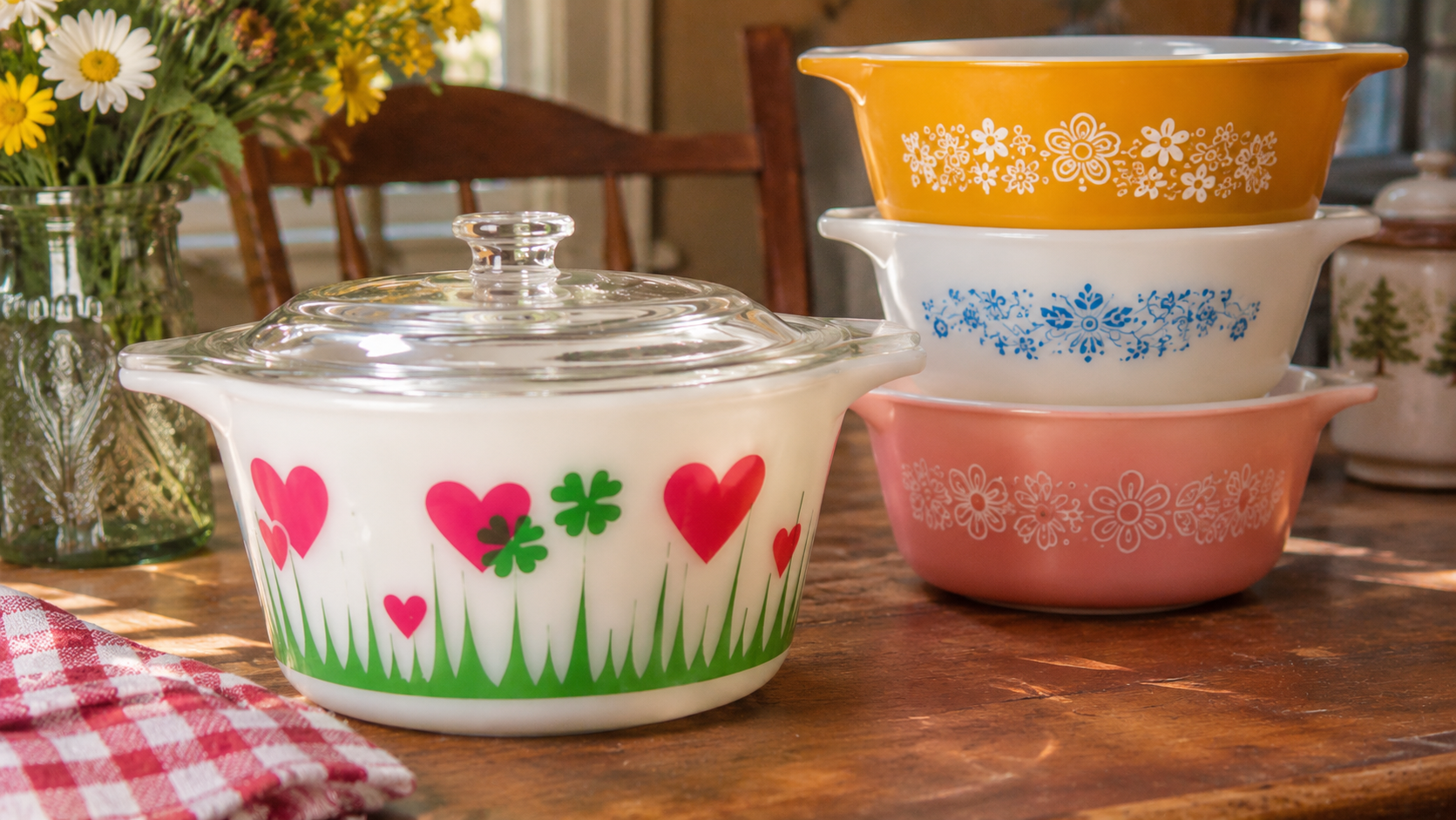
Lucky in Love, introduced in 1959, puts pink hearts and green four-leaf clovers on a white one-quart round casserole. The Corning Museum of Glass calls it one of the most elusive Pyrex designs ever made and says it was most likely a limited release or a test piece. The museum’s own example has no pink hearts, only grass and clovers. The museum notes that online auctions of the pattern have topped $4,000. In 2017, Goodwill of Western New York reported a Lucky in Love dish selling for $5,994, the highest amount that branch had ever seen on its auction website, according to Hunker. An eBay listing for the same dish later climbed to more than three times that Goodwill price.
A $22,100 Bid Shows Why Asking Prices Mislead

That listing reached $22,100, according to Hunker, and then the final bidder retracted the offer. The dish went back on the market, so $22,100 was never a sale price. The gap between a listing and a sale is the lesson here. An asking price is what a seller hopes to get, and a sold price is what a buyer actually paid. A bowl advertised for $500 isn’t worth $500 until someone pays it. Corning made nearly 135 promotional gift set patterns through 1983, and told stores to pull older unsold promotions.
Short-run Promotional Patterns Are Where Scarcity Comes From
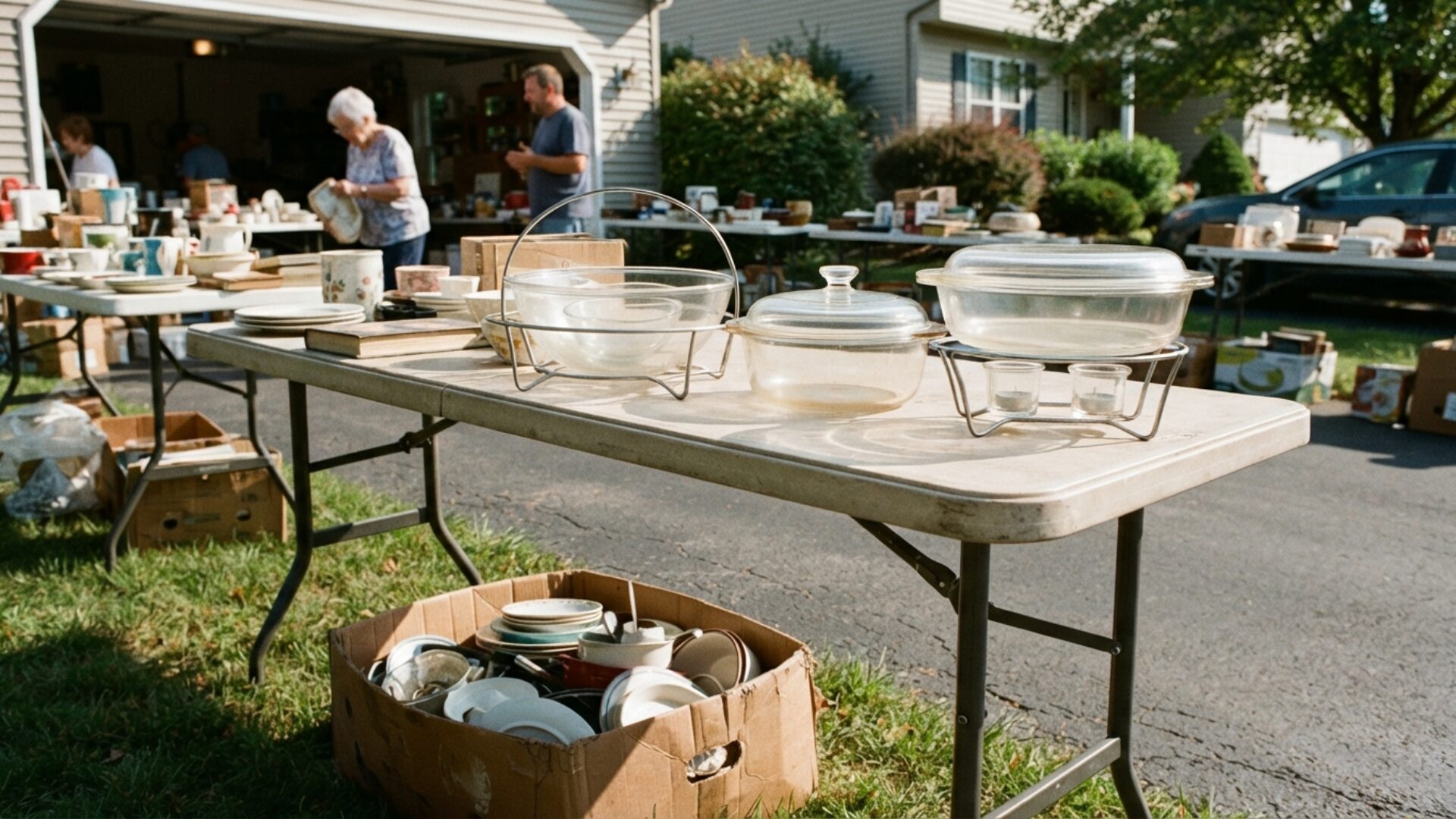
Corning’s gift set program ran through 1983 and produced nearly 135 patterns, according to the Corning Museum of Glass. Each was meant to be sold for a limited time, and retailers were told to remove older unsold promotions, which is why survivors can be hard to find. Collectors look for names like Black Tulip, Balloons, Starburst and Eyes. Balloons was a patterned promotional chip and dip set. Starburst, in its complete form, is a two-quart casserole with a glass lid and a two-candle warmer stand, according to Good Housekeeping. Many promotional patterns had no official name, and collectors assigned the names you’ll see in listings. Four bowls found together can sell for more than the same four sold one by one.
A Complete Set Is Worth More Than Its Parts
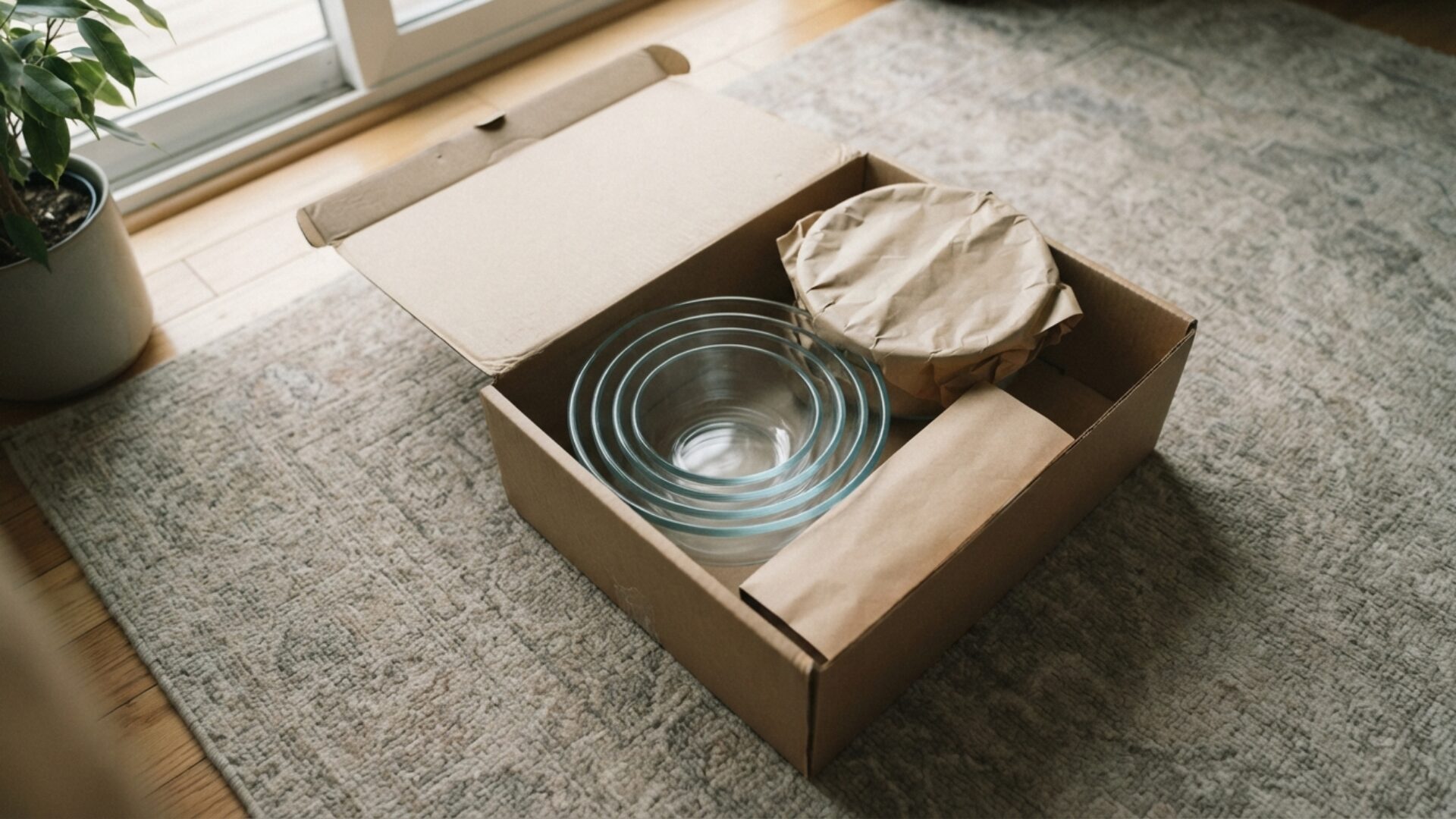
Antiques reseller Diana Petrillo estimates that complete sets are typically worth about 10 to 30 percent more than the same pieces sold separately. That’s one person’s estimate, not a rule, but it’s a good reason to keep bowls together until you’ve checked their value. The classic example is the Primary Colors set from 1945: four nesting bowls in red, yellow, blue and green, sized to stack inside one another. Extras count too. Original boxes, instructions and accessories add value, especially on rare patterns, according to Estimonia, so keep any stray lid or carton found with the dishes. A complete set only keeps that premium if the paint is intact, and one common habit wears it off.
Dishwasher Wear And Chips Can Sharply Cut A Piece’s Value
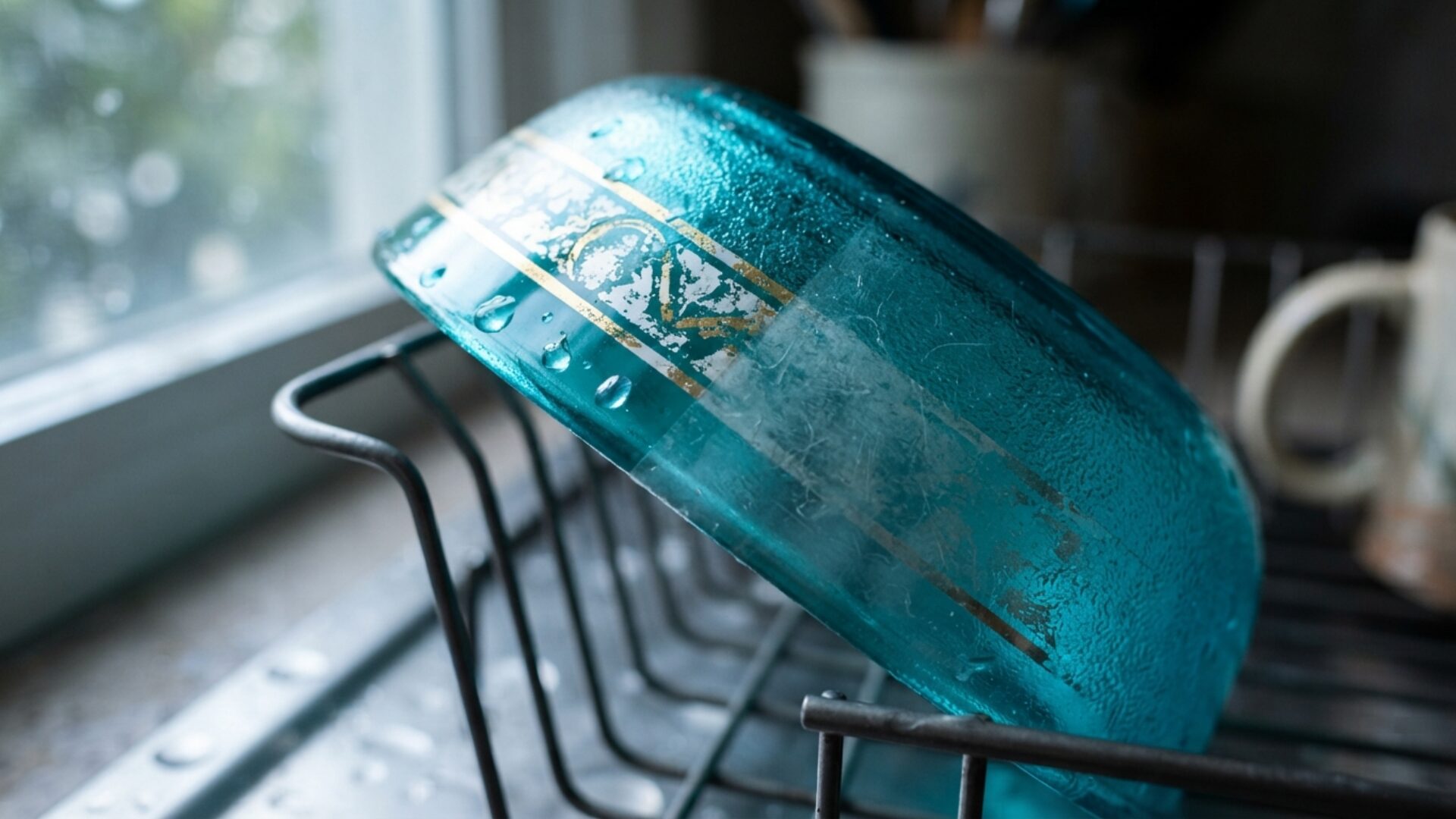
The decoration on vintage Pyrex sits on the glass surface, so repeated dishwasher cycles can leave it faded, hazy or patchy, and the damage can’t be reversed. Collectors have a shorthand for it, DWD, which stands for dishwasher damage and is a distinct condition category on the Pyrex Collector site, according to Morning Overview. Guides differ on how much value is lost, but they agree on the direction: collectors want bright color, a glossy surface and no damage. A rare pattern in poor condition is worth far less than the same pattern with crisp color and no damage. Check rims and handles for chips and cracks too. Condition only matters once you know what you’re holding, and the clues are on the bottom.
Check The Underside, Then Compare Sold Prices

Turn the dish over and look for the Pyrex stamp and a model number. An all-caps PYREX mark is the classic sign of an older piece, but not necessarily a valuable one, since pattern and condition drive the price. A missing stamp isn’t a verdict either: the Corning Museum of Glass notes that only some Eyes bowls carry the Pyrex stamp. Then compare the design with the museum’s online Pattern Library. It lists only patterns in the museum’s own collection, so you may need another resource, and the museum says it can’t answer questions about the value of your glass. If you decide to sell, local pickup avoids shipping heavy glass. Before listing anything, search eBay’s sold listings for your pattern and match color, size, condition and accessories.