Cutting Exposed Tree Roots Could Damage Your Tree. Here’s What to Do Instead
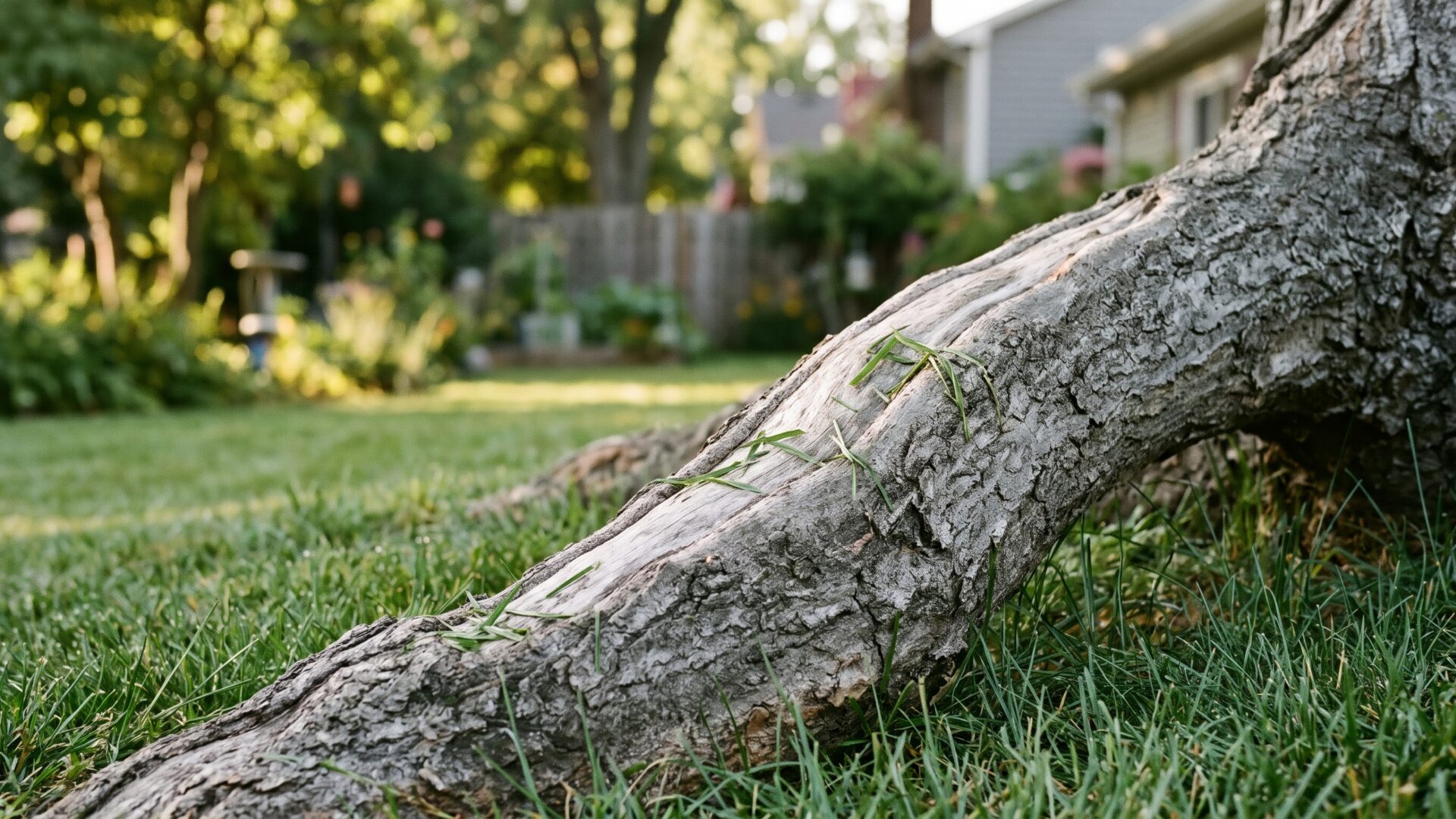

You hit one with the mower deck, you catch a toe on another, and the urge to go after them with a saw is strong. Resist it. Those woody ridges are structural roots, and they surfaced because they found what the tree needed near the top of the soil. “The tree roots will grow where they can get those things the easiest,” says Barbara Fair, a certified arborist and extension specialist at North Carolina State University, referring to oxygen, water and nutrients. Nothing about them signals a sick tree. The reason they’re up there usually has less to do with the tree than with the first 12 inches of your yard.
This article was created with the assistance of AI and reviewed by our editorial team for accuracy and clarity.
Most of the root system sits surprisingly shallow
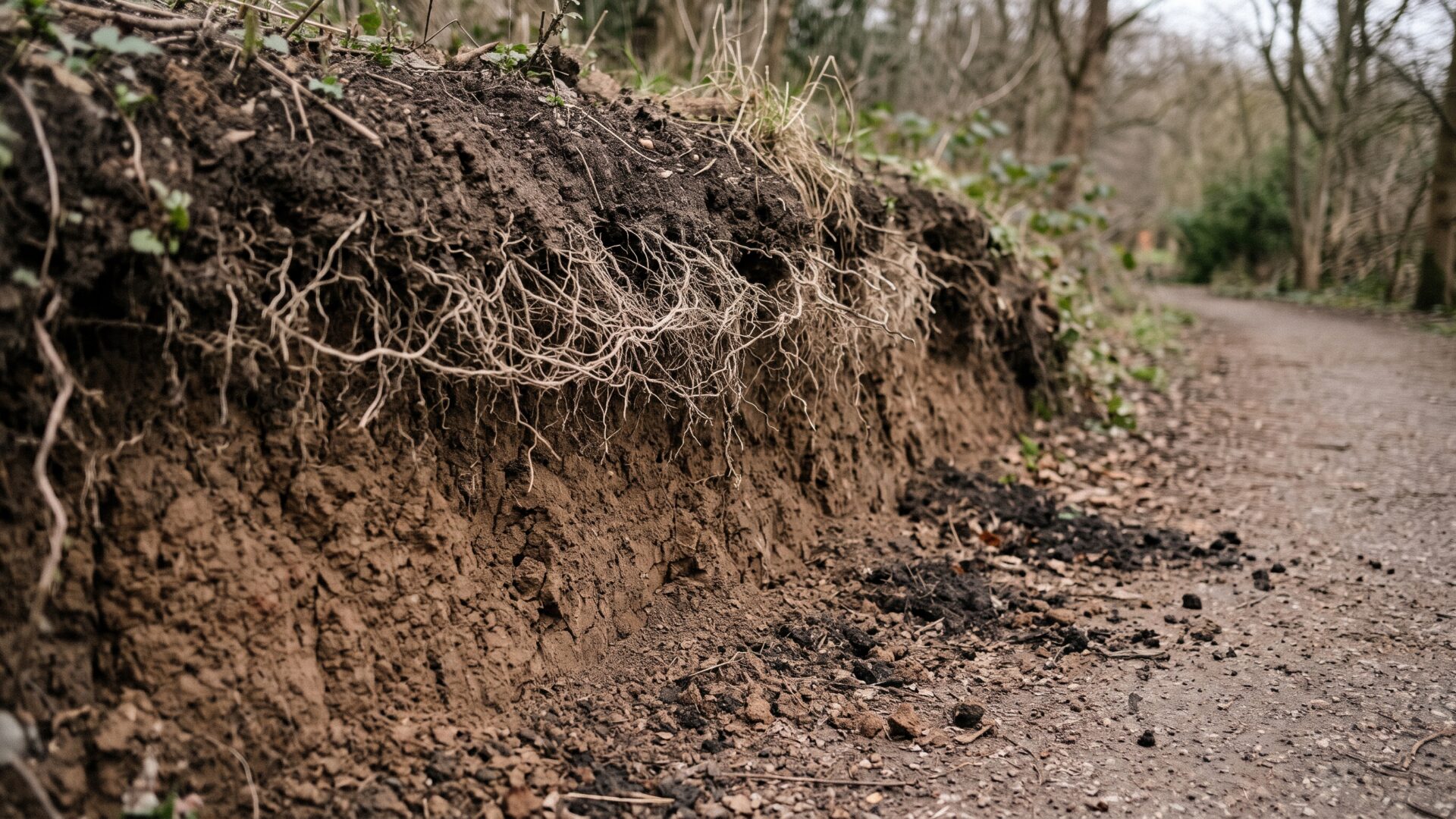
Half of a tree’s absorbing roots sit in the top 12 inches of decent soil, and 90 to 95 percent of all roots stay within the top 3 feet, according to Colorado State University Extension. Most trees never grow the deep taproot people picture. Instead the big roots spread sideways into a root plate, and the thick buttress roots near the trunk are what keep the tree standing in wind. Width is the other surprise. In good soil, roots commonly reach two to three times the spread of the canopy, so the quiet part of your yard well past the branch tips is full of them. In packed soil those numbers change, and not in the tree’s favor.
Compacted soil pushes roots toward the surface
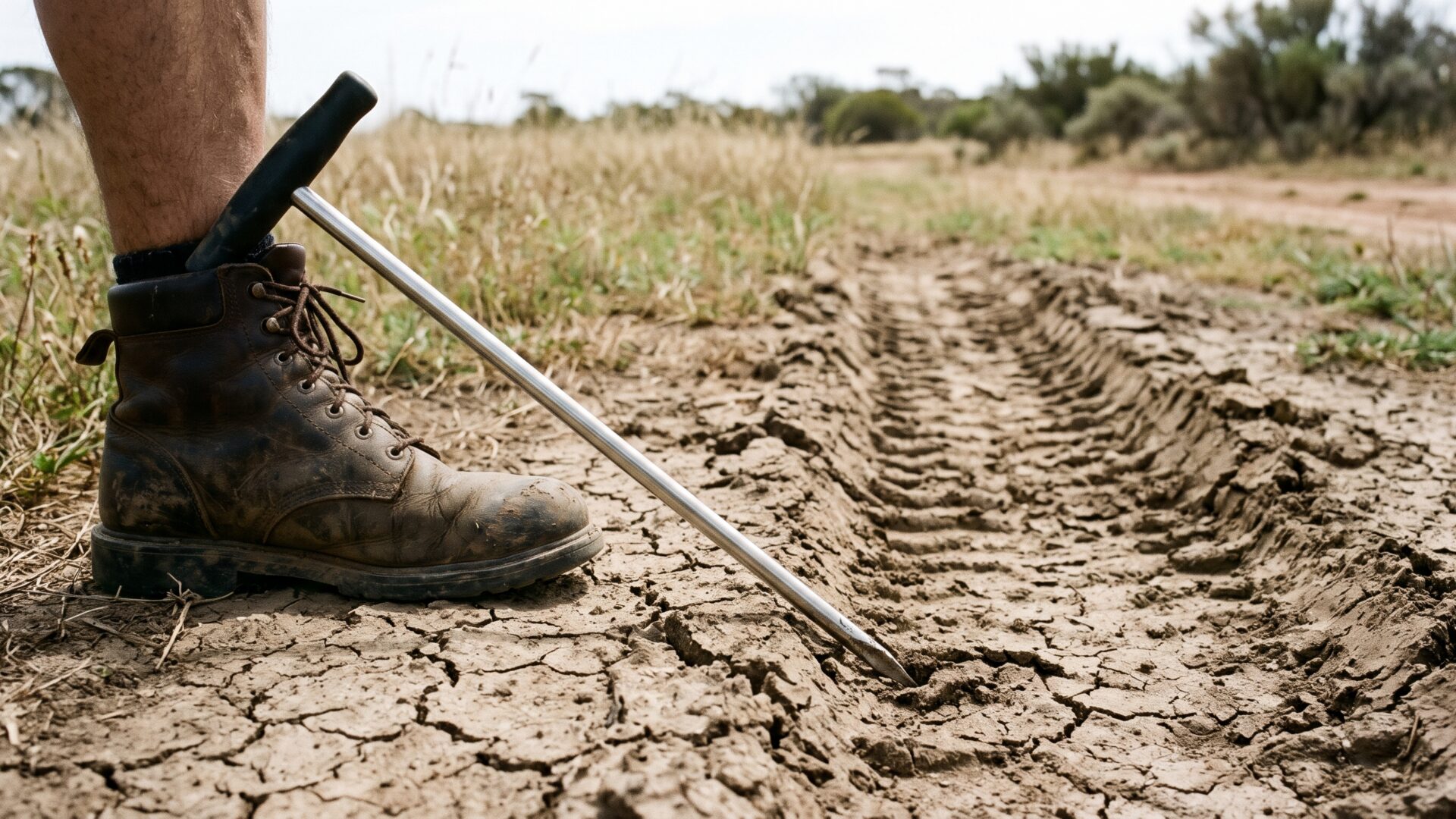
In compacted or clay soil, Colorado State University Extension puts 90 to 95 percent of roots in the top 12 inches or less, with half of the absorbing roots in the top 4 inches. The roots also spread five or more times the tree’s height to make up for the lost depth. That’s the usual story under a suburban lawn. “It often says more about the soil and growing site than about the tree itself,” says Blake Watkins, a master arborist and director of plant health care at Monster Tree Service, who points to compaction left behind by construction. Your own watering habits can lock the roots in place just as effectively.
Frequent shallow sprinkling keeps roots up top
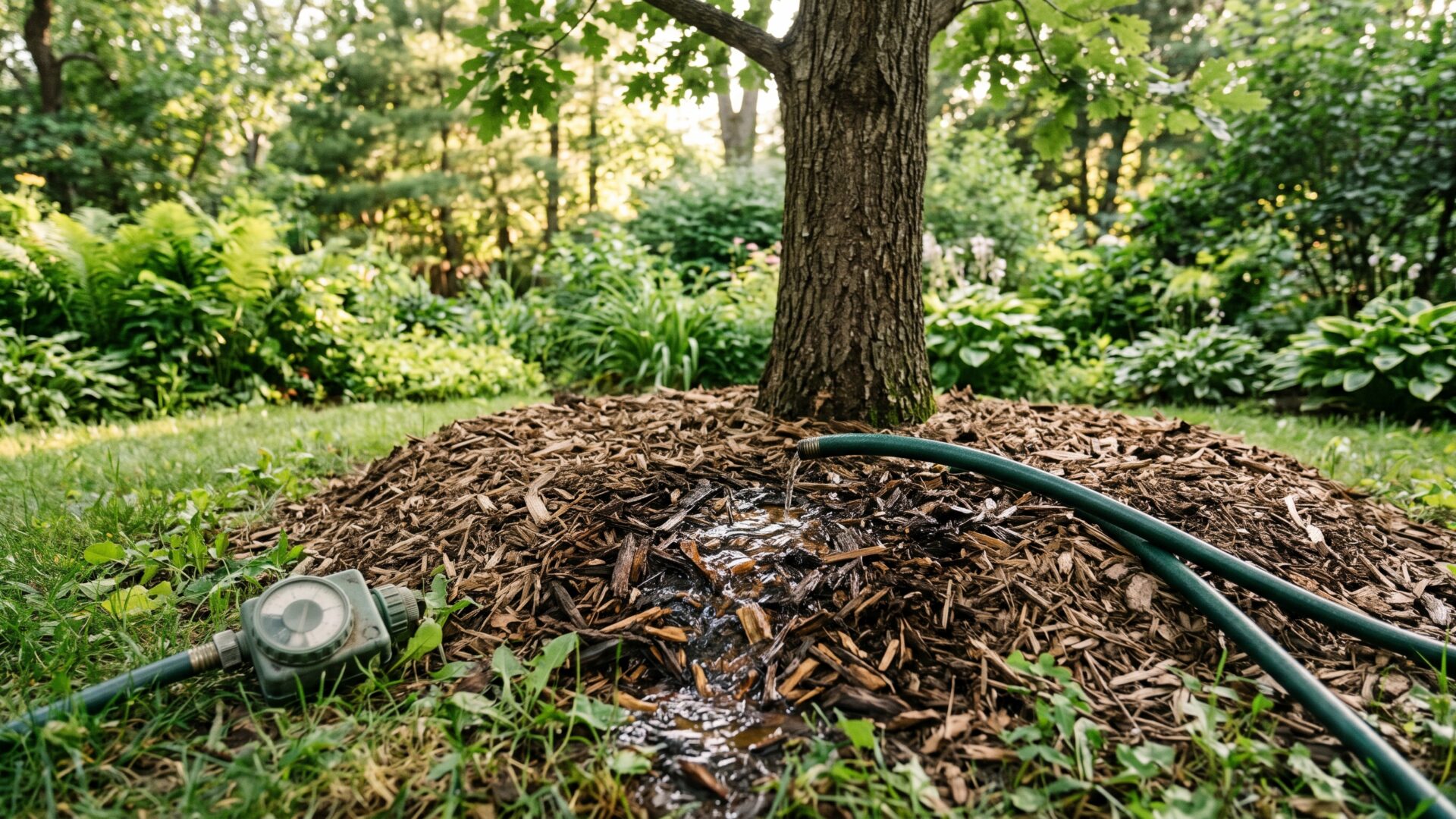
A lawn watered a few times a week trains roots to stay where the water stops. “That kind of shallow watering can cause tree roots to stay on top,” says Watkins, who suggests the opposite approach for a tree: a hose running on low for a few hours, roughly once a month, with a timer so you don’t forget it. The target is soil moistened about 12 inches down, the depth University of Arizona Cooperative Extension sets for landscape trees. Push a long screwdriver into the ground afterward to see how far the water actually got. On an irrigation system, bubbler emitters release the larger volume a tree wants. Even perfect watering won’t change some trees. A few species surface their roots as a matter of habit.
Some species raise roots no matter what
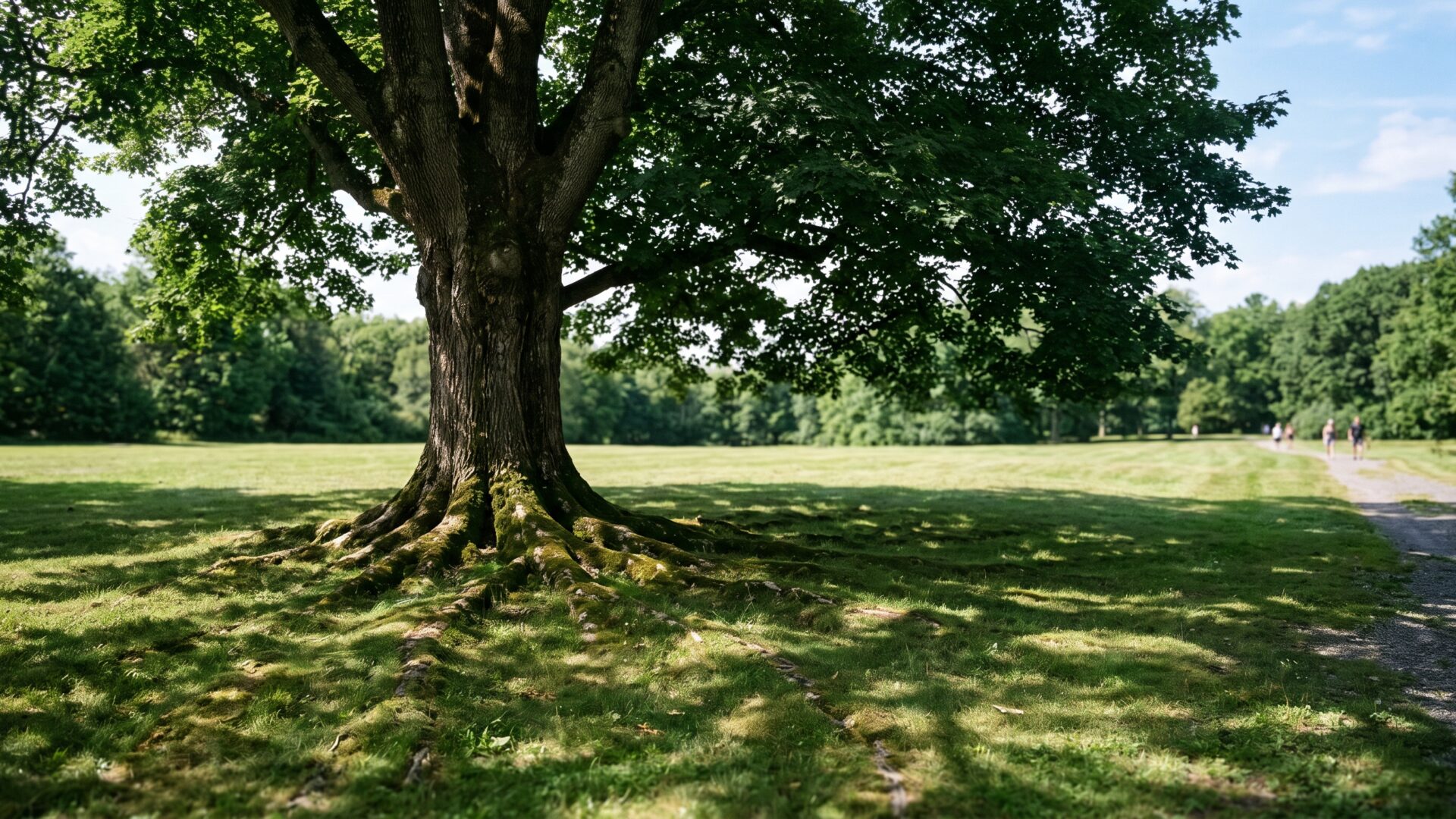
Redwoods, camphors, Southern magnolias and most maples run their roots near the surface by nature, and so do sycamores, willows and several ash species. Watkins says surface roots on these trees don’t point to a problem with the tree. “Genetics determine the characteristics of root growth in a tree,” Purdue Extension urban forestry specialist Lindsey Purcell wrote in a university publication on surface roots, and the site decides the rest. Knowing your species changes the plan: a magnolia or maple in open lawn will keep raising ridges however you water, so it’s worth giving that area over to a mulch bed early. Age matters too, and the explanation is in the width of the root, not its depth.
The roots thickened, the soil washed away
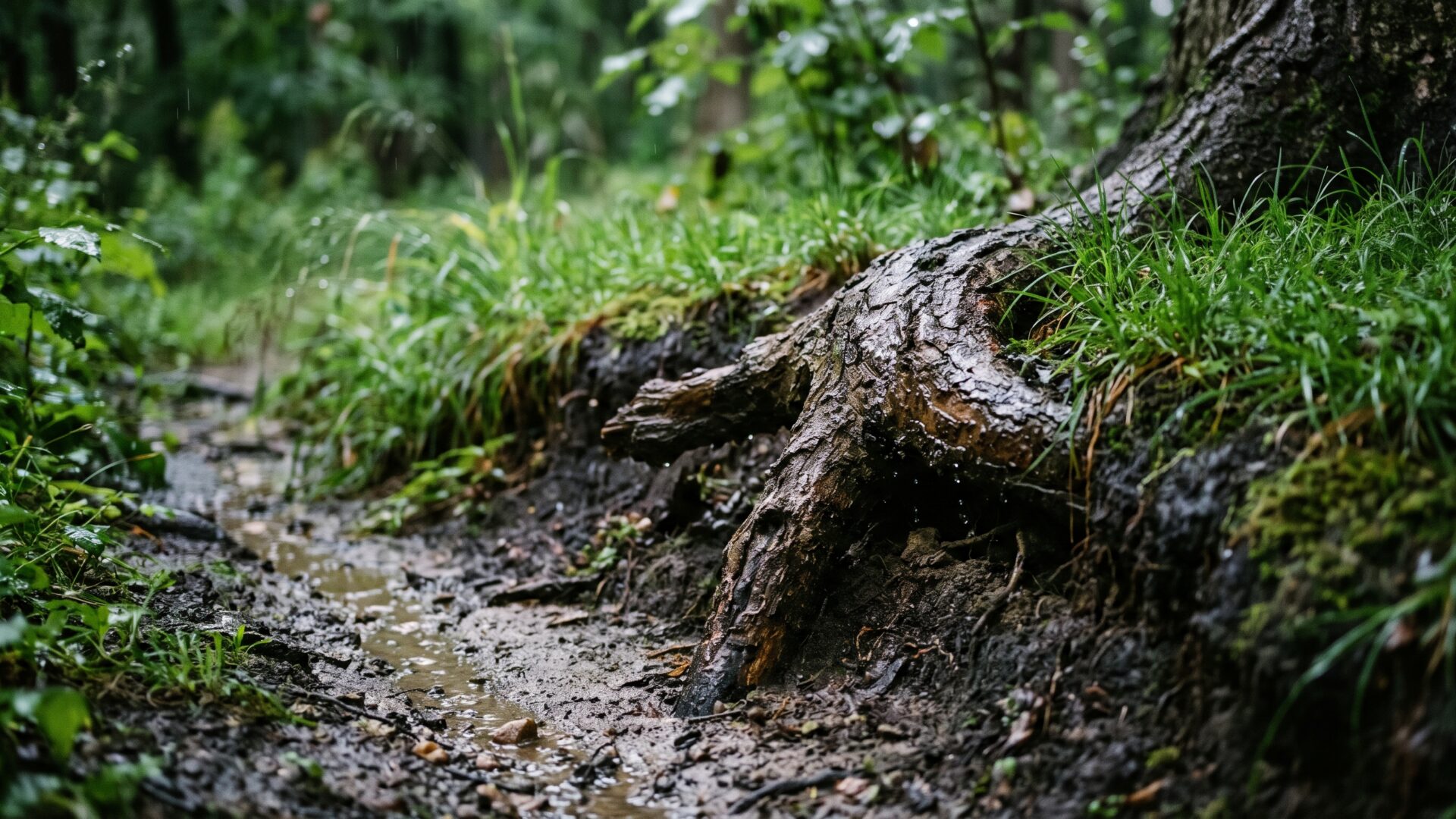
Woody roots add a growth ring every season, the same way the trunk does, so a root that sat just under the lawn when you moved in can be standing proud of it a decade later. Iowa State University Extension makes the point plainly: these roots thicken over years, which is why so many of them end up exposed. Soil loss finishes the job. Water dropping off the canopy and running down the trunk carries fine soil away from the base, says Fair, lowering the grade around roots that are getting thicker. That’s why it shows up on established trees and almost never on a young one. One common response makes it permanently worse.
Cutting the roots trades a bump for decline
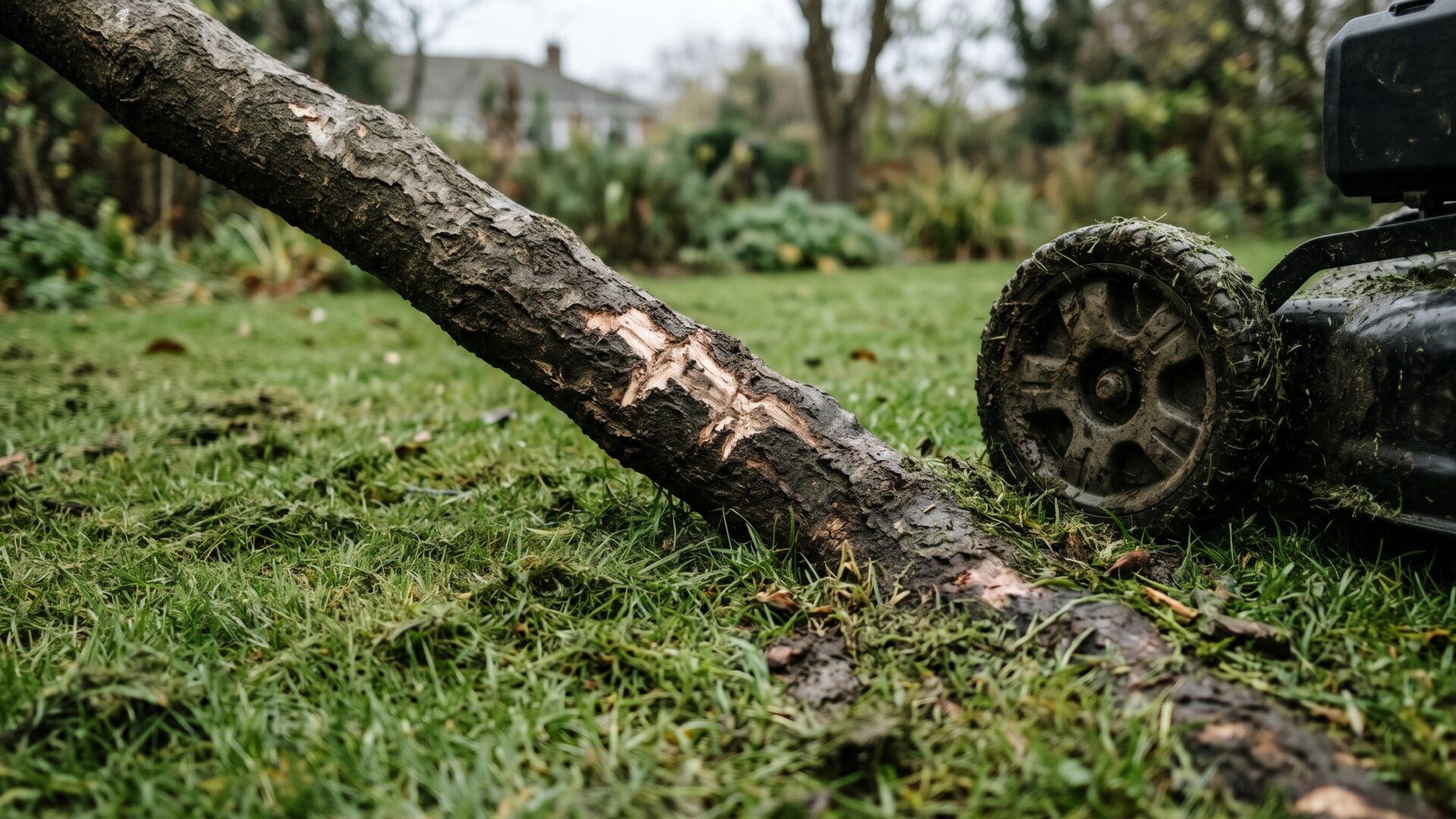
The response is a saw, an axe, or a stump grinder run along the ridge. “This affects the long-term health of the tree and could cause a decline,” says Mary Carol Sheffield, a certified arborist and extension agent with the University of Georgia. She puts repeated mower strikes in the same category, because each pass opens a wound that disease and insects can use. There’s a safety side as well. The thick roots nearest the trunk are the anchors, so cutting them trades a mowing nuisance for a tree that’s less secure in a storm. Purdue Extension lists root cutting and grinding among the fixes homeowners try that it doesn’t recommend. Grass seed is the next thing people reach for.
Grass won’t win the ground under a shade tree
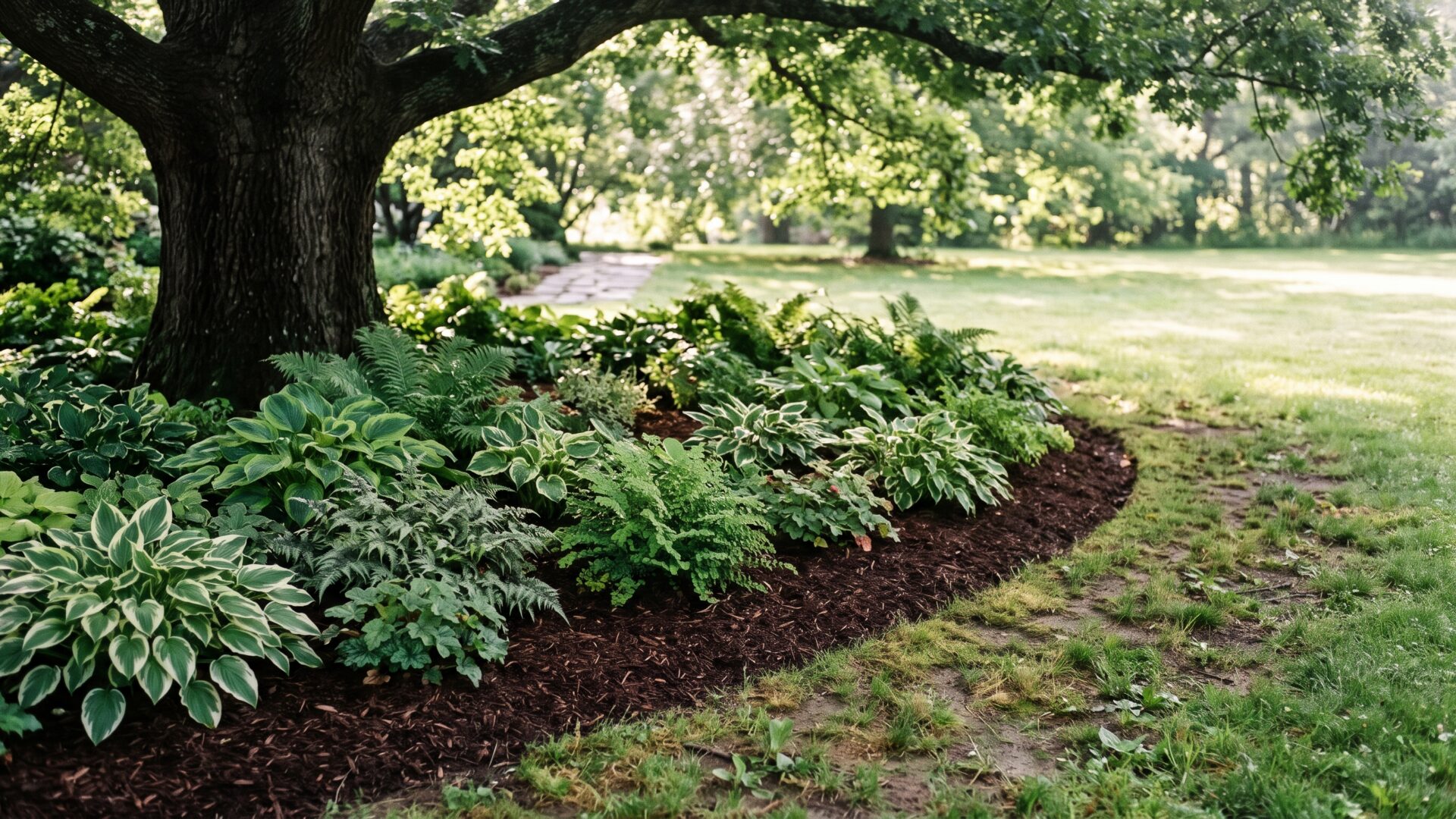
Reseeding under a mature canopy rarely sticks. “Turf is just never going to grow as well as you’d like it,” says Fair, who singles out warm-season grasses such as Bermudagrass and zoysia as the worst partners for trees. Tree and grass roots occupy the same top 6 to 8 inches of soil, so they compete for the same water and nutrients, and work done for one tends to damage the other. Shade perennials are the better tenants. Ferns, hostas and small hydrangeas suit the conditions. Plant them bare-root, Fair says, because a bare-root perennial goes in without the wide hole that would cut into tree roots. Between the plants, a thin layer of one cheap material does more for the tree than anything else here.
Mulch is the fix arborists name first
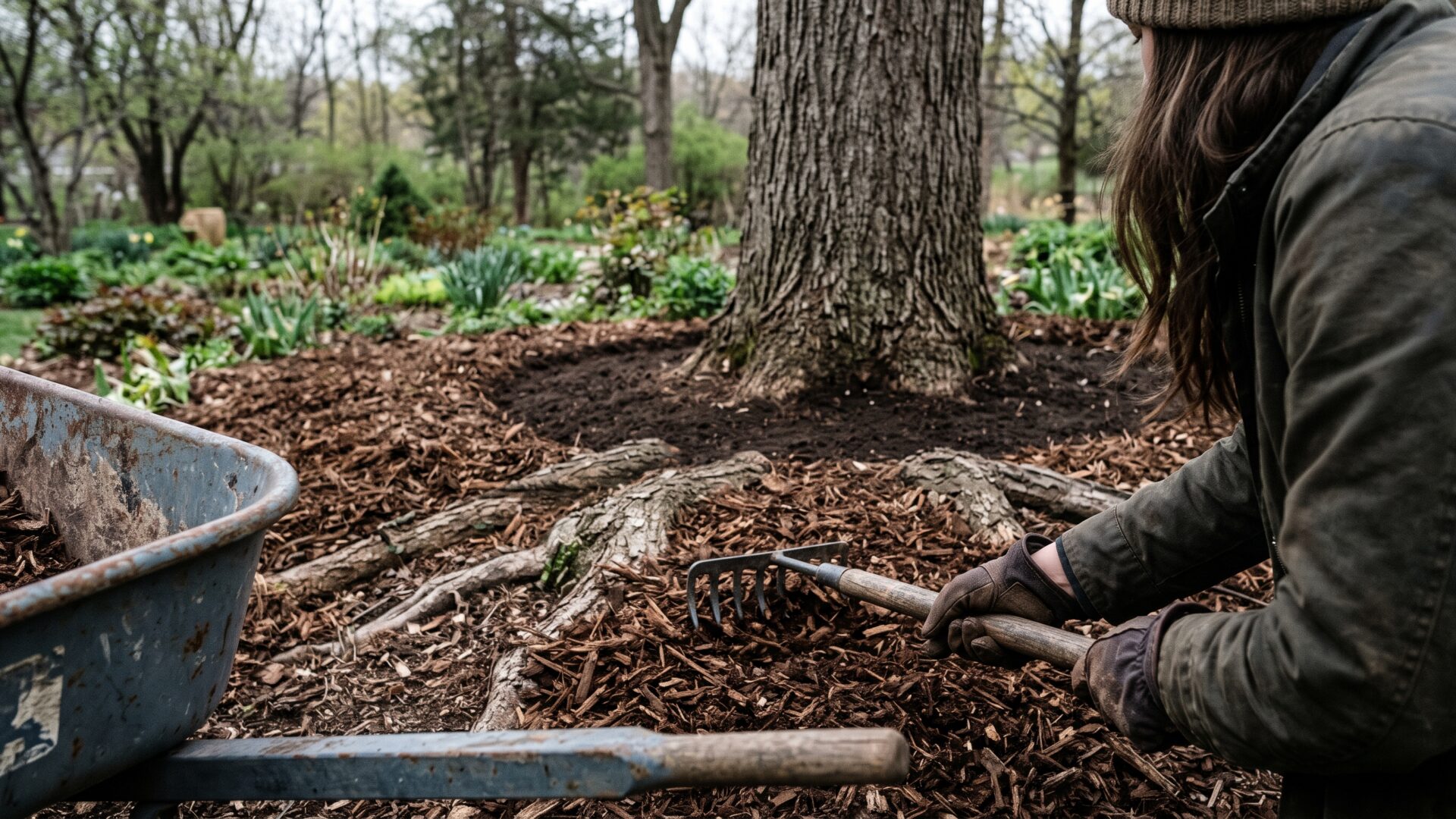
“The best solution for bothersome surface roots is simply to mulch,” Lindsey Purcell wrote for Purdue Extension. The spec is narrow: 2 to 3 inches of an organic mulch such as wood chips or pine straw, spread out to the drip line if you can, or at least past the last visible root. Skip decorative rock, which holds heat and doesn’t break down. Leave a gap of an inch or two at the trunk rather than piling mulch against the bark. A mulch ring also marks the no-mow zone, holds moisture in the soil, and keeps direct sun from heating roots that lost their cover. Soil looks like the simpler option. There’s a hard ceiling on it.
Two inches of soil, and when to call a pro
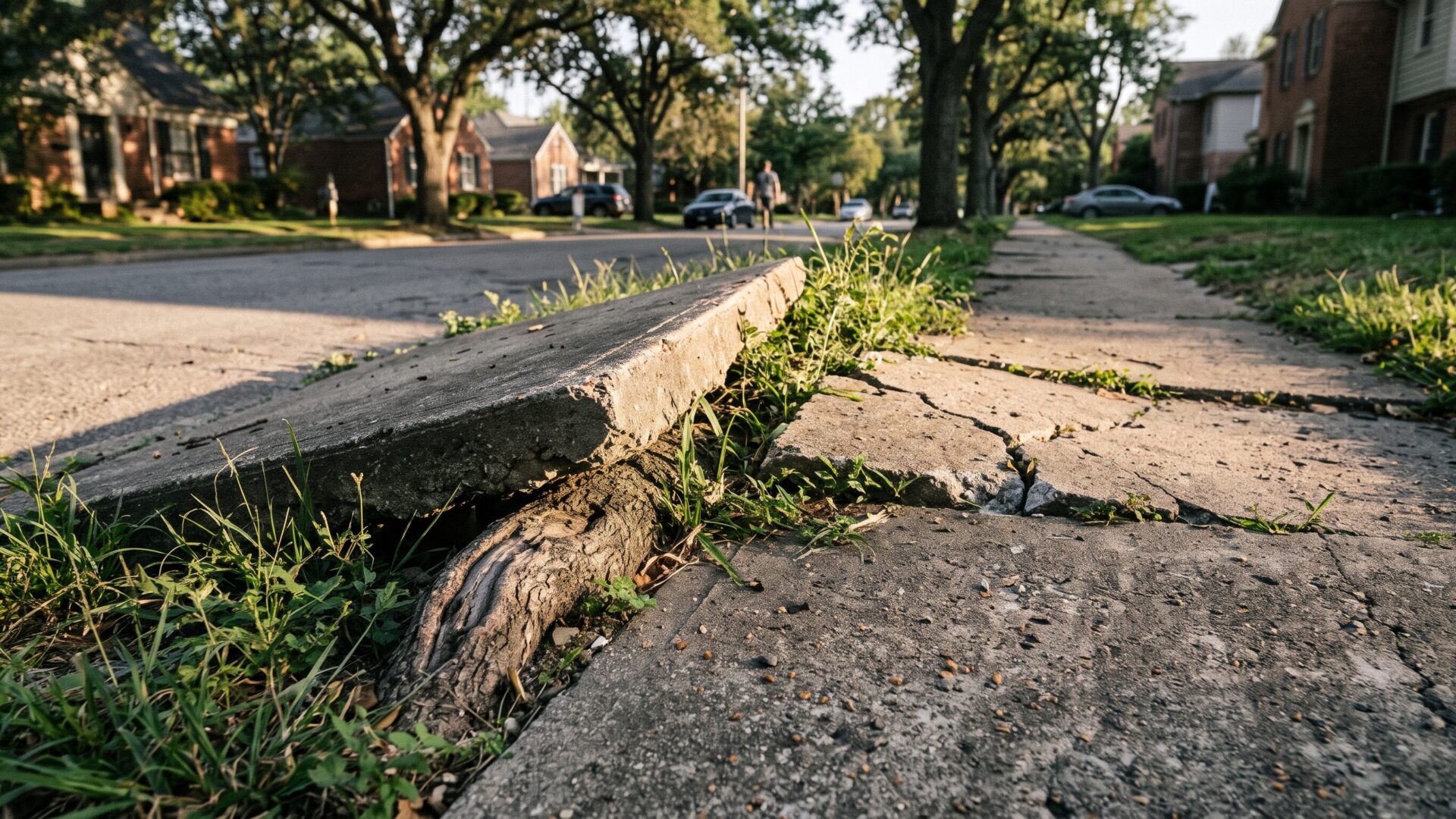
“You can add two inches at most over the exposed roots,” says Fair, who specifies a sandy, loamy mix and warns that a 6-inch dump will suffocate the roots and kill the tree. Even done right, it’s an annual chore, since the roots keep thickening. Burying the root flare, the point where the trunk widens into its first big roots, invites stem-girdling roots, which Colorado State University Extension describes as the leading cause of tree decline and death in home landscapes. When roots are lifting a sidewalk or a driveway slab, that’s the point to call a certified arborist, says Watkins. Before any of it, look at the base of your tree. If the trunk enters the ground like a fence post, something is already piled on top.