Collectors Are Paying Good Money for These Vintage Pyrex Dishes
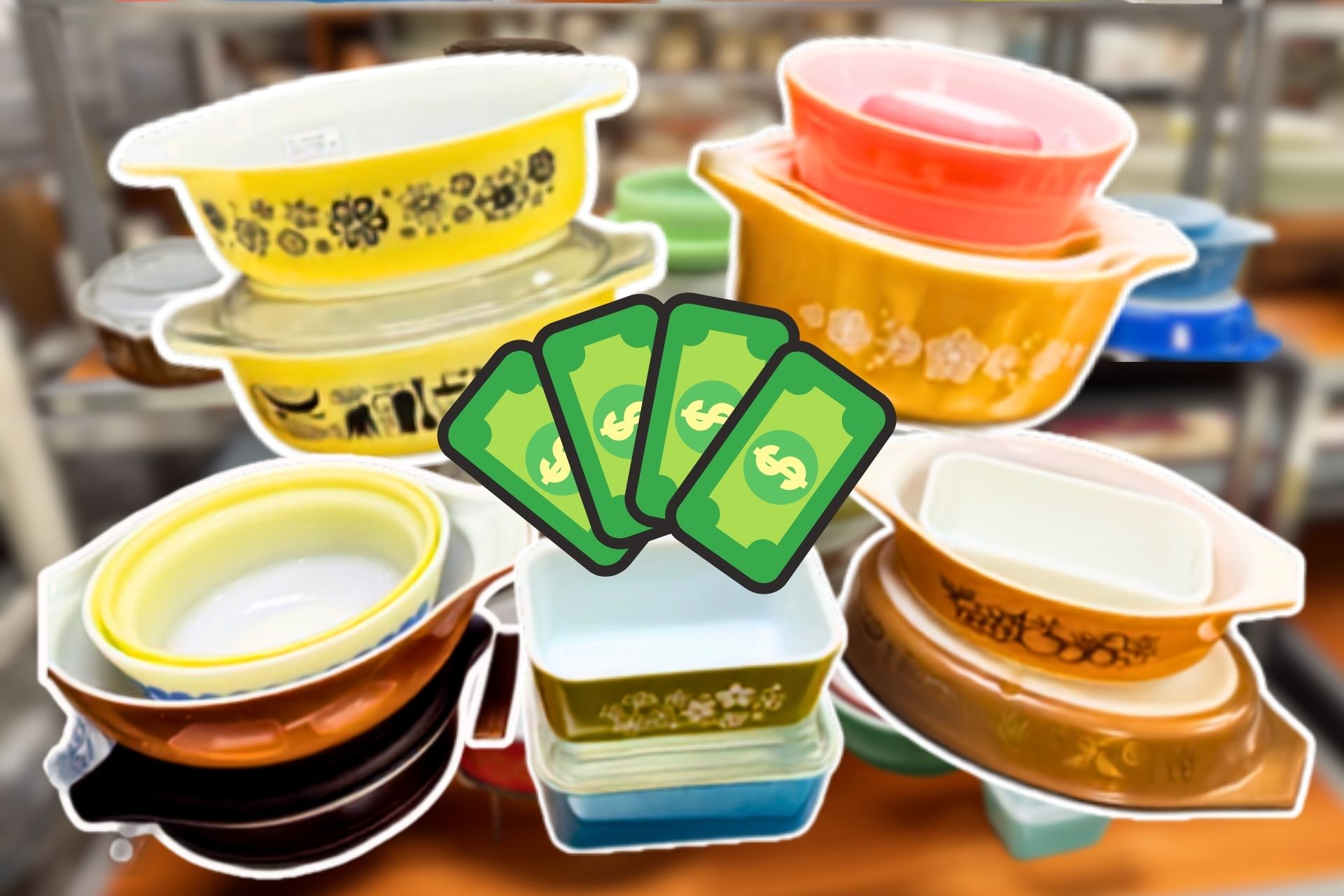

The Pyrex tucked inside a parent’s cupboard or sitting unnoticed at an estate sale is not automatically valuable, but the right piece can be another story entirely. Collectors hunt particular colors, patterns, promotional releases and unusual shapes, and documented sales range from a few hundred dollars to several thousand. Recent examples show just how wide the market can be. A common bowl may remain inexpensive, while a rare casserole in exceptional condition can inspire serious bidding.
Turquoise Golden Birds Has Sold For Thousands
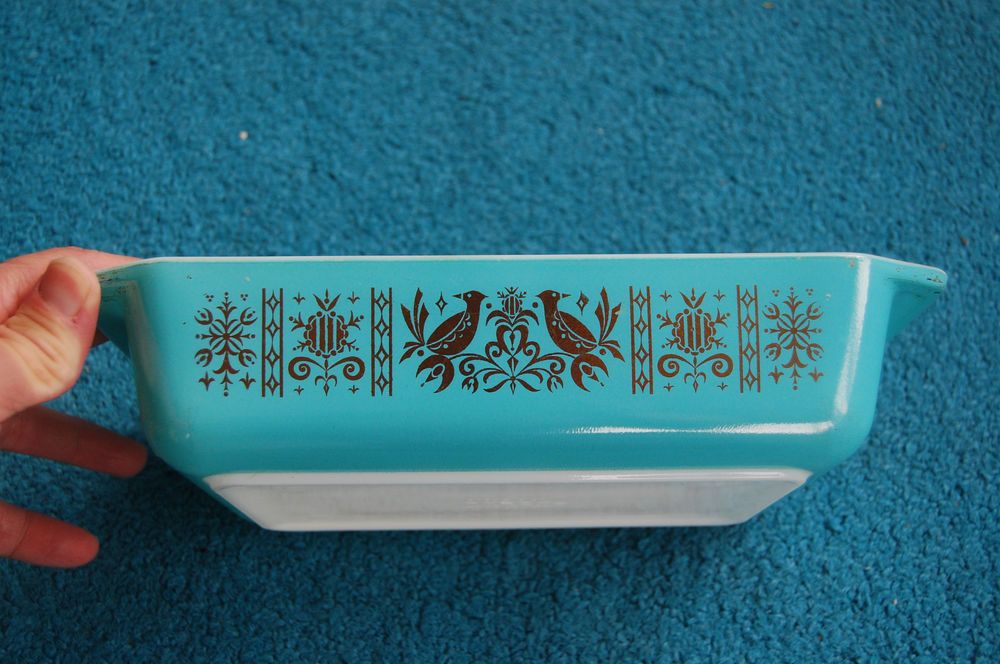
A turquoise casserole decorated with two gold birds is among the pieces worth recognizing. The rectangular 2-quart Space-Saver, numbered 575-B, is associated with the 1960s and is exceptionally scarce. A documented eBay sale reached $7,550 in February 2024, while another near-mint example reportedly sold for $6,600 in March 2026. The lesson is in the specifics: an ordinary turquoise Pyrex dish should not be assumed to carry the same value. Collectors are pursuing this particular Golden Birds design, shape and configuration.
Fleur De Lis Produced A $6,100 Sale
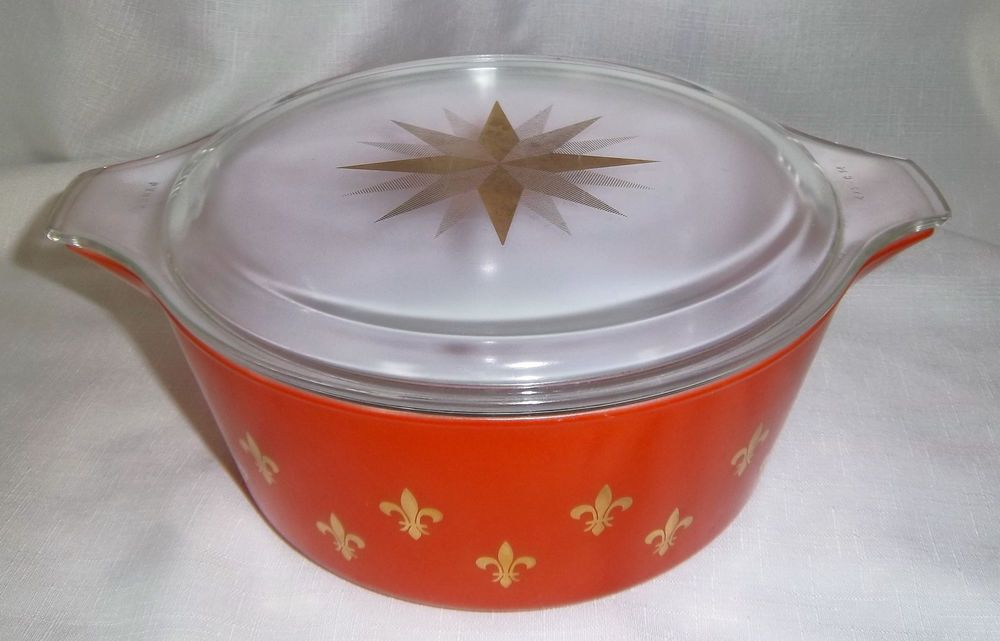
Another striking casserole recently demonstrated what scarcity can do to a price. Fleur de Lis appeared in several colors, including goldenrod, blue, green and red, with casserole examples accompanied by a lid and cradle. In May 2026, a red Fleur de Lis casserole with its cradle sold on eBay for $6,100, according to Tasting Table and Yahoo Shopping. That original hardware matters because vintage Pyrex sets were often separated over decades of household use, making surviving complete configurations particularly attractive to collectors.
Lucky In Love Is A Pyrex Legend
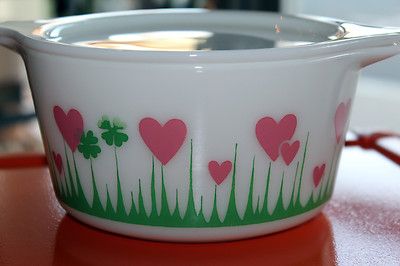
Few patterns have a reputation comparable to Lucky in Love. Introduced in 1959, the one-quart white casserole combines green grass and four-leaf clovers with pink hearts. More importantly, the Corning Museum of Glass says it was most likely a test piece or limited release, making surviving examples extraordinarily elusive. The museum reports that online auctions have exceeded $4,000. Its own example is even more unusual: the museum identifies it as a prototype that has grass and clovers but no pink hearts.
A Tiny Butterprint Bowl Brought $2,100
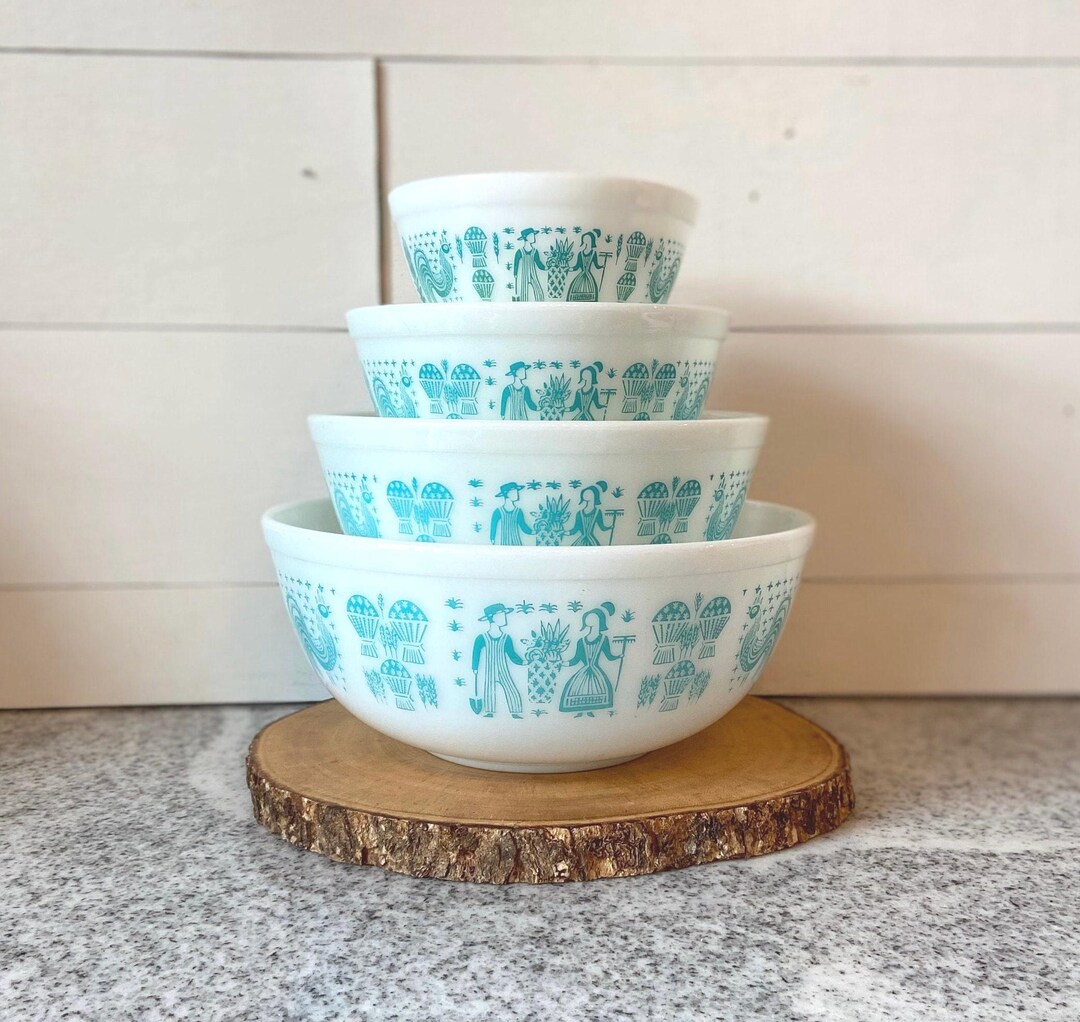
Butterprint itself is familiar to many vintage Pyrex fans, but one unusual bowl illustrates why shoppers shouldn’t judge value by pattern alone. Vintage dealer Louis Prizzi told Fox News Digital that he bought a small blue Butterprint bowl at a flea market without realizing what he had. After collectors spotted its significance, he sold it on eBay for $2,100. Prizzi said the bowl was an apparently unproduced fifth size matching the familiar four-bowl set, with fewer than 10 believed to exist. By comparison, a standard four-piece Butterprint set sold for $219 in March 2025.
Gooseberry Can Turn A Complete Set Into A Prize
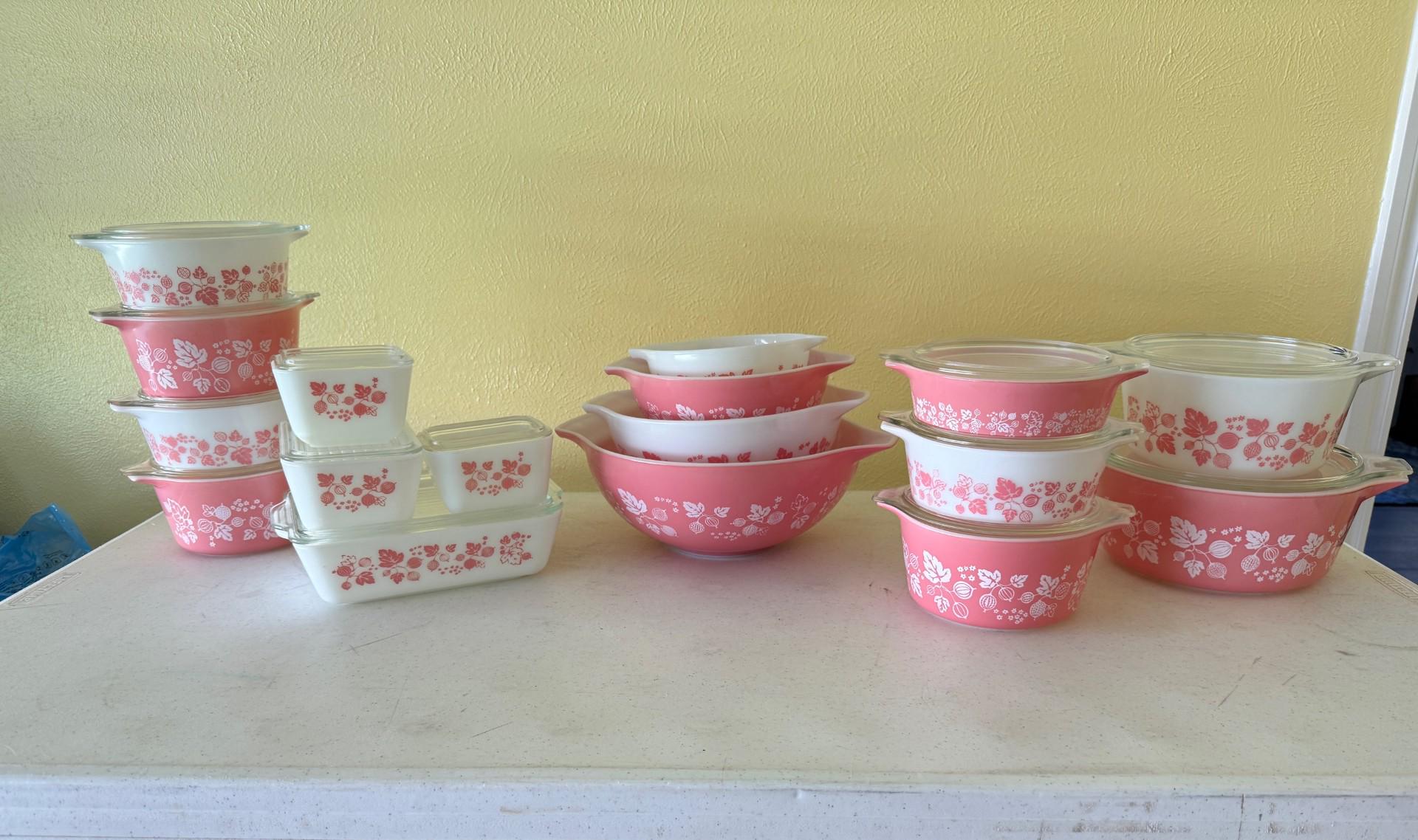
The cheerful Gooseberry pattern is another name worth remembering. Corning Museum records place Gooseberry among Pyrex designs manufactured from 1957 to 1966, and the pattern has become recognizable for its stylized berries and leaves. In 2023, Fox News reported that a harder-to-find Gooseberry set sold for $699 at a Texas antique mall. The price should not be treated as a guarantee for every Gooseberry bowl, however. Color, size, condition and whether the pieces still form a desirable set can make a substantial difference.
Atomic Starburst Can Approach Four Figures
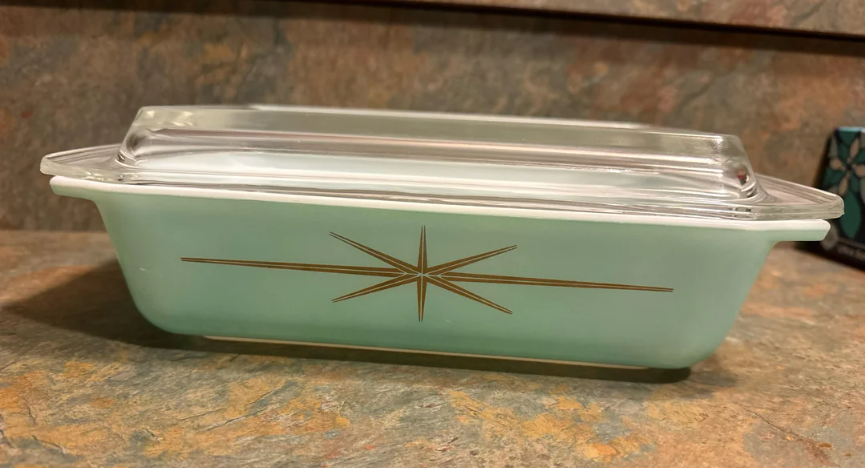
Mid-century design fans may want to memorize Atomic Starburst. A turquoise-and-gold 2-quart 575-B casserole with its lid sold on eBay for $999.99 in October 2023. The historical listing described the starburst decoration as nearly pristine and reported no chips or cracks, despite some signs of use. That condition information is important because two examples of the same pattern can command very different prices after decades of scratches, fading, dishwasher damage or missing lids.
Atomic Eyes Has Its Own Collector Following
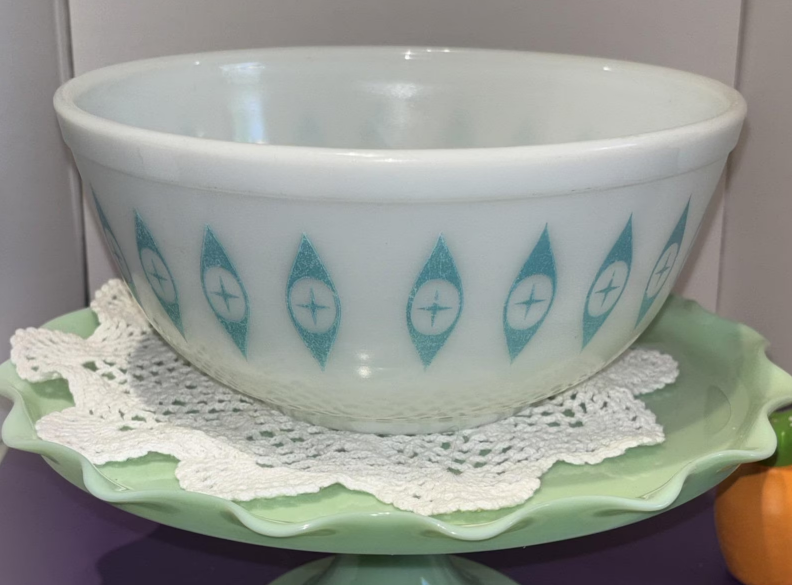
Long before Forest Fancies mushrooms arrived, Pyrex was producing another unmistakable design now commonly called Atomic Eyes. The Corning Museum dates the Eyes pattern to the 1950s, and the turquoise oval-like motifs have become strongly associated with mid-century styling. A 2½-quart bowl described as being in superb condition sold for $275 on eBay in March 2025. A separate smaller Atomic Eyes bowl sold for $249 in March 2026, demonstrating that even pieces well below the four-figure rarities can still attract meaningful resale prices.
Barcode Is More Valuable Than Its Name Suggests
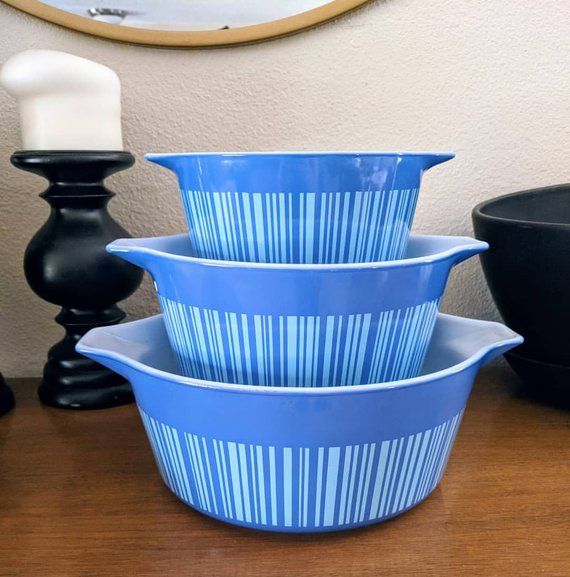
Officially called Blue Stripe, the design collectors nicknamed Barcode was introduced in 1966. The Corning Museum says it was offered in two casserole sets and notes eight additional color variations are known beyond the more readily available blue version. A three-piece blue Bake, Serve and Store set with lids sold for $600 on eBay in August 2021. Rarer color combinations can be more coveted still, which is why the exact colors and piece numbers matter when identifying what initially looks like a simple striped casserole.
Forest Fancies Shows Valuable Doesn’t Have To Mean Thousands
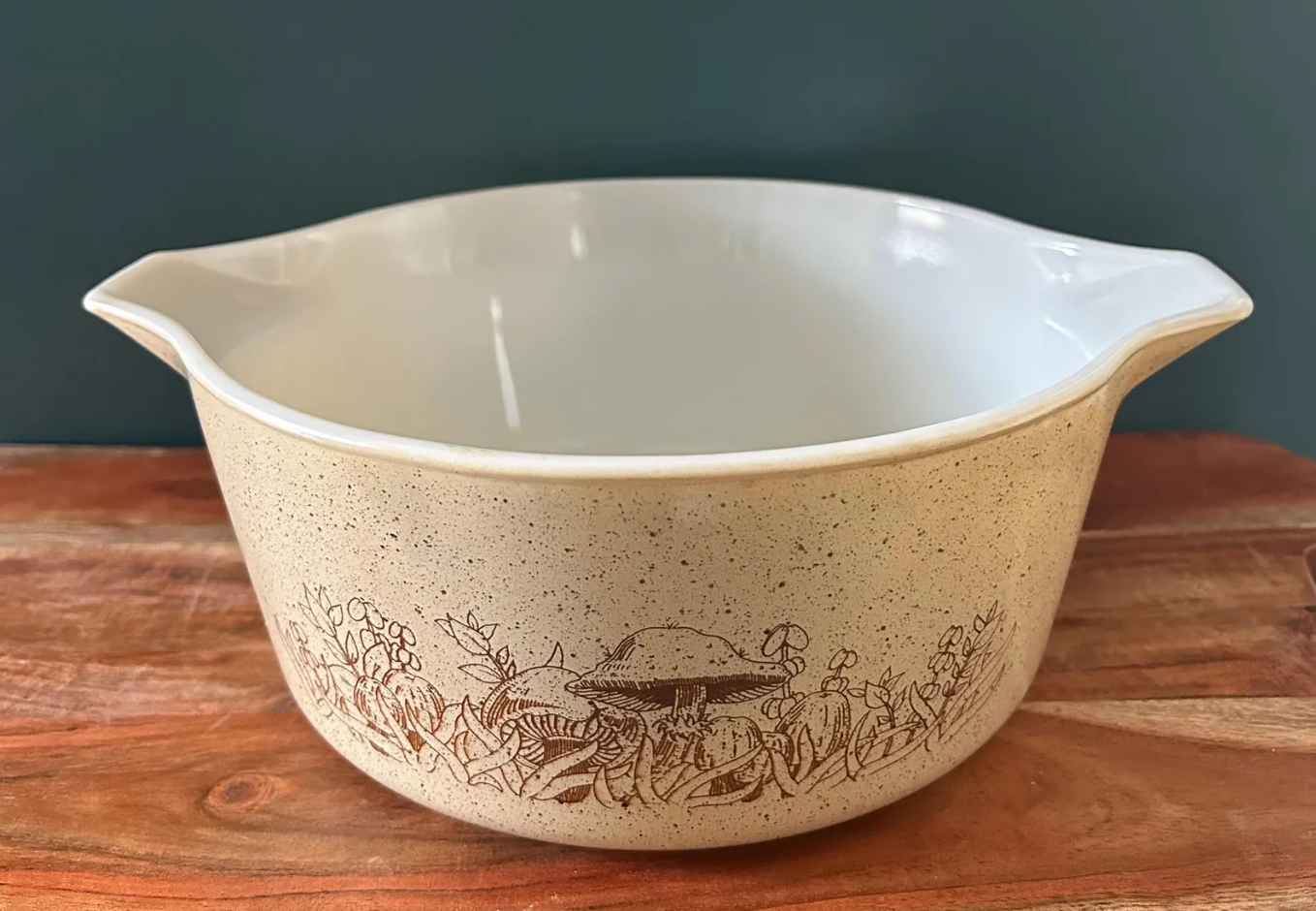
Not every collectible Pyrex discovery is a four-figure jackpot. Forest Fancies, the tan-speckled mushroom pattern produced from 1981 through 1986, occupies a more accessible corner of the market. Your original research found individual pieces commonly priced around $15 to $30, while complete sets can reach $100 or more, with some sellers asking substantially higher amounts. Its appeal also shows what makes Pyrex collecting so unpredictable: a quirky pattern, an intact set and excellent condition can matter as much as simple age.
Before Selling Grandma’s Casserole, Check The Details
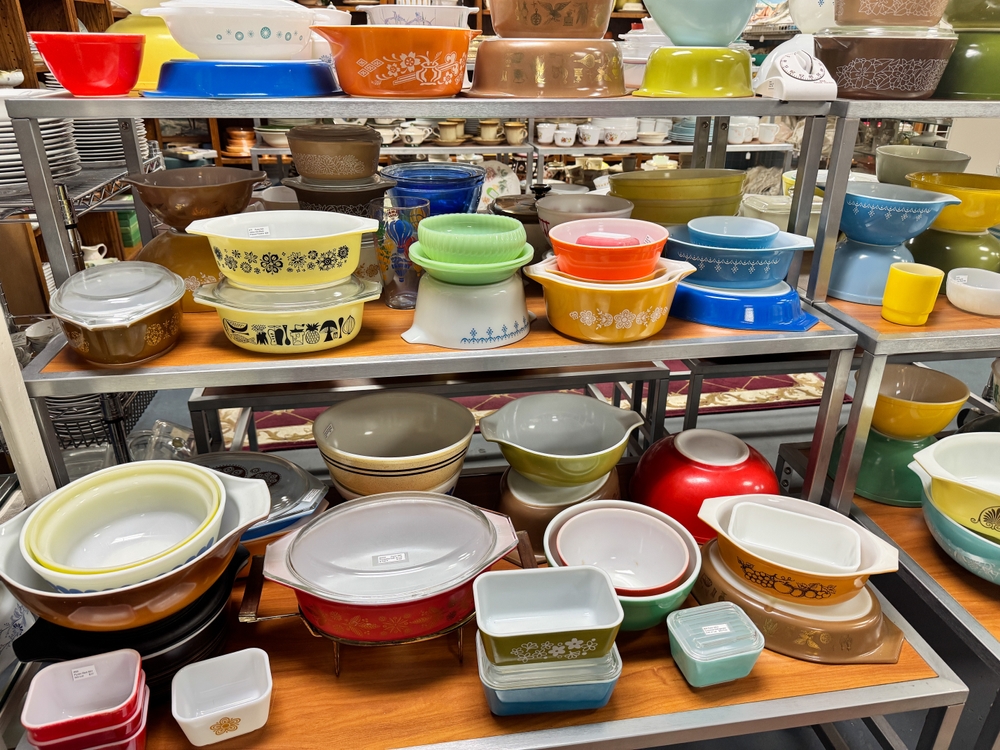
The eye-catching sale prices don’t mean every vintage Pyrex dish is a hidden windfall. Scarcity, condition, colorway, shape, original lids and accessories, and whether several pieces remain together can all influence what collectors will pay. Asking prices also aren’t the same as completed sales, so checking recently sold comparable pieces is more useful than finding one ambitious online listing. With increasingly knowledgeable buyers searching thrift stores, estate sales and online marketplaces, identification is becoming part of the hunt. Before donating an unfamiliar patterned bowl, checking its bottom markings and matching the design against resources such as the Corning Museum of Glass’s Pyrex archive could reveal whether it is ordinary kitchenware or one of the pieces collectors are still chasing.