California Has a New Law That Anyone Buying a Used Car Won’t Want to Miss


California used-car shoppers woke up on Thursday, October 1, 2026, to a different set of rules at licensed dealerships across the state. Senate Bill 766, known as the Combating Auto Retail Scams Act, rewrites how dealers advertise prices, sell add-ons and handle a buyer’s second thoughts. Its sponsors say one provision has no precedent anywhere in the country. The details decide who benefits, and several come with fine print.
Buyers Who Once Paid for a Two-Day Option Now Get Three Days Free on Used Cars Up to $50,000

Before October 1, California dealers had to offer used-car buyers a two-day cancellation option, and buyers paid extra for it on cars priced under $40,000. SB 766 repeals that system. Every used car or lease sold by a dealer for $50,000 or less now carries an automatic three-day right to cancel, for any reason. Sen. Ben Allen’s office calls it the nation’s first cooling-off period of its kind. The right disappears if the odometer climbs past a certain number.
Driving More Than 400 Miles Before Returning a Car Ends the Three-Day Right

The cutoff is 400 miles, counted from the moment the buyer signs. The three days are calendar days, and the clock starts the day after signing. If the third day lands when the dealership is closed, the deadline moves to the next day it opens. Returns must happen in person, during business hours, with the car in the condition it left the lot, apart from normal wear. Even a buyer who meets every requirement should expect the dealer to keep some money.
Dealers May Keep 1.5% of the Price, With a $200 Floor and a $600 Ceiling

The restocking fee equals 1.5% of the sale price, never less than $200 or more than $600. A $10,000 car therefore carries the $200 minimum, while the $600 cap applies at $40,000. A buyer who drove more than 250 miles can owe an extra $1 for each mile past 250, up to $150. A dealer that charged for shipping and actually paid to ship the car may keep that amount instead, up to the fee’s limit. A clock starts running on the dealer’s side once the keys come back.
Dealers Owe a Refund Within 48 Hours and Must Return the Trade-In or Pay Its Top Value

Once a buyer returns the car, the dealer must cancel the contract and issue the refund within 48 hours, with extra time allowed if the buyer paid by check. A trade-in must come back too. If the dealer already sold it or began transferring it, the buyer is owed the greatest of three amounts: the agreed trade-in value, the price the dealer sold it for, or its fair market value, minus any loan still owed. An itemized receipt must list every deduction. Plenty of purchases never qualify for any of this.
New Cars, Private Sales, Auctions and Motorcycles Fall Outside the Three-Day Right

The cancellation right covers dealership sales and leases of used cars only. New vehicles have no equivalent, and neither do private sales between individuals, auction purchases or motorcycles. Used cars priced above $50,000 are excluded, as are fleet purchases and buyers who acquire five or more vehicles a year for business. A lessee buying out the car they already drive is also left out. A separate group of requirements reaches every vehicle on a lot, new and used, and it starts with the advertised price.
Advertised Prices Must Now Include Roof Racks, Tow Hitches, Special Wheels and Shipping Charges
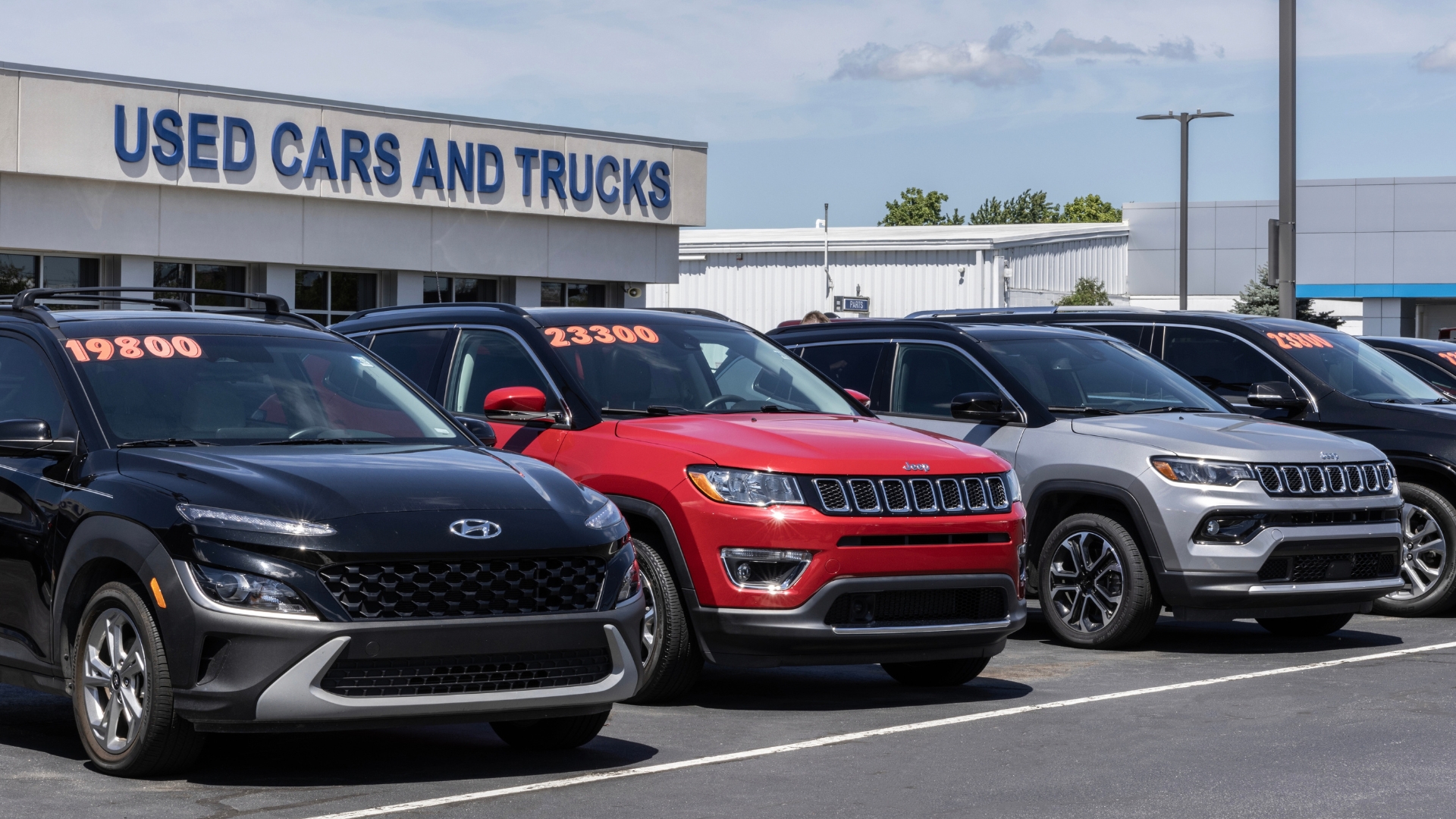
Any dealer ad that names a specific vehicle, and the first written reply to a shopper asking about one, must display the total price. That figure includes equipment the buyer cannot decline, such as roof racks, tow hitches, special wheels or software, plus destination charges. It cannot subtract rebates that are not open to every buyer. Government charges and optional extras can stay out of the number. Optional extras are where the law gets most specific.
Oil Changes for Electric Cars and Other Worthless Add-Ons Are Now Off Limits

Dealers may not charge for add-ons that deliver no benefit to the buyer. The statute’s examples include oil changes for electric vehicles, catalytic converter markings on cars without catalytic converters, service contracts voided by existing damage, paint-protection products that cancel the factory paint warranty, and nitrogen tire fills below 95% purity. Any add-on discussed in writing must also be labeled optional, with a statement that the buyer can get the car without it. Payment quotes face their own new requirement.
A Lower Monthly Payment Now Comes With a Mandatory Warning About Total Cost

Any monthly payment quoted in writing must also state the total the buyer will pay over the full term, and a dealer pitching a lower payment must disclose that lower payments often raise the overall cost. Dealers must keep ads, contracts, complaints and related records for two years. The framework borrows its name and much of its content from a Federal Trade Commission rule that an appeals court vacated on January 27, 2025, before it took effect. Economists say the savings could be sizable, though the estimate rests on an assumption.
Economists Project $234 Million in Yearly Savings Tied to California’s Pricing Rules

Economists cited by Allen’s office put the savings at $234 million a year in reduced search costs. Their analysis assumes just one in five consumers visits one fewer dealership, and it covers the pricing and add-on rules, with the return right counted separately. “When the federal government fails to protect consumers, California is ready to step up,” Allen said. For qualifying used-car buyers, a signature no longer ends the decision, and the advertised price must now include every item the buyer cannot decline.