Apple Closed Its Only Union Store and The Difference in How Workers Are Being Treated Has People Furious

When Apple closes stores at Trumbull Mall in Connecticut and North County Mall near San Diego on June 11, those employees will be offered transfers to nearby Apple locations. When Apple closes its Towson, Maryland store on the same day, those approximately 90 workers will be told they are “eligible to apply for open roles.” Applying for a job is not the same as being offered one. That difference in three words is the center of a labor dispute that is now drawing national attention because the Towson store is the first Apple retail location in the United States to have ever unionized.
Workers at the Towson Town Center location voted to join the International Association of Machinists and Aerospace Workers in June 2022, a milestone moment in American labor history. Apple is one of the most tightly controlled retail operations in the world, and the vote was widely interpreted as a test of whether organized labor could establish itself inside a major tech company. Two years later, in August 2024, workers ratified a three-year collective bargaining agreement covering higher pay, scheduling protections, and a clearer disciplinary process. Many employees believed that contract offered some degree of job security. The closure announcement on April 9 suggested otherwise.
Apple described the decision as a retail matter, citing “the departure of several retailers and declining conditions” at Towson Town Center mall, where Crate & Barrel and Banana Republic have already closed. The company called it a “difficult decision” and noted the store will not be replaced. The International Association of Machinists and Aerospace Workers is not accepting that explanation. In a statement, the union called the closure “a cynical attempt to bust the union” and said it is exploring all legal options. The gap between Apple’s framing and the union’s reading of events is the story, and it is widening.
Why Three Words Are at the Center of a Major Labor Dispute
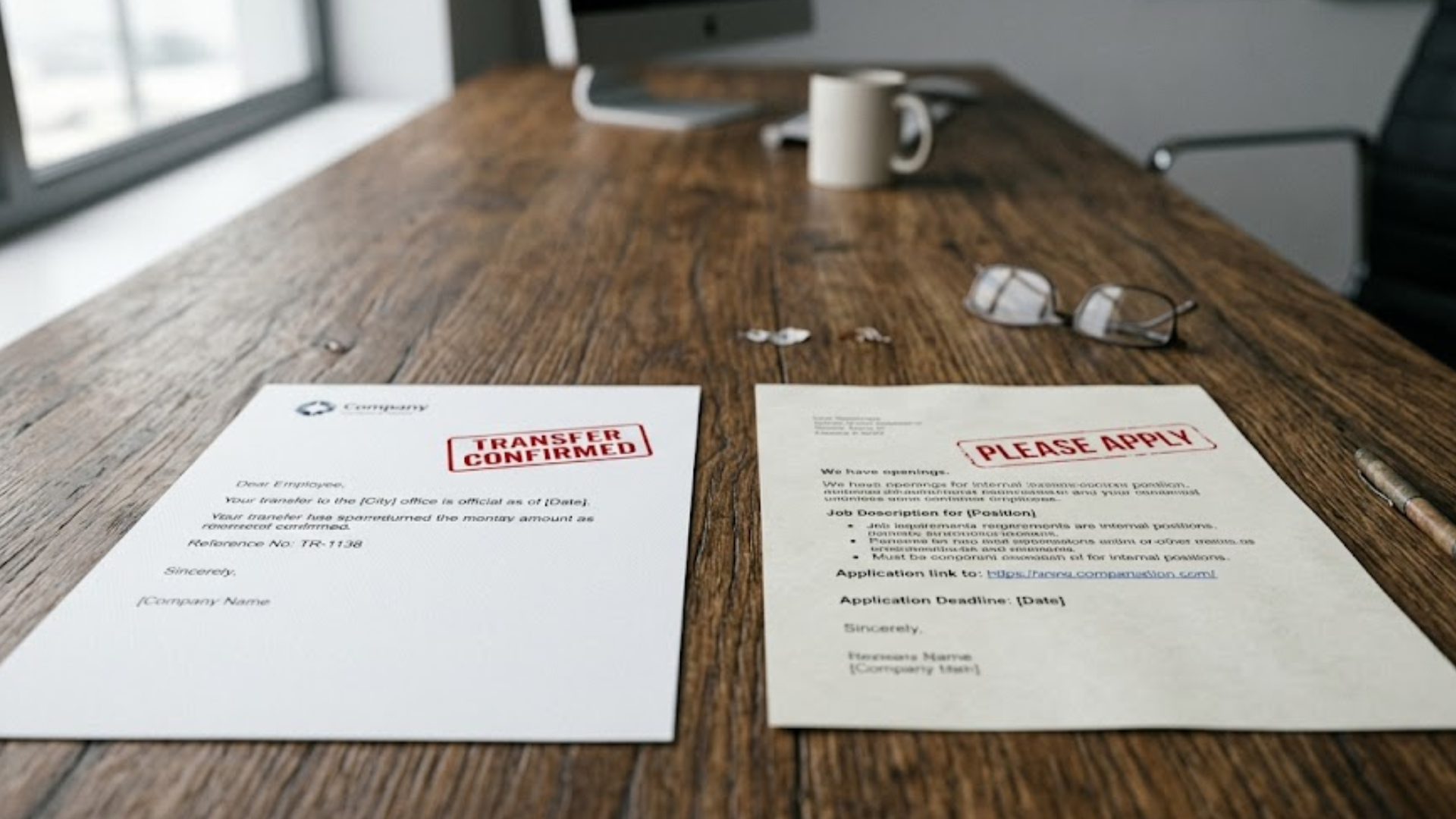
Apple’s explanation for why Towson workers are not receiving automatic transfers, unlike their counterparts at the two other closing stores, centers on the collective bargaining agreement itself. The company says the contract prevents it from automatically relocating unionized employees. The IAM called that claim “simply false.” That direct contradiction between the company and the union over what the contract actually says is not a minor disagreement about tone — it is a factual dispute about legal rights that will likely need to be resolved through formal channels, and the union has already signaled it intends to pursue every available option.
The practical consequences of the difference are immediate and personal. An employee at the Connecticut or California store learns their location is closing and receives a transfer offer to a nearby Apple retail location. Their job continues, their tenure continues, their benefits continue. An employee at Towson learns their store is closing and is told to look at the job listings. Their employment is not guaranteed. They must compete for available roles through a standard application process, with no assurance of placement. For workers who organized, negotiated, and won a contract in part to gain job protections, that outcome carries a specific sting.
Kevin Gallagher, a union representative at IAM CORE, said the organization will “look at every single option available” to advocate for its members. The union has also indicated it will engage elected officials and allies as part of its response. Apple has not publicly addressed the union’s rebuttal of its contract interpretation. The employees who were informed of the closure at a morning meeting on April 9; held after the store was closed to customers, reportedly had no prior warning, describing themselves as blindsided. Several said they had believed their union status provided protection against exactly this kind of outcome.
The History Behind This Store Makes the Closure Far Bigger Than One Retail Location

The significance of what happened in Towson in 2022 extends well beyond the store itself. At the time, Apple was navigating a broader wave of labor organizing that was also touching Amazon and Starbucks, companies that had long resisted union activity. The Towson vote came at a moment when the question of whether major consumer-facing corporations could be organized was genuinely open, and the answer that came out of that Maryland mall sent a signal across the entire retail industry. Around the same time, a similar union drive at an Apple store in Atlanta was withdrawn, with workers there alleging intimidation.
Towson’s 2024 contract ratification made it a second landmark. Voting to join a union is one thing. Successfully negotiating and ratifying a collective bargaining agreement with a company as legally resourced and strategically deliberate as Apple is another. The contract covered pay increases, scheduling rights, and a disciplinary process with clearer accountability, concrete gains that workers in non-union Apple stores do not have access to. Apple’s only other unionized store in the United States is in Oklahoma City, which remains open. The Towson store was the original, and it is the one being closed.
That sequence, organizing in 2022, contract in 2024, closure announced in 2026, is the timeline that labor observers are examining most closely. Apple has every legal right to close stores for business reasons. The National Labor Relations Act does not prevent companies from making retail decisions that happen to affect union workers. What it does prohibit is closing a location specifically to retaliate against workers for unionizing. Whether the Towson closure crosses that line is precisely what the IAM says it intends to find out, and the distinction between Apple’s stated rationale and the treatment of its union workers versus its non-union workers will be central to that investigation.
For the Broader Labor Movement, the Message From Towson Is Complicated and Uncomfortable
Apple’s stock was trading around $260 on the day of the closure announcement, up about 0.6%, with no meaningful market reaction. For a company of Apple’s scale, the financial impact of closing a single mall store is negligible. But the reputational and labor implications operate on a different ledger. Apple has largely avoided sustained public labor conflict throughout its retail history, and the Towson closure is generating the kind of attention that is difficult to manage through a carefully worded statement about mall foot traffic and declining retail conditions.
The harder question belongs to the labor movement, not to Apple. Workers at the Towson store did everything the organizing playbook calls for. They built enough support to win a union vote. They held together through a negotiation process with one of the most powerful companies in the world. They ratified a contract with real provisions. Two years into that contract, their store is closing, and they are being asked to reapply for their jobs while colleagues at non-union stores are transferred automatically. The argument that organizing delivers meaningful protection is significantly harder to make in the shadow of that outcome.
Whether the IAM’s legal challenges succeed, whether a federal investigation finds merit in the union-busting allegation, or whether Apple’s business rationale ultimately holds up under scrutiny, the immediate reality for those 90 workers in Maryland is that their store closes on June 11. What happens next, in the courts, in the National Labor Relations Board, and in the next organizing conversation at an Apple store somewhere across the country will determine whether Towson becomes a cautionary tale or a rallying point. That answer is still being written, and the people writing it are not in Cupertino.