AI Is Making Travel Scams Nearly Impossible to Spot as Americans Lose Billions
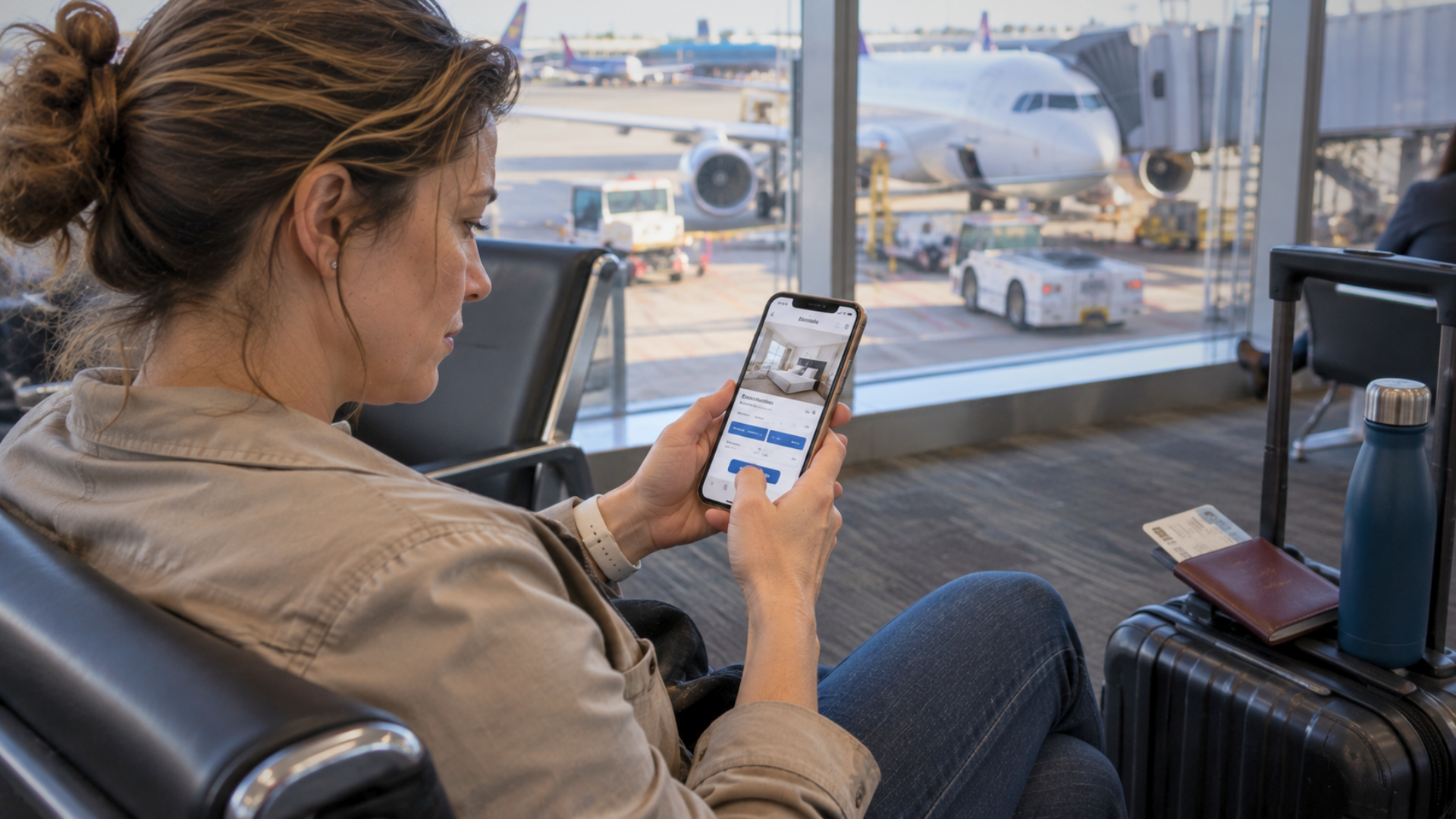

You used to worry about a stranger’s hand in your pocket. Now the real threat hides inside your phone, dressed up to look just like your hotel. Travel scams have changed. They no longer look sloppy or strange. Fraudsters use artificial intelligence to build fake websites that look exactly real, according to Florent Silve, an executive at travel platform Engine. The scam that once seemed obvious now looks like ordinary trip planning, and that shift changes everything for travelers.
Money is disappearing fast, and most people don’t see it happening until it’s gone. The Federal Trade Commission reported that Americans lost $3.5 billion last year to scams delivered by text, email, phone, social media, and search engines. That number is not abstract. It stands for real families losing real savings. Impostor scams, where criminals pretend to be a trusted company, made up almost one in three of every reported case. That statistic shows how often trust itself becomes the weapon.
The scam itself matters less than the reason it works. AI did not invent deception, but it erased the clues that used to give scammers away: bad grammar, broken logos, strange wording. “The most dangerous scams don’t look suspicious, they look expected,” said Iskander Sanchez-Rola, a scam expert at cybersecurity firm Norton. That single sentence explains why even careful travelers keep getting fooled by messages that feel completely normal.
A Real Reservation Can Be Turned Into a Weapon Against You
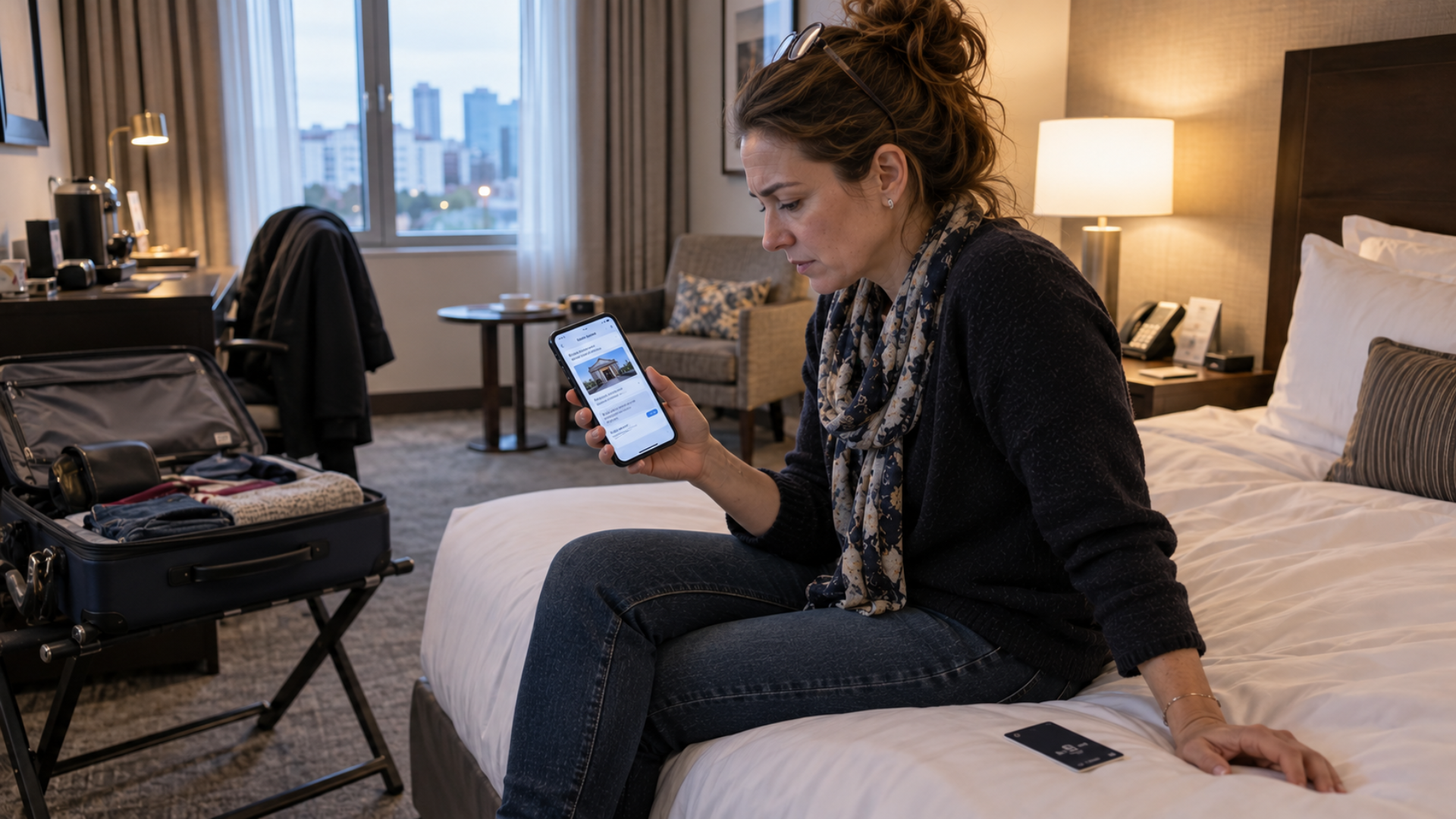
A hotel scam does not need to be fake to be dangerous. Reservation hijacking is the newest trick criminals use, and it works because the information inside it is real. Scammers first target hotel staff with phishing messages, tricking employees into handing over login access to guest records. Once inside those systems, criminals pull real stay dates, real room prices, and real names, then use those details to sound completely legitimate to you.
Details are what make this scam so convincing. Sanchez-Rola explained that fraudsters often already know your exact travel dates or the precise cost of your stay before they even contact you. “The main thing is that this isn’t a fake booking confirmation, it’s a real reservation that is weaponized against you,” Sanchez-Rola said. That distinction matters because it removes the one signal travelers used to trust: familiarity.
Knowing the trick doesn’t make it easy to resist in the moment. Fear of losing a reservation pushes people to act fast, and speed is exactly what scammers count on. Sanchez-Rola recommends never using a phone number sent in the message itself. Instead, travelers should look up the hotel’s official number and call directly. That single habit breaks the scam, but it only works if you actually stop and check every detail scammers now fake.
One Sticker Over a QR Code Is All It Takes to Steal Your Money
A single text message can make you panic before you even check the facts. Scammers send urgent alerts claiming your flight was canceled, usually the day before you fly, then offer to rebook you for an extra fee. Sanchez-Rola pointed out that this scam works because it creates instant urgency: you feel you must act now or miss your trip entirely. That rushed feeling is the exact moment scammers are counting on.
Posting a photo of your boarding pass online gives away more than most travelers realize. “The QR codes or the barcodes that are there include a lot of information,” Sanchez-Rola said, noting some even reveal your return flight. Blocking out the flight number with an emoji does not fix this. The barcode itself holds the real data. That single social media post can hand a stranger everything needed to impersonate your booking.
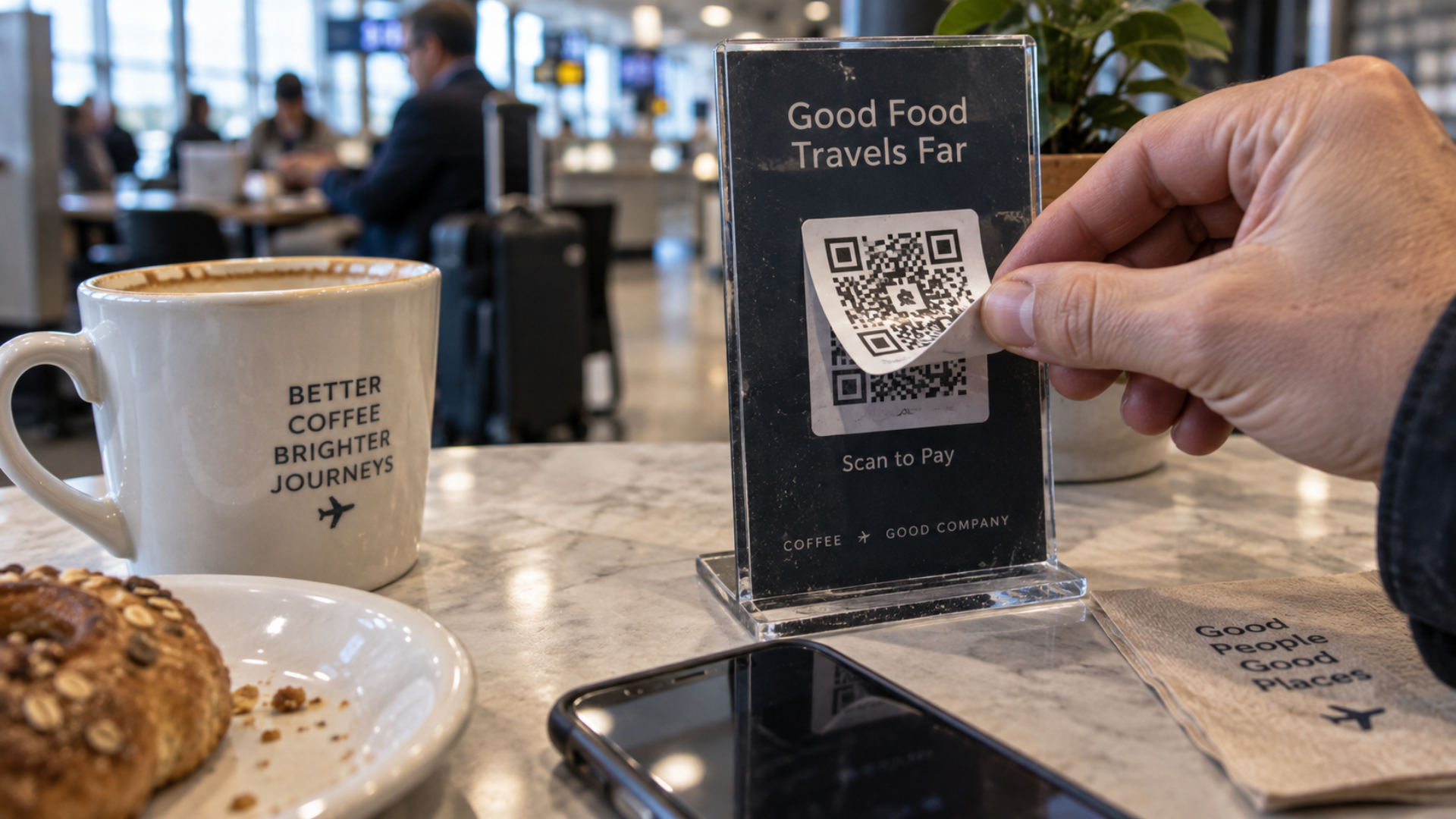
A fake sticker can fool an entire restaurant table. Criminals place a new QR code sticker directly over a real one, then redirect diners to a fraudulent payment page, according to Alissa Abdullah, Mastercard’s deputy chief security officer. “You may be sitting at a coffee shop and have a real QR code with a fake one that’s a sticker laid right on top,” Abdullah said. Cash or a card, she suggests, is often the safer choice.
The Tools That Make Travel Easy Are Now the Tools Used Against You
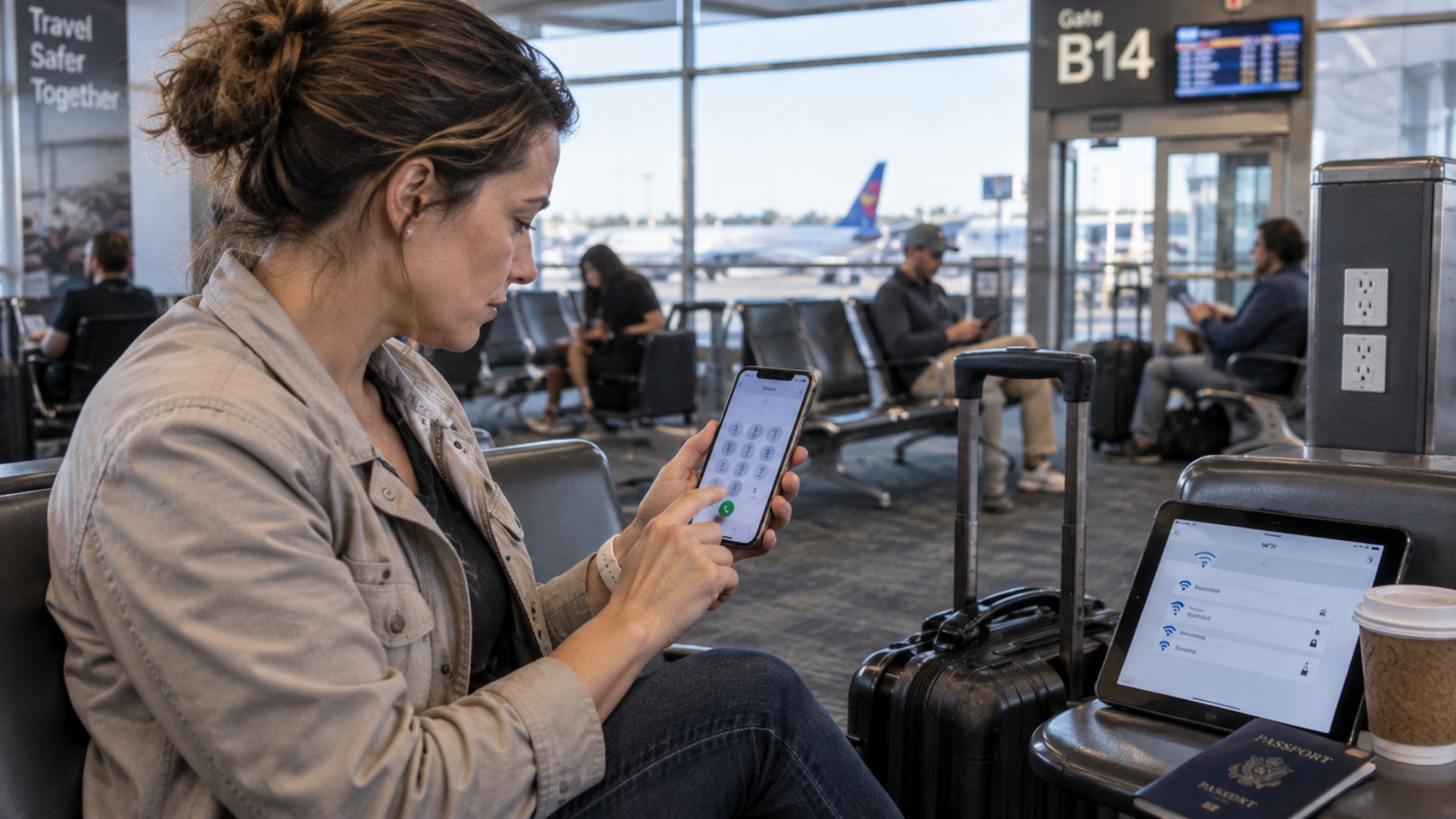
Free Wi-Fi at an airport feels harmless, but it can open a door straight into your phone. Criminals create networks with names nearly identical to the real one, hoping travelers connect without checking, according to Brian Cute, chief executive of the nonprofit Global Cyber Alliance. Once you join a fake network, criminals can see your data, take over your device, or plant tools to keep watching you. That risk hides behind something as ordinary as a login screen.
Cute’s advice is simple: use public Wi-Fi only for small things, like checking directions to your hotel. Save banking apps and email for networks you actually trust. That single rule sounds obvious, yet almost no traveler follows it under pressure, jet lagged and rushing between gates. The tools built to make travel easier, free Wi-Fi, quick QR payments, instant text alerts, have quietly become the exact tools scammers now use against us.
None of these scams needed a criminal mastermind, just patience and stolen scraps of real information. A real check-in date. A real QR code. A real Wi-Fi name, copied almost exactly. What changed isn’t how travelers behave. It’s that the ordinary signals people relied on to feel safe, a familiar logo, a matching reservation, a working link, no longer separate the real world from the fake one built to rob them.