AI Could Replace Millions of Workers, and “Dr. Doom” Says That May Be the Best-Case Scenario


For years, the biggest fear surrounding artificial intelligence has been simple: What happens when AI becomes good enough to replace people? Economist Nouriel Roubini, famously nicknamed “Dr. Doom” after warning about vulnerabilities ahead of the 2008 financial crisis, thinks that question could become unavoidable. He recently predicted that AI and robotics could replace a large share of workers within 20 to 25 years. Strangely enough, that is part of what he considers an optimistic scenario.
Roubini Sees Enormous Economic Growth Ahead
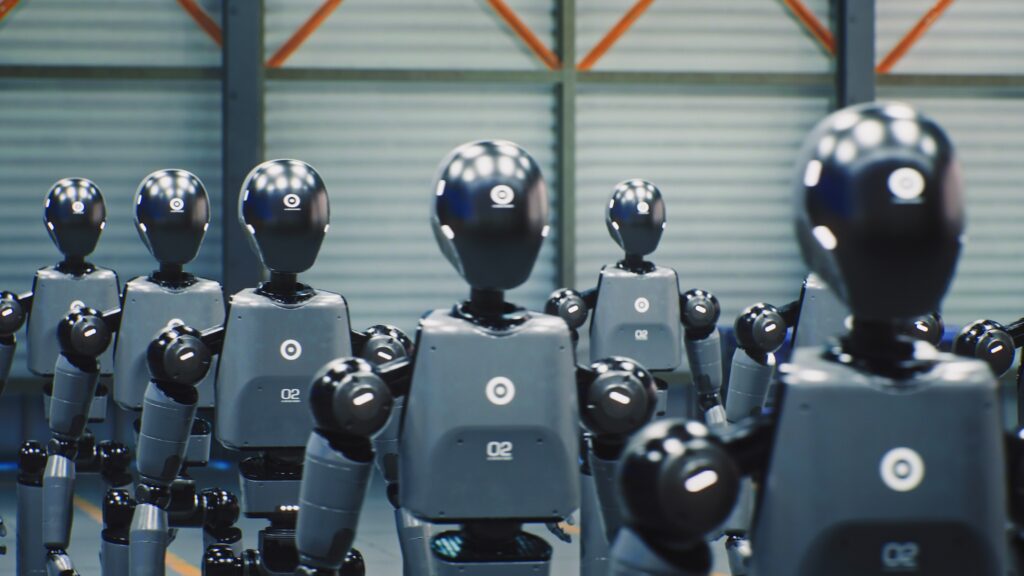
The surprising part of Roubini’s argument is that he isn’t predicting economic collapse. He believes advances including AI, robotics and other technologies could eventually produce extraordinary productivity growth, potentially pushing economic growth toward 10% by around 2050. Machines could produce more goods and services with far less human labor. The uncomfortable question is who receives the resulting prosperity if millions of people no longer earn their living through traditional employment.
Millions of Jobs Are Already Exposed to Automation

Roubini’s timeline is speculative, but today’s numbers show why the debate is accelerating. SHRM’s 2026 research estimates that about 31.1 million U.S. jobs have at least half of their tasks automated. That does not mean 31.1 million people are about to lose their jobs. Once factors requiring humans are considered, SHRM estimates roughly 7.9 million jobs currently face high automation displacement risk.
White-Collar Workers Aren’t Necessarily Safe

Automation once conjured images of robots replacing factory workers, but generative AI can perform cognitive tasks involving writing, analysis, coding and information processing. Roubini has long argued that this makes white-collar service jobs vulnerable too. Current research is more cautious, but the International Labour Organization estimates that one in four workers worldwide has a job with some degree of generative-AI exposure, while emphasizing that transformation is currently more likely than outright replacement.
So Far, the Mass Layoffs Haven’t Arrived

There is an important reality check. Researchers have not yet observed the enormous economy-wide job losses predicted in some AI forecasts. A 2026 ILO review found that large-scale displacement remains limited, while Anthropic researchers found no systematic rise in unemployment among highly AI-exposed occupations since late 2022, although they found suggestive evidence of slower hiring among younger workers in exposed professions. In other words, AI’s capabilities and its actual labor-market effects remain two different things.
The Best Case Could Require Universal Basic Income

Here is where Roubini’s “optimism” becomes unconventional. If machines generate enormous wealth while replacing substantial human labor, he argues governments may eventually need universal basic income or another large redistribution system. In his scenario, governments would tax the companies, capital owners and other winners benefiting from the productivity boom and redistribute part of those gains. He has even described the possible outcome as “some form of socialism.”
Retirement Could Change Along With Employment

Roubini raised the issue while discussing Social Security, arguing that simply expecting people to work longer may become increasingly unrealistic if automation removes many jobs. The program already faces a long-term financing challenge, but an AI-driven labor transformation could create an entirely different policy problem: supporting people who are capable of working but whose labor is no longer needed in the same quantities. That scenario would force governments to reconsider the relationship between employment, taxation and retirement benefits.
AI Could Widen the Gap Between Workers and Owners
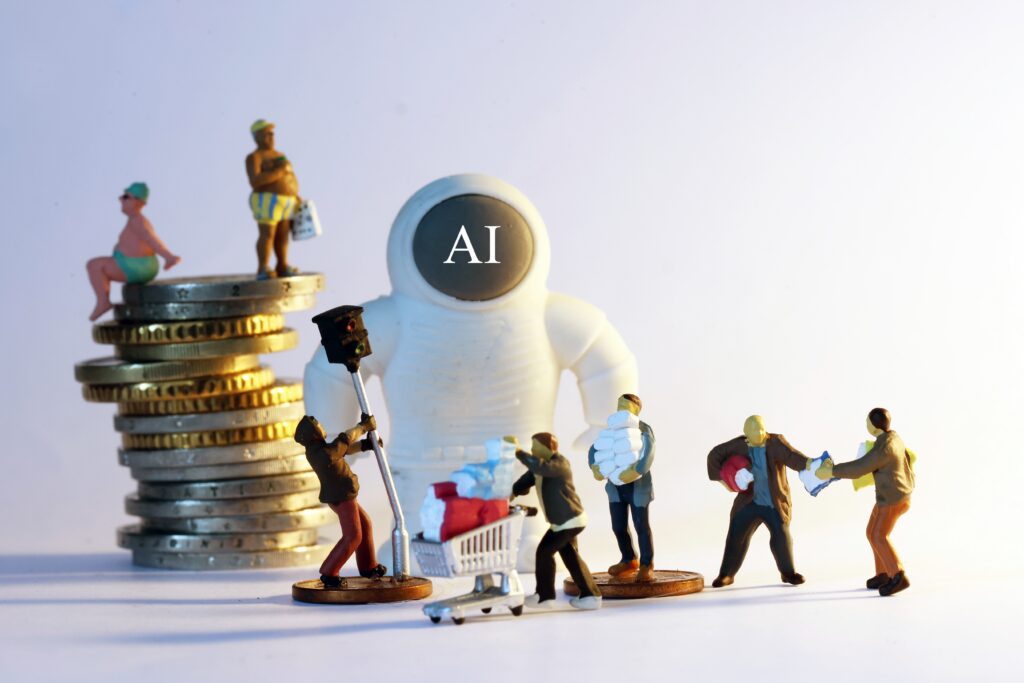
Even if AI creates tremendous prosperity, its benefits may not be distributed evenly. IMF researchers found that AI could potentially reduce some wage inequality by disrupting higher-income occupations, but increased returns to capital could simultaneously worsen wealth inequality. Workers whose skills complement AI may become more productive and valuable, while people owning businesses, technology and investments could capture an especially large portion of the gains.
Other Researchers See a Less Extreme Future
Roubini’s forecast is far from settled economic fact. The ILO says augmentation of human abilities may prove more common than widespread automation, while Goldman Sachs Research reported in April 2026 that job losses in occupations where AI substitutes for workers were being partly offset by employment gains where AI complements them. AI could therefore eliminate some occupations, reshape many others and create demand elsewhere rather than simply producing permanent mass unemployment.
The Bigger Question Is Who Benefits

The most consequential part of Roubini’s forecast may not be whether his 20-to-25-year timeline proves correct. It is what happens if productivity eventually becomes less dependent on human labor. Governments would face difficult decisions over taxation, income support, education and who shares in AI-generated wealth. For now, evidence suggests transformation is happening faster than outright displacement. But if AI capabilities continue advancing, the defining labor question may shift from “Can a machine do my job?” to “How should an economy work when fewer people need jobs at all?”