Affordable Homes Are Sitting Vacant While Low-Income Americans Struggle to Find Housing

In Austin, Texas, thousands of apartments classified as affordable are sitting vacant. At the same time, people with the lowest incomes are struggling to find anywhere they can actually afford to live. Mathew Davis, who lives in an Austin homeless shelter and earns a few hundred dollars a month donating plasma, told the Associated Press that even a $450 monthly tiny home would stretch his budget. The contradiction points to a deeper problem: “affordable housing” is not necessarily affordable to everyone who needs it.
This article was created with the assistance of AI and reviewed by our editorial team for accuracy and clarity.
The Biggest Shortage Is At The Bottom

The National Low Income Housing Coalition estimates that the United States is short 7.2 million affordable and available rental homes for extremely low-income households. Nationwide, just 35 suitable homes exist for every 100 such renter households, and no state has an adequate supply. Extremely low-income generally means earning no more than the federal poverty guideline or 30% of local area median income, whichever is greater.
Many “Affordable” Apartments Target Higher Earners

The label can be confusing because affordable housing programs serve multiple income levels. Only about 12% of homes financed through the federal Low-Income Housing Tax Credit in 2024 were reserved for extremely low-income residents. Most targeted households earning at least 50% of their area’s median income. In Austin, that could mean an individual earning around $47,000, compared with less than $28,000 for someone considered extremely low-income.
That Leaves The Poorest Renters Squeezed
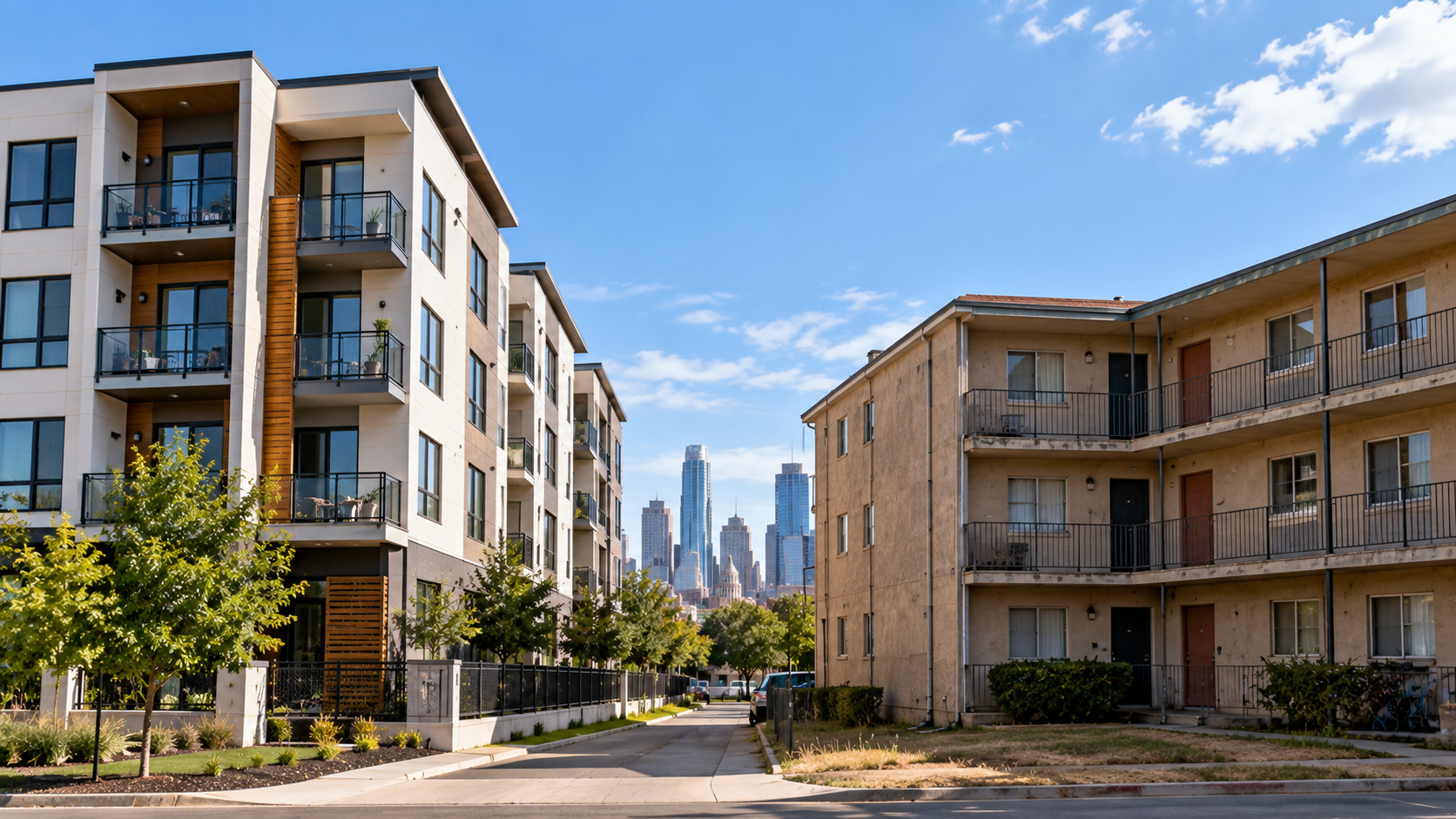
The consequences show up in household budgets. Extremely low-income renters include low-wage workers, older adults and people with disabilities living on fixed incomes. About three-quarters spend more than half their income on rent and utilities, leaving far less for groceries, transportation, medicine and other everyday expenses. The national shortage means these renters are competing for a limited pool of homes priced within their actual reach.
Meanwhile, Some Affordable Units Can’t Find Renters

Higher up the income scale, a different problem is emerging. In Austin, the vacancy rate for affordable housing has approached 16%, representing more than 4,500 empty units. Denver has reported vacancy rates of 13% among tax-credit apartments aimed at households earning 60% of area median income and 21% among those targeting 80%. Portland, Oregon, has reported more than 1,700 vacant affordable units.
Market-Rate Apartments Can Be Surprisingly Competitive
Some subsidized apartments are now priced close enough to conventional rentals that qualified tenants may decide the extra cost is worthwhile. In Portland, many vacant affordable homes target someone earning about 60% of area median income and cap rent at $1,444 monthly. The average market-rate one-bedroom cited by CoStar was $1,581, a difference of $137. That relatively narrow gap can make an unrestricted apartment more attractive, particularly when renters gain more choice over where they live.
The Application Process Can Tip The Balance
Price isn’t the only consideration. Affordable housing applicants can face extensive income verification. Rebekah Fischer of LDG Development described collecting bank statements, paychecks, bills and even records of Venmo transactions. A competing market-rate property may be able to approve a renter much faster. Portland renter Jaiden Barbee, who was on affordable-housing waitlists, said he would rather spend roughly $200 more to avoid the extra hoops and get into an apartment more easily.
Building For The Poorest Renters Is Harder Financially

Developers say simply lowering rents further can make projects financially unworkable without additional assistance. True Ground Housing Partners offered an example in which a 60% AMI apartment collecting $1,715 monthly had $1,575 in mortgage and operating expenses, leaving just $140. President and CEO Carmen Romero said creating units at the 30% AMI level requires substantially more subsidy. That helps explain why developers can produce technically affordable housing without reaching households at the very bottom.
Vouchers Help, But Most Eligible Families Don’t Get One
Housing vouchers can bridge that affordability gap by helping lower-income households pay rent, including at properties built through the tax-credit program. Yet assistance is scarce. Experts cited by the Associated Press estimate only about one in four eligible families receives a voucher, with waiting lists sometimes lasting years. Critics of the tax-credit system argue more aid should go directly to renters, while others contend vouchers and subsidized construction work best together.
The Next Challenge Is Building For The People Being Missed

Austin illustrates what policymakers are confronting. The city set a 2018-to-2027 goal of creating 20,000 homes for extremely low-income residents, but only 543 had been built as of 2024. It did, however, complete its 15,000-unit goal for households earning 60% to 80% of area median income. Austin officials say they are now prioritizing funding proposals containing more 30% AMI units. The next test for affordable-housing policy is therefore not simply producing more apartments, but ensuring the homes being produced match the incomes of the people with nowhere else to go.