Accidentally Turned Your White Clothes Pink? A Cleaning Pro Says There’s Still Hope
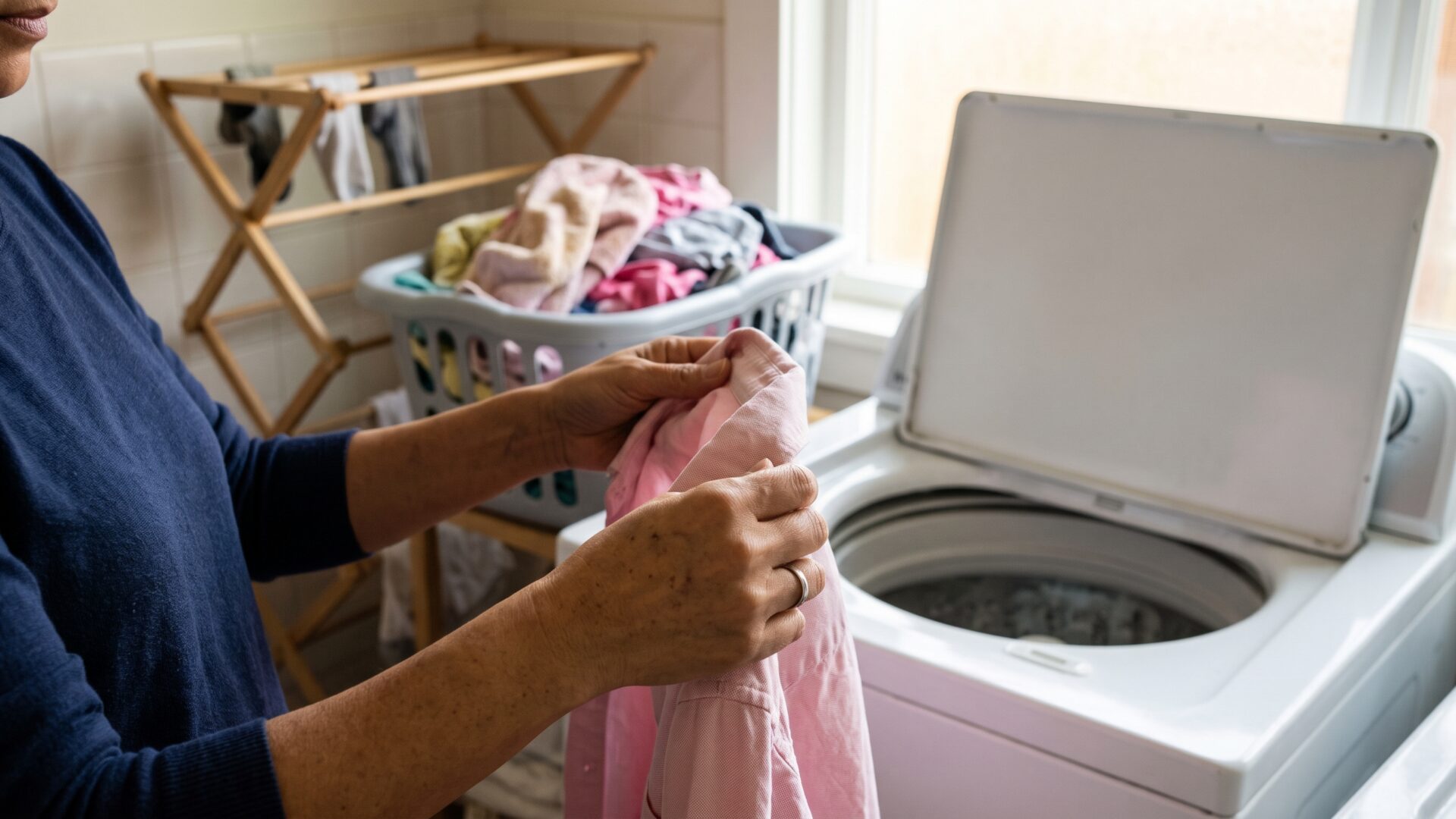

You open the washer, pull out a white button down shirt, and it’s pink. That’s dye transfer, and washing cold doesn’t prevent it. Loose dye leaves one garment, drifts through the water, and settles on everything else in the drum. In one case it was a maroon souvenir sweatshirt from Theodore Roosevelt National Park, washed with a stack of brand new white button downs on a cold cycle, and every shirt came out a pale maroon pink. Nothing in the laundry cabinet brought the white back. That sent the shirts’ owner to Scott Schrader, a cleaning expert and chief marketing officer at CottageCare, whose method starts the moment you spot the problem. The next decision involves the dryer, and getting it wrong makes the pink permanent.
This article was created with the assistance of AI and reviewed by our editorial team for accuracy and clarity.
Heat is what makes the pink permanent
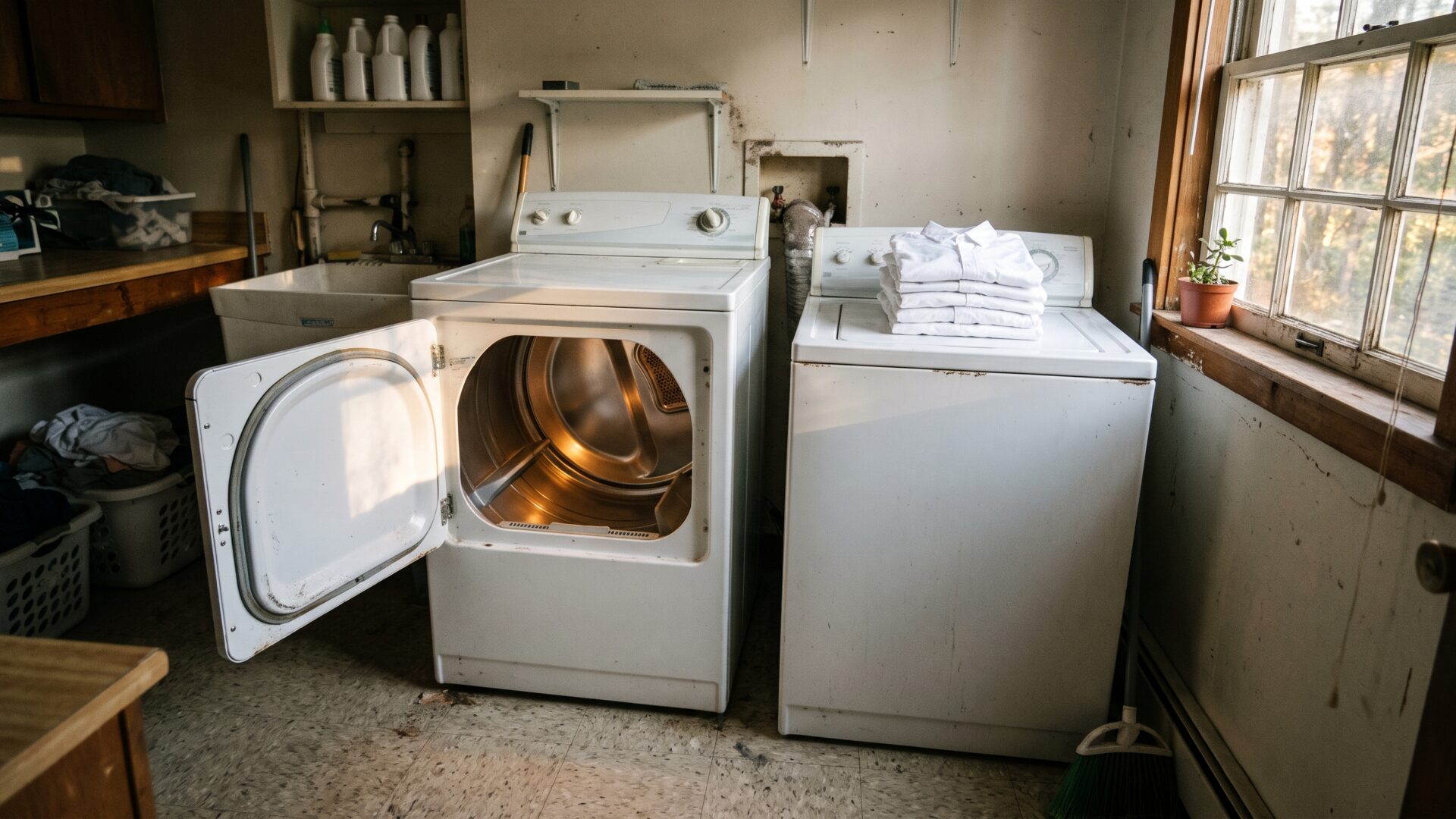
Keep the stained clothes out of the dryer until the color is gone, Schrader says, because the heat sets the stain for good. While the fabric is still wet, the transferred dye is mostly sitting on the surface, held there by the same weak attraction that let it leave the sweatshirt in the first place. Drying changes the chemistry. As the water evaporates, the dye left behind concentrates against the fiber at the same moment heat is opening up the fiber structure, and bonds form between the dye and the cotton. The mark stops being a deposit you can rinse at and starts being the color of the shirt. That’s why the next step happens right away, at the sink, with nothing but cold water.
Rinse in cold water before anything else
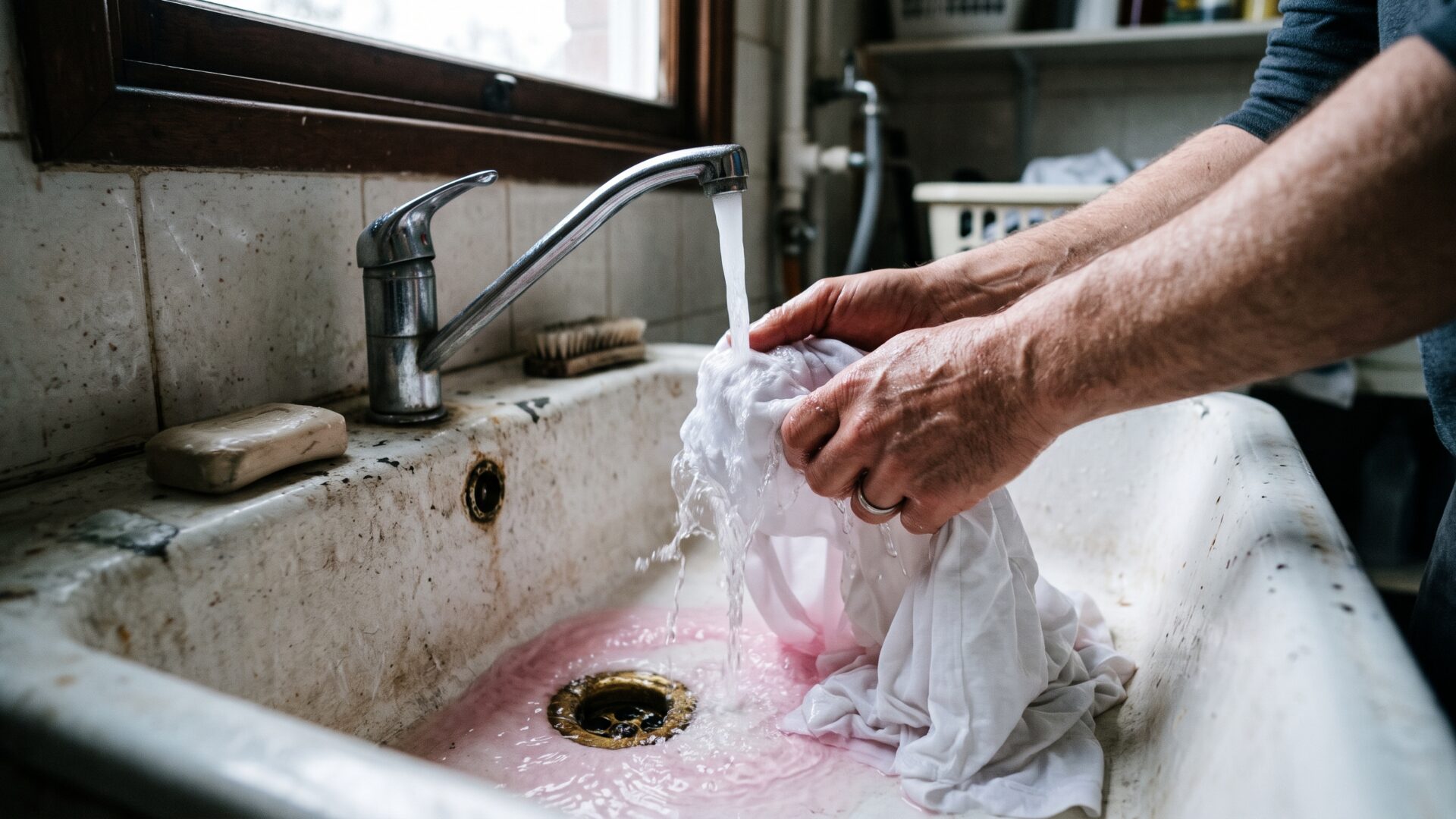
Before any product comes out of the cupboard, hold the stained fabric under a running cold tap. The goal is to carry off as many loose dye particles as possible, Schrader says, before they settle further into the weave. Dye that leaves now is dye the soak won’t have to deal with later. Let the water run through the cloth rather than pool in a basin, and turn the garment so both faces get the flow. Cold matters here, because heat opens up the fiber structure, which is how dye gets into fabric in the first place. Keep going until the water coming off the fabric runs close to clear. After that, the method splits into two products that attack dye in opposite ways.
Option one is an oxygen bleach soak
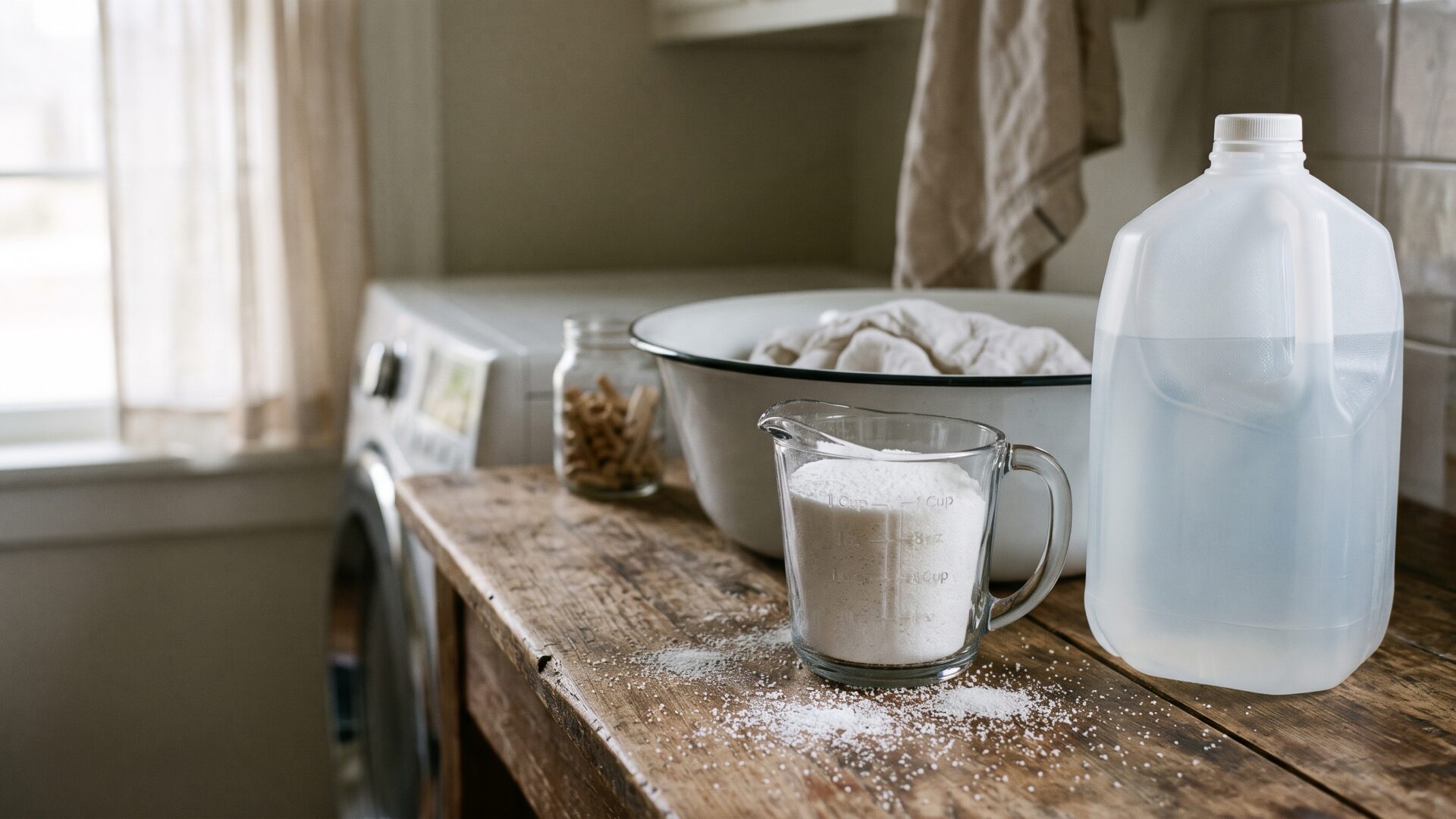
Mix one cup of an oxygen based, color safe bleach into a gallon of water. Schrader points to OxiClean White Revive. The powder is sodium percarbonate, and when it meets warm water it splits back into hydrogen peroxide and washing soda. The peroxide does the work, oxidizing dye molecules until they break apart. That’s also why the soak water should be as hot as the care label allows, since sodium percarbonate is activated by warm or hot water. Because oxygen bleach is color safe, it’s the option to reach for when the stained item has some color of its own. The other product doesn’t break the dye apart at all. It leaves it in the fabric and switches the color off.
Option two is a dye remover that decolorizes
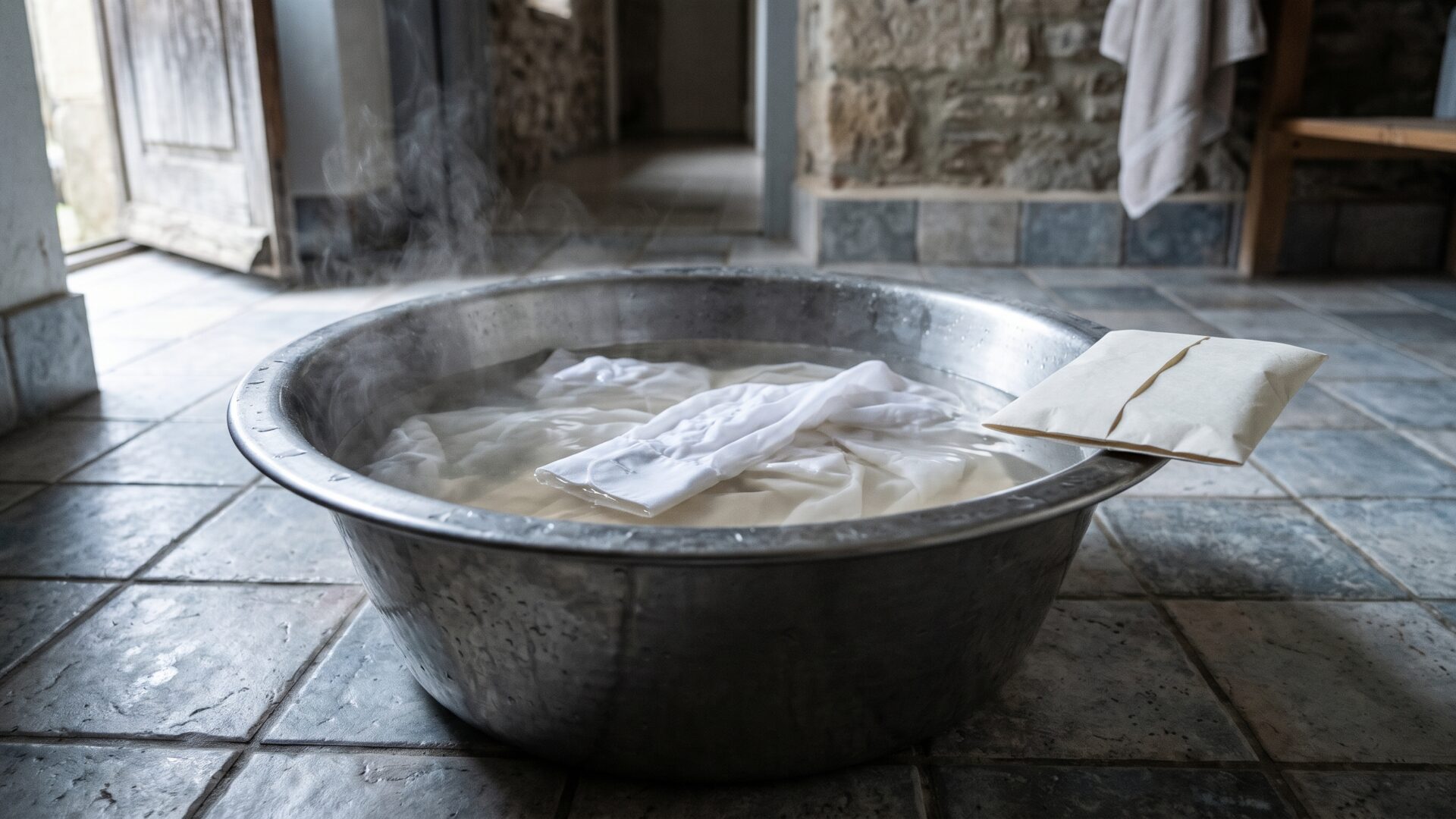
The second product leaves the dye where it is and takes the color out of it. Schrader’s measurement is one sachet to 1.5 gallons of water, again as hot as the care label permits, and he names Dr. Beckmann Colour Run Remover. These products are built around reducing agents, usually sodium dithionite or a close relative. They add electrons to the dye molecule and break up the arrangement of double bonds that produces the color, converting it to a colorless form. The molecule stays in the cloth, invisible. That chemistry can’t tell one dye from another, which is why dye removers are sold for whites and treated carefully around anything colored. Whichever bath you mix, the clock is the next thing to get right.
Six to eight hours, or overnight for heavy stains
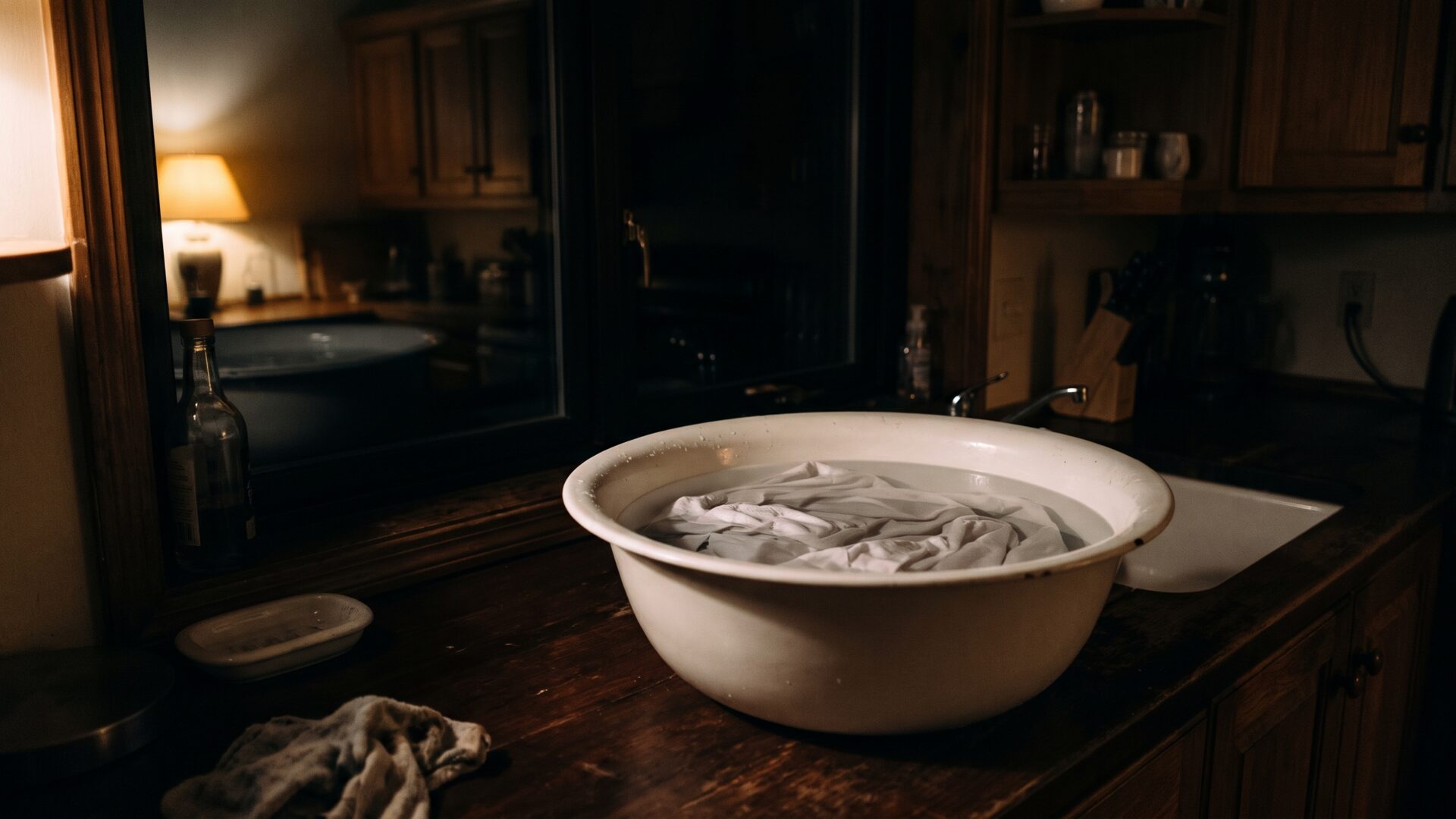
Time is the part people cut short. Schrader’s window is six to eight hours in the bath, overnight when the staining is heavy. Set the water at the hottest temperature the care label allows, which the wash tub symbol on the tag will tell you, and keep the garment submerged. There’s a reason the window isn’t open ended. Once oxygen bleach is mixed into water it stays active for about six hours, after which the solution is little more than soda ash and salt water. An overnight soak does most of its work in the first part of the night. When the soak ends, what goes into the drum alongside the garment matters as much as what stays out.
Wash it alone on the hottest safe cycle
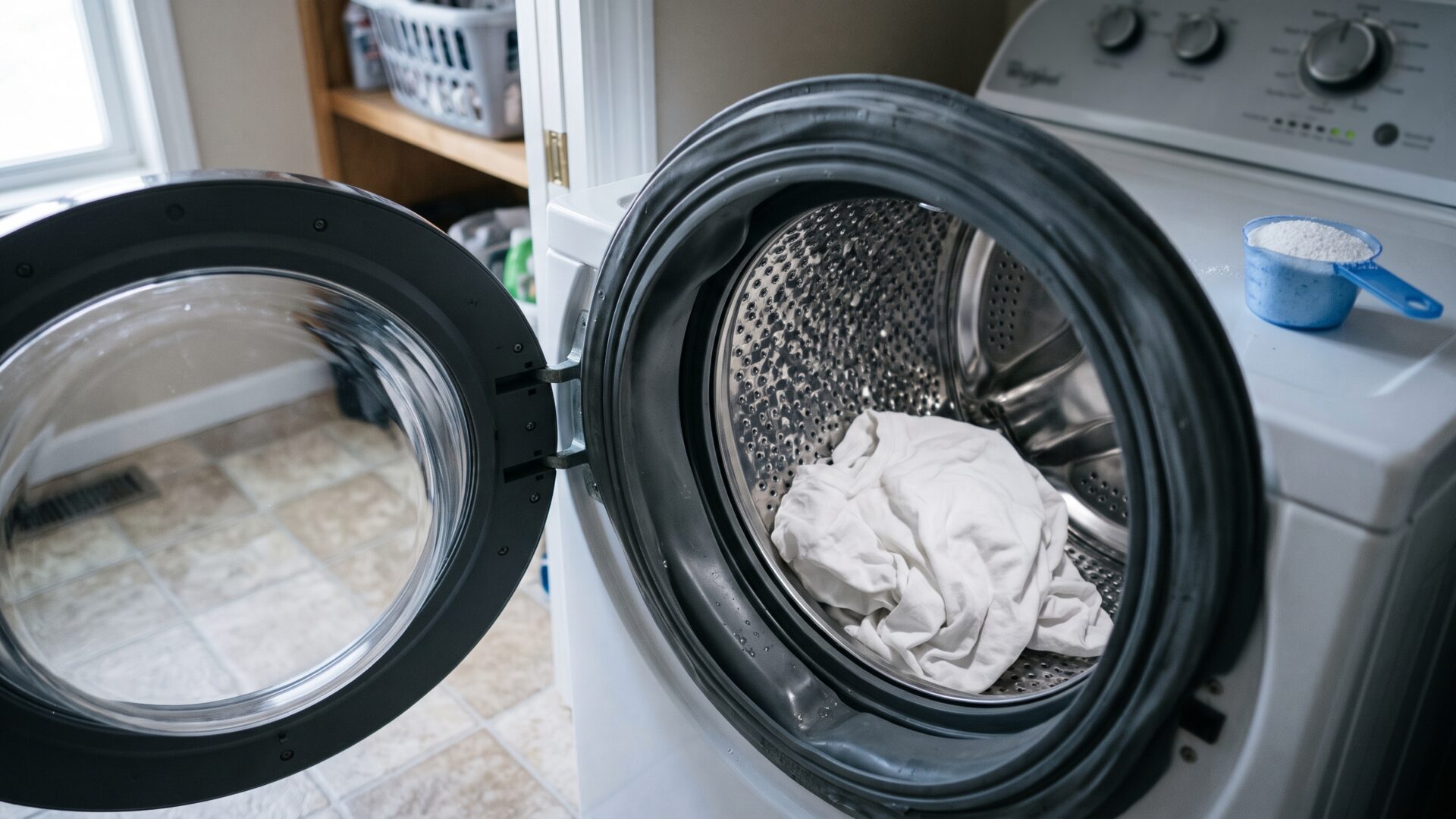
Schrader’s wash step calls for a heavy duty detergent, and he names Persil ProClean. Run the cycle at the hottest temperature the fabric allows, with the stained item alone in the drum. That last part is not fussiness: the soak has loosened dye that is now free in the water, and free dye is exactly what stained the shirt in the first place. Put a second white item in with it and you’ve given that dye somewhere new to land. Set the temperature by the care tag. A cotton shirt rated for hot water can take it, while a blend or a delicate can’t, and a shrunken shirt is no better than a pink one. If it comes out still faintly pink, the answer is not a stronger chemical.
Repeat the soak and the wash if color remains
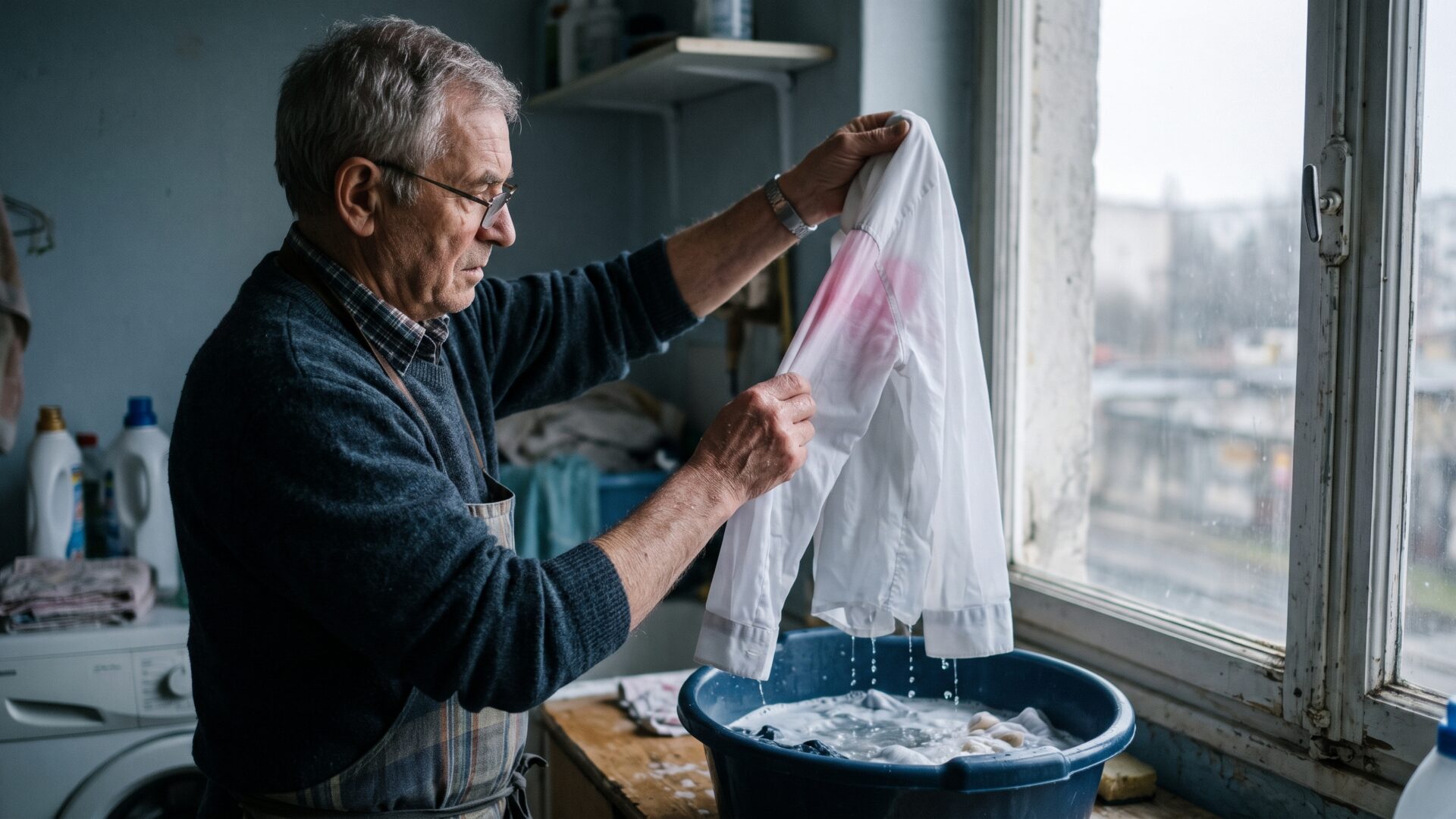
The answer is another round of the same thing. Schrader’s instruction for a stain that survives the first wash is to repeat the soak and the wash rather than escalate to something harsher. A second pass starts from a lighter stain than the first, so there’s less for it to remove. The one rule that holds through every round is the dryer. Don’t tumble the garment to see how it looks, because checking costs you the stain. Clothes that already went through a hot dry cycle before anyone noticed the pink are the hard cases, since the bonding between dye and fiber has already happened. A scrubbing brush is the one tool that makes the stain worse.
The brush and the radiator both make it worse
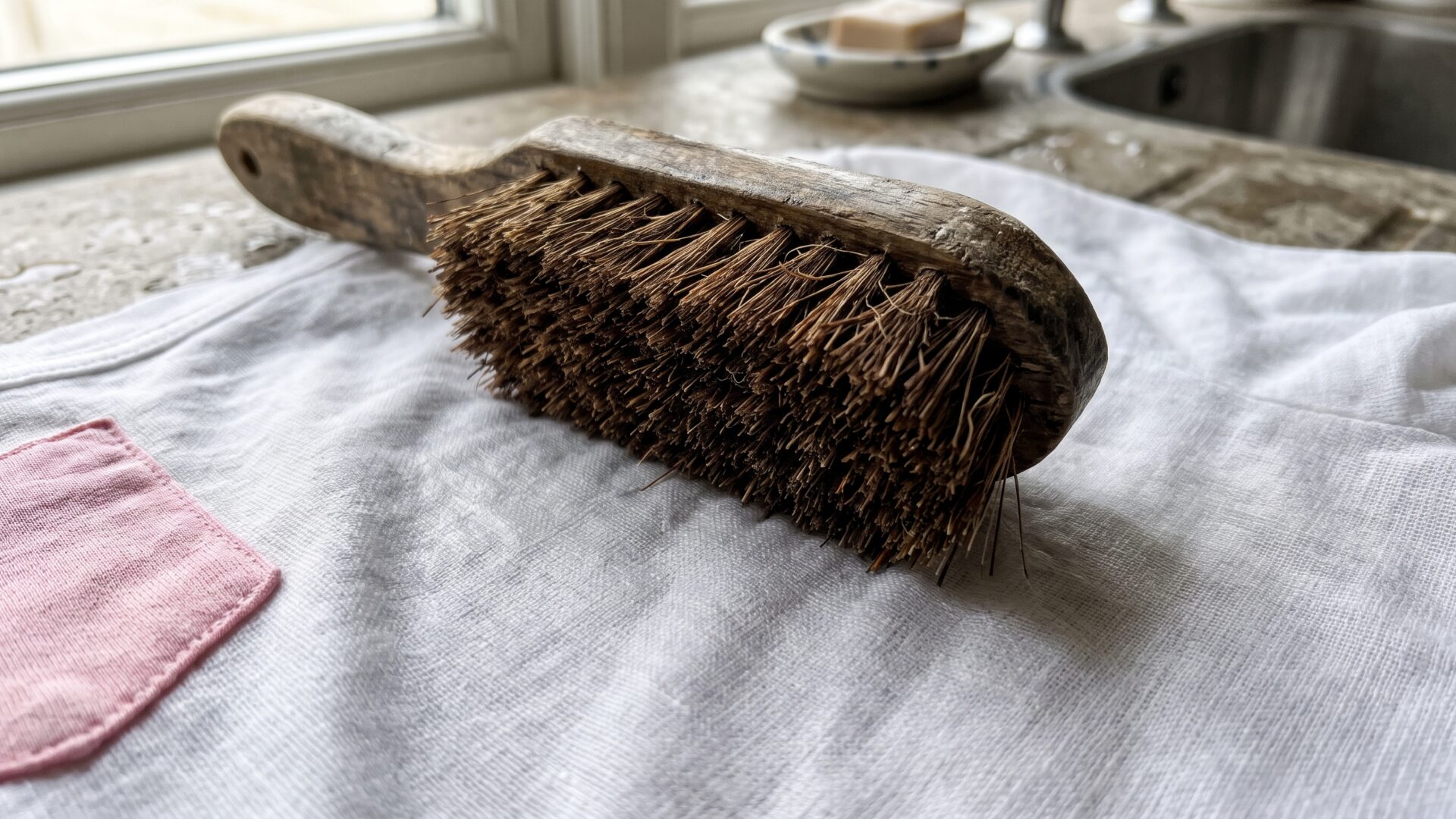
Don’t scrub the dye, Schrader says, because the stain can spread deeper. Pressure from a brush or a thumbnail pushes surface dye down between the yarns and into the core of the fiber, where a soak has further to travel to reach it. It also widens the stained area, turning a defined pink patch into a soft edged one. The companion rule governs the whole process: no drying until the color is completely gone. That includes a quick tumble to check and a seat on a hot radiator. Keep the garment damp between rounds instead. The step that prevents the whole exercise is a single sheet dropped into the drum.
The sheet that prevents the next pink load
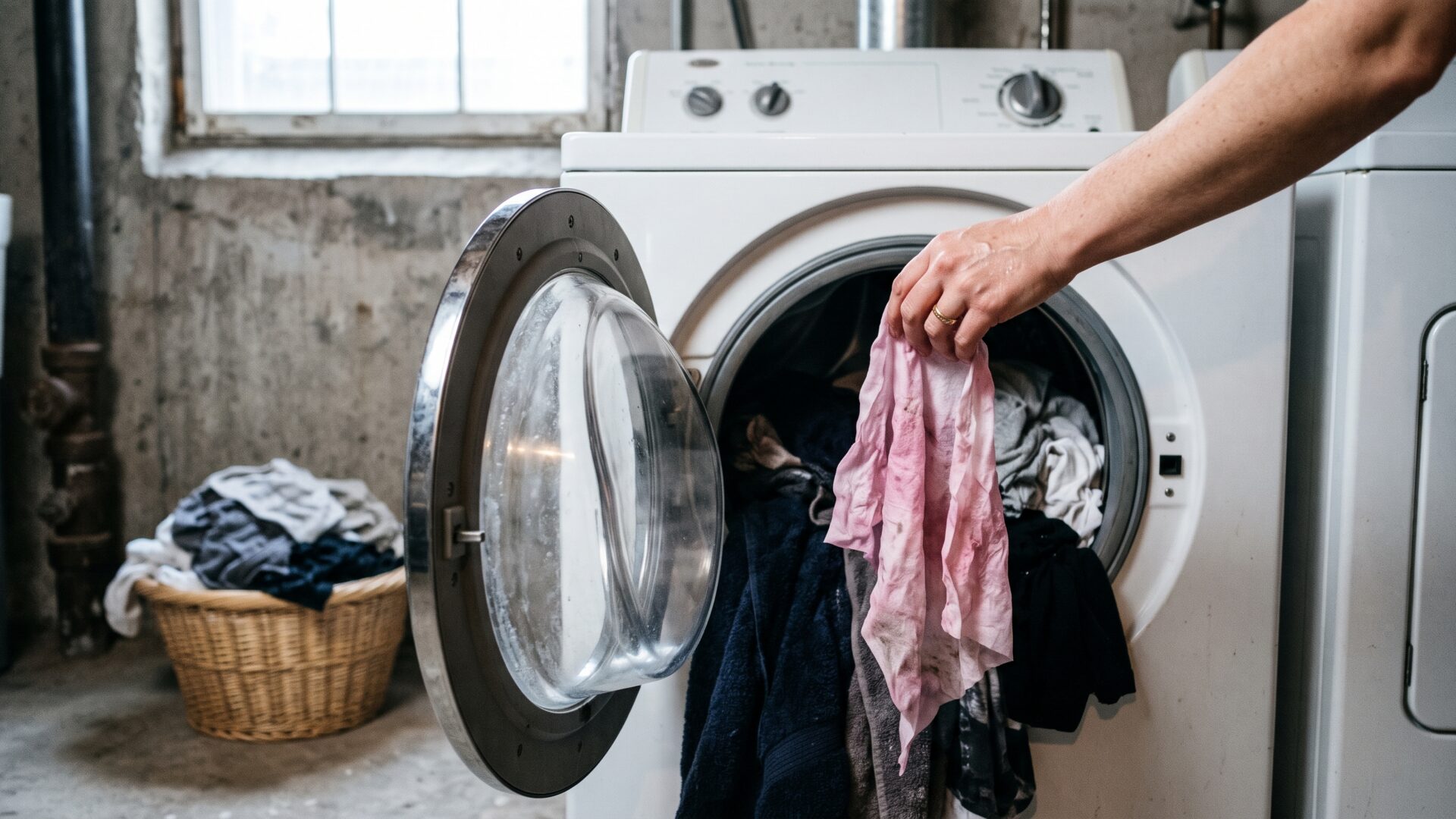
Schrader’s advice for anyone who keeps mixing whites and colors in one load is to use color catcher sheets liberally. The sheet is made of absorbent fibers treated with dye attracting polymers. Loose dye in the wash water binds to the sheet instead of settling on the shirts next to it. They have limits worth knowing. A sheet is single use, since once it’s loaded with dye it has no capacity left, and a brand new dark garment can release more dye than one sheet can hold. Sorting is still the more reliable protection for anything white you care about. When the cycle ends, look at the sheet before you throw it away: the color it came out is the dye that didn’t end up on your clothes.