A December Draft Rule Change Is Coming. Here Are 6 Options Americans May Have


If you’re a man between 18 and 25, or you have a son about to turn 18, a piece of paperwork is about to stop being your responsibility. Under the fiscal 2026 defense law, the Selective Service System is supposed to start registering eligible men itself, pulling their names from federal records instead of waiting for them to fill out a form. Registration is not a draft. No one has been inducted into the US armed forces since 1973, and restarting that would take a new vote in Congress and the president’s signature. The law behind the December change was signed a full year before its own deadline, inside the annual defense bill.
This article was created with the assistance of AI and reviewed by our editorial team for accuracy and clarity.
Section 535 and what the defense law requires

President Donald Trump signed the National Defense Authorization Act for fiscal 2026 on December 18, 2025. Section 535 of that law, Public Law 119-60, amends the Military Selective Service Act so the director of Selective Service has to register men automatically, using data held by other federal agencies rather than forms submitted by individuals. The agency’s regulatory filing puts the effective date at December 19, 2026, and describes the requirement as covering men ages 18 to 26. The duty to sign yourself up has always run from 18 through 25, and the gap between those two age ranges is the kind of detail implementing regulations exist to settle. Those regulations never made it out of review.
The rule that was supposed to make it work

Selective Service sent its proposed automatic registration rule to the White House Office of Information and Regulatory Affairs on March 30, 2026. On July 23, 2026, the agency pulled it back, before it had ever been published for public comment. Military.com reported on September 14, 2026 that the agency still lists automatic registration as a future rulemaking project and has not said when it will restart the process or how it intends to meet the statutory deadline. The date in the law has not moved. What’s missing is the published procedure for matching federal records to a particular 18 year old and telling him he has been registered. The reason Congress ordered it shows up in a single compliance number from 2024.
Why Congress wanted registration taken out of men’s hands

Selective Service reported that 81 percent of eligible men registered in 2024, which left close to one in five outside the database. Compliance had been sliding since 2022, when the registration question was taken off federal student loan applications. That one form had accounted for nearly a quarter of all registrations, according to Selective Service data. Failing to register carries costs beyond the draft, because proof of registration can be required for federal jobs, job training and some student aid. Forty-six states and territories were already enrolling men through their own systems in 2024. A complete list still cannot put anyone in uniform.
What it would take to restart the draft
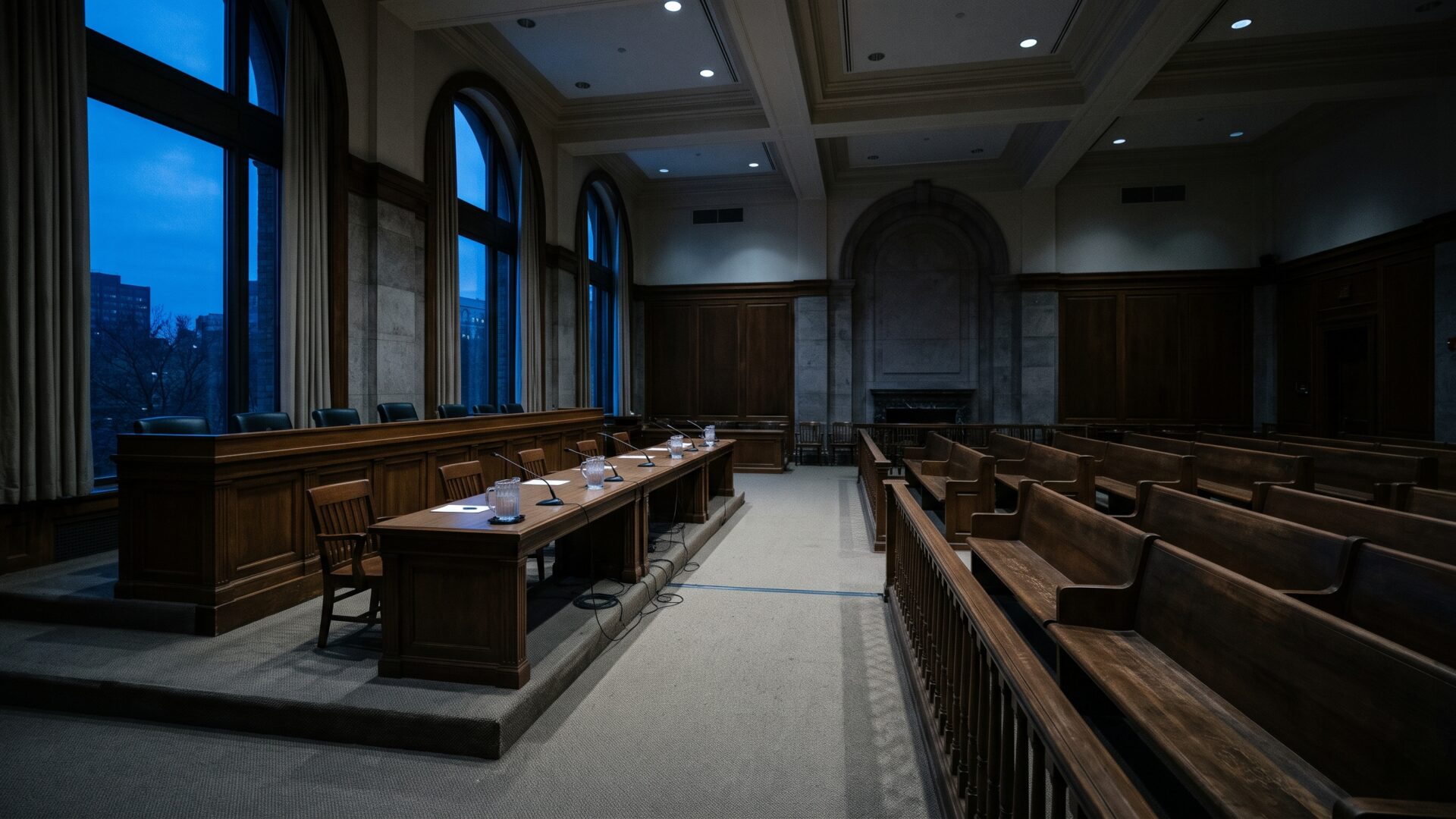
Bringing back conscription takes two branches. According to the Selective Service System, Congress would have to amend the Military Selective Service Act to authorize the president to induct people into the armed forces, and nothing in the automatic registration provision does that. The last American inductions took place in 1973. The subject hasn’t stayed theoretical. In March 2026, the Trump administration said a draft remained “on the table” as a possible wartime measure, according to Military.com, and no law restarting induction has followed. If one ever did, most registrants would discover they aren’t in any category at all yet.
No one is classified until a draft is authorized

Everyone in the database is just a name and an address. Classification, the step that sorts men into categories, begins only once a draft is authorized, and most men would start in Class 1-A, available for unrestricted military service. At the other end of the same list sits 4-F, not qualified for any military service. Claims come after the order to report, not before. Local boards and appeal boards would be activated to handle requests for deferments, postponements and exemptions, each one decided on the registrant’s circumstances and the evidence he brings. The claim men ask about most often can’t be filed in advance at all.
Conscientious objection cannot be claimed ahead of time

There is no box for conscientious objection on a registration form. The Selective Service System has no authority to classify anyone as an objector unless a draft is running, so the claim exists only after an induction order arrives, and the window to file it is short. Two outcomes are written into the rules. Class 1-A-O is for a man opposed to carrying arms, who serves in a noncombatant military job. Class 1-O is for a man opposed to all military service, who is assigned civilian alternative work instead. Objection to one particular war does not qualify, because the test is opposition to war itself. In past drafts, the more common way out had nothing to do with belief.
The medical exam and the 4-F classification

Anyone called up would be examined before induction, and three results are possible: qualified for induction, qualified for noncombatant service, or disqualified. A man who doesn’t meet the physical or mental standards is classified 4-F, not qualified for any military service. This is the one route on the list that isn’t argued. Examiners apply the military’s medical standards, so the outcome turns on records and tests rather than on a claim a registrant writes. The classification is still in the regulations today, unused since the last inductions in 1973. Hardship works the opposite way, and marriage alone has never been enough.
Hardship, ministers, reservists and college students

A hardship deferment applies when a man’s induction would leave people who depend on him for support without it. Marriage or fatherhood by itself would not carry the claim, which rests on evidence about who actually relies on his income or care. The regulations also carve out groups by occupation and status. Ministers of religion are exempt, and students preparing for the ministry can be deferred. Members of a reserve component and students in military training have their own classes, numbered 1-D-D and 1-D-E. College enrollment buys a postponement rather than an exemption, so a student ordered to report could finish the term he’s in. A board’s refusal is not where the process ends.
Appeals, penalties and the rule still in force

A registrant can take his classification to a Selective Service appeal board, which reviews his file again along with whatever evidence he adds. Refusing to take part is the one option on this list with a criminal penalty attached. Knowingly failing to comply with the Military Selective Service Act is a federal offense punishable by up to five years in prison and a fine of as much as $250,000. None of that is live, and registration remains the only obligation that exists. Until automatic registration takes effect, the old rule still stands: men must register within 30 days of turning 18, and anyone unsure whether that was ever done can check his status at sss.gov.