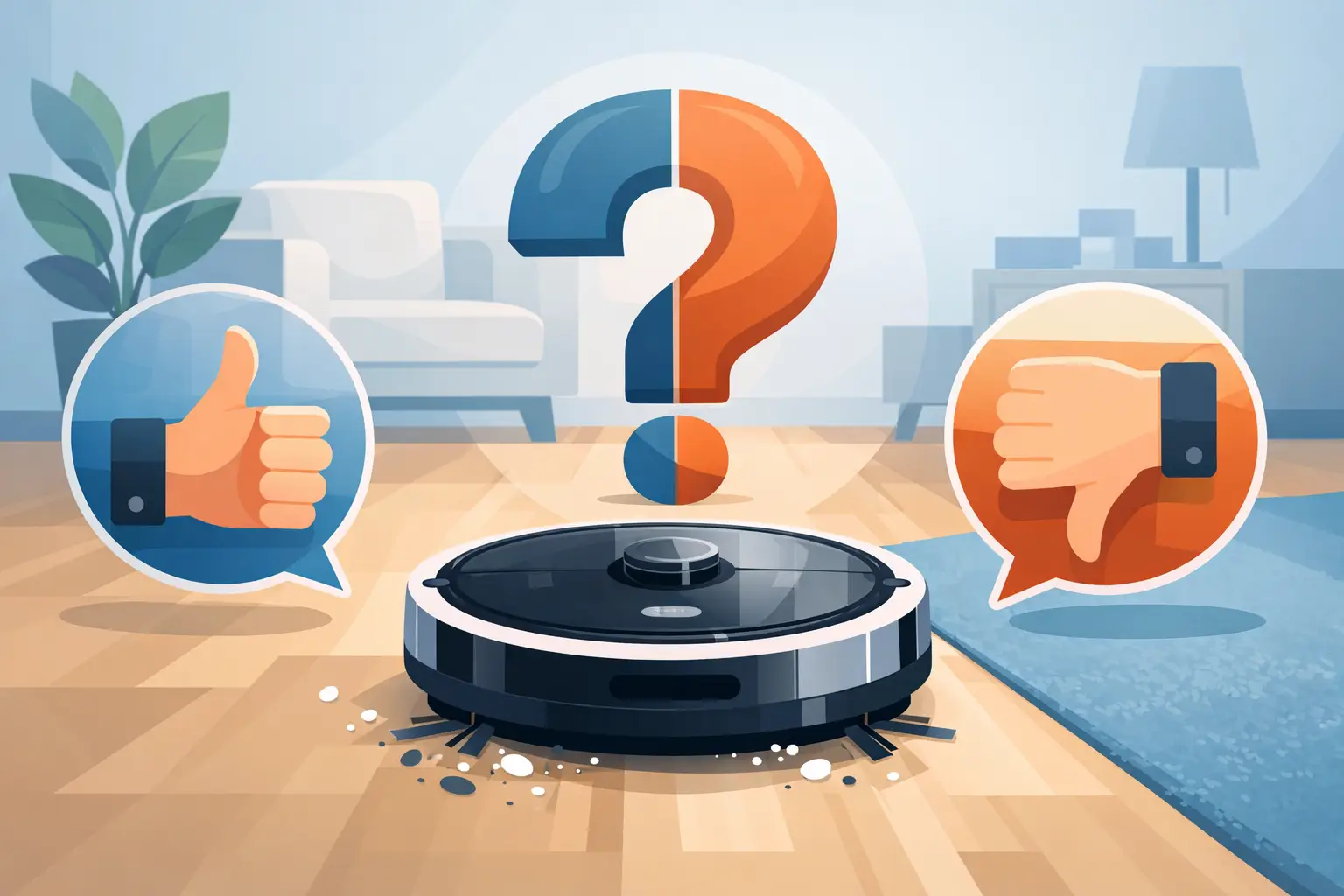

Crumbs under the breakfast bar by 9 a.m., pet hair making tiny tumbleweeds by lunch, and mystery dust in the corners no matter how often you sweep – that is exactly why a robot vacuum review matters before you buy one. These little floor helpers can feel like magic in the right home, but in the wrong setup, they are just expensive pucks bumping into chair legs.
Robot vacuum review: what these gadgets actually do well
The biggest win is simple: consistency. A robot vacuum is not usually better than a full-size vacuum for deep cleaning, but it is much better at doing light cleaning over and over again without needing a pep talk. If your floors always look a little messy between bigger cleanups, this is where robot vacuums shine.
They are especially handy in busy households where dirt shows up on a schedule. Think kids dropping cereal, pets shedding on repeat, or shoes tracking in whatever the weather delivered that day. Running a robot vacuum daily can keep the mess from building into a whole weekend chore.
That said, not every home gets the same payoff. In a small apartment with mostly hard floors, even a modest robot vacuum can feel like a game changer. In a split-level house with thick rugs, cords everywhere, and toys permanently on the floor, the experience can be a lot less dreamy.
The features that make or break a robot vacuum review
If you are shopping, try not to get hypnotized by flashy names and futuristic photos. A few practical features matter far more than the rest.
Navigation matters more than you think
Basic models often move in a more random pattern. They still pick up dirt, but they can take longer and miss spots. Smarter models map your home and clean in neat rows, which usually means better coverage and less battery waste.
If you have a simple layout, random navigation can still work. But for larger homes, open living spaces, or anyone who wants room-specific cleaning, mapping is the feature that makes the experience feel modern instead of mildly chaotic.
Suction is important, but floor type matters too
A lot of shoppers focus on suction power, and yes, it matters. But suction alone does not tell the whole story. Brush design, wheel height, and how the vacuum transitions from wood to rug can matter just as much.
On hard floors, most decent robot vacuums do a solid job with dust, crumbs, and everyday debris. Carpets are trickier. Low-pile rugs are usually fine, while plush carpets can expose the limits of many models. If your home is mostly carpeted, you may still need a traditional vacuum for the heavy stuff.
Bin size and self-emptying can change the vibe completely
If you have pets, long hair, or a lot of foot traffic, a tiny dustbin fills up fast. That means more interruptions and more maintenance. A self-emptying dock is one of those features that sounds extra until you live with it.
For some people, emptying a small bin every day is no big deal. For others, that extra task is exactly how a helpful gadget turns into something ignored in a corner. If convenience is the whole point, self-emptying is worth serious consideration.
App controls are useful when they are simple
Most robot vacuums now come with an app, and the best ones actually make life easier. Scheduling cleanings, checking maps, setting no-go zones, and targeting one room after a messy moment can all be genuinely helpful.
But there is a trade-off. Some apps are smooth and intuitive, and some feel like they were designed by someone who has never been late, frazzled, or holding a coffee in one hand. If you want a low-fuss experience, ease of setup matters just as much as the cleaning itself.
Where robot vacuums struggle
Here is the honest part of any robot vacuum review: they are not miracle workers.
Cords are a classic problem. So are socks, tassels, thin bath mats, and pet accidents, which is a category no one wants to discover the hard way. If your floors tend to collect clutter, a robot vacuum may force you to tidy more before each run. For some households, that is a nice motivator. For others, it defeats the purpose.
Corners and edges can also be hit or miss. Most models use side brushes to flick debris inward, but fine dust along baseboards may still need a quick follow-up with a stick vacuum now and then.
Then there is noise. Robot vacuums are often quieter than upright vacuums, but they are not silent little cleaning fairies. If one starts rolling under your desk during a meeting or barges into the kitchen while the baby is napping, you will notice.
Who should actually buy one?
A robot vacuum makes the most sense for people who want cleaner-looking floors with less day-to-day effort. If you are a parent juggling constant mess, a pet owner fighting fur drift, or someone who simply hates sweeping, it can be a smart buy.
It is also a great match for people who like routines. Set it to run every morning after everyone leaves, and your floors stay in much better shape with almost no thought required.
On the flip side, if your home has lots of stairs, thick rugs, frequent clutter, or rooms packed with tricky furniture, the value drops a bit. The robot may still help, but it will not replace your main vacuum, and it may need more babysitting than expected.
Budget vs premium: what you really get
Budget robot vacuums can absolutely be worth it. If your space is small, your floors are mostly hard surfaces, and your expectations are realistic, you do not always need a top-tier model. A basic vacuum that runs regularly can still make your home feel noticeably cleaner.
Premium models usually earn their price in a few areas: smarter navigation, stronger carpet performance, better obstacle avoidance, and convenience extras like self-emptying or mopping. Those upgrades matter most in larger homes or busier households where the robot is doing serious daily maintenance.
The sweet spot for many shoppers is the middle tier. That is often where you get mapping, decent suction, and a reliable app without paying for every possible bell and whistle.
A few smart questions before you buy
Before adding one to your cart, picture your real life instead of your dream life. Are your floors usually clear enough for a robot to run? Do you want this to reduce cleaning, or are you hoping it will replace cleaning altogether? Those are two very different goals.
Also think about your biggest mess. Is it pet hair, kitchen crumbs, dust, or tracked-in dirt? Different homes stress-test these machines in different ways. A model that gets rave reviews from apartment dwellers may not be the best fit for a house with two dogs and three rug-heavy bedrooms.
And if mopping is part of the package, treat that feature as a bonus unless reviews show it performs especially well. Many combo models are good for light maintenance, but they usually do not replace a real mop when sticky spills or deeper grime show up.
Final verdict in this robot vacuum review
A robot vacuum is one of those products that can feel wildly overrated or weirdly life-changing depending on your home and habits. If you want spotless deep-clean results, you may be disappointed. If you want a simple way to keep daily mess from piling up, it can be a surprisingly satisfying upgrade.
The best approach is to buy for your floor plan, your mess level, and your tolerance for maintenance. Pick the robot that fits your routine, not the one with the flashiest feature list. When it matches your space, it is less like a gimmick and more like a tiny household win you will appreciate every single day.