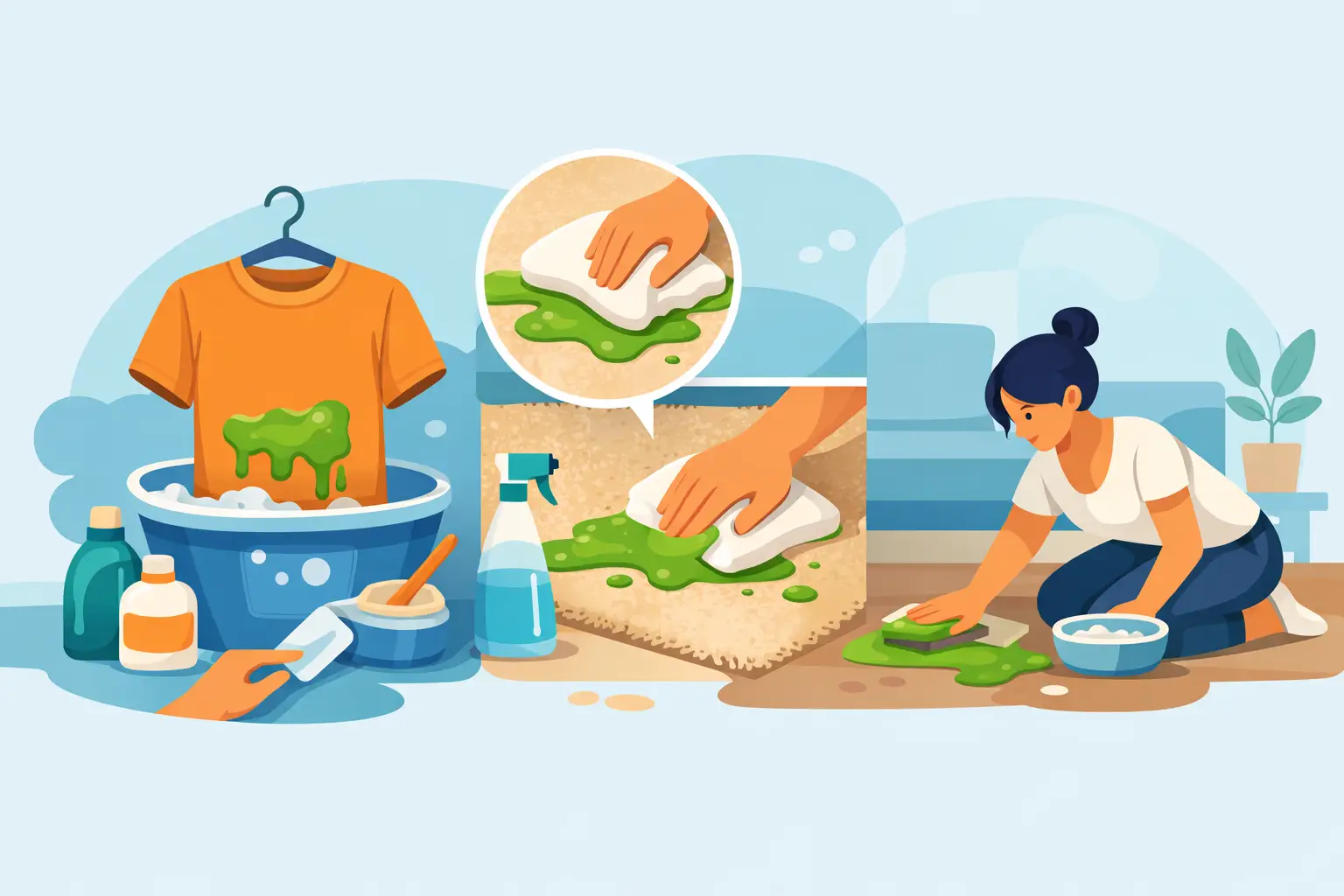

A slime surprise is all fun and games until it lands on the couch, gets ground into the rug, or somehow ends up in your kid’s hair. The good news: learning how to get slime out usually does not require a special cleaner or a full-on panic session. The trick is to work slowly, loosen the goo before scrubbing, and choose a method that suits the surface.
Fresh slime is easier to remove than dried slime, so tackle it when you spot it. But even a crusty, forgotten blob is not necessarily a lost cause. Start by checking the item’s care label and test any cleaner on a hidden spot first, especially with delicate fabrics, dyed upholstery, or wood finishes.
First, Lift Off What You Can
Before reaching for liquid, use a spoon, dull butter knife, or old gift card to gently lift away as much slime as possible. Work from the outside edge toward the center so you do not spread the mess farther. If the slime is still super soft, place an ice cube in a sealed bag over it for a few minutes. The cold helps firm it up, making it easier to peel away.
Resist the urge to rub hard right away. Rubbing pushes slime deeper into fabric fibers and carpet backing, turning a simple cleanup into a sticky little project. Once the excess is gone, choose your next move based on where the slime landed.
How to Get Slime Out of Clothes
For washable clothes, white vinegar is the go-to hero. It helps break down many slime mixtures, especially the homemade kind made with glue, starch, or baking soda.
Place the stained area over a clean towel or sink. Saturate the slime with plain white vinegar and let it sit for five to 10 minutes. As it loosens, gently work at it with your fingers or a soft toothbrush. Rinse with cool water, then apply a small amount of liquid laundry detergent and rub it in lightly.
Wash the item according to the care label. Before tossing it into the dryer, inspect the fabric in good light. Heat can set any remaining color or residue, so repeat the vinegar-and-detergent step if you still see a spot.
If the Slime Has Glitter or Food Coloring
Glitter likes to stick around long after the slime is gone. After lifting the main blob, use a lint roller or wide tape to pick up loose sparkles. For food coloring or bright pigment, pre-treat the area with laundry detergent for 10 to 15 minutes before washing.
Avoid using bleach unless the care label says it is safe. Bleach can damage fibers and may react unpredictably with certain dyes. A little patience is much kinder to that favorite sweatshirt.
Remove Slime From Carpet Without Soaking It
Carpet needs a lighter touch because you do not want to flood the padding underneath. Start by scraping up the dried or thickened slime with a spoon. Then dab, do not pour, white vinegar onto the remaining residue using a clean cloth.
Let the vinegar sit for a few minutes, then blot with another cloth dampened in cool water. Keep switching to clean areas of the cloth as slime transfers over. If the carpet still feels tacky, mix a few drops of dish soap into a cup of cool water, dab the area again, and blot dry.
For a fluffier finish, let the carpet air-dry completely, then vacuum the spot. This picks up any tiny dried bits and helps restore the pile. Skip hot water and steam cleaners at first, since heat can make some slime ingredients cling more stubbornly.
Clean Slime Off Upholstery and Sofas
A sofa can handle the same basic approach as carpet, but check its cleaning tag before you begin. A code of W usually means water-based cleaners are okay. An S code calls for a solvent-based product, while X means vacuuming only or professional cleaning is safest. If you are not sure what the tag means, use the smallest amount of moisture possible and test in a hidden area.
For most washable upholstery, lift away the excess slime, then dab the spot with a cloth lightly moistened with vinegar. Follow with a cloth dampened in plain water to remove the vinegar and loosened residue. Blot with a dry towel and let the cushion air-dry.
Do not saturate cushions. Too much moisture can leave water rings or create a musty smell inside the padding. For velvet, suede, leather, or other specialty materials, avoid vinegar unless the manufacturer specifically allows it. A professional cleaner may be the better call for a large stain on a pricey piece.
Get Slime Out of Hair Gently
Slime in hair looks dramatic, but scissors should be the absolute last resort. Start by coating the sticky area with conditioner, baby oil, olive oil, or coconut oil. These slippery helpers reduce the slime’s grip and let strands slide free more easily.
Use your fingers to work the product through the tangled section, beginning at the ends of the hair and moving upward. Gently comb through with a wide-tooth comb, wiping off slime as it comes loose. Once the slime is gone, shampoo the hair once or twice to remove the oil.
Keep the process calm and slow, especially with kids. Pulling at the hair can turn a manageable mess into tears. Put on a favorite song, grab a towel, and treat it like a temporary spa treatment with an extremely weird plot twist.
What About Walls, Wood, and Hard Surfaces?
On sealed counters, tile, plastic toys, and most hard surfaces, scrape off the slime first and wipe the area with warm, soapy water. A microfiber cloth works well because it catches residue without scattering it around.
For painted walls, use only a barely damp cloth with a drop of dish soap. Rub softly and dry the area right away. Aggressive scrubbing can remove paint along with the slime, particularly on matte finishes.
Wood needs extra care. Wipe away the slime with a dry cloth or plastic scraper, then use a cloth that is only slightly damp with mild soapy water. Dry it immediately. Avoid vinegar on unfinished, waxed, or delicate wood because it can dull the finish.
A Few Things Not to Do
Some fast fixes create more work later. Do not put a slimy garment straight into the washer without removing the bulk first, because bits can cling to other clothes. Do not use boiling water, and do not blast the mess with a hair dryer. Heat can make the residue harder to lift.
Also, skip harsh solvents, nail polish remover, and random cleaning sprays unless you know they are safe for the material. They may discolor fabric, weaken carpet fibers, or damage upholstery. When in doubt, start with the gentlest option: scraping, cool water, mild dish soap, and careful blotting.
Keep the Next Slime Session Contained
A tray, baking sheet, or washable tablecloth can save a lot of cleanup later. If slime play is happening near carpet or furniture, set up at the kitchen table or on an easy-to-wipe floor. It takes about two minutes and makes the craft time much more relaxing for everyone.
Slime is supposed to be squishy, colorful fun, not a reason to write off a favorite hoodie or your living room rug. Take your time, use the right method for the surface, and that sticky little situation can become just another everyday cleanup win.