‘We were wrong’ – Uranus and Neptune Might Not Be “Ice Giants” After All
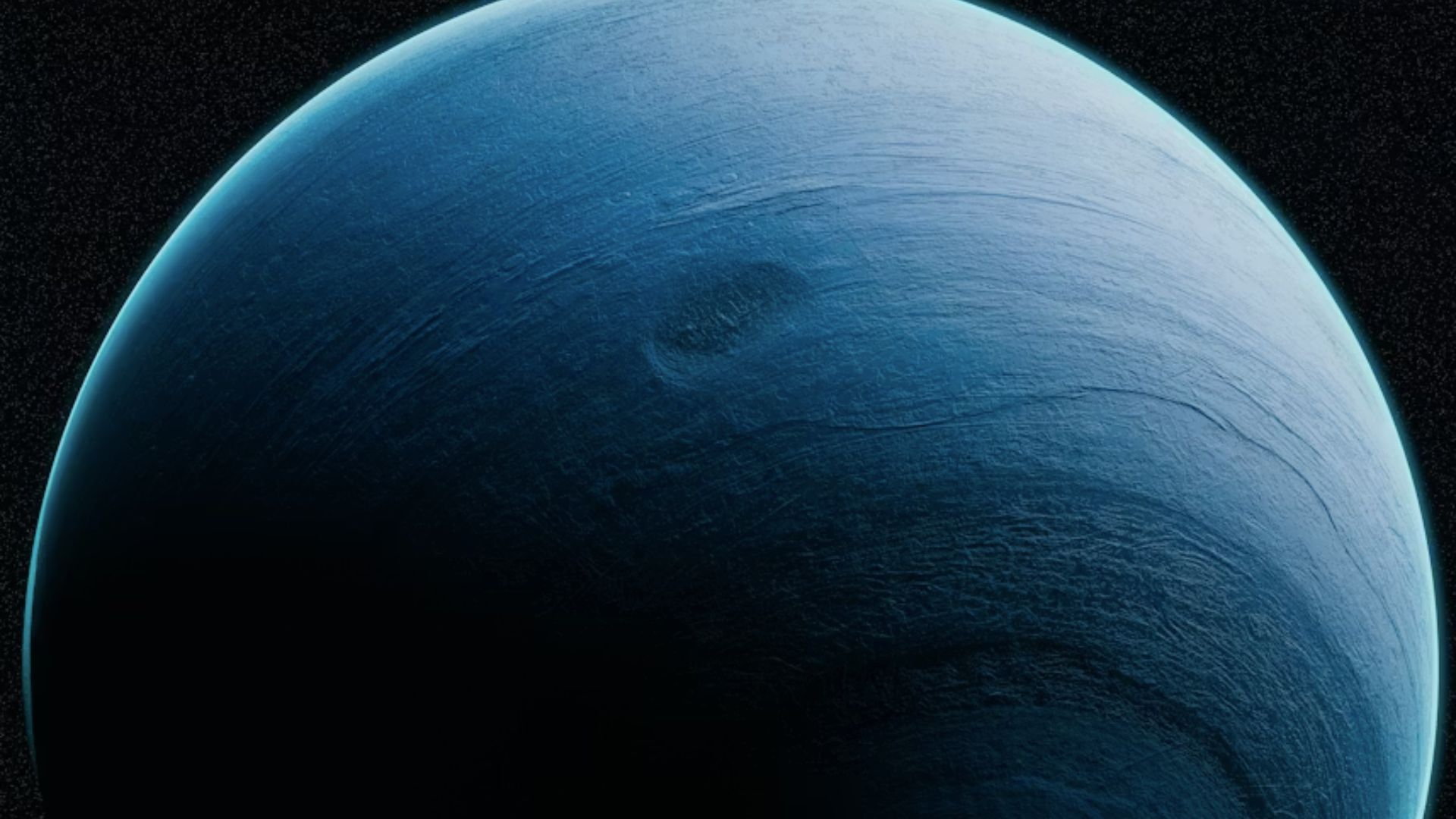

New research suggests that the deep interiors of Uranus and Neptune may be far less icy and far more rocky than scientists once believed. A recently developed computational model challenges the long-standing assumption that these distant worlds are dominated by frozen compounds, opening the door to a more complex and nuanced understanding of their internal structure.
The findings, published in the journal Astronomy and Astrophysics, point to planetary cores that could contain substantial amounts of rock mixed with water under extreme conditions. This shift in perspective not only questions their traditional classification as ice giants, but also offers fresh clues about some of their most puzzling features.
For decades, Uranus and Neptune have remained among the least understood planets in the solar system. Their distance from Earth and the scarcity of direct observations have forced scientists to rely on simplified models. This new approach attempts to bridge that gap by combining physical theory with observational data in a more balanced way.
Rethinking the nature of the outer planets
Uranus and Neptune orbit at the fringes of the solar system, where temperatures are so low that gases like hydrogen, helium, and water are expected to condense into dense, icy mixtures. This assumption gave rise to the term “ice giants,” a label that has shaped planetary science for years.
However, researchers now argue that this classification may gloss over important internal variations. According to the study’s authors, previous models leaned too heavily on either theoretical assumptions or limited observations, leading to an oversimplified picture of what lies beneath these planets’ thick atmospheres.
By revisiting how density changes from the core outward and carefully matching those profiles to gravitational data, the team uncovered scenarios in which rock plays a much larger role. In several models, the balance between rock and water suggests interiors that are neither purely icy nor easily categorized.
A new model with deeper implications

The research team developed a hybrid modeling method designed to reduce bias while remaining physically realistic. They repeatedly adjusted core density, temperature, and composition until the results aligned with available measurements, creating multiple viable internal structures for each planet.
Among the outcomes were several models with high rock-to-water ratios, indicating that solid material could dominate significant portions of the core. This challenges the idea that ice alone defines these planets and suggests a broader spectrum of possible internal makeups.
The simulations also revealed convective layers where water exists in an ionic state, broken into charged particles by immense pressure and heat. These exotic regions are believed to play a key role in shaping the unusual magnetic fields of Uranus and Neptune, which do not align neatly with their rotational axes.
Magnetic mysteries and the limits of current data

One of the most intriguing aspects of the study is its potential to explain why Uranus and Neptune have such irregular magnetic fields. The presence of electrically charged water layers could generate complex magnetic behavior, resulting in multiple poles rather than a simple north-south structure.
The model further suggests that Uranus may generate its magnetic field closer to its center than Neptune does, hinting at subtle but important internal differences between the two planets. These insights bring scientists closer to understanding why the magnetic environments of these worlds are so distinct.
Still, the researchers caution that uncertainty remains. Material behavior under extreme planetary conditions is not fully understood, and key compounds such as methane and ammonia may also influence the results. With most existing data coming from the Voyager 2 flybys of the 1980s, the picture is far from complete.