Study Reveals: Humans Give Off Light That Is Extinguished in Death


You may have heard people say we have a “light” within us, but what if that idea was more than metaphorical?
A new discovery by Canadian researchers reveals that our bodies emit an ultra-weak glow that disappears when we die. Though invisible to the naked eye, this faint light offers a stunning link between science and the symbolism of life and death.
Here’s what the research uncovered and why it’s creating such a buzz.
Humans Do Emit Light—But Not the Kind You Think

Biophoton emission is the scientific name for the tiny amounts of light all living organisms release. In humans, it’s a byproduct of metabolism, especially oxidative stress, a process that also causes fruit to brown.
Though a billion times weaker than sunlight and undetectable by our eyes, it’s very real. Your body glows quietly all the time, whether you’re aware of it or not.
Not Bioluminescence, Not Body Heat
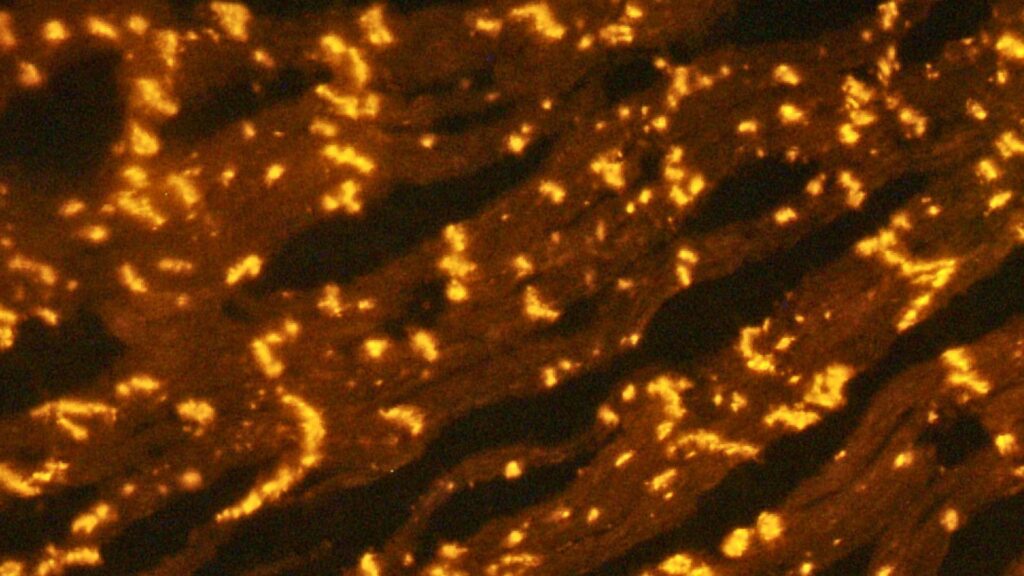
It’s easy to confuse biophoton emission with other types of light, like the glow of a firefly or the warmth your body radiates. But this isn’t bioluminescence, which involves chemicals like luciferin that create visible light. Nor is it blackbody radiation, the infrared heat all warm objects give off. Biophoton emission is unique. It comes from excited molecules within our cells releasing light when they return to a lower energy state, typically during oxidative stress.
When Life Stops, So Does the Light

In a 2024 study from Canada’s National Research Council, scientists confirmed that biophoton emission, the faint glow produced by living cells, disappears shortly after death. Using specialized detectors, they observed that this subtle light fades rapidly as cellular activity and oxygen flow cease.
While it may sound poetic, it’s grounded in biology. The glow vanishes not because a soul leaves the body, but because the metabolism that fuels life has come to a halt.
A New Way to Think About Death

The researchers say this vanishing light may serve as a biological marker for the end of life. Rather than focusing on heartbeats or brainwaves, this could offer another indicator of death at the cellular level. While it won’t replace traditional definitions anytime soon, it adds a new layer of understanding, one that blends science and symbolism in a strangely beautiful way.
Science That Echoes Ancient Beliefs

Cultures around the world have long believed in an inner light or aura that fades with death. While those ideas were spiritual in nature, this discovery adds a scientific twist. The fact that we do glow, if only faintly, and that the glow disappears when we die, gives new context to ancient intuition. It’s not proof of a soul, but it is a stunning example of how science can reflect age-old human wonder.
A Potential Window into Health

Beyond the poetry of it all, researchers are exploring how this light might be used in medicine. Elevated biophoton levels can indicate stress, inflammation, or even cancer. With the right tools, this natural glow could help us diagnose disease earlier and track treatment progress—all without invasive procedures. It’s one more example of how observing our body’s subtle signals can lead to groundbreaking innovation.
A Glowing Future for Tech and Medicine

The ability to detect and interpret this faint light could revolutionize biomedical imaging. Scientists envision wearable tech or diagnostic tools that monitor biophoton activity in real time. Unlike other methods, it wouldn’t require harmful dyes or radiation. While still early in development, the promise of using our own natural glow for health monitoring feels like something pulled from science fiction, yet it’s rooted in solid science.
Light That Lingers in Meaning

This new discovery reminds us that even the smallest details of life, the invisible light we emit, carry profound meaning. While science explains the glow through chemistry, its symbolism isn’t lost. As our light fades, it leaves behind wonder, curiosity, and a deeper appreciation for the life that produced it. In the end, understanding this glow is both a scientific step forward and a poetic tribute to what it means to be alive.