
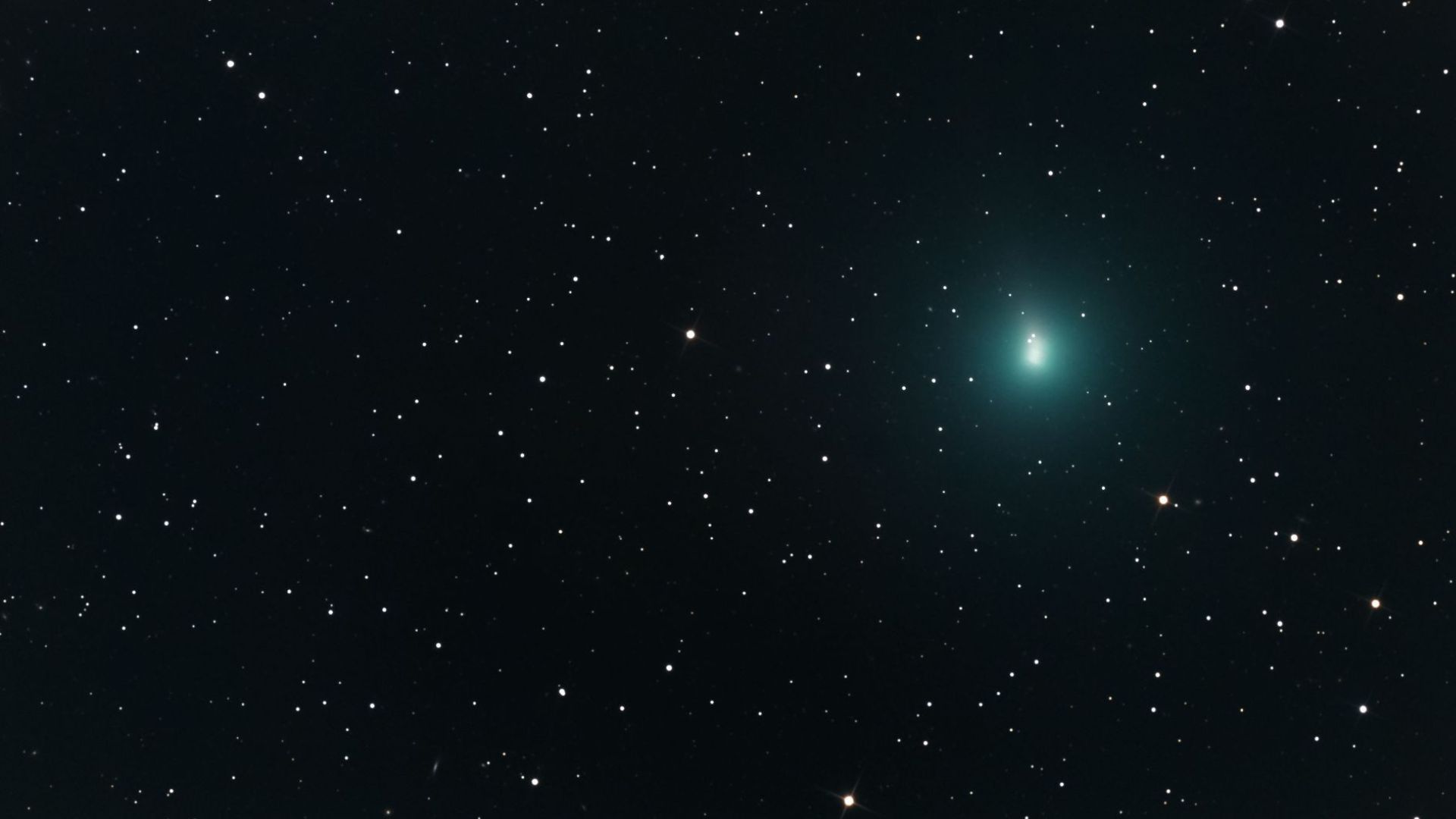
Comet 3I/ATLAS became a rare scientific gift, a pristine body arriving from another star system that offered researchers a window into materials formed far from our sun.
Observations collected as it moved inward revealed an unexpectedly dramatic change in appearance, prompting astronomers to reconsider how such objects behave when exposed to a new stellar environment.
The comet’s journey toward the inner solar system provided a unique chance to study an object that likely never encountered strong heating before, making its current behavior especially revealing about conditions in its birth system.
Sudden, sustained brightening
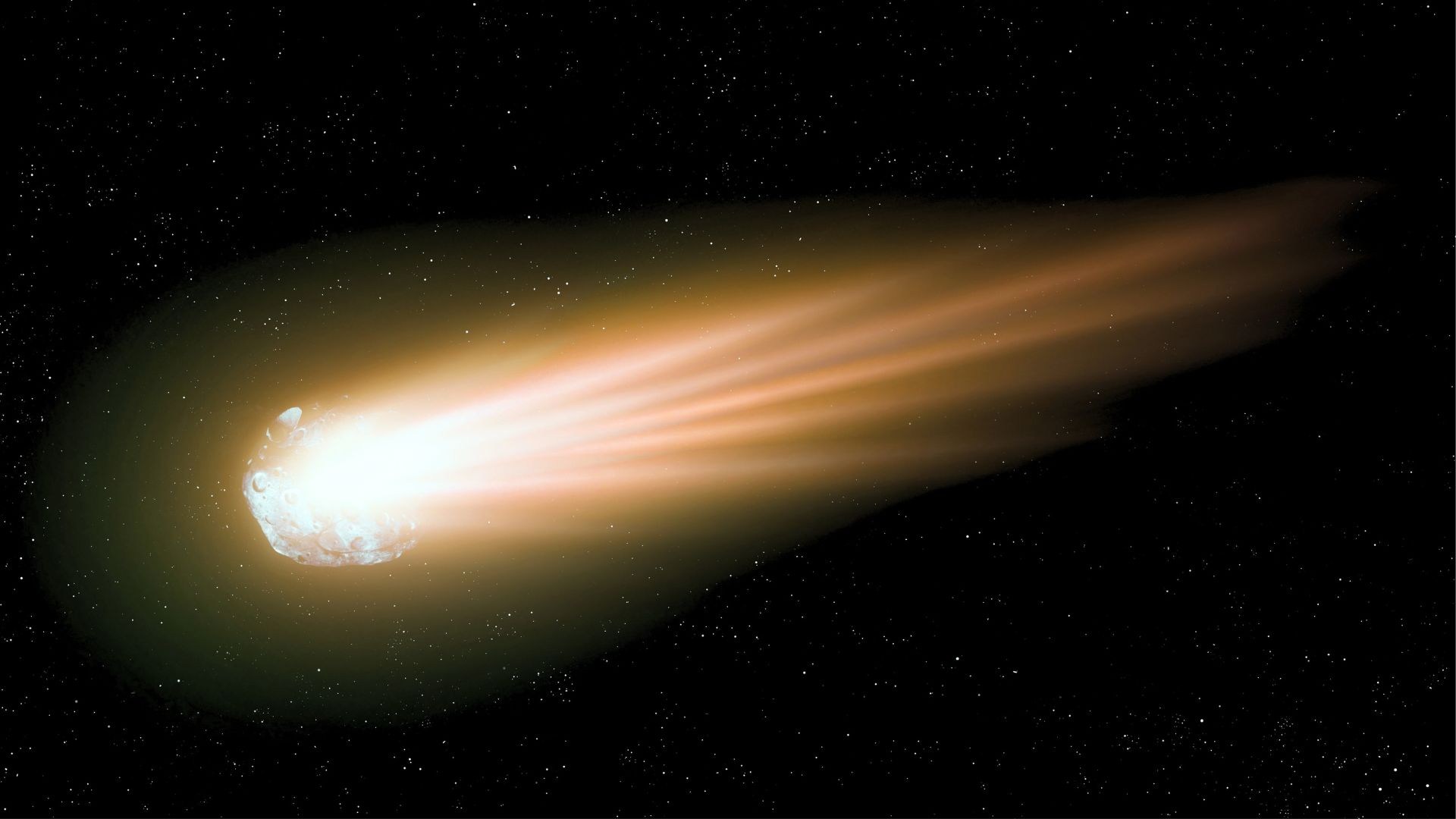
Photometric tracking showed a marked and lasting rise in brightness when the comet reached roughly 2.5 astronomical units from the sun, a steady glow rather than a short-lived flare.
Scientists interpret this persistent brightening as a global activation of surface water ice, a process that increased reflected light across the object.
Unlike many comets in our system, which are insulated by a dusty layer that moderates surface changes, this interstellar visitor appears to lack such a mantle, allowing ice-driven activity to develop across much of its exterior.
Evidence for icy eruptions and metals

Spectral analysis of reflected light, compared with known meteorite samples, matched characteristics of a rare carbonaceous chondrite type, rich in metal grains such as iron and nickel.
That material signature points toward an interior with higher metallic content than typical comet models predict.
As surface warmth converted ice into liquid, interactions between water and fine metal grains would produce chemical energy and volatile gases including carbon dioxide, a combination capable of driving ongoing cryovolcanic activity. This mechanism explains how sustained, planet-scale icy eruptions could persist rather than flicker and fade.
Rethinking small body formation

If Comet 3I/ATLAS truly combines metal-rich interiors with widespread cryovolcanism, it challenges the common picture of comets as low-metal, loosely consolidated ice-and-rock aggregates that only become active from surface heating.
Interstellar visitors may therefore represent a broader family of small bodies, formed under different chemical and thermal histories.
These findings invite revisions to models of planetary-system formation and the chemical evolution of minor bodies, showing that objects arriving from beyond our neighborhood can expand our view of how diverse planetary materials and processes can be.